
Heat-resistant tiles: key factors for choosing the right option
The choice of materials in interior design and architectural projects goes far beyond aesthetics. In spaces where surfaces are constantly exposed to high temperatures or sudden thermal changes, it is essential to opt for coverings capable of maintaining their technical and visual properties intact over time. In this context, heat-resistant ceramics have established themselves as one of the most versatile and durable solutions for residential and contract projects.
In this regard, choosing a heat-resistant tile is particularly important in areas such as kitchens, fireplaces, barbecues, sun-exposed terraces, or contract and hospitality projects, where continuous use and thermal conditions can affect the performance and appearance of coverings.
Heat-resistant tiles offer not only safety and stability when exposed to high temperatures, but also a decorative solution capable of maintaining its appearance intact over time. Therefore, understanding the most important technical and aesthetic characteristics before choosing the right material is key to ensuring functional, durable, and visually appealing spaces.
What makes a tile heat-resistant?
The ability of a ceramic covering to withstand high temperatures does not depend on a single factor, but rather on the combination of different technical properties that directly influence its performance and durability. Therefore, when choosing a heat-resistant covering, it is important to understand which characteristics guarantee good performance against intense heat or sudden thermal changes.
One of the most important aspects is the ceramic composition of the material. Tiles manufactured with high-quality raw materials and selected clays offer greater structural stability against temperature variations.
The firing process is also crucial. Pieces subjected to very high firing temperatures, as is the case with porcelain tiles, acquire greater mechanical and thermal resistance, as well as a much more compact structure.
Another fundamental factor is low water absorption. The lower the porosity of the material, the lower the risk of expansion, cracking, or damage caused by thermal shock. For this reason, porcelain tiles are often one of the most recommended options for areas exposed to heat.
In addition, thermal resistance and the dimensional stability of the covering are essential, meaning its ability to maintain its shape, size, and finish even when exposed for prolonged periods to high temperatures or intense solar radiation.
Differences between white-body tiles and porcelain tiles
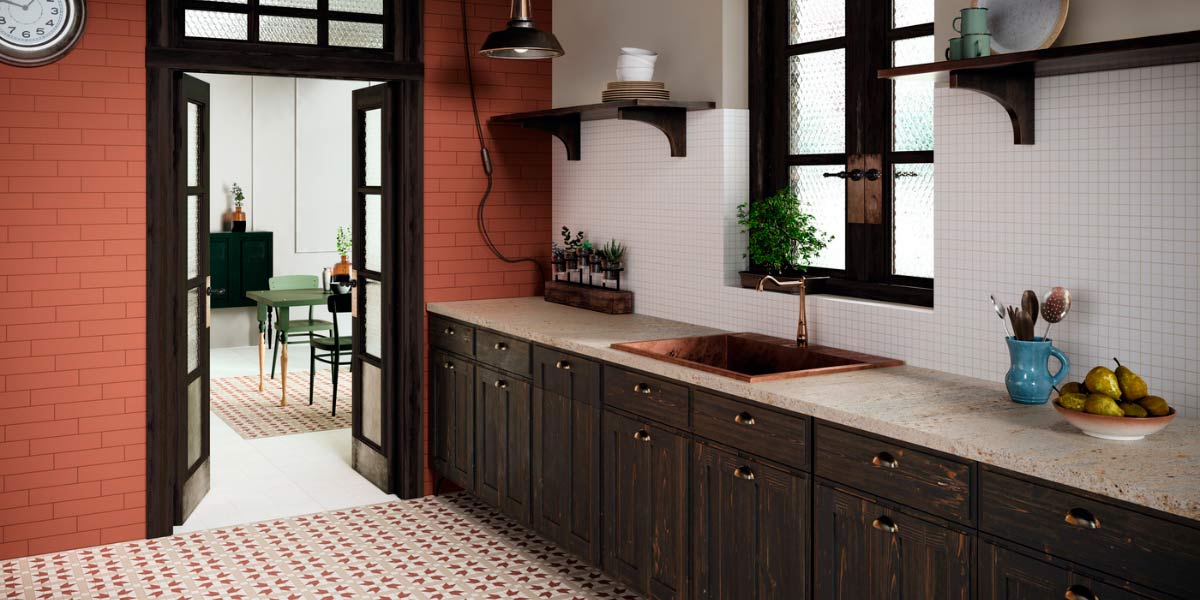
The differences between porcelain and ceramic tiles during the manufacturing process mean that they do not perform in the same way when exposed to heat. White-body wall tiles stand out for their lightness and decorative value, making them a popular choice for interior walls and spaces with lower technical requirements. However, due to their higher porosity and water absorption, their resistance to intense thermal changes is generally more limited, which is why they are not recommended for outdoor use or flooring applications.
Heat-resistant porcelain, on the other hand, offers a much more compact structure and very low water absorption, providing greater stability when exposed to heat and sudden temperature changes. As a result, heat-resistant porcelain tiles are particularly recommended for areas close to heat sources, sun-exposed outdoor spaces, barbecues, fireplaces, or contract projects subject to intensive use.
These same properties also make porcelain an especially suitable solution for underfloor heating systems. Its ability to efficiently transmit and distribute heat, combined with its dimensional stability and resistance to intensive use, has made it one of the most widely used options in both residential and hospitality projects.
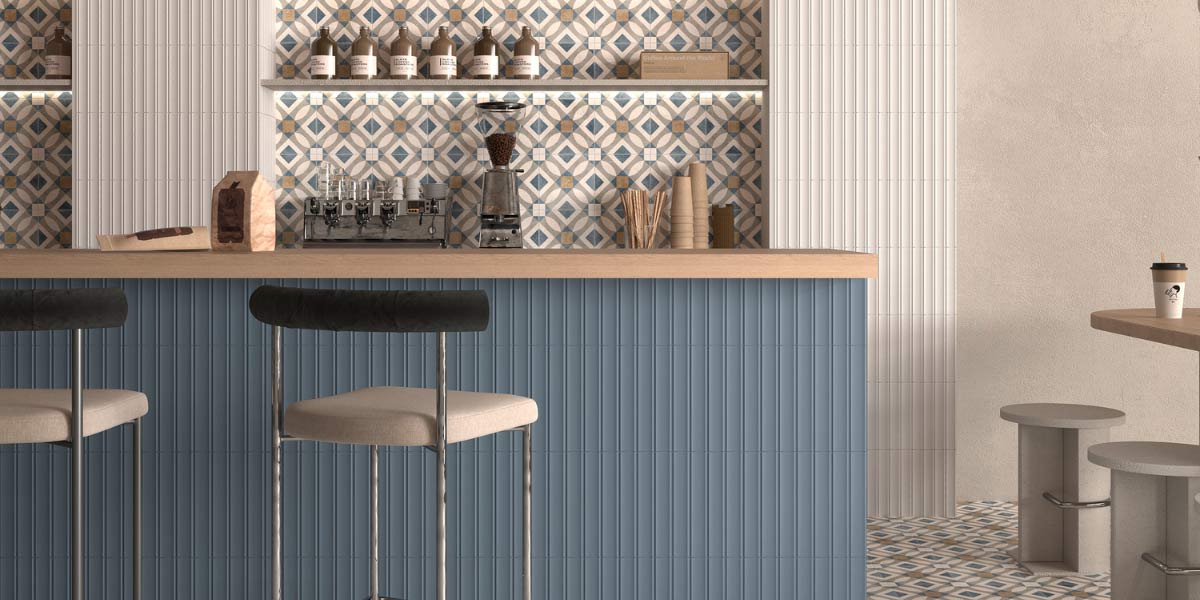
Although white-body wall tiles perform well on interior walls, porcelain provides greater stability when faced with sudden thermal changes and more demanding conditions.
Where it is important to use heat-resistant tiles
Choosing heat-resistant tiles is particularly important in spaces where surfaces are regularly exposed to high temperatures, intense sunlight, or continuous sudden temperature changes. In these environments, using technically suitable materials not only improves the durability of the covering but also enhances the safety and maintenance of the space.
Kitchens with heat-resistant tiles
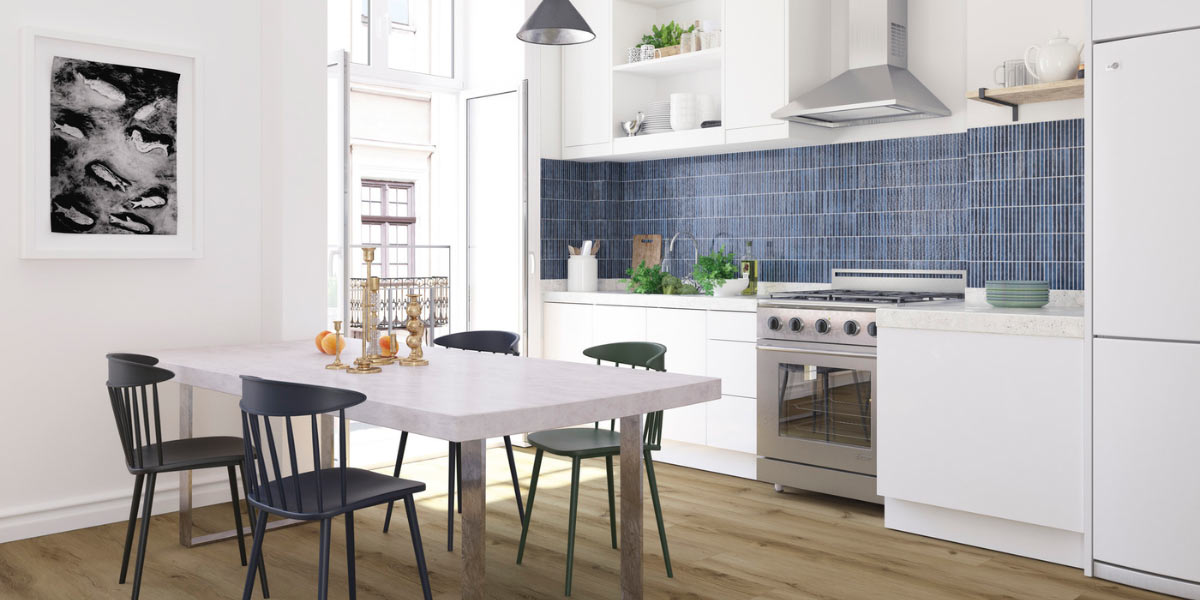
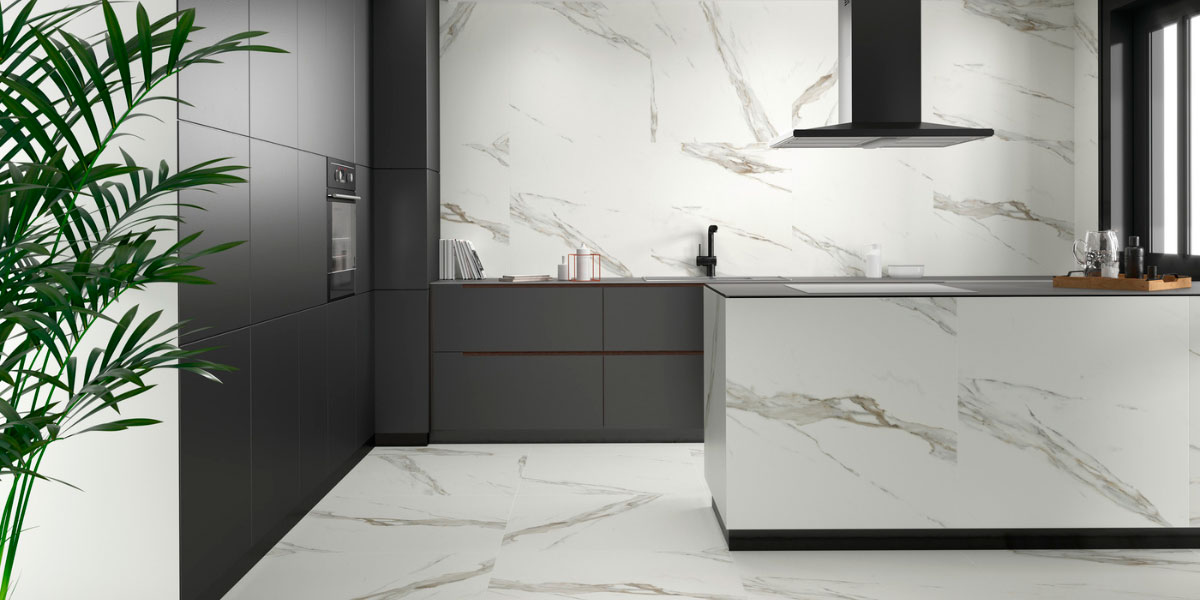
One of the most common examples is the kitchen, where kitchen coverings must withstand heat, moisture, and intensive daily use. In these cases, choosing a heat-resistant tile helps preserve the finish of the covering and prevents deformation or premature deterioration.
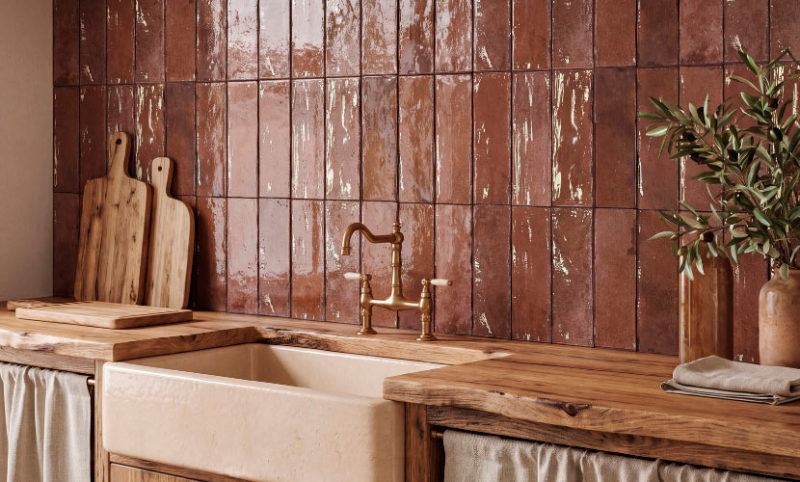
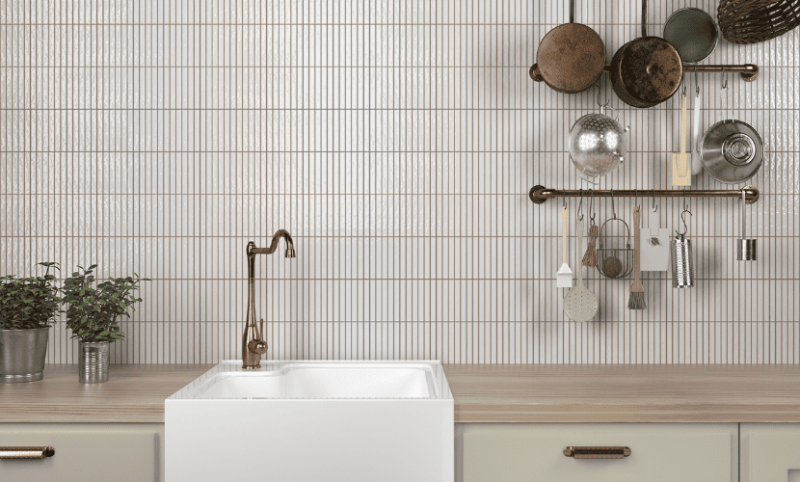
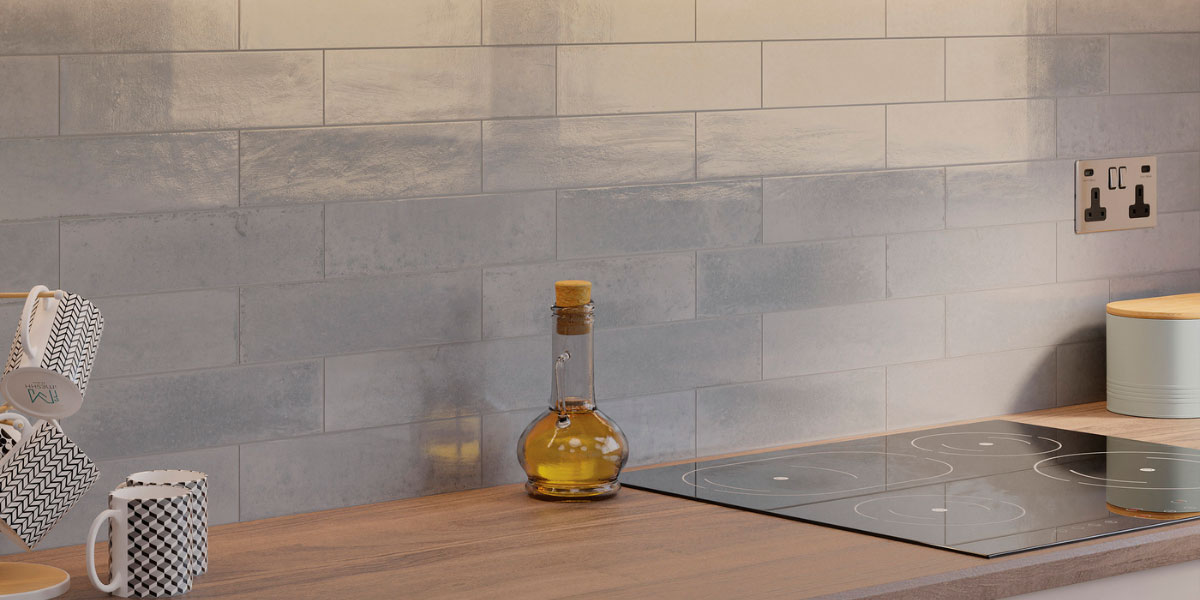
In this regard, using a heat-resistant tile as a kitchen backsplash not only provides protection against heat and moisture but also creates a surface that is easy to clean and maintain. In addition, ceramic coverings make it possible to combine functionality and design, offering a wide variety of finishes, textures, and styles to suit any interior design project.
Heat-resistant tiles also help minimise wear caused by continuous thermal changes, preventing cracks, deformation, or colour fading in heavily used areas.
Fireplace surrounds and coverings
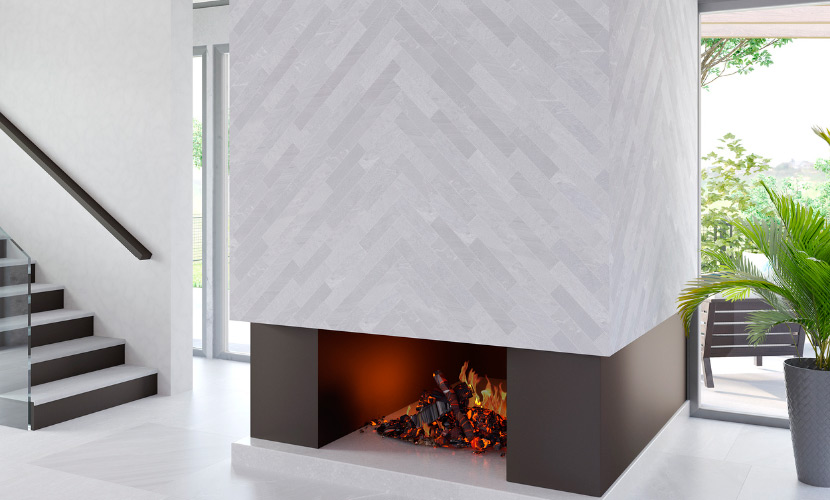
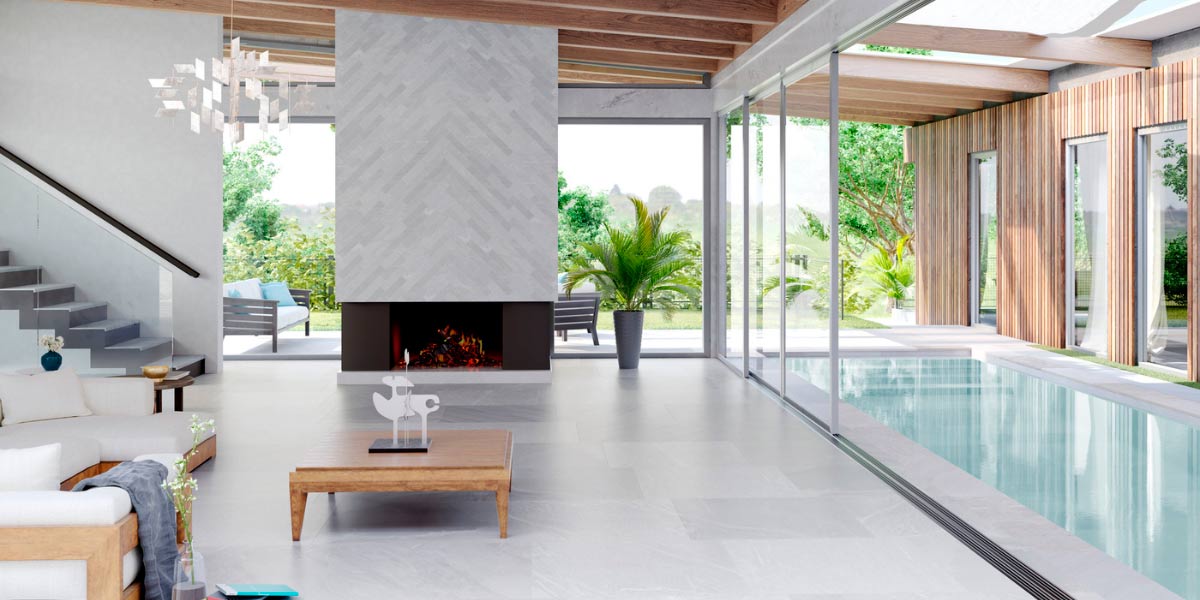
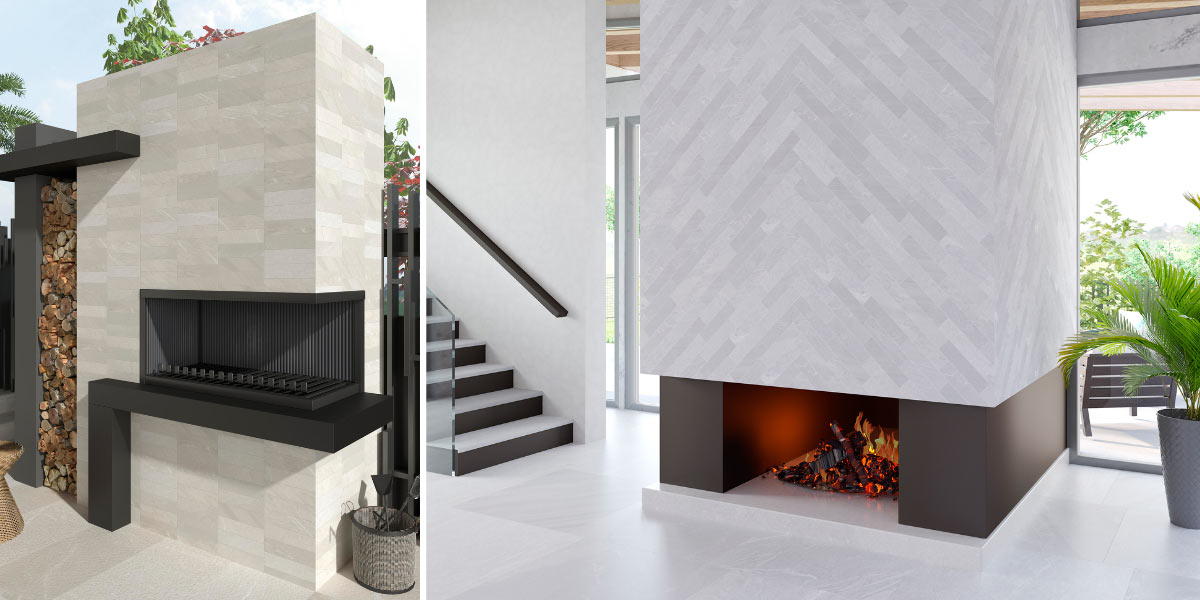
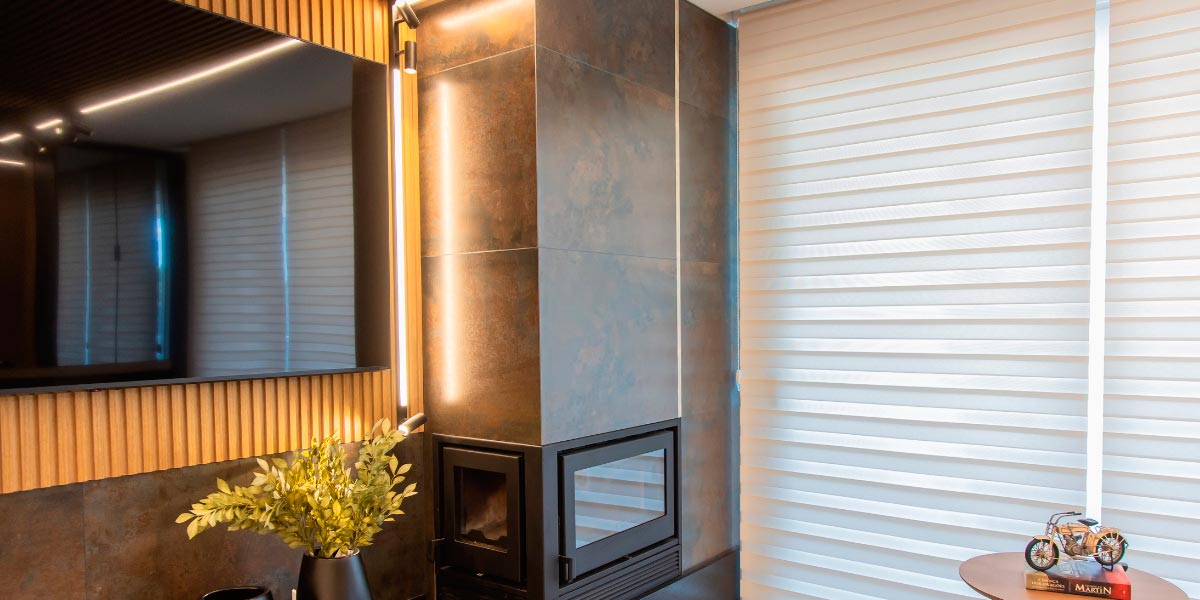
Fireplaces require fireplace tiles and coverings capable of withstanding high temperatures on a continuous basis without compromising the safety or stability of the material. In these applications, choosing heat-resistant tiles is essential to ensure reliable long-term technical performance.
In addition to their thermal resistance, ceramic coverings offer excellent dimensional stability against expansion caused by constant heat, helping to prevent cracks and deformation over time.
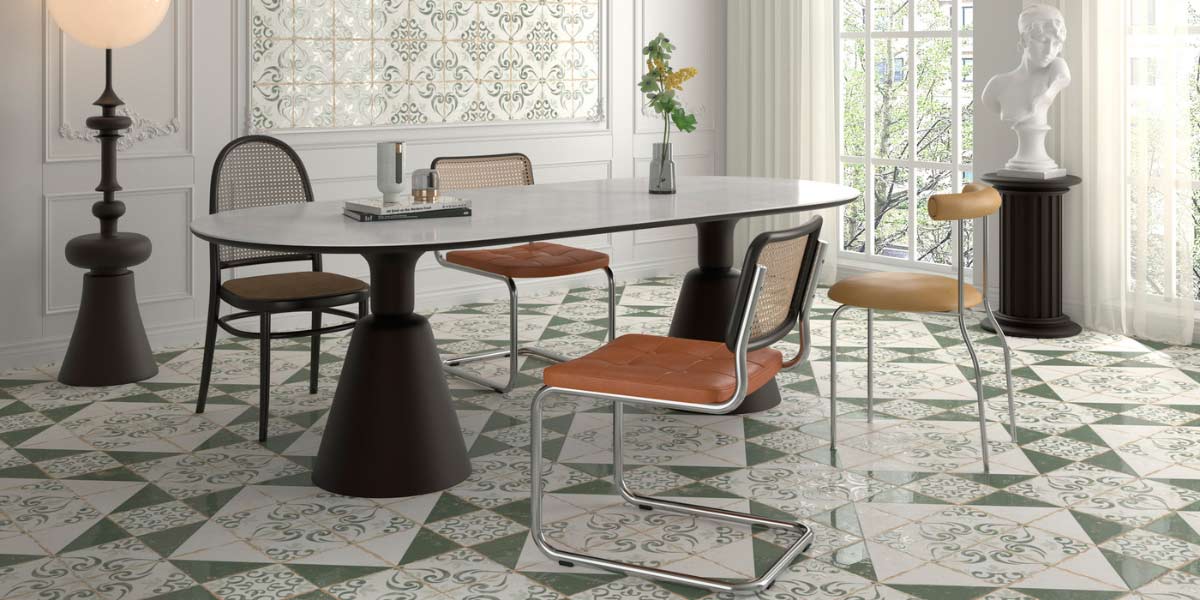
From an aesthetic perspective, these spaces also benefit from the enormous decorative versatility of ceramics, making it possible to create warm and sophisticated environments with finishes ranging from natural stone to metallic, handcrafted, or contemporary-inspired surfaces.
Heat-resistant tiles for outdoor areas, terraces, and barbecue spaces
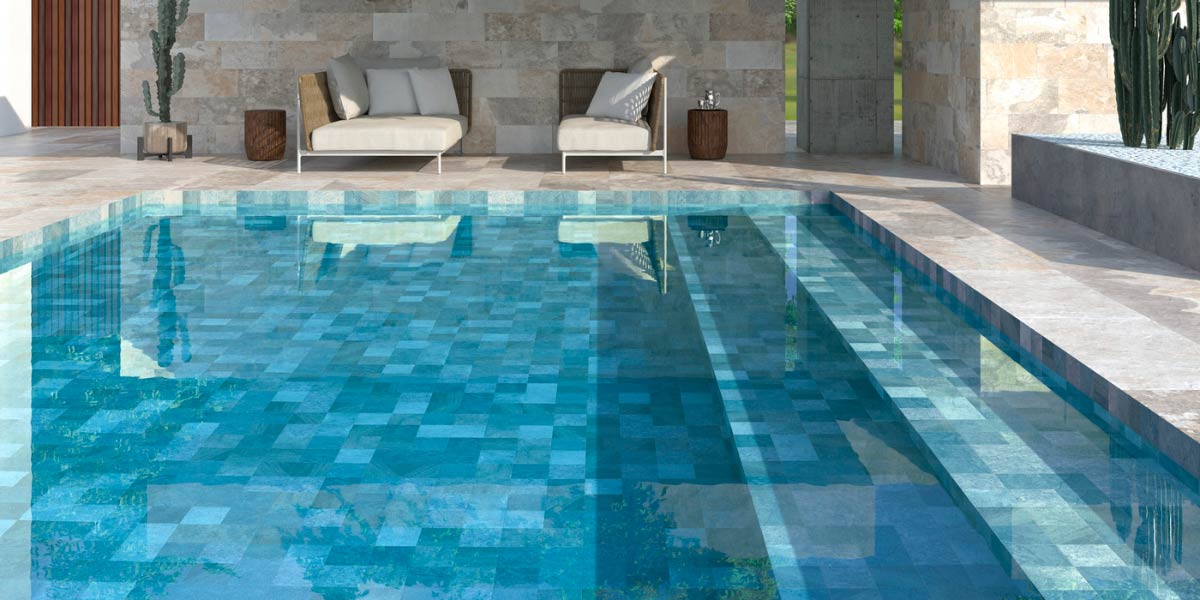
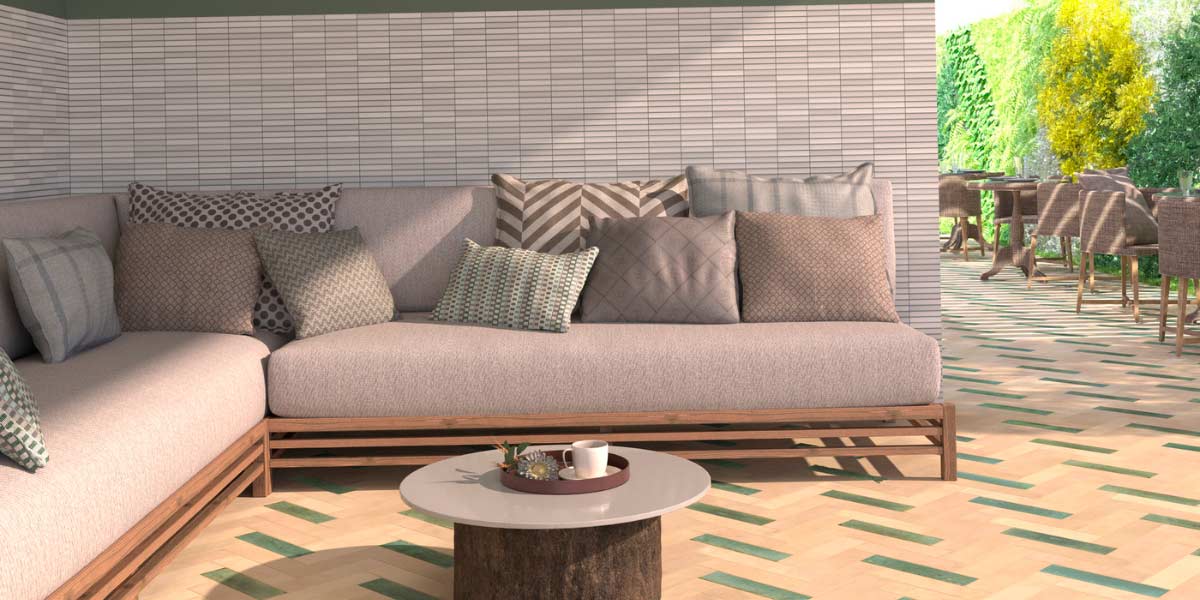
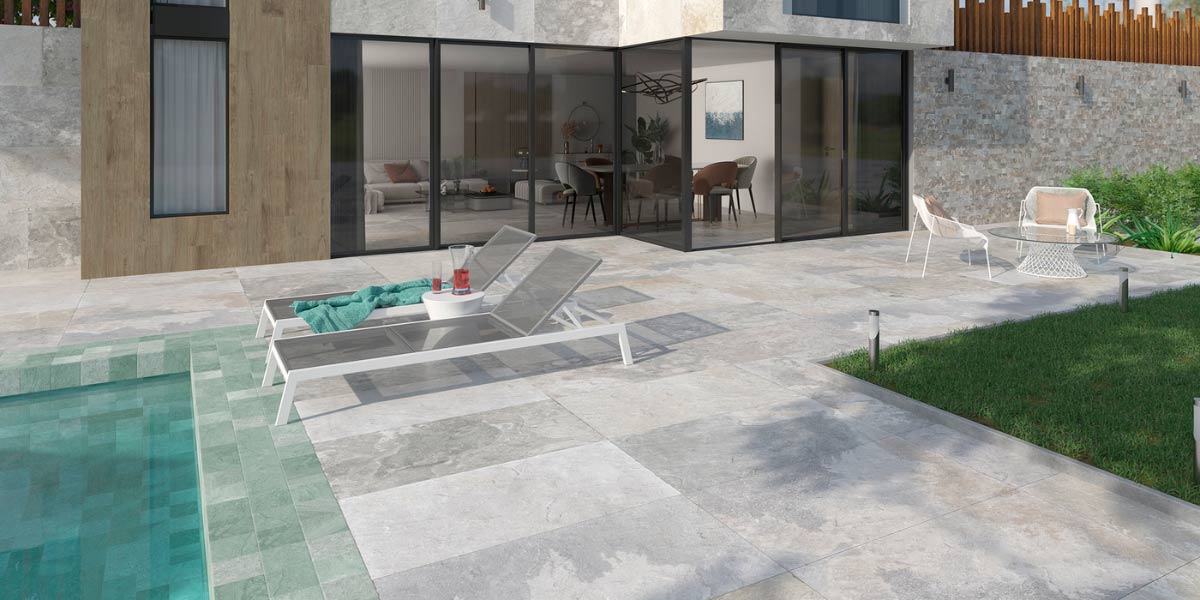
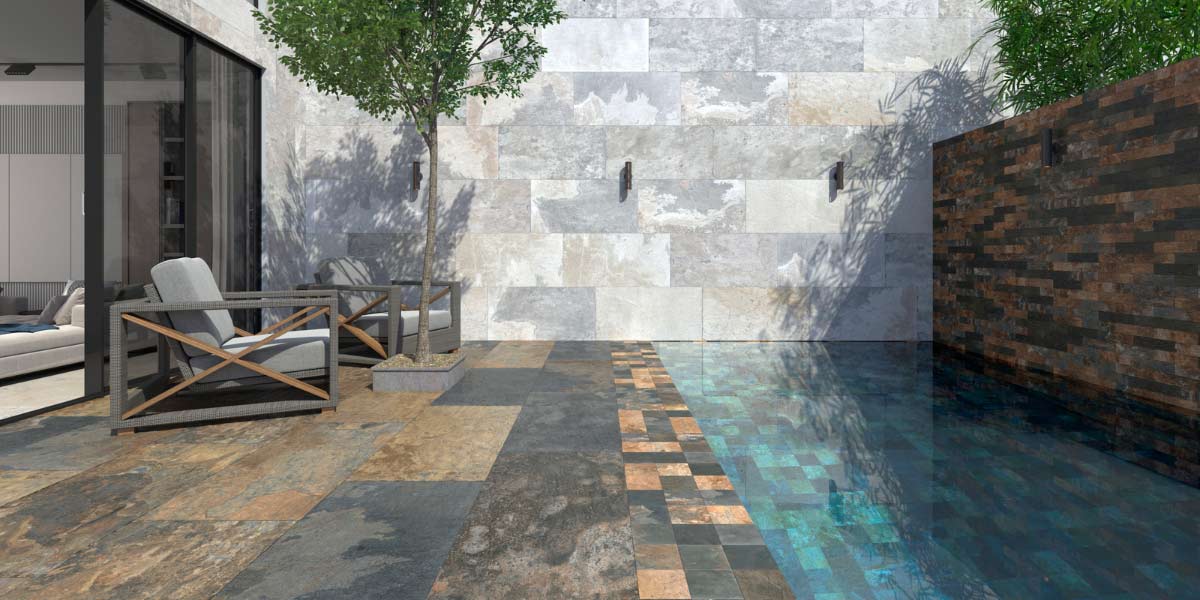
Outdoors, thermal resistance also plays a fundamental role. Facades, terraces, or swimming pools located in areas with high sun exposure and/or sudden temperature changes require coverings capable of withstanding UV radiation and heat-induced expansion without losing their aesthetic or technical properties.
For this reason, the thermal resistance of ceramics is one of the most highly valued characteristics in outdoor applications.
Commercial and hospitality projects
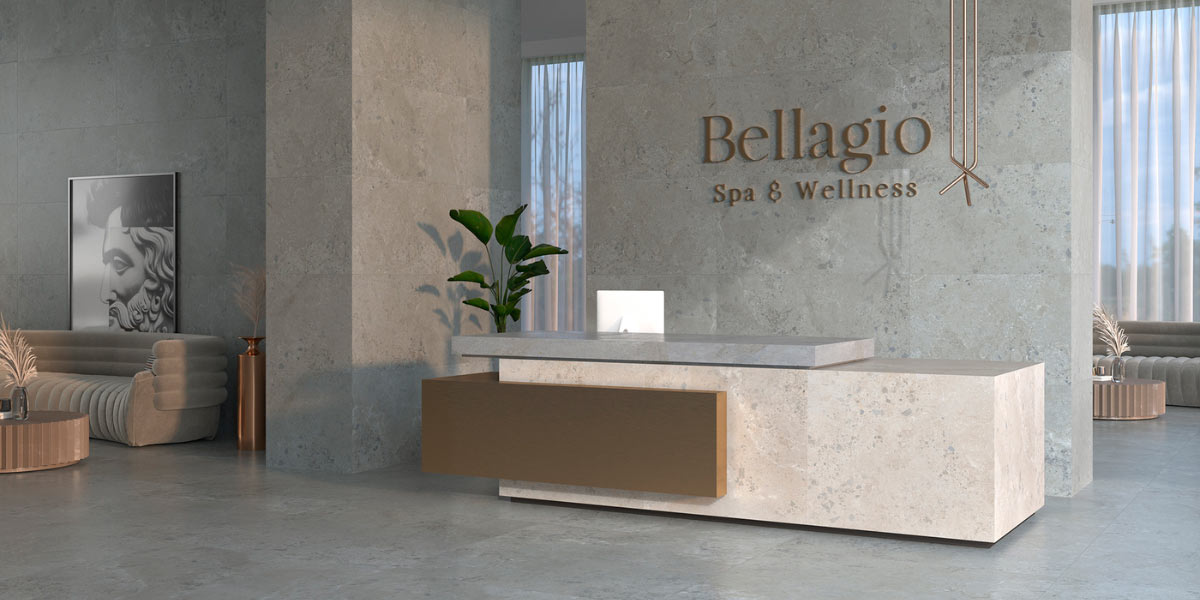
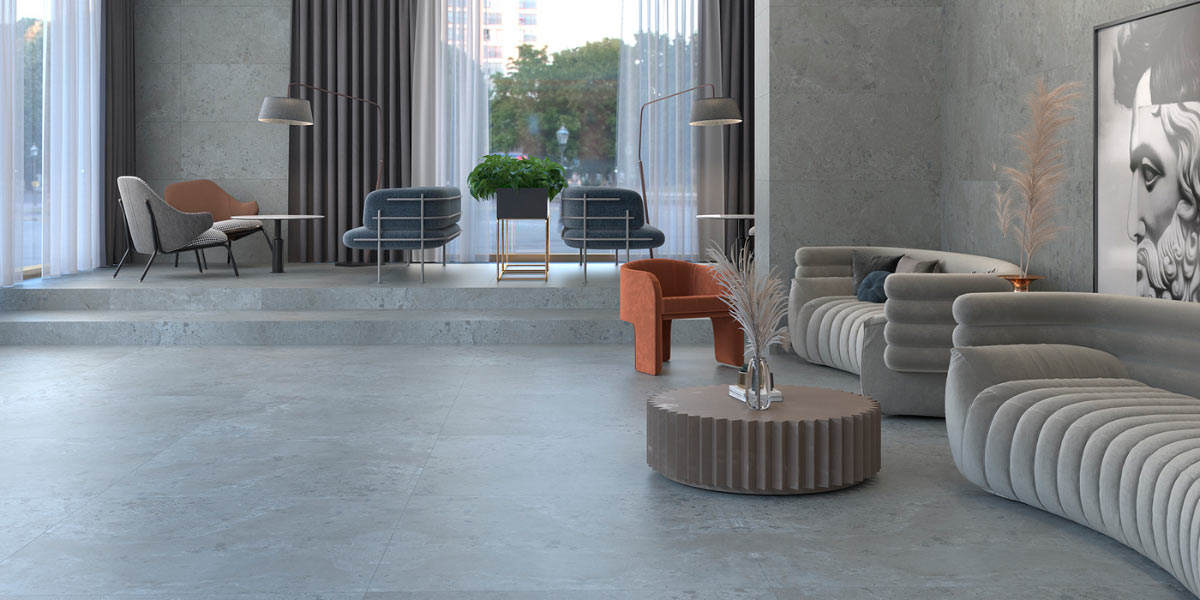
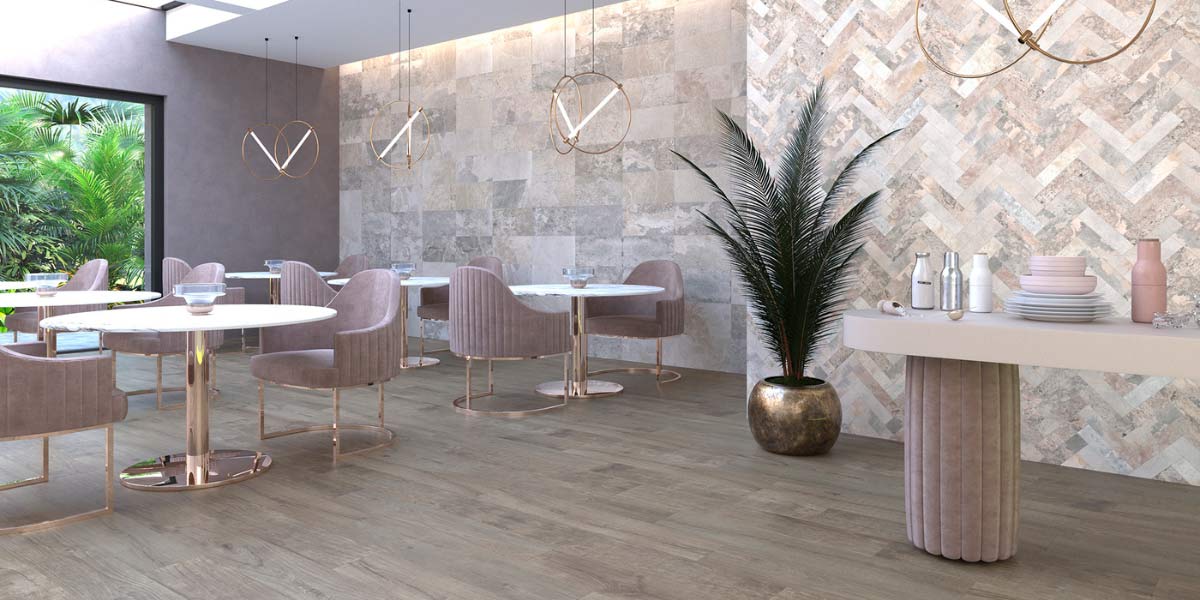
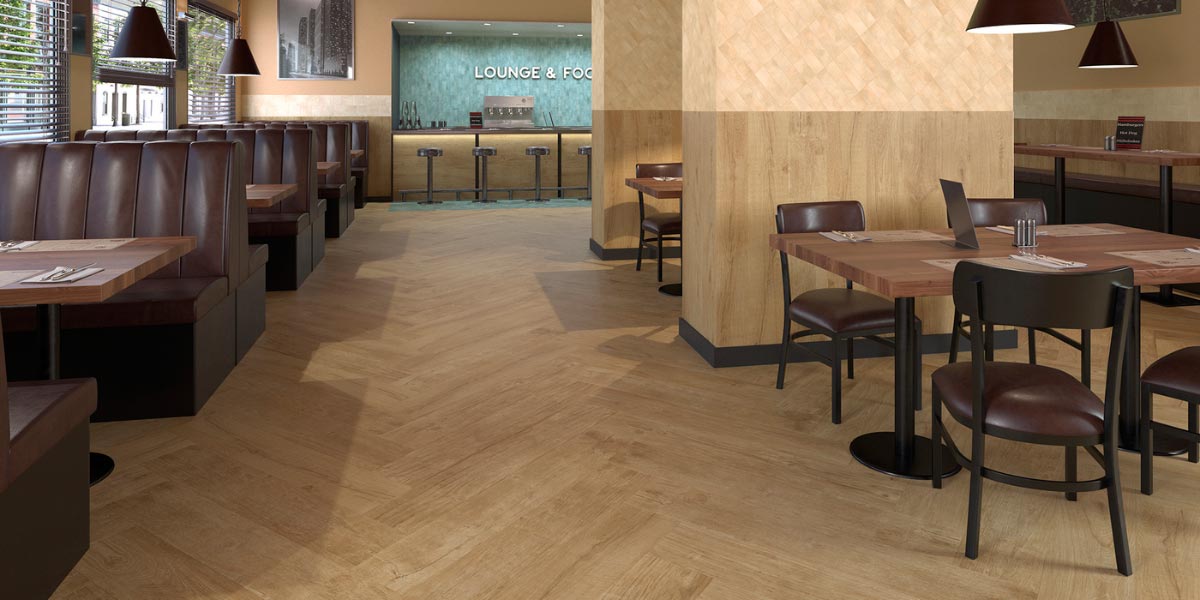
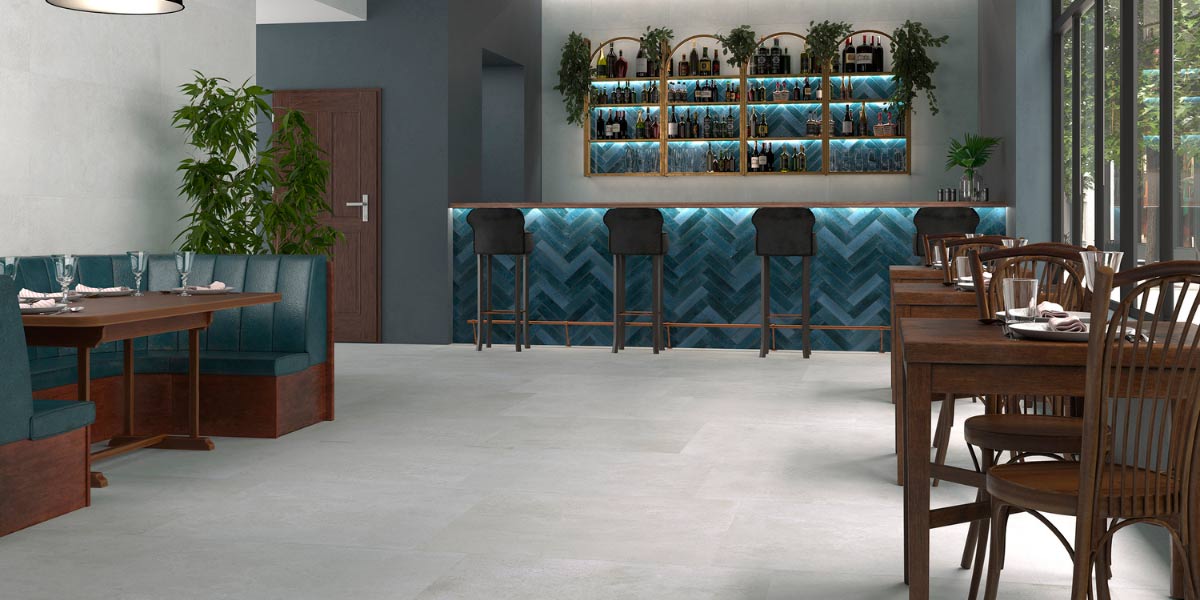
In commercial and hospitality projects, the choice of materials goes far beyond design. Restaurants, hotels, spas, and wellness spaces require coverings capable of withstanding intensive use, high temperatures, and demanding environmental conditions without losing their technical performance or aesthetic value.
Thanks to their combination of strength, durability, and aesthetic versatility, heat-resistant coverings have become a key solution in contemporary contract projects, where design and technical performance must coexist in perfect balance.
The best finishes for areas exposed to heat
In addition to the technical performance of the material, the finish of the covering also influences its behaviour and maintenance in spaces exposed to high temperatures. Choosing the right type of surface not only improves the overall resistance of the installation but also enhances the functionality and aesthetics of the project.
Beyond design, the key lies in selecting heat-resistant tiles that combine suitable technical properties with finishes capable of maintaining their appearance intact even under the most demanding conditions.
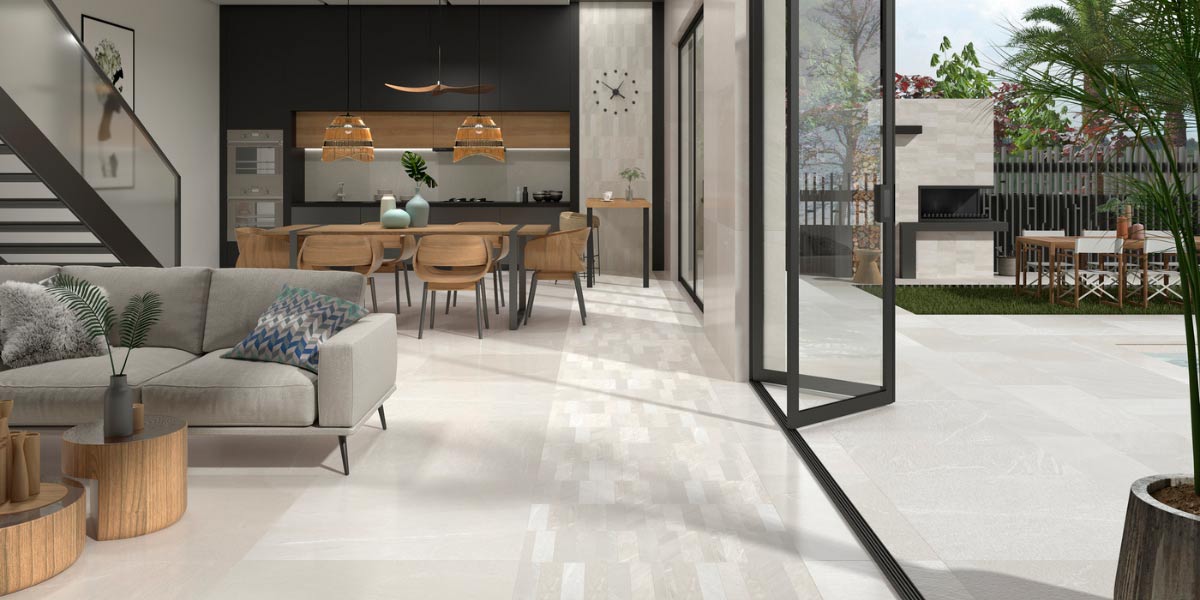
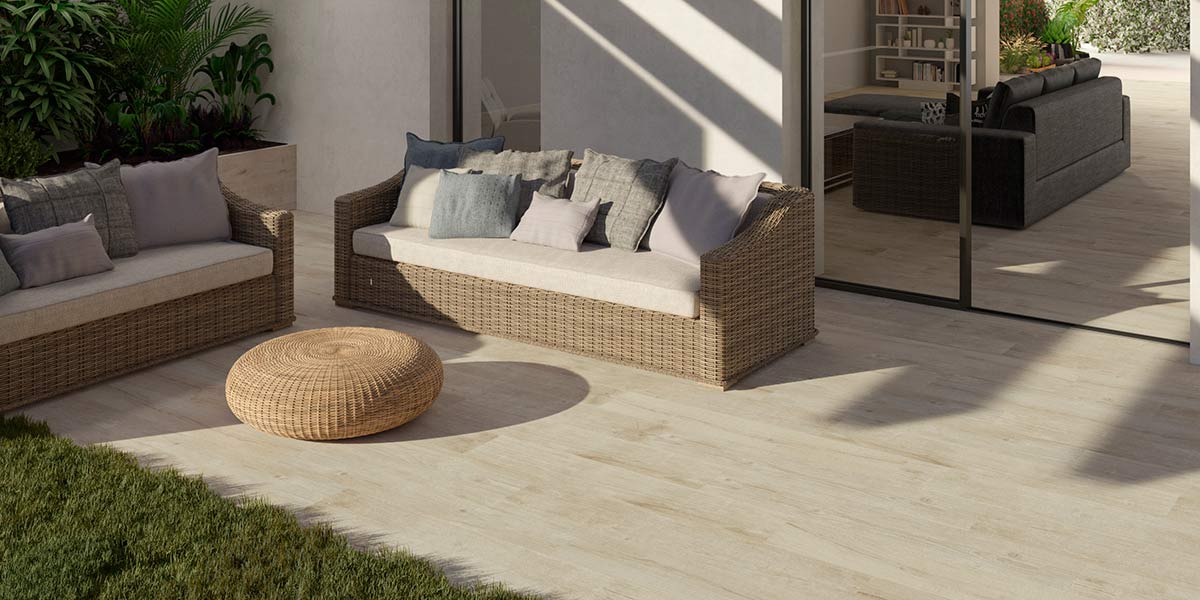
Stone- and cement-inspired finishes
Finishes inspired by natural stone and cement have become one of the leading trends in contemporary interior design and architecture, especially in spaces where a combination of minimalist aesthetics, natural appeal, and technical performance is sought.
These types of surfaces provide a sober, elegant, and timeless look that can be easily adapted to both residential settings and contract or hospitality projects. In addition, their aesthetic versatility allows them to be seamlessly integrated into kitchens, fireplaces, terraces, spas, or outdoor kitchens.
Beyond their decorative value, heat-resistant ceramic coverings with stone or cement effects offer excellent thermal performance. As a result, these finishes not only respond to current design trends but also guarantee durability, functionality, and easy maintenance in spaces subjected to intensive use or high temperatures.
Glazed and easy-to-maintain surfaces
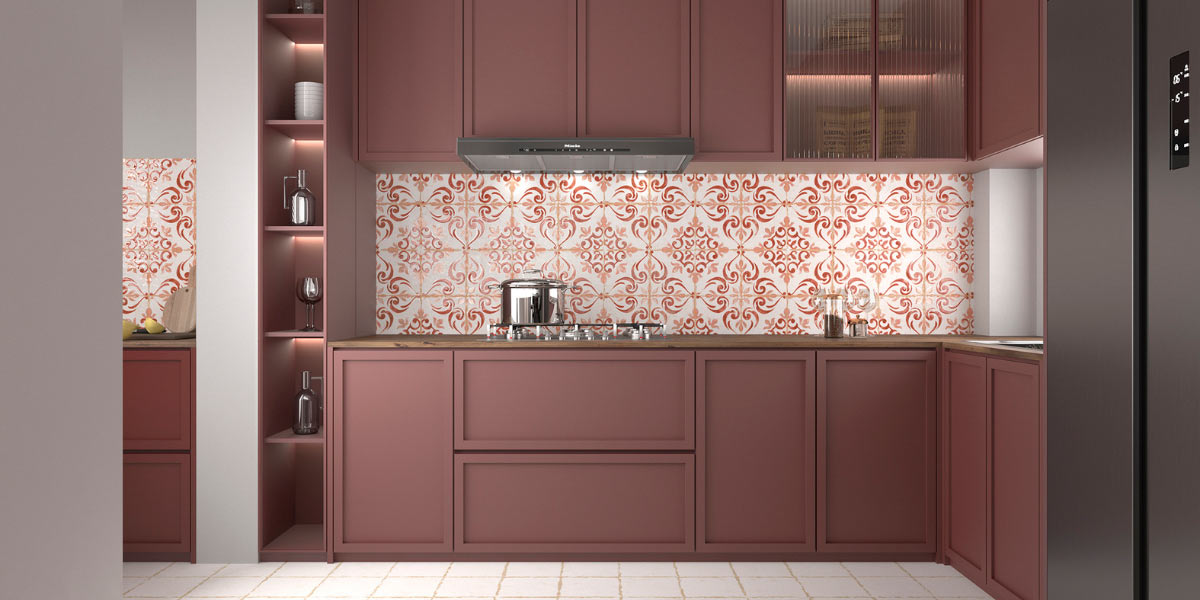
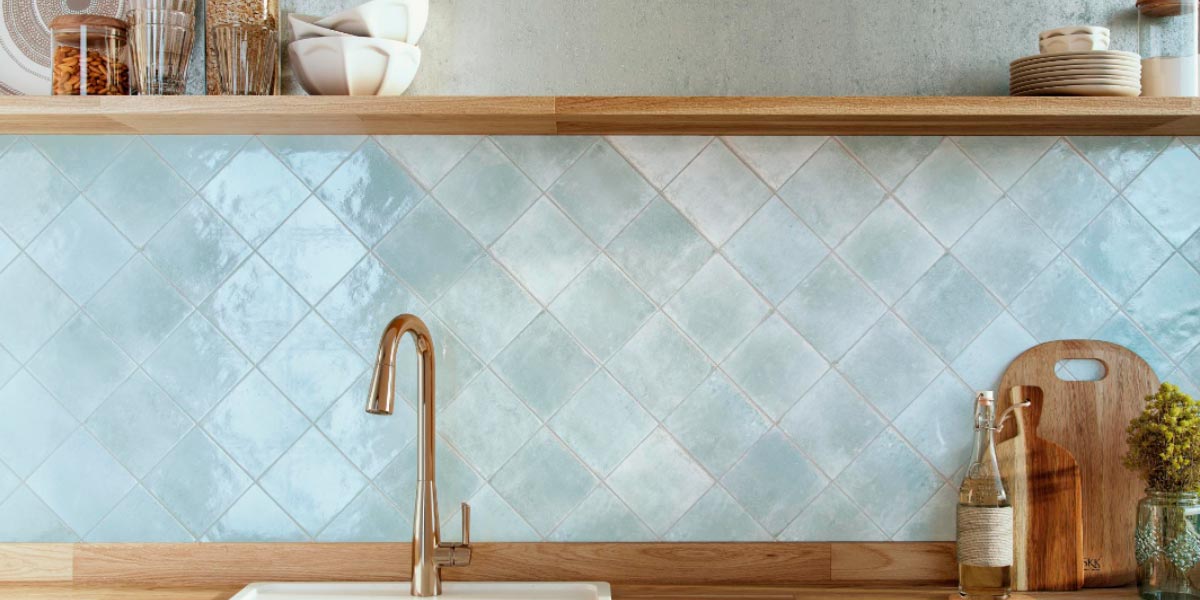
In spaces such as kitchens, where heat, humidity, and splashes are part of everyday life, the ease of maintenance of the covering becomes a key consideration. For this reason, glazed surfaces have become one of the most practical and functional options for these environments.
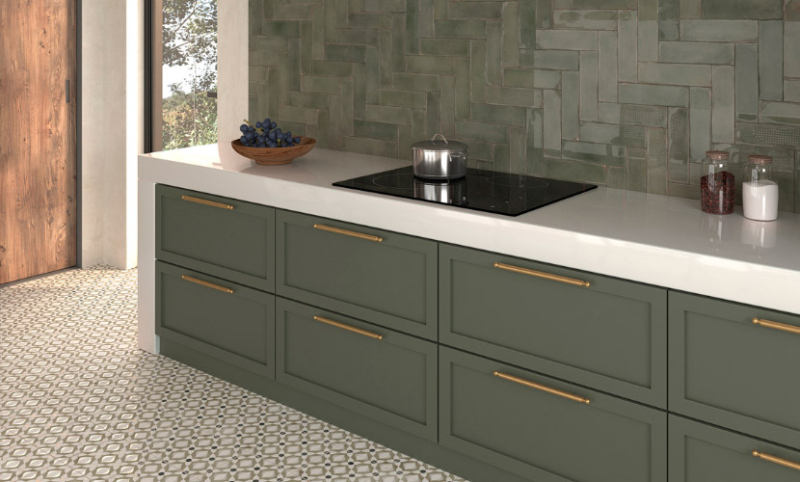
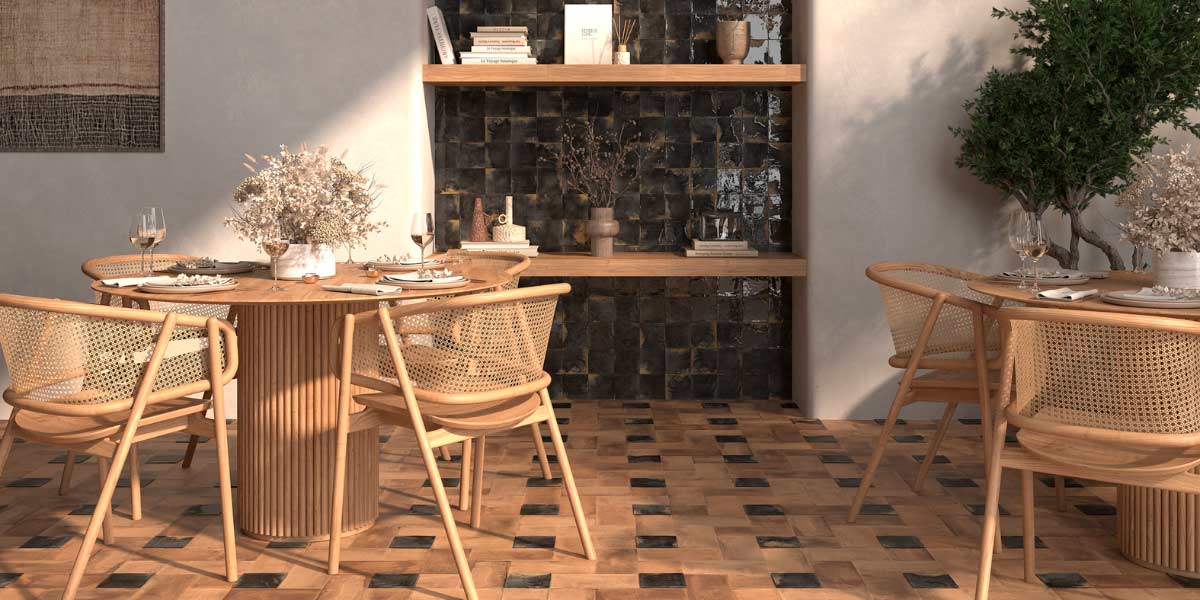
In addition to offering a wide variety of decorative finishes, heat-resistant tiles with glazed surfaces feature lower surface porosity, making them easier to clean and preventing grease, steam, or dirt from penetrating the material. This characteristic is particularly useful for kitchen backsplashes and areas near hobs or ovens, where surfaces are constantly exposed to temperature changes and cooking residues.
Another benefit is their ability to retain their colour, sheen, and original finish over time, even in heavily used spaces. Thanks to this, glazed surfaces help maintain kitchens that are functional, hygienic, and visually flawless for longer.
Large formats for contemporary spaces
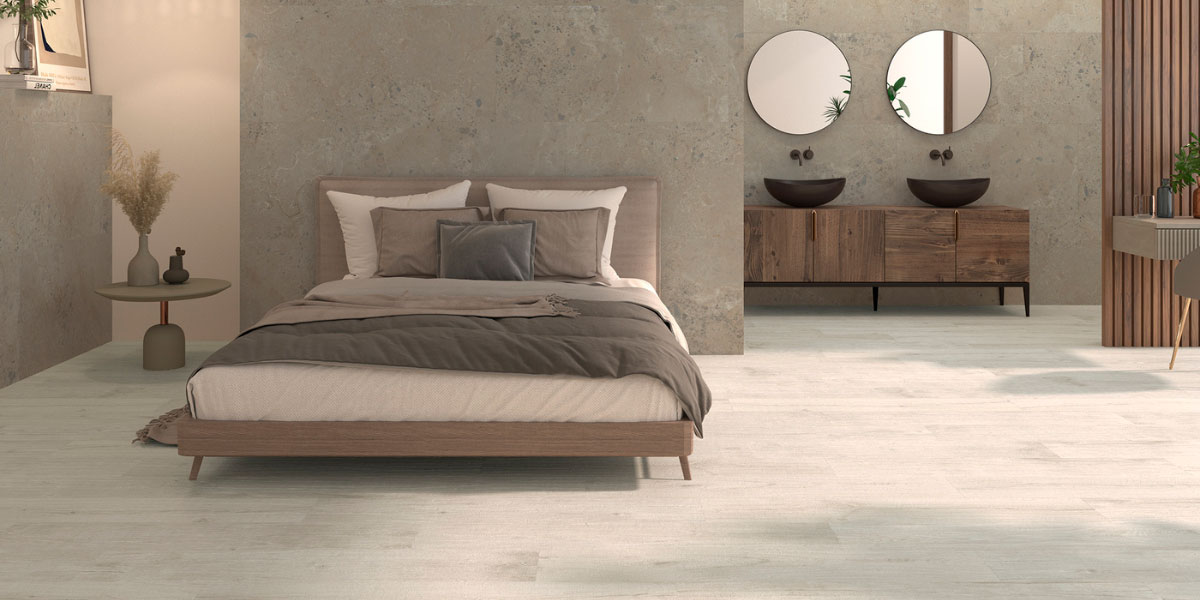
Large-format tiles have become one of the most sought-after solutions in contemporary projects thanks to their ability to create visually larger, more uniform, and sophisticated spaces.
This visual continuity provides a sense of spaciousness and order that is highly valued in minimalist designs and modern architecture, while also enhancing brightness and spatial perception.
When manufactured in porcelain, large-format tiles also offer excellent thermal performance, providing surfaces that are resistant, stable, and durable when exposed to high temperatures and frequent thermal changes.
Frequently asked questions about heat-resistant tiles
What types of tiles are most resistant to heat?
Porcelain tiles are the most recommended option for spaces exposed to high temperatures. Thanks to their low water absorption, high density, and excellent dimensional stability, they offer outstanding performance when subjected to intense heat and sudden temperature changes.
Can tiles be installed inside a fireplace?
Yes, although it is important to choose materials that are suitable for this type of application. High-quality porcelain coverings can be used in areas close to heat sources, provided that the installation is carried out correctly and the manufacturer’s technical specifications are followed.
Can porcelain withstand high temperatures?
Yes. Porcelain is designed to withstand high temperatures continuously without deforming or altering its finish. For this reason, it is widely used in kitchens, fireplaces, barbecues, façades, and outdoor spaces exposed to sunlight.
Can tiles crack due to heat?
A high-quality ceramic covering that has been correctly installed should not crack due to heat under normal conditions of use. However, materials with high water absorption or an improper installation may be affected by expansion and sudden thermal changes, especially outdoors or in areas close to direct heat sources.
What is the difference between thermal resistance and fire resistance?
Thermal resistance refers to a material’s ability to withstand temperature changes and prolonged exposure to heat without deforming or deteriorating. Fire resistance, on the other hand, relates to how a material behaves when exposed to combustion and its ability not to spread flames or emit hazardous substances.
What is the best covering for a kitchen near a heat source?
For kitchen areas located near hobs, ovens, or direct heat sources, porcelain is usually one of the most recommended options. Its low water absorption, high thermal resistance, and exceptional durability allow it to better withstand temperature fluctuations and intensive daily use.
What temperature can a porcelain tile withstand?
Porcelain tiles are manufactured through firing processes at very high temperatures, which gives them excellent thermal stability. Under normal conditions of use, they are capable of withstanding high temperatures continuously without deforming, cracking, or altering their finish. As a result, porcelain is one of the most widely used materials in kitchens, fireplaces, barbecues, façades, and other areas exposed to heat sources or frequent temperature changes.
Are heat-resistant tiles suitable for outdoor barbecues?
Yes. Heat-resistant tiles, especially porcelain tiles, are an excellent option for cladding outdoor barbecues and outdoor kitchen areas. Their low water absorption and high thermal resistance enable them to withstand both the high temperatures generated during use and the sudden temperature changes caused by weather conditions. In addition, they provide a durable, easy-to-clean surface capable of maintaining its original appearance over time.
Choosing heat-resistant tiles is a key factor in ensuring the durability, safety, and performance of any space exposed to high temperatures or frequent thermal changes. From kitchens and fireplaces to terraces, swimming pools, and hospitality projects, selecting materials with adequate thermal resistance helps preserve both their technical and aesthetic properties over time.
In this regard, porcelain coverings stand out for their low water absorption, dimensional stability, and excellent performance when exposed to heat, making them one of the most reliable solutions for residential and contract projects. In addition, the wide variety of available finishes, formats, and designs makes it possible to create functional and long-lasting spaces without compromising creativity or decorative value.
Choosing heat-resistant ceramics is not only an investment in quality and easy maintenance, but also a guarantee of comfort, safety, and design for any contemporary architectural project.