
Kitchen mosaic trends: ideas, types, and how to choose
Kitchen mosaics have established themselves as one of the most versatile and attractive options in interior design. They not only provide high aesthetic value, but also stand out for their durability and ease of maintenance, making them an ideal solution for exposed areas such as backsplashes or walls.
In recent years, trends in kitchen mosaics have evolved towards more personalized proposals, where the combination of shapes, materials, and colors allows for the creation of unique spaces. From geometric designs to nature-inspired finishes, mosaics adapt to all types of styles, from modern kitchens to warmer, more traditional environments.
In this article, we show you the types of kitchen mosaics, current trends, and the keys to choosing the best option according to your space and your needs.
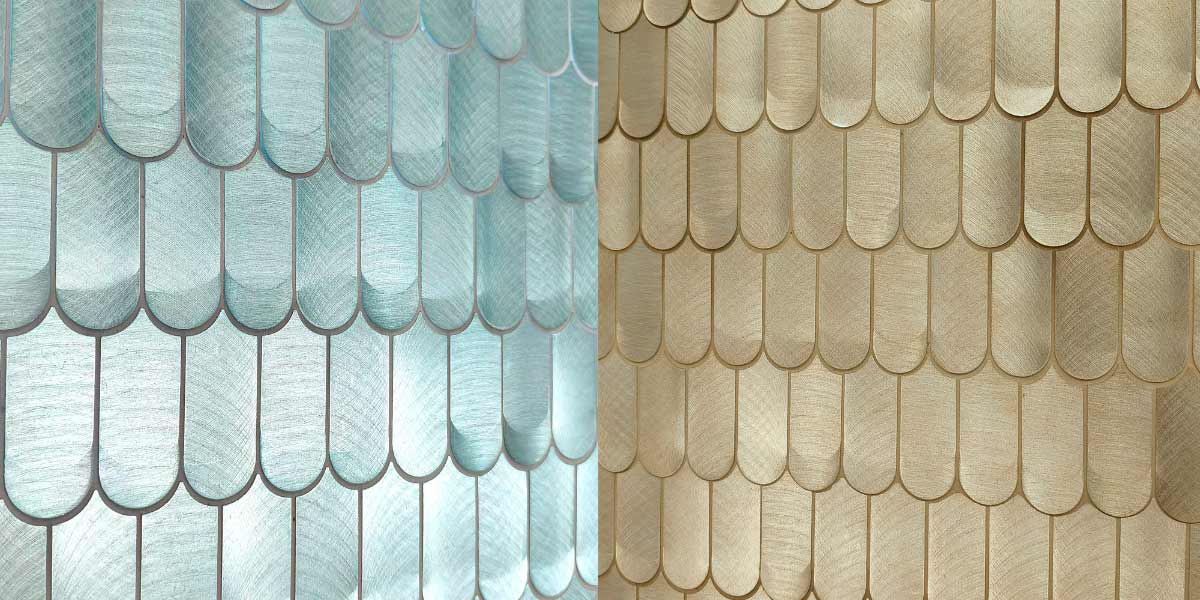
Why choose kitchen mosaics?
Kitchen mosaics have become one of the most complete solutions both aesthetically and functionally. Their ability to adapt to different styles, together with their technical performance, positions them as an ideal option for both residential projects and professional spaces.
One of their main advantages is their high resistance. Mosaic tiles for kitchens are designed to withstand demanding conditions such as humidity, temperature changes, or the typical splashes in this area. This makes them especially suitable for areas such as backsplashes or walls near the cooking zone.
In addition, they stand out for their ease of maintenance. Thanks to their generally non-porous surfaces, mosaics allow for quick and efficient cleaning, which is key in spaces where hygiene is essential. With basic maintenance, they retain their original appearance for years.
Another distinctive aspect is their decorative versatility. There are multiple options in terms of materials, formats, colors, and finishes, allowing for everything from subtle and elegant designs to more daring and decorative compositions. In fact, you can see the variety of styles available in the Dune mosaic collection, where design and technology are combined to adapt to any type of kitchen.
It is also important to highlight their adaptability to different applications. Mosaics can be used on walls, floors, or specific elements such as islands or kitchen fronts, providing visual continuity or creating focal points depending on the design.
In short, choosing kitchen mosaics means opting for a solution that combines design, durability, and functionality, adapting to the current needs of interior design.
Types of kitchen mosaics
Choosing the right material is one of the most important aspects when selecting kitchen mosaics, as it influences both aesthetics and durability and maintenance. Currently, there is a wide variety of options that adapt to different styles and needs.
Below, we show you the main types of mosaic tiles for kitchens and their characteristics:
Ceramic mosaics
Ceramic mosaics for kitchens are the most widely used option thanks to their balance between resistance, design, and ease of maintenance. This type of mosaic perfectly withstands humidity, high temperatures, and daily use, making it an ideal solution for backsplashes and walls. In addition, it offers a wide variety of finishes, colors, and formats, allowing it to adapt to both modern kitchens and more classic styles.
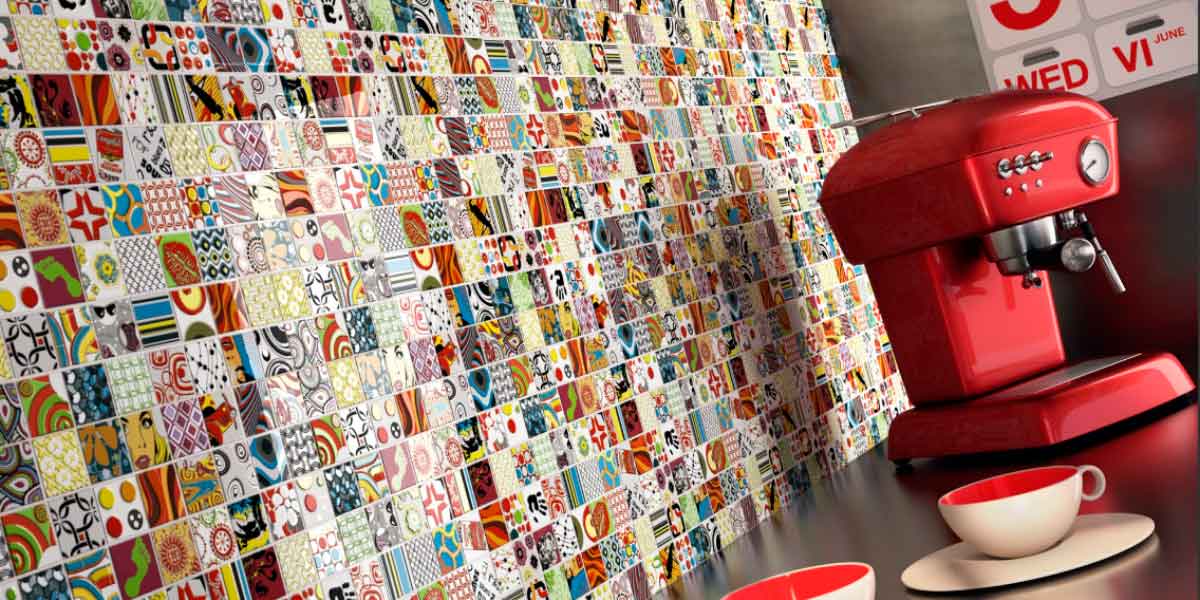
Glass mosaics
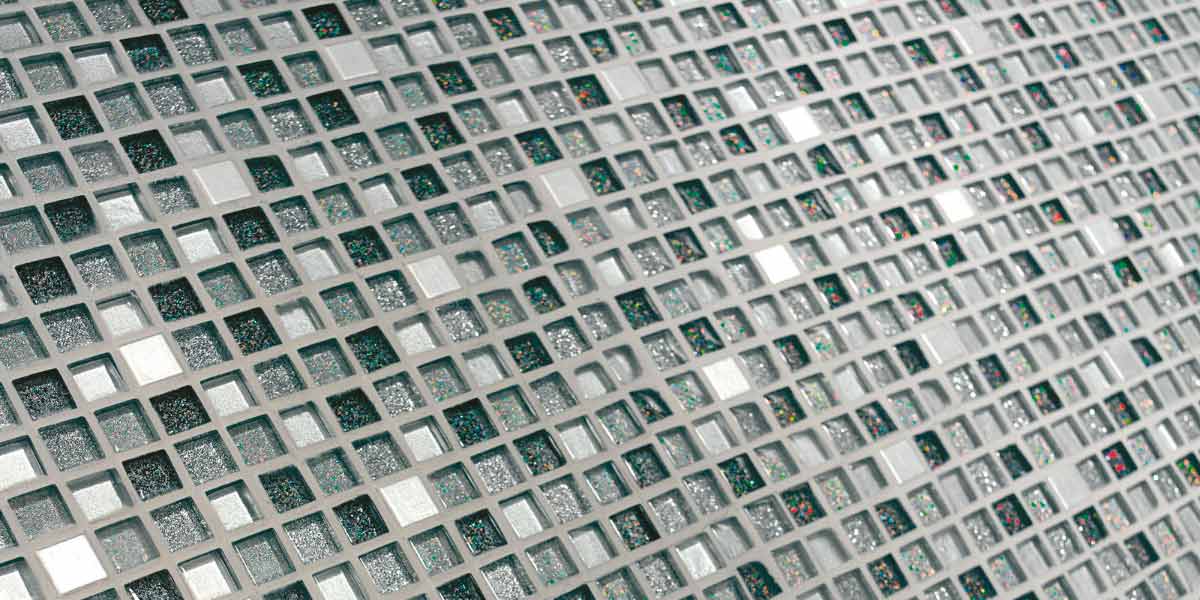
Glass mosaics stand out for their ability to reflect light, which helps to visually enlarge the space. For this reason, they are especially recommended in small kitchens or those with little natural light. Their glossy finish adds a contemporary and elegant touch, although it is important to note that they may require more frequent cleaning to maintain their impeccable appearance.
Stone mosaics
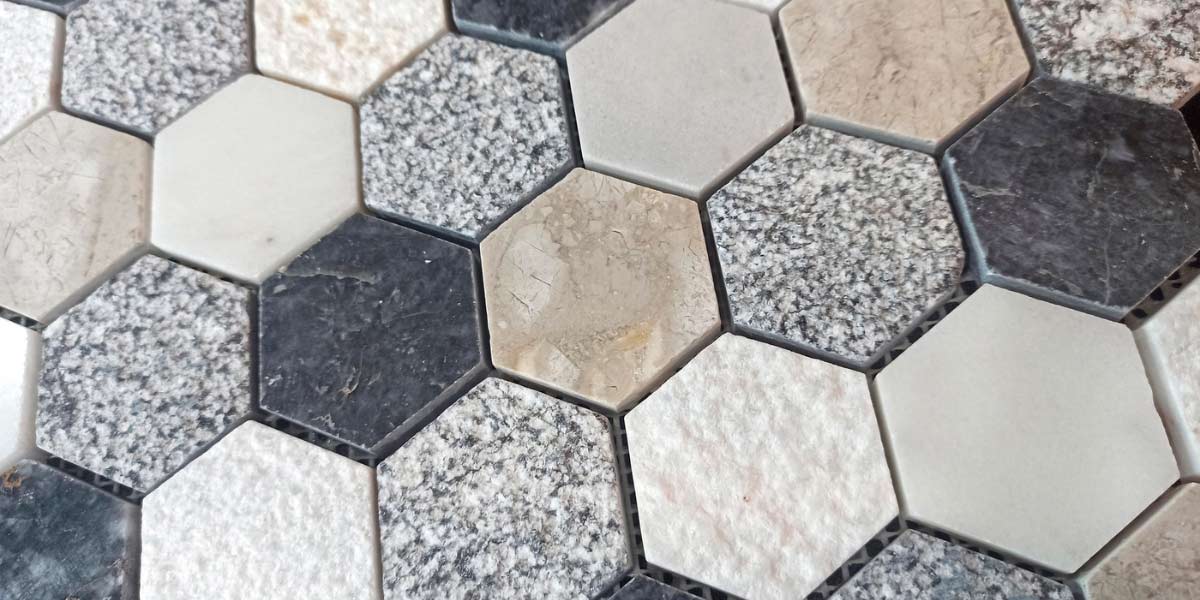
Stone mosaics add warmth and texture, creating cozy environments with character. They are an excellent option for rustic, Mediterranean, or natural-style kitchens. However, as this is a more porous material, it is advisable to apply specific treatments to improve its resistance and facilitate its maintenance in environments such as the kitchen.
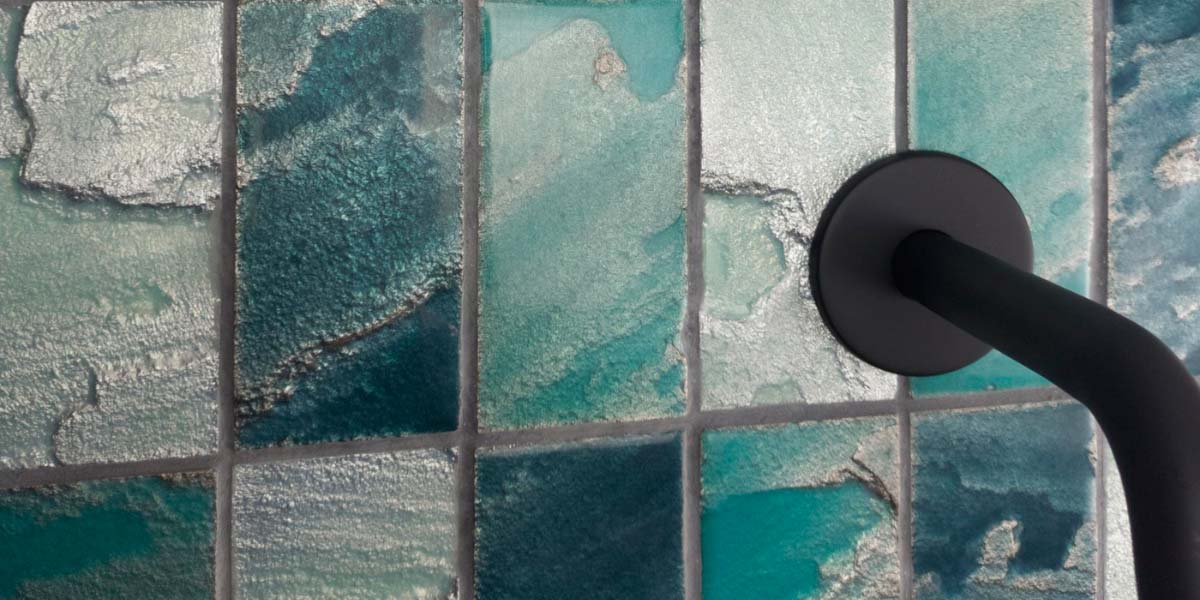
Metal mosaics
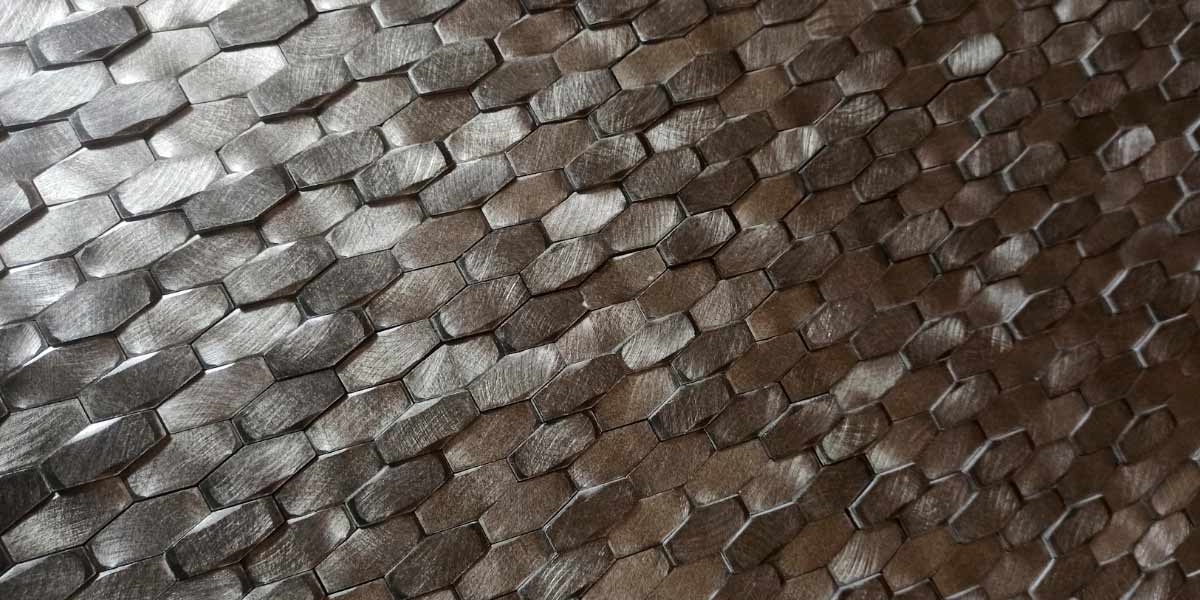
Metal mosaics are perfect for those seeking a modern and industrial design. Their finish provides sophistication and a striking visual effect, ideal for highlighting specific areas such as the backsplash or the kitchen island. They are usually used in combination with other materials to avoid overloading the space and to achieve an aesthetic balance.
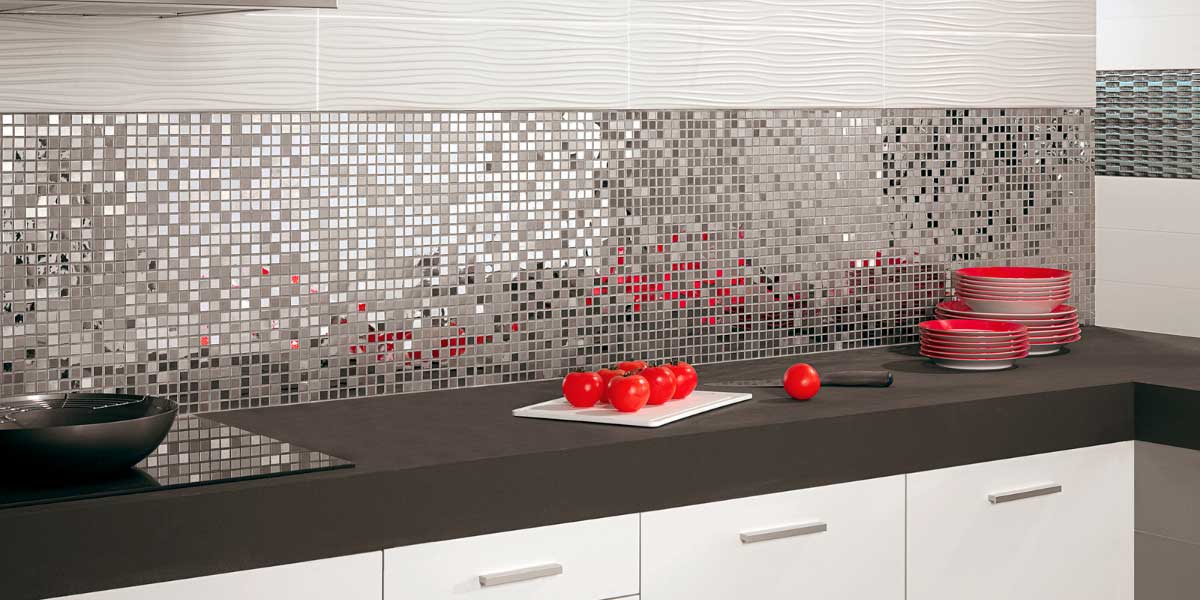
Mix of materials
Mosaics that combine different materials—such as glass, stone, and metal—allow for the creation of unique and dynamic designs. This type of composition adds visual depth and high decorative value. They are ideal for more creative or personalized projects, where a distinctive result with its own personality is sought.
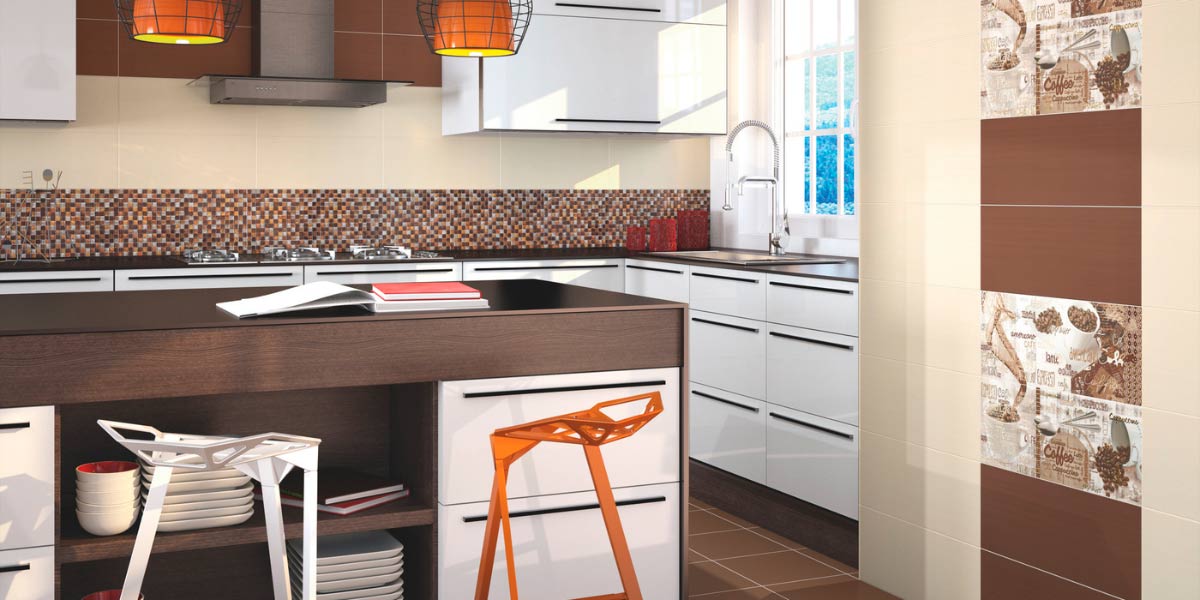
Overall, knowing the different types of kitchen mosaics will allow you to make a more informed decision and choose the option that best suits both your style and the demands of the space.
Kitchen mosaic trends
Kitchen mosaic trends have evolved in recent years towards proposals where design takes center stage. Beyond their practical function, mosaic tiles for kitchens are now used as a decorative resource capable of completely transforming the space, adding personality, texture, and dynamism.
Currently, trends focus on the combination of shapes, materials, and finishes that allow the creation of more expressive kitchens adapted to different lifestyles. Below, we review the main directions shaping mosaic design:
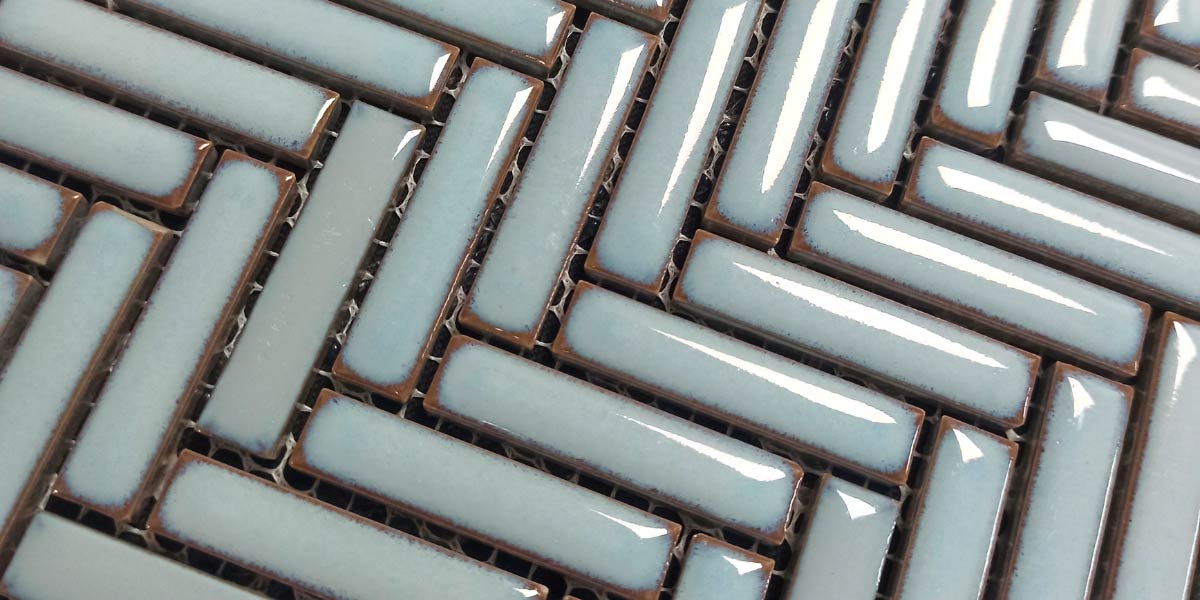
Herringbone
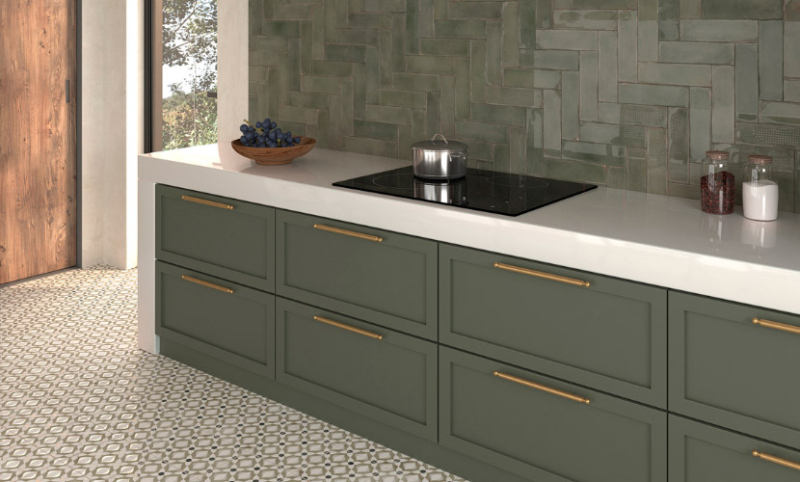
The herringbone pattern has established itself as one of the most elegant and versatile options. Its angled layout creates a dynamic visual effect that breaks with traditional linearity, adding movement without being excessive.
This type of layout works especially well on backsplashes or main walls, where it can become the focal point of the kitchen. It also allows for playing with different shades within the same range to achieve a more sophisticated result.
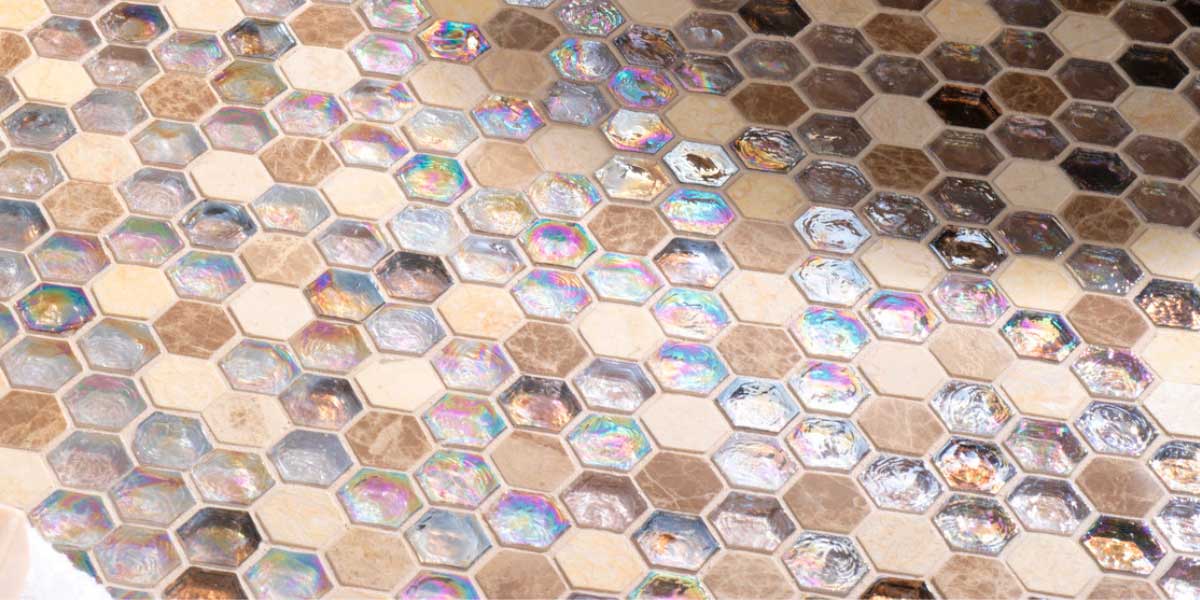
Hexagons
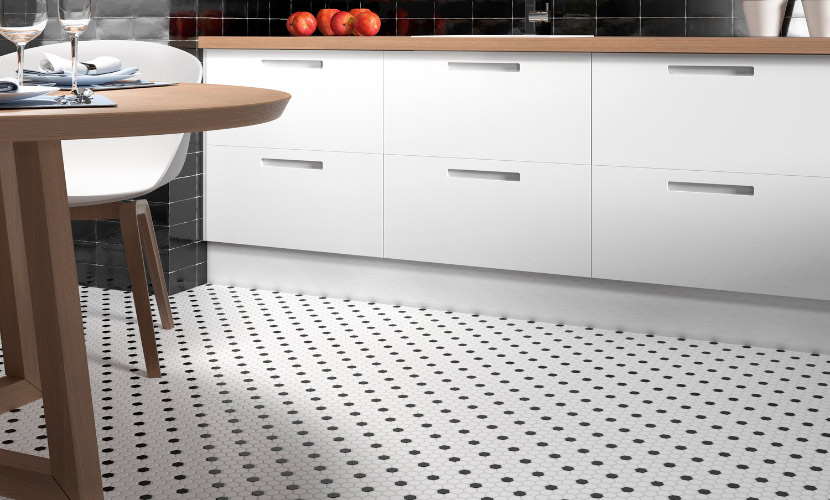
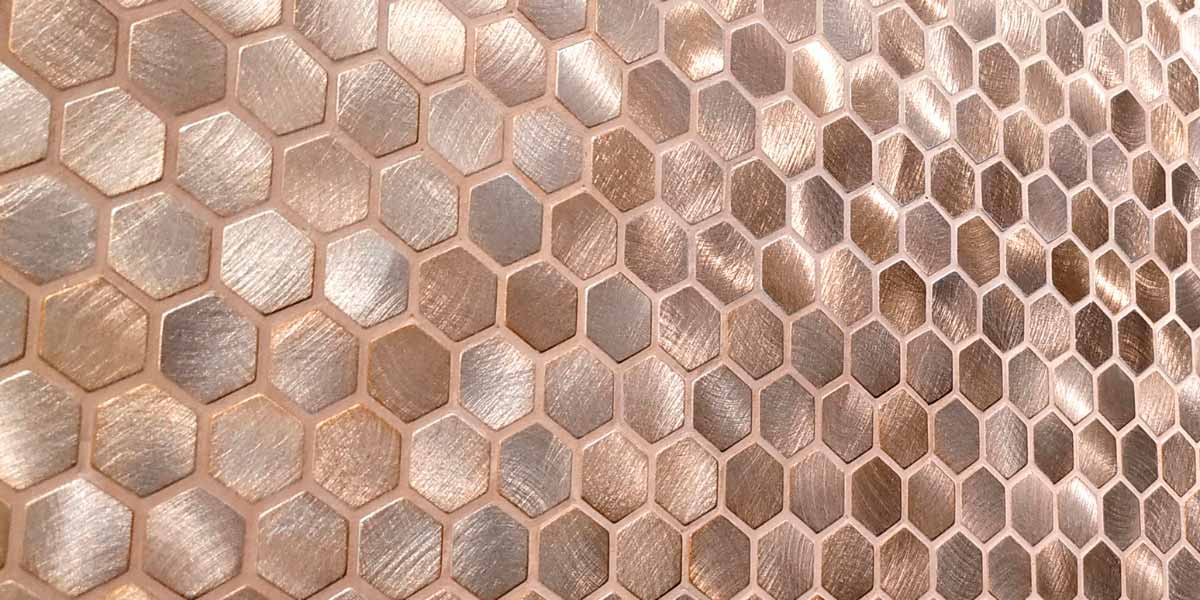
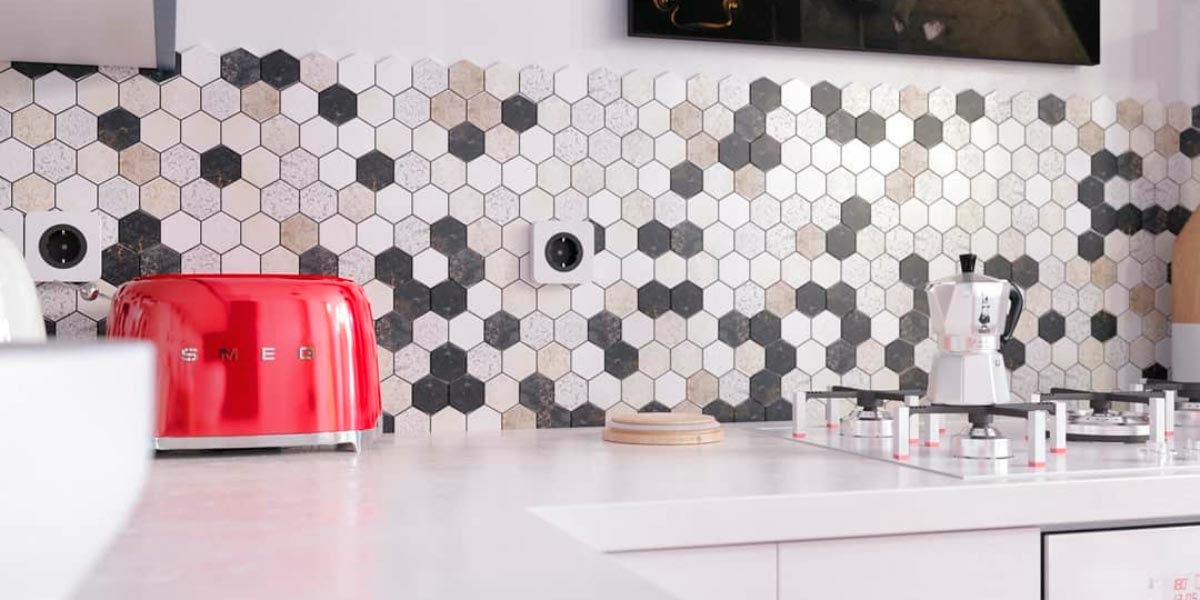
Hexagonal mosaics continue to be a key trend in contemporary design. Their geometry brings order and modernity, while at the same time offering multiple creative possibilities.
Depending on the combination of colors and sizes, it is possible to achieve anything from more understated and uniform surfaces to more striking and decorative compositions. They are a widely used option in modern kitchens that seek a balance between design and functionality.
Scales
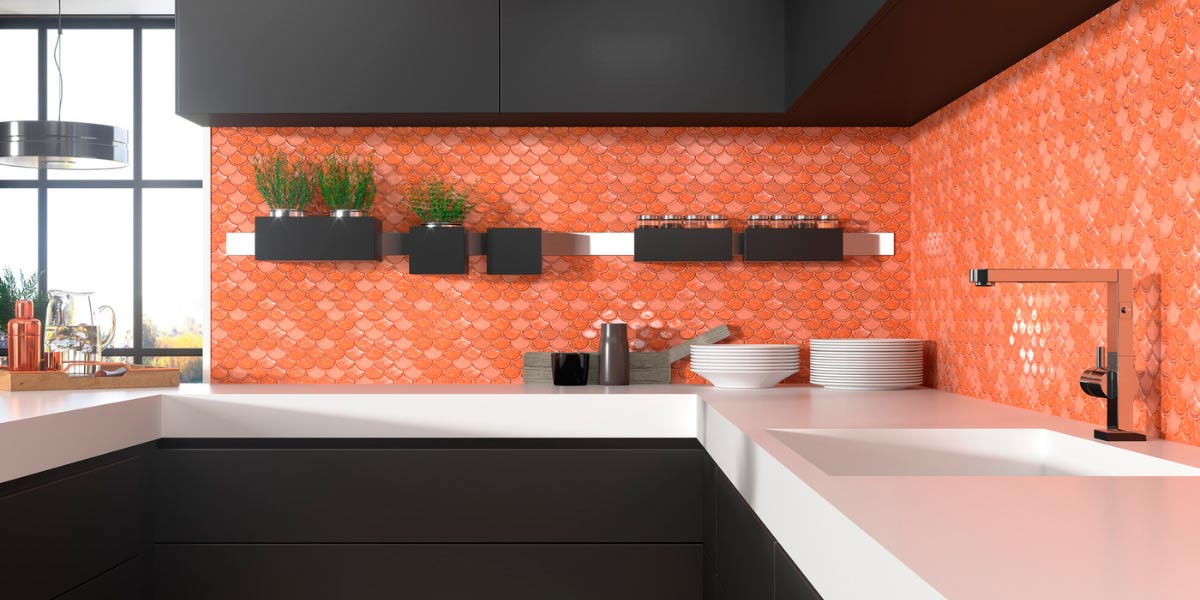
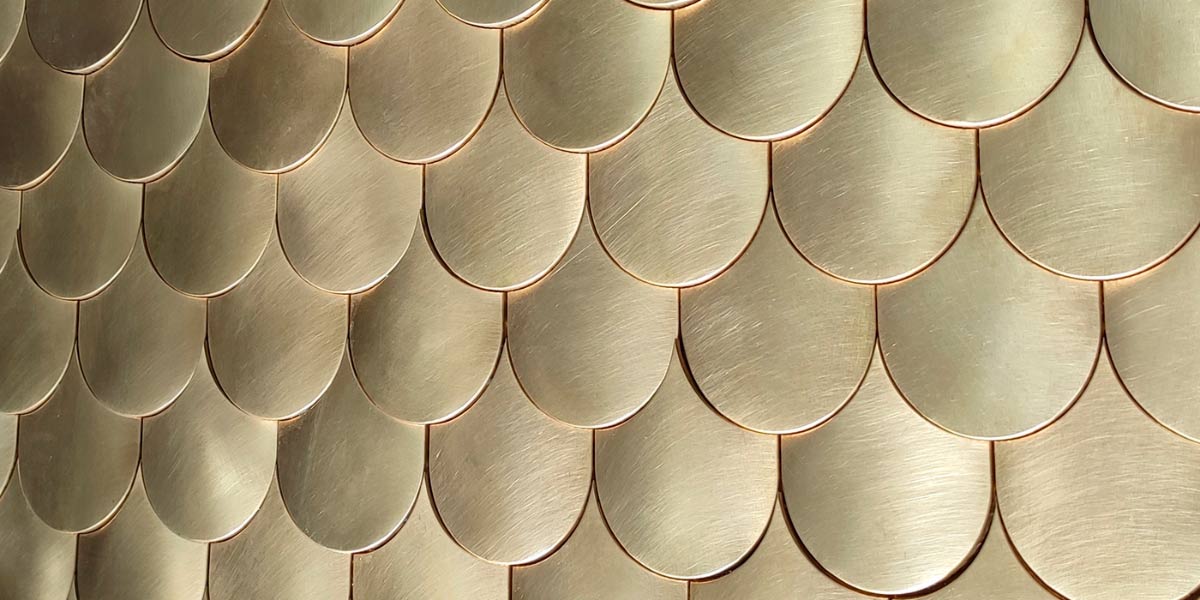
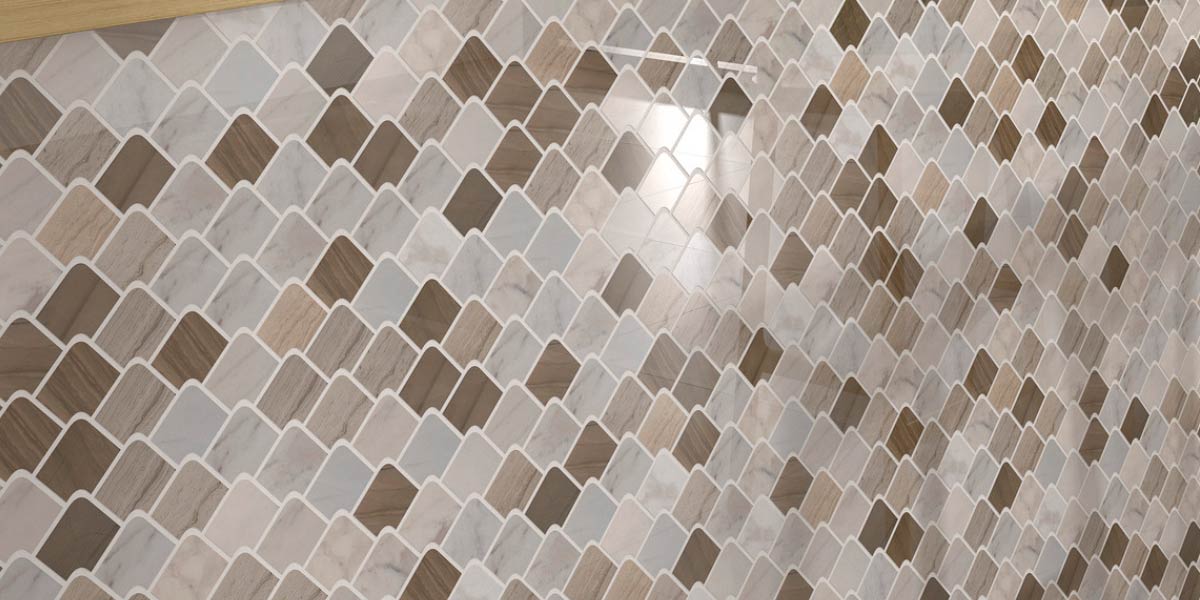
Inspired by organic shapes, scale-shaped mosaics bring a more fluid and natural aesthetic. Their curved lines soften the space and create an enveloping visual effect, ideal for kitchens that aim to convey calm and elegance.
They are usually used in soft tones or glossy finishes, enhancing light and creating surfaces with high decorative value, especially in areas such as the backsplash.
Irregular mosaics
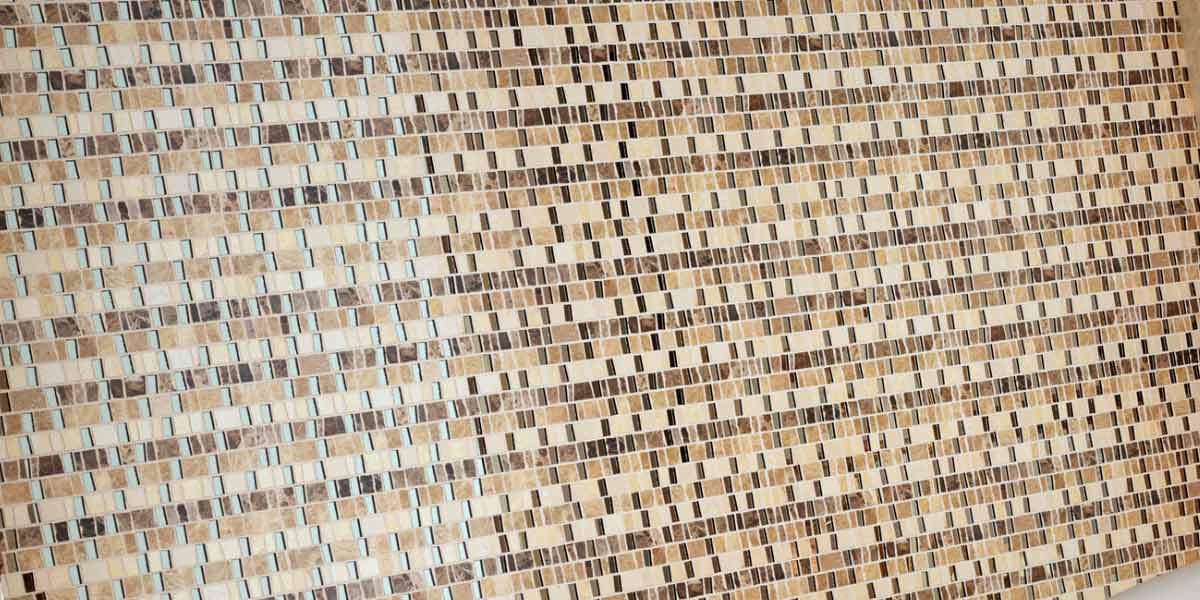
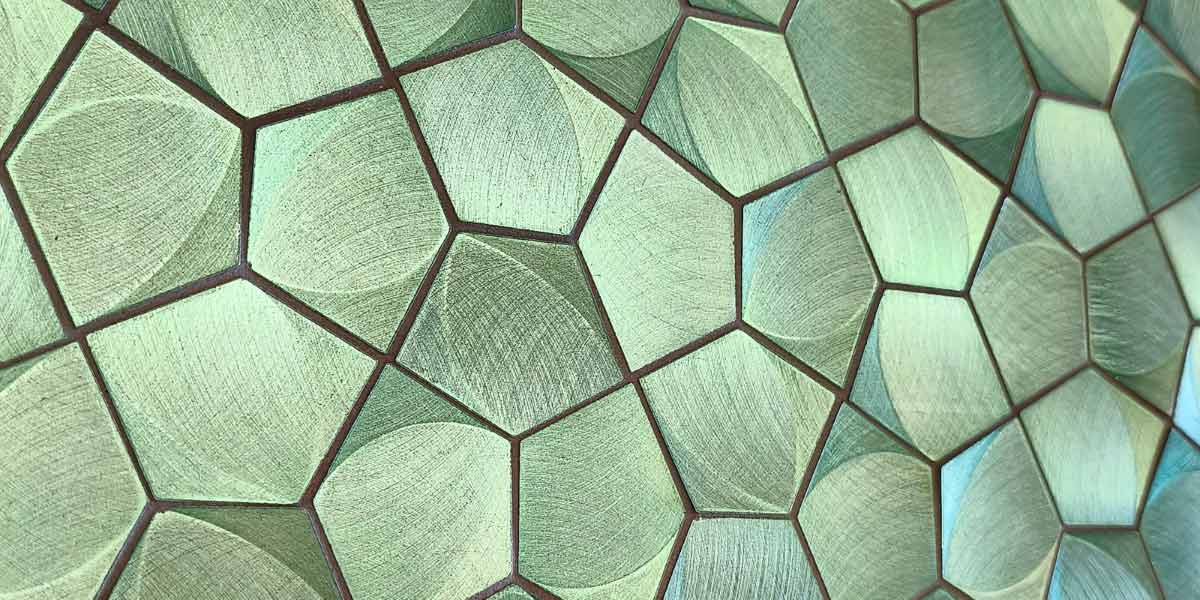
Another growing trend is the use of irregular or handcrafted-inspired designs. In contrast to geometric perfection, these mosaics introduce slight variations in shape or finish that add authenticity and character.
This type of proposal fits especially well in kitchens seeking a more personal style, where every detail contributes to creating a unique and less standardized environment.
Natural colors
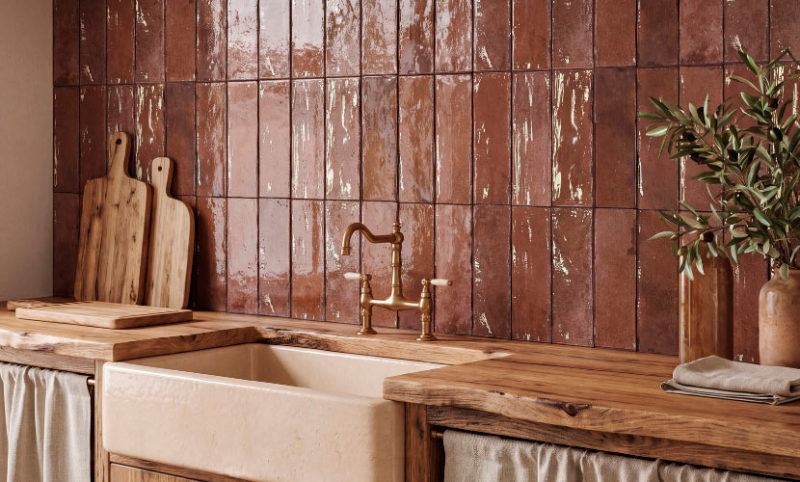
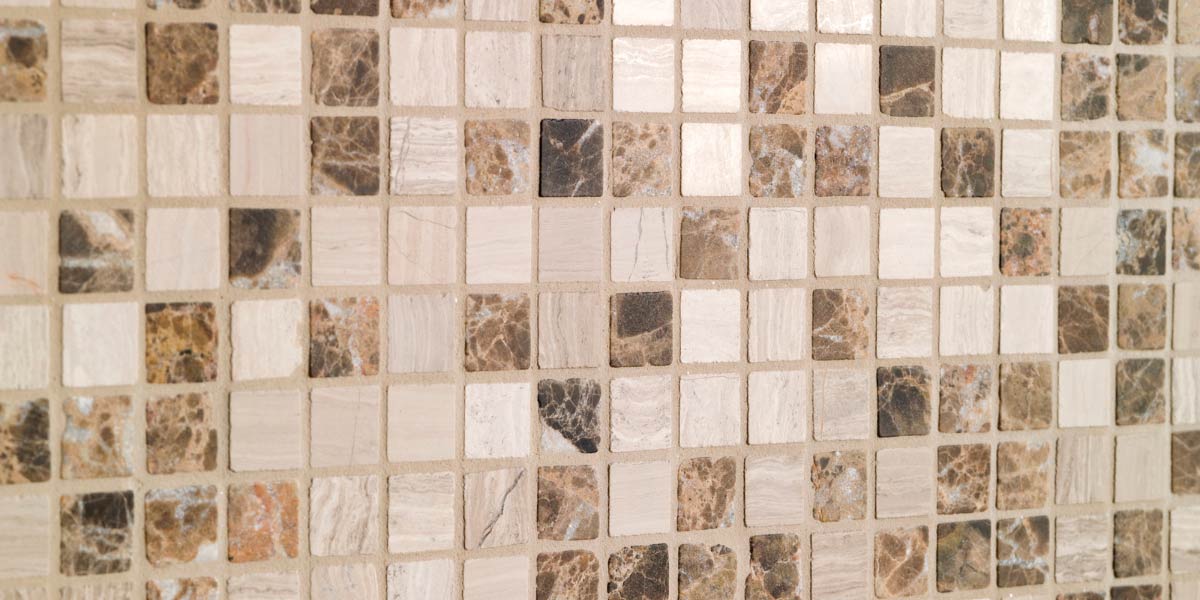
In terms of color palette, natural tones continue to gain prominence. Greens, beige, sand, terracotta, or even stone shades help create warmer and more welcoming spaces.
These colors are not only aligned with current interior design trends, but also make it easier to combine with other materials such as wood, metal, or stone, achieving a balanced and timeless aesthetic.
Mix of textures
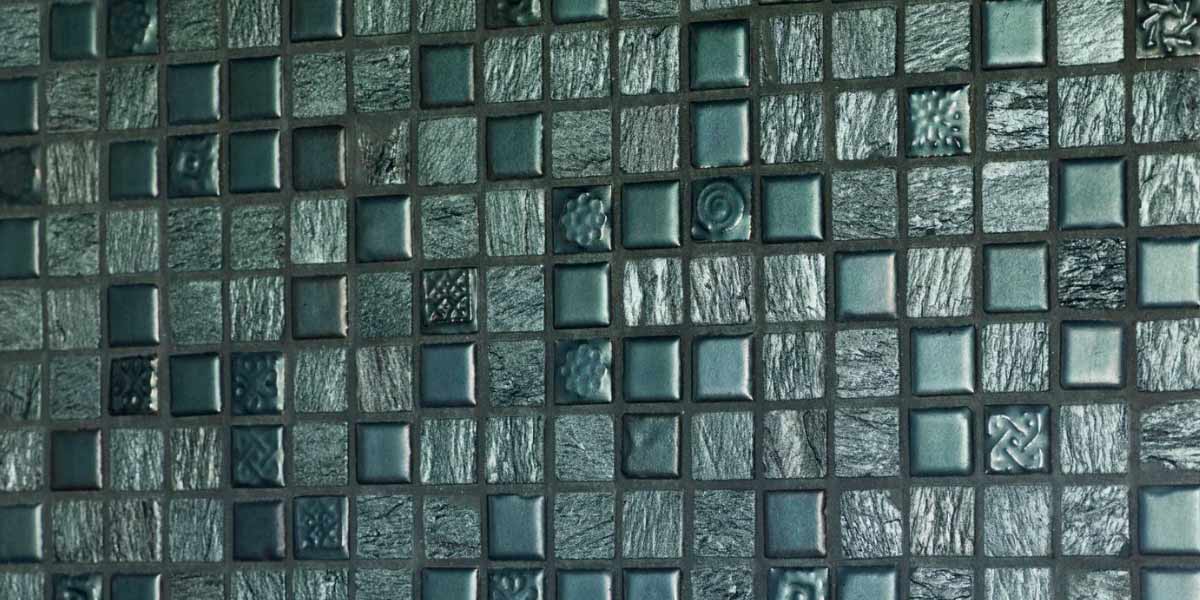
The combination of finishes is another key aspect in current kitchen mosaic design. Mixing matte and glossy surfaces, reliefs, or three-dimensional effects allows depth and visual richness to be added without resorting to intense colors.
This type of solution brings dynamism and makes surfaces come alive with natural or artificial light. In this sense, at Dune it is possible to find proposals that integrate different textures and finishes, adapting to the latest trends in kitchen design.
Overall, kitchen mosaic trends reflect a clear evolution towards more personalized and sensory spaces, where design not only responds to an aesthetic matter, but also to the way we live and use the kitchen in our daily lives.
How to choose the ideal mosaic for your kitchen
Choosing the ideal mosaic for your kitchen does not depend solely on design, but on a combination of functional and aesthetic factors. The goal is to find a solution that not only fits the style of the space, but also meets the needs of everyday use.
Below, we show you the key aspects you should consider when selecting kitchen mosaics:
According to the size of the kitchen
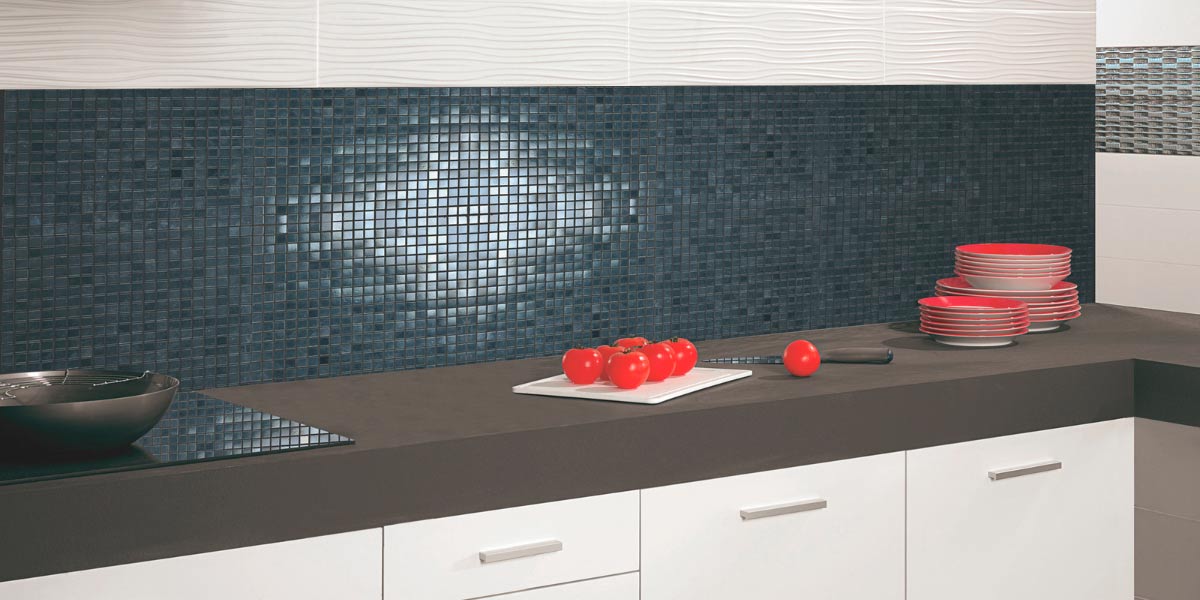
The size of the space directly influences the visual perception of the mosaic. In small kitchens, it is advisable to opt for mosaics in light tones or glossy finishes, as they help reflect light and create a greater sense of spaciousness.
In larger kitchens, there is more freedom to use more intense colors, more defined formats, or even bolder compositions, without the risk of overwhelming the space.
According to the decorative style
The mosaic should integrate coherently with the overall style of the kitchen. Some common recommendations are:
- Modern kitchens → geometric, hexagonal, or metallic mosaics
- Rustic or natural kitchens → stone finishes or earthy tones
- Minimalist kitchens → simple designs in neutral colors
Choosing the right style allows you to create a balanced and visually harmonious space.
According to the application area
Not all mosaics perform the same on every surface, so it is important to consider where they will be installed, as each area has specific requirements that must be taken into account to ensure durability and functionality:
- Backsplash: requires materials that are easy to clean and resistant to stains
- Walls: greater freedom in design and finish
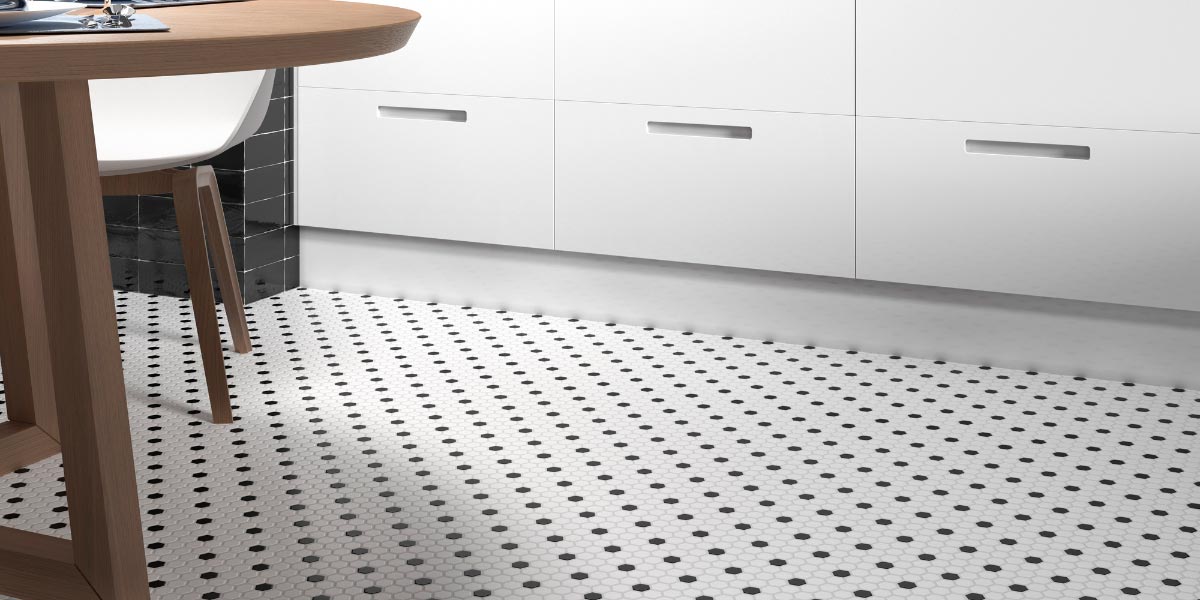
- Porcelain mosaic floors: it is essential that they are porcelain and, preferably, with anti-slip properties.
Common mistakes to avoid
When choosing kitchen mosaics, it is also important to avoid some common mistakes:
- Prioritizing aesthetics only without considering functionality
- Choosing materials that are not suitable for humid areas
- Overloading the space with overly intense designs
- Not considering the kitchen lighting
In short, choosing the right mosaic involves finding a balance between design, use, and maintenance. With proper planning, kitchen mosaics can become a key element in defining the character of the space and improving its functionality on a daily basis.
Design ideas with kitchen mosaics
Kitchen mosaics not only stand out for their technical performance, but also for their enormous decorative potential. Thanks to the variety of formats, materials, and finishes available, they can be integrated in multiple ways to transform the space and adapt it to different styles.
Below, we show you some design ideas with kitchen mosaics that can serve as inspiration:
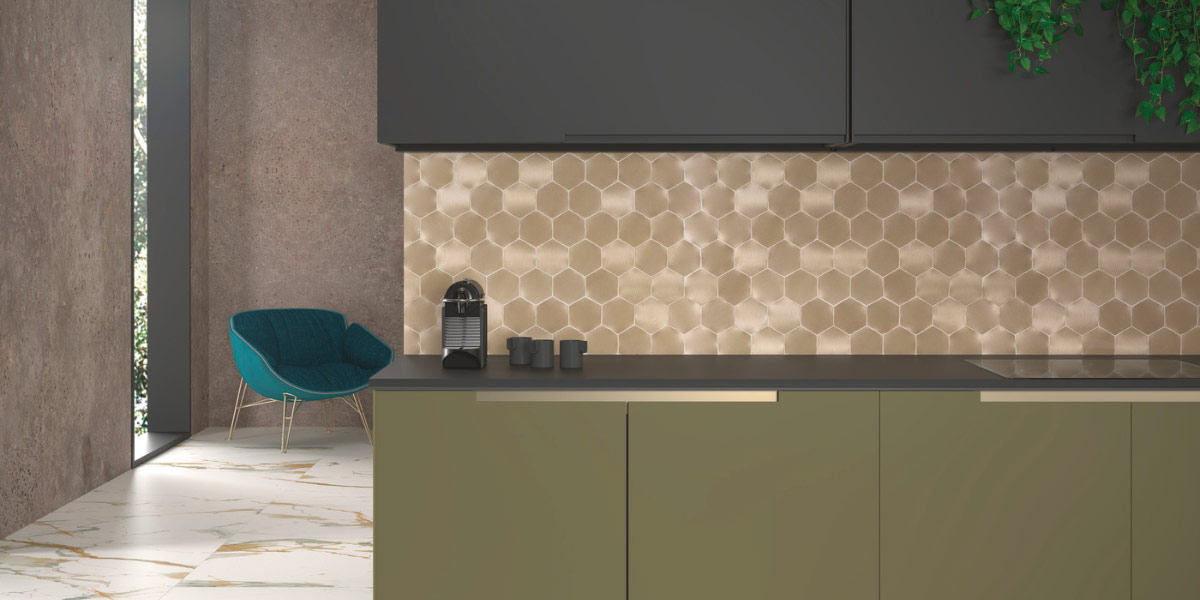
Decorative backsplashes
The backsplash is, without a doubt, one of the most common applications of mosaics in the kitchen. It is a functional area that, at the same time, offers a great opportunity to introduce design.
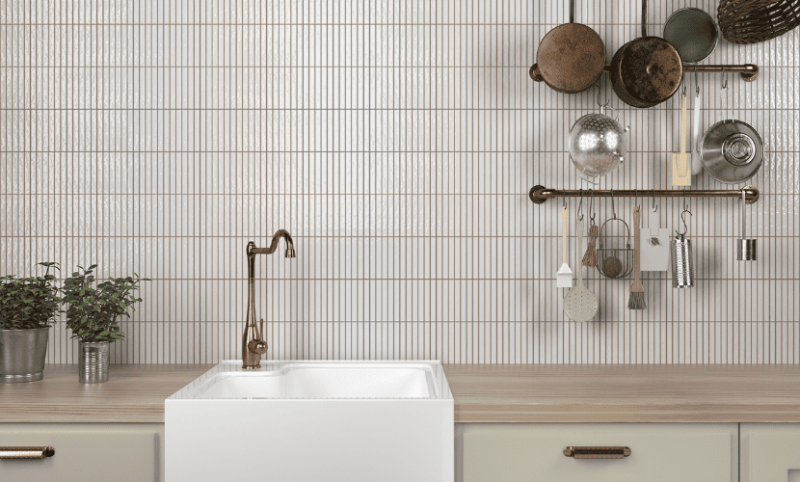
Using mosaic tiles for kitchens on the backsplash allows you to create an attractive focal point, whether through geometric patterns, contrasting colors, or textured finishes. In addition, their easy cleaning makes them a practical solution for everyday use.
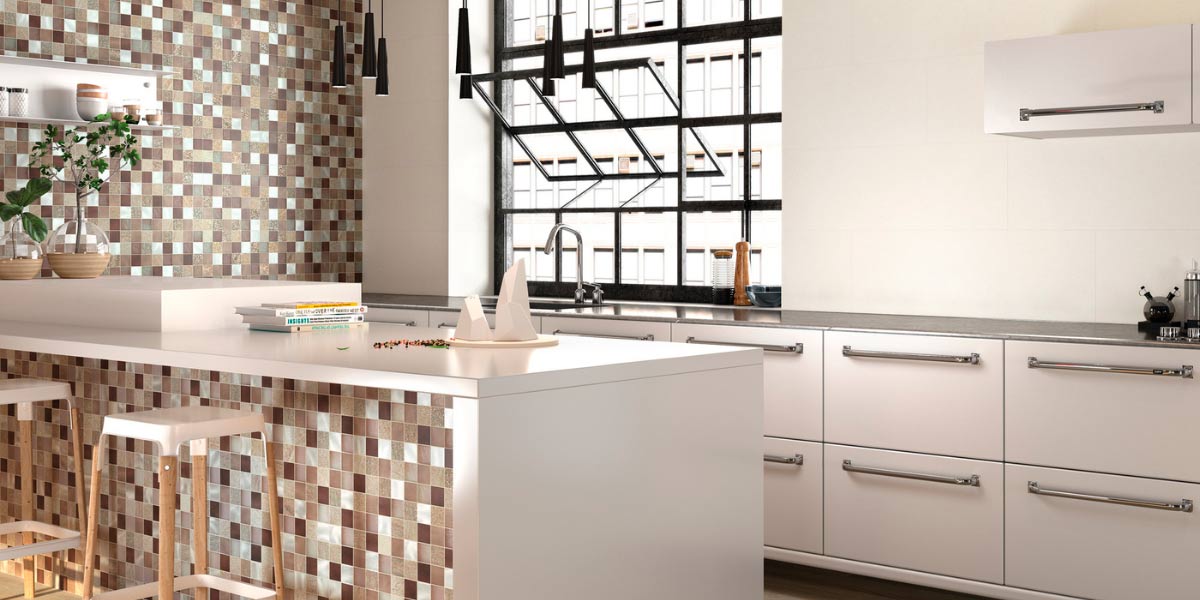
Kitchen islands
Islands have become a central element in many kitchens, and covering them with mosaic is an effective way to give them prominence. This resource allows the island to be visually differentiated from the rest of the furniture and adds a distinctive touch to the overall design.
Depending on the chosen design, you can opt for more subtle solutions or more striking compositions that reinforce the character of the space.
Full walls
Another increasingly present trend is the use of mosaics on entire walls. This option provides visual continuity and allows the creation of more immersive environments, especially when neutral or natural tones are used.
In kitchens open to the living room, this resource helps integrate both spaces coherently, creating a smoother visual transition.
Decorative details
It is not always necessary to cover large surfaces to achieve visual impact. Mosaics can also be used in small areas or specific details, such as niches, columns, or particular sections of the wall.
This approach allows texture and design to be introduced without overloading the space, making it an especially interesting option in smaller or minimalist-style kitchens.
Kitchen mosaics have evolved from being a purely functional resource to becoming a key element in contemporary design. Their ability to combine durability, ease of maintenance, and aesthetic value positions them as one of the most complete options when designing or renovating this space.
Throughout the article, we have seen how kitchen mosaic trends are evolving towards more personalized proposals, where materials, shapes, and colors are combined to create unique environments. From more subtle options to more prominent designs, mosaics can adapt to any style and need.
Choosing the right mosaic tiles for kitchens involves considering both the use of the space and the visual effect you want to achieve. When these factors are properly balanced, the result is a functional, durable kitchen with its own identity.
In short, mosaics not only provide design, but also help create more refined, modern spaces designed for everyday life. A well-considered choice that can completely transform the perception of the kitchen.