
Handmade tiles for the home: styles, uses, and trends
Handcrafted-effect tiles have become one of the most prominent trends in contemporary interior design. Their ability to combine the aesthetics of traditional ceramics with modern technical performance makes them a versatile solution for all types of spaces in the home.
More and more projects are turning to handcrafted-effect tiles to add warmth, texture, and personality, recreating the charm of handmade ceramics without sacrificing the durability and ease of maintenance of porcelain. From kitchens to bathrooms, including living rooms and transitional spaces, artisan-style tiles make it possible to create unique environments, balancing rustic and modern elements.
In this guide, we explore everything you need to know about handcrafted-effect ceramics: their main characteristics, the advantages of handcrafted-effect tiles, the most current styles, and where to use them in the home. We also examine how modern traditional tiles adapt to new interior design trends, offering aesthetic and functional solutions for residential projects.
What are handcrafted-effect tiles?
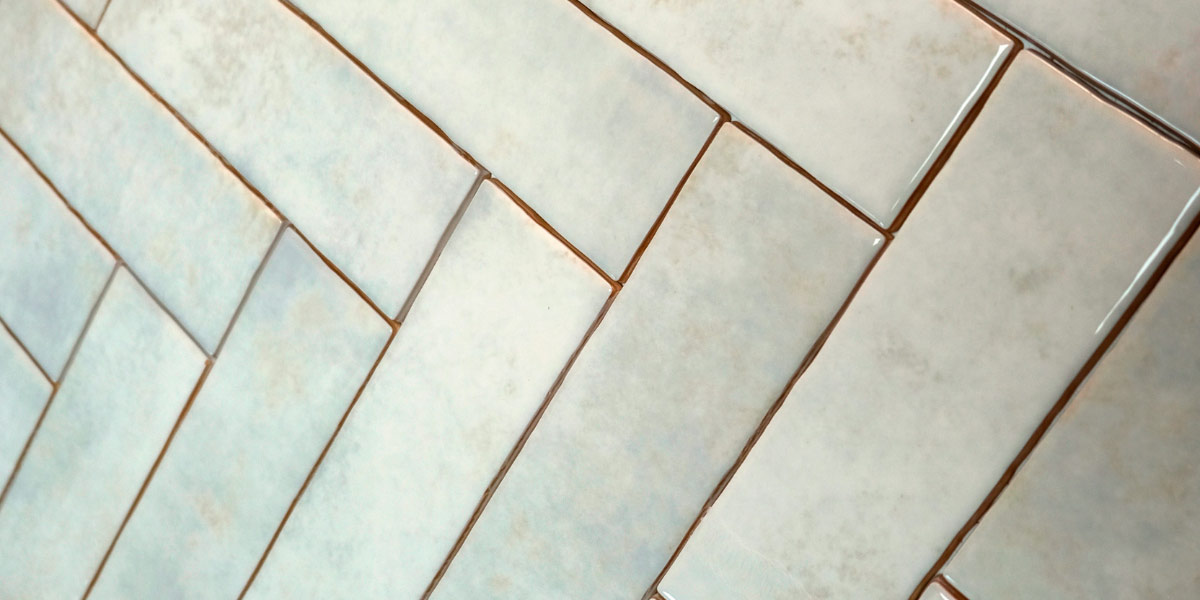
Handcrafted-effect tiles are ceramic pieces designed to reproduce the aesthetics, texture, and variations typical of handmade ceramics. They are characterized by slight visual irregularities, color nuances, and non-uniform finishes that evoke the traditional manufacturing process.
Unlike conventional tiles, tiles with a handcrafted look aim to convey authenticity and character, bringing a warmer and more natural feel to spaces. This type of ceramic allows the essence of traditional materials to be reintroduced while adapting them to the needs of contemporary design.
How is the handcrafted effect achieved in ceramics?
The handcrafted effect in tiles is achieved through a combination of advanced design, production technology, and specific finishes:
- Carefully developed graphic design. Patterns are created with intentional variations in color, gloss, and texture, imitating the imperfections of handmade ceramics. This results in unique surfaces where each piece shows slight differences.
- Digital printing technology. Thanks to advanced printing techniques, it is possible to reproduce with great realism the nuances, gradients, and details characteristic of artisan-style tiles.
- Finishes. Glazes play a key role in handcrafted-effect ceramics, creating effects such as irregular shine, visual depth, or slight undulations that reinforce the sense of a handmade piece.
- Formats and edges. In many cases, modern handcrafted-effect tiles incorporate softly irregular edges or traditional formats that enhance their authentic aesthetic.
The result is a solution that combines the best of both worlds: the beauty of modern traditional tiles and the technical performance of contemporary ceramics.
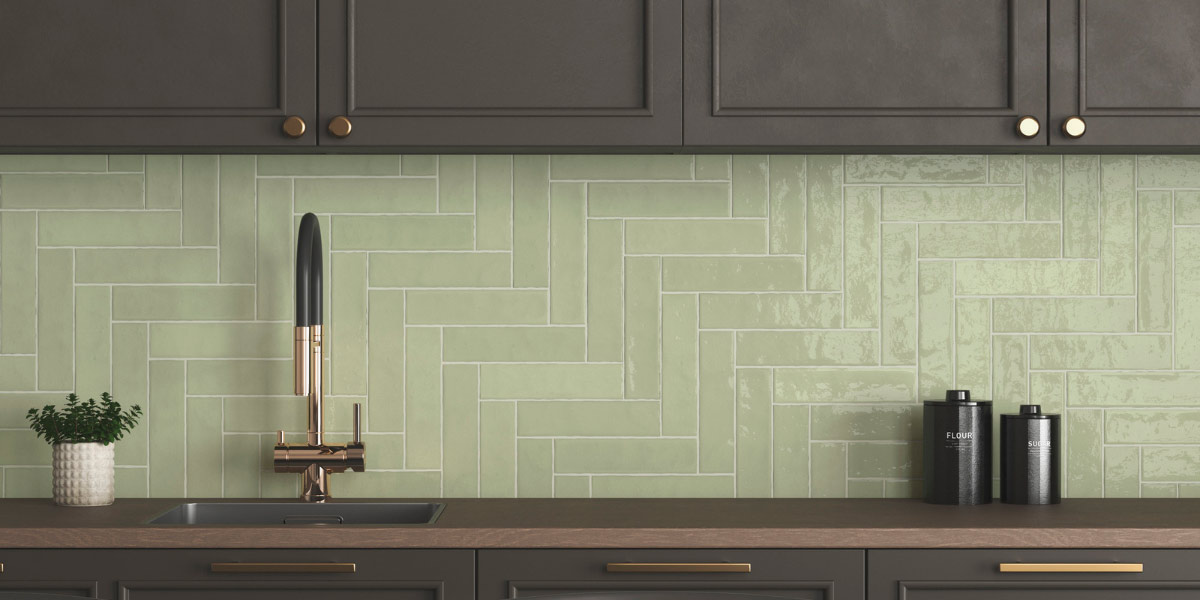
Characteristics of handcrafted-effect tiles
Handcrafted-effect tiles stand out for a series of aesthetic and technical qualities that differentiate them from other ceramic coverings. Their main value lies in their ability to reproduce the imperfect beauty of traditional ceramics, adapted to current standards of design and innovation.
Variation of tones and nuances
One of the most recognizable characteristics of handcrafted-effect tiles is the chromatic variation between pieces. Through subtle changes in tones, shades, and gradients, a dynamic finish is achieved that simulates manual production, where each tile is slightly different.
This visual diversity allows for richer and more natural surfaces, moving away from industrial uniformity. Tiles with a handcrafted look thus provide depth and authenticity, making them an ideal option for projects seeking personality and character.
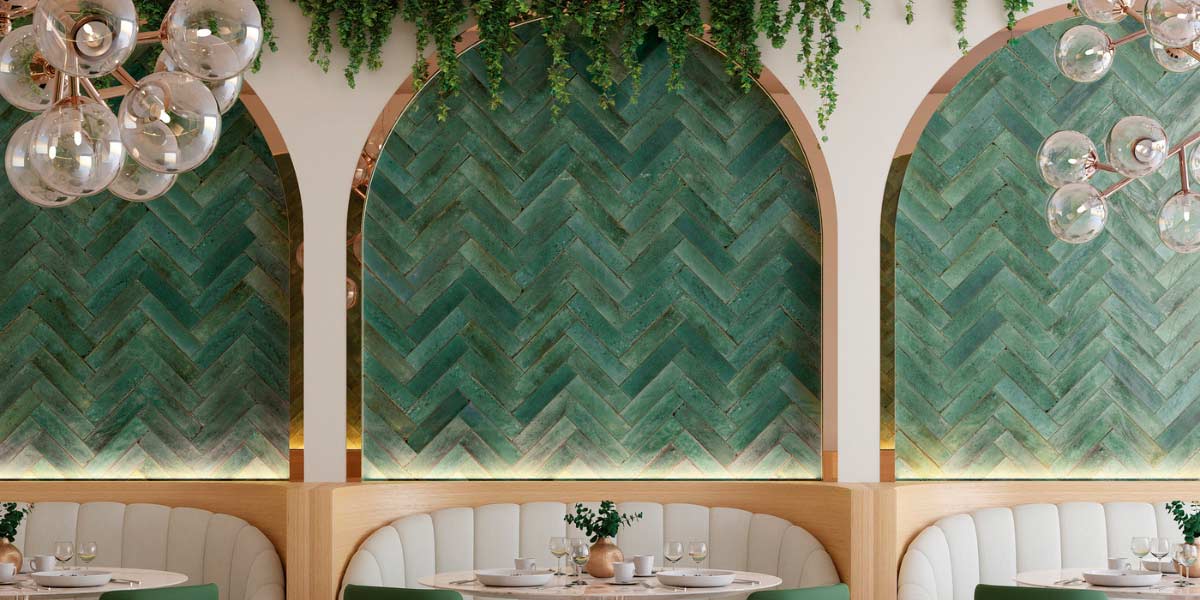
Irregular finishes and textures: gloss, reliefs, and softened edges
Texture is another key element in handcrafted-effect ceramics. Finishes may include slight reliefs, undulations, or glaze effects that create plays of light across the surface. Variations in gloss are also common, ranging from more satin areas to points of higher intensity.
In addition, some artisan-style tiles feature softened or slightly irregular edges, reinforcing the feeling of a handmade piece. These types of details help create warmer and more immersive spaces, especially in wall coverings.
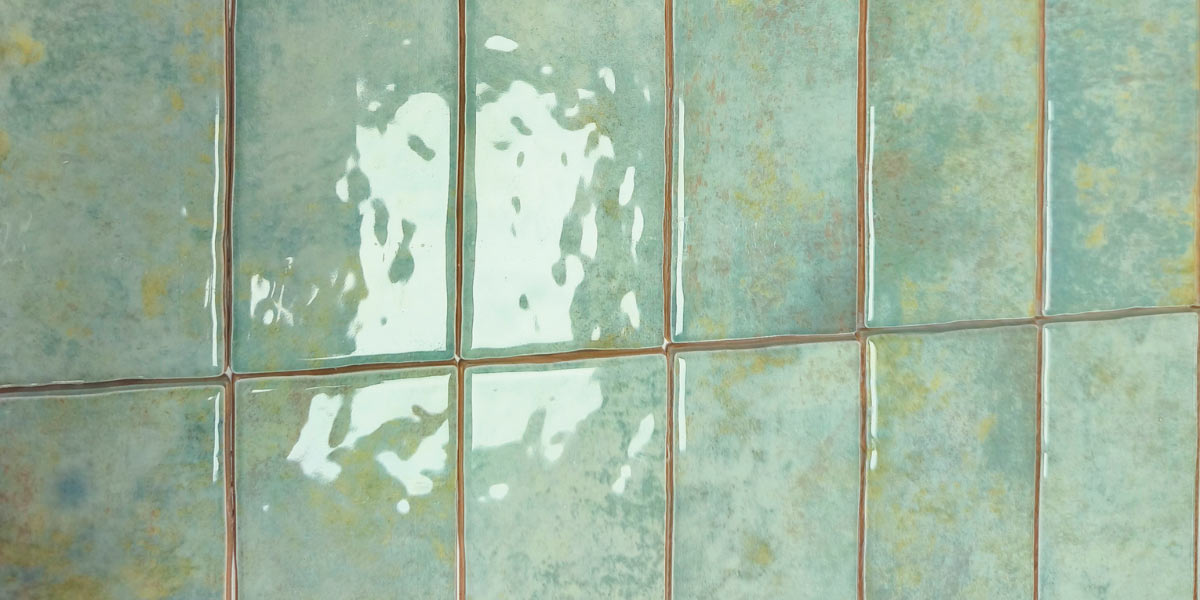
Designs inspired by tradition: geometric, hydraulic, Mediterranean
Modern handcrafted-effect tiles take inspiration from classic styles of traditional ceramics, reinterpreting them in a contemporary way. Among the most common are:
- Geometric designs, which provide rhythm and visual structure.
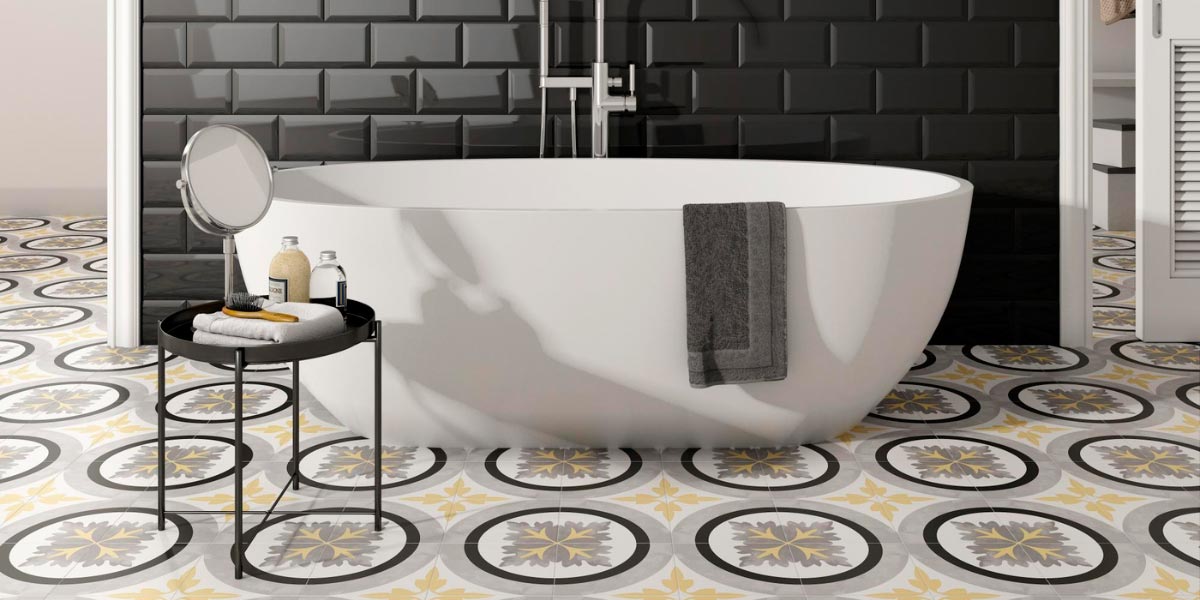
- Hydraulic patterns, inspired by traditional decorative floors.
- Mediterranean style, with natural colors and organic motifs.
This fusion of tradition and modernity makes modern traditional tiles a versatile solution, capable of adapting to both classic spaces and contemporary interiors.
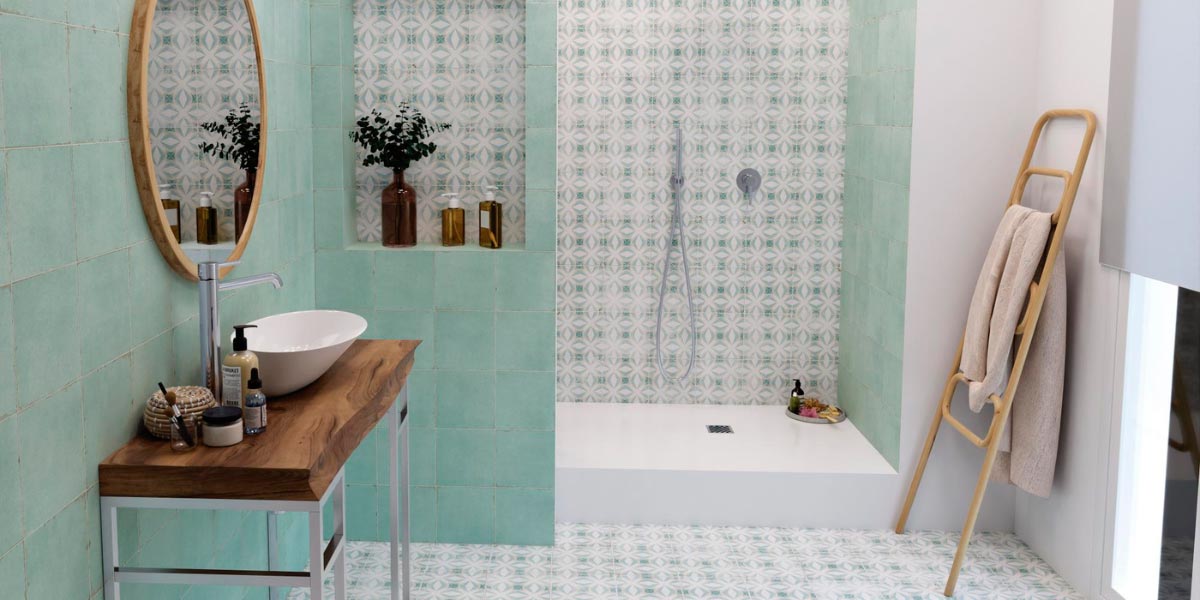
Where to use handcrafted-effect tiles
Handcrafted-effect tiles stand out for their versatility, allowing them to be incorporated into different areas of the home. Their ability to bring texture, warmth, and personality makes them an ideal option for both functional and decorative spaces.
Kitchens: backsplashes or main walls
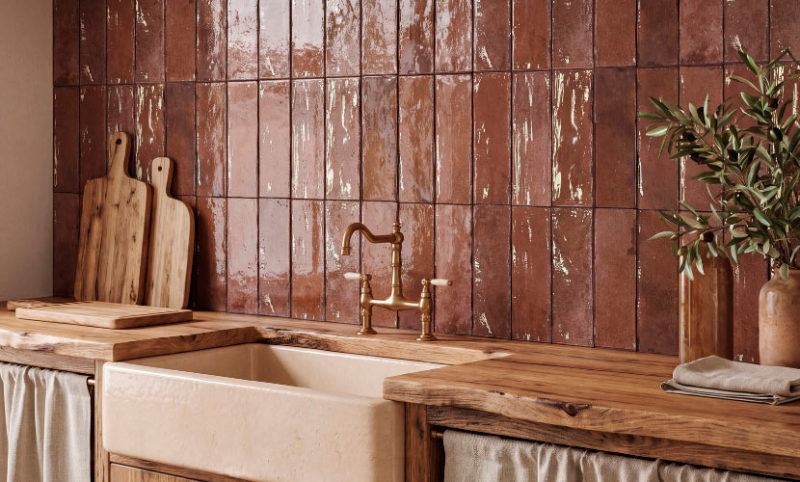
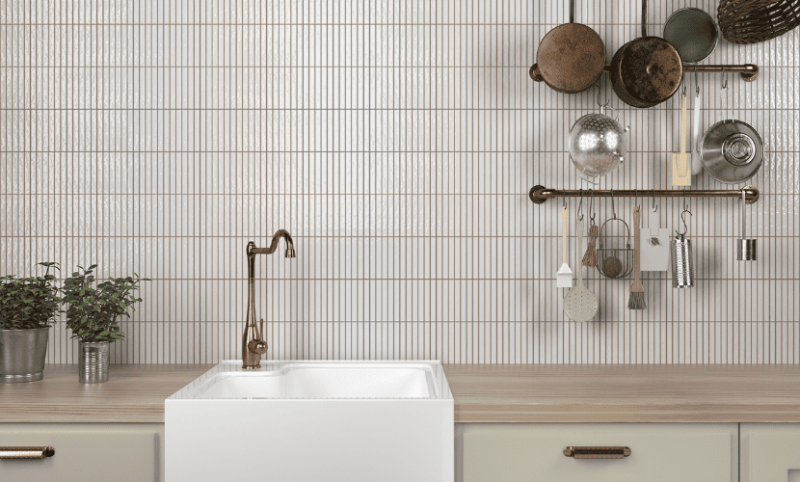
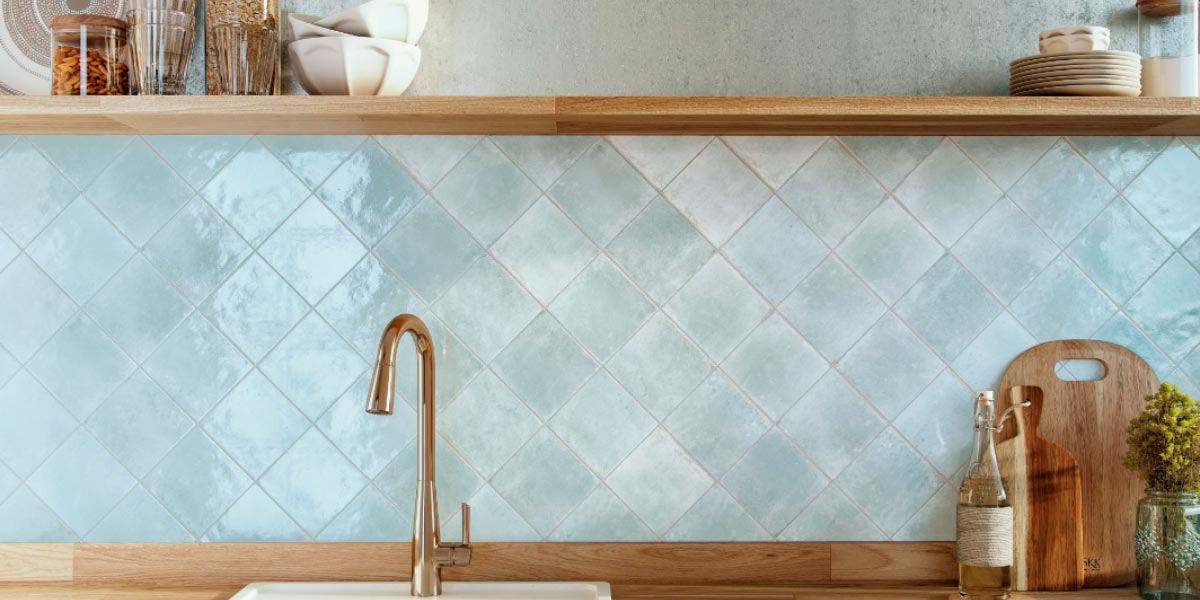
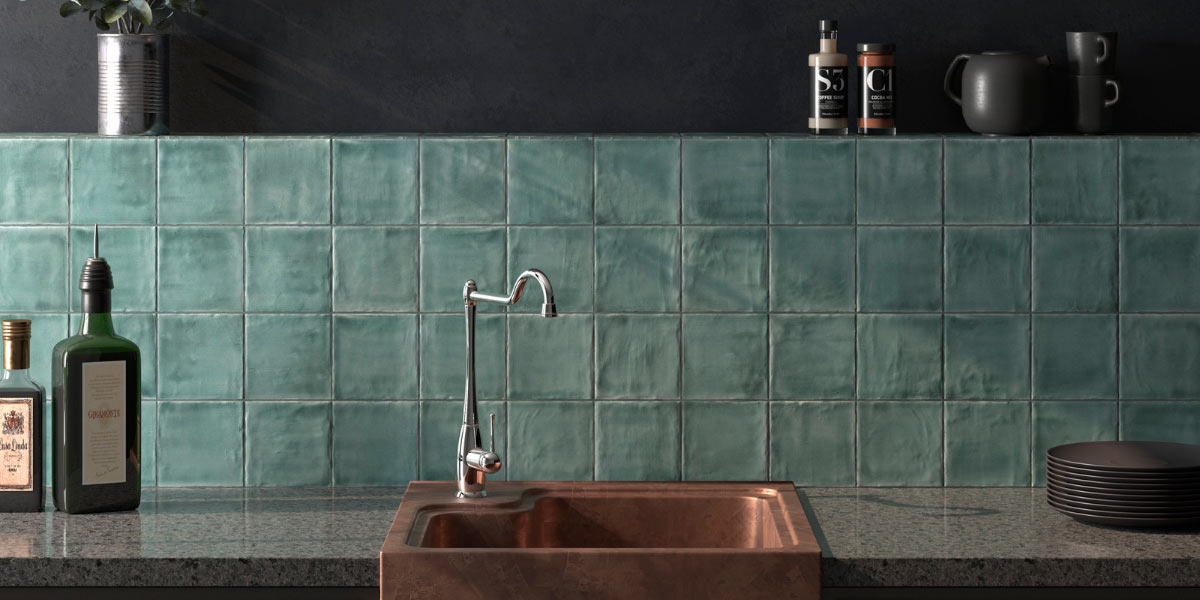
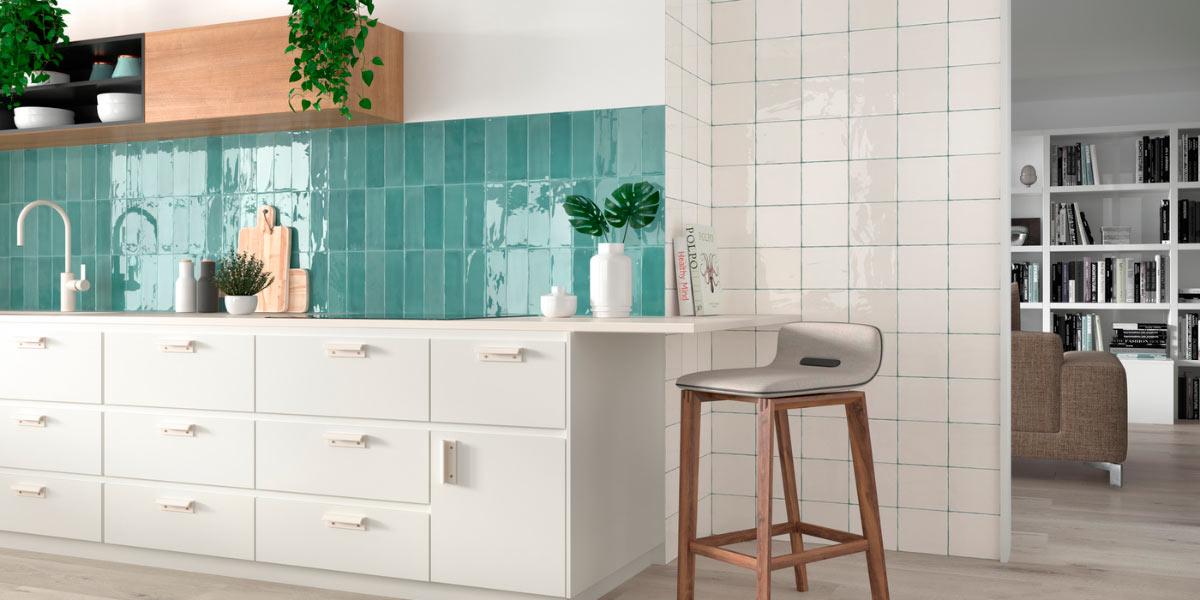
In kitchens, tiles with a handcrafted finish are a widely used option for backsplash areas. Their variety of tones and finishes makes it possible to create dynamic surfaces that add character without overwhelming the space. They can also be used on full walls, combining traditional aesthetics with functionality.
Bathrooms: wet areas and showers
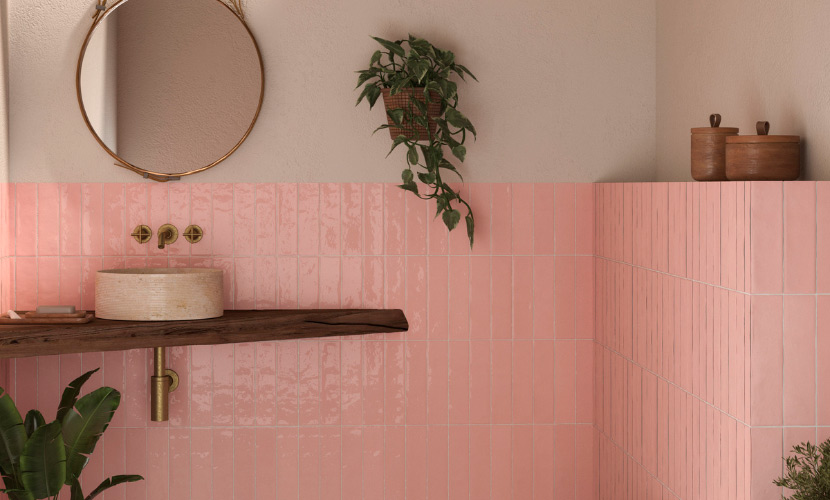
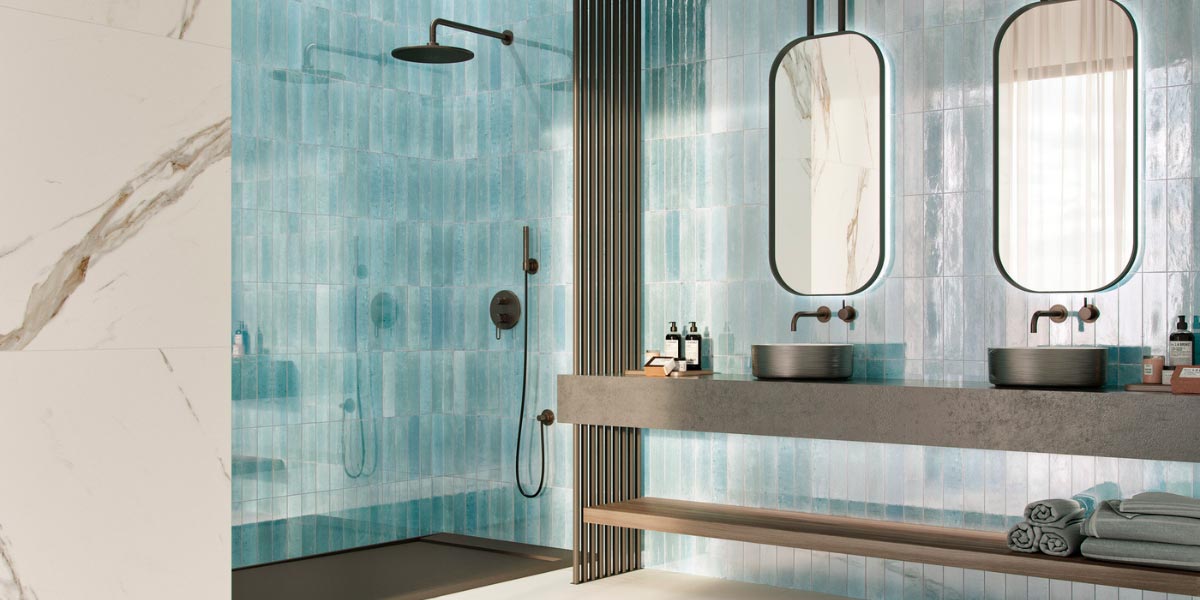
Handcrafted-effect tiles for bathrooms are one of the most popular applications. They work especially well in showers, main walls, or washbasin areas, where their texture and shine create interesting plays of light.
In addition to their aesthetic value, handcrafted-effect ceramics offer water resistance and durability, key features in wet areas.
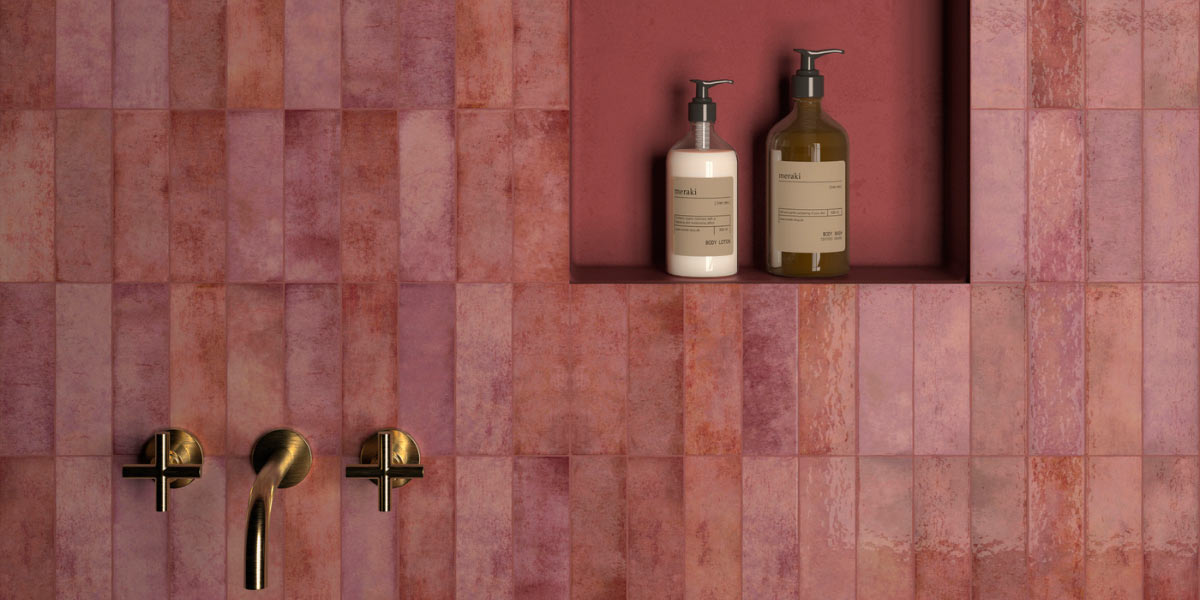
Handcrafted ceramics on decorative walls
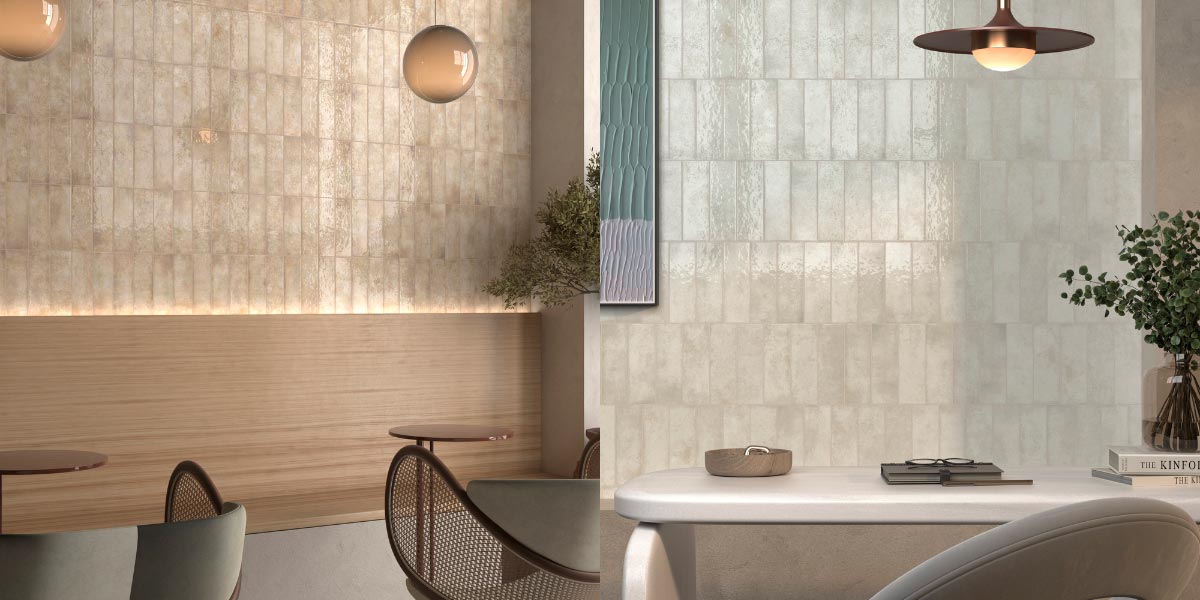
Handcrafted ceramics are ideal for creating feature walls, whether in living rooms, bedrooms, or transitional areas, allowing you to add a focal point with personality, bringing visual depth and a more refined finish.
This type of application is key in current interior design trends, where tiles are used to separate spaces.
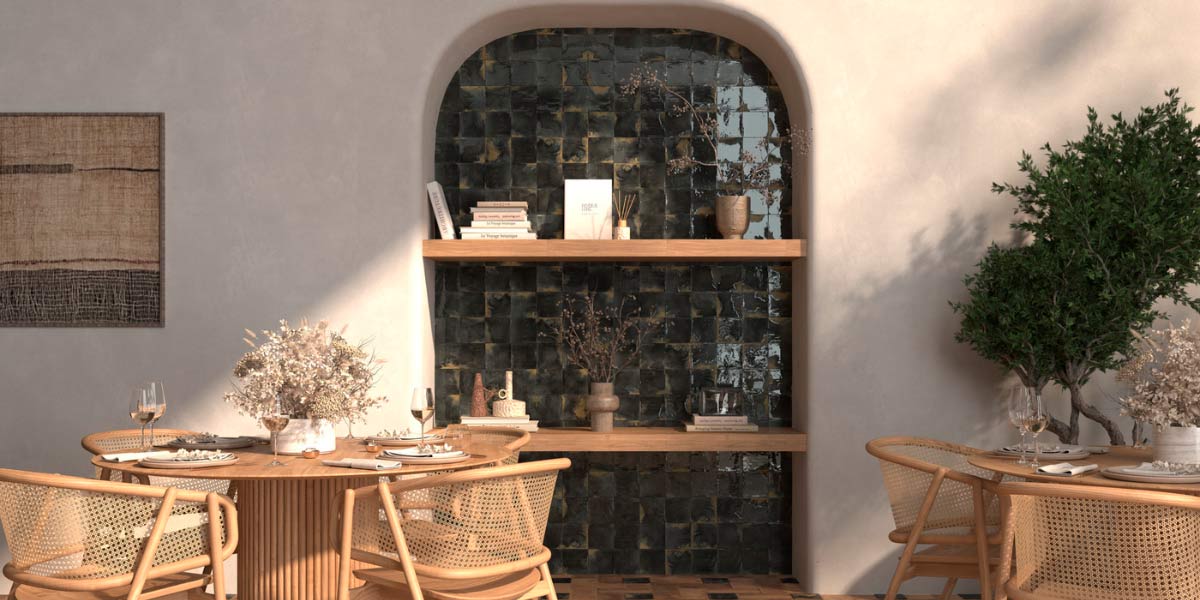
Handcrafted-effect tiles for indoor floors
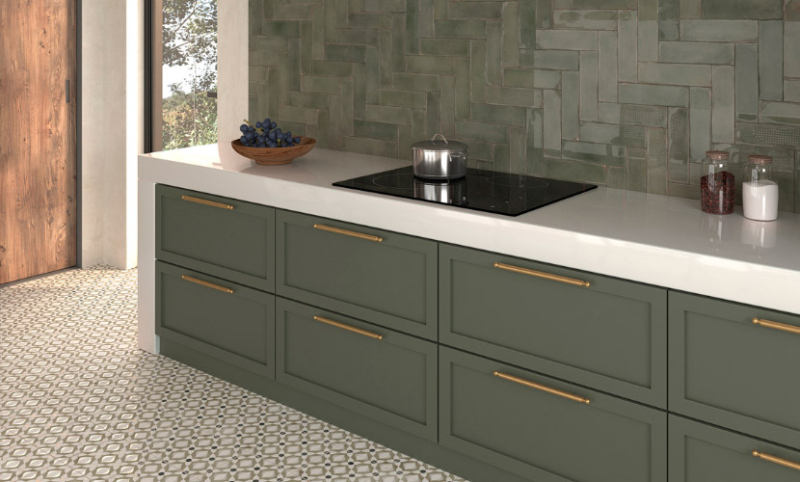
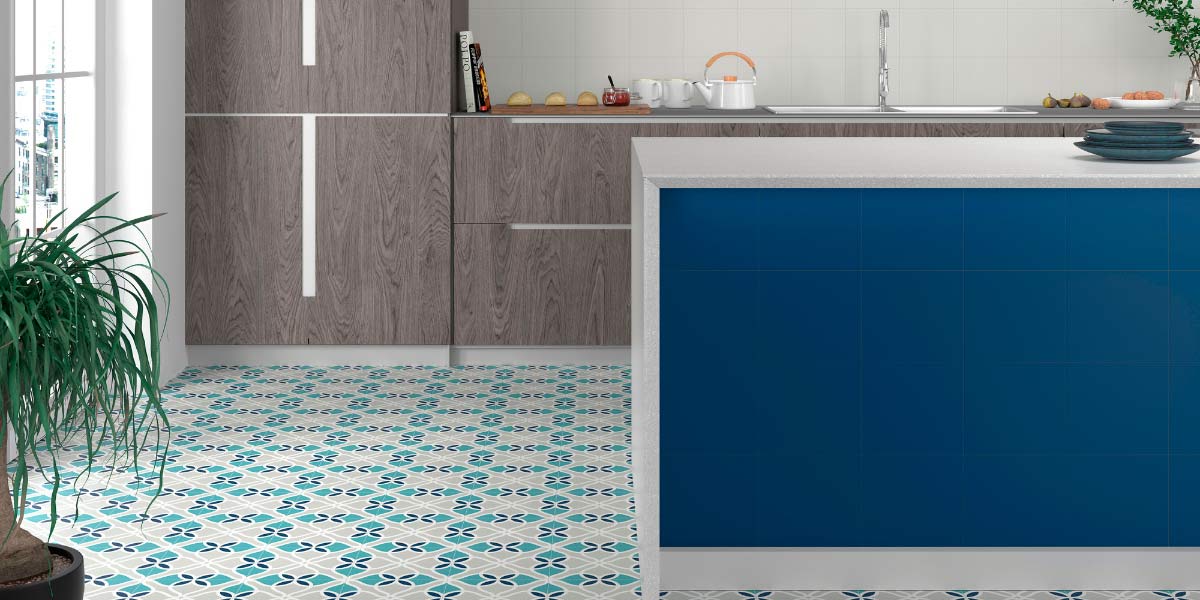
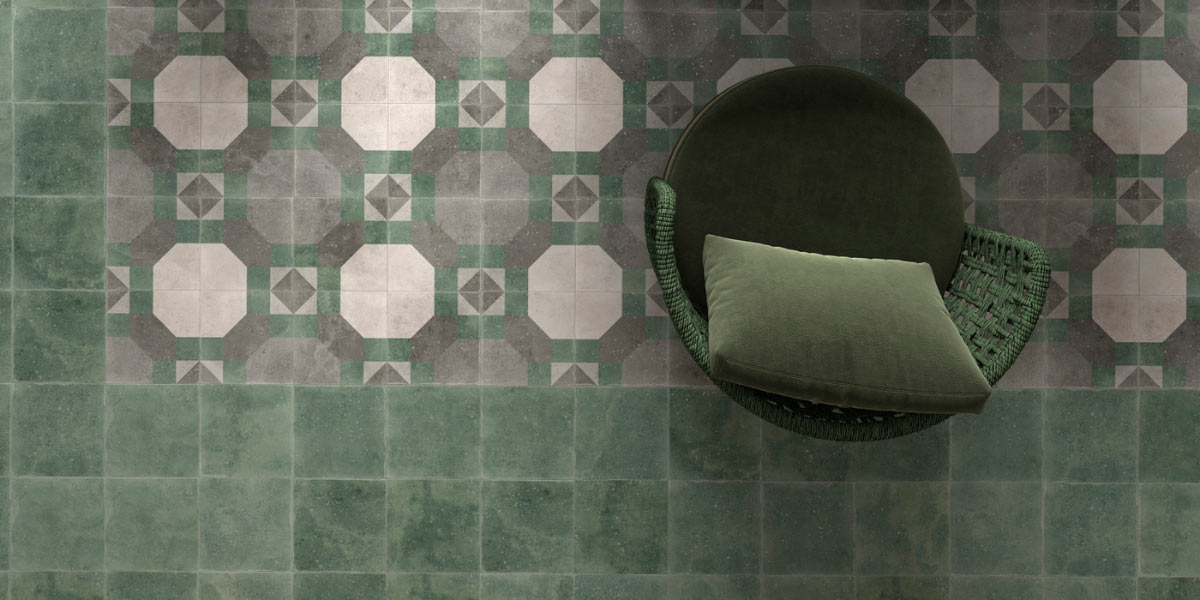
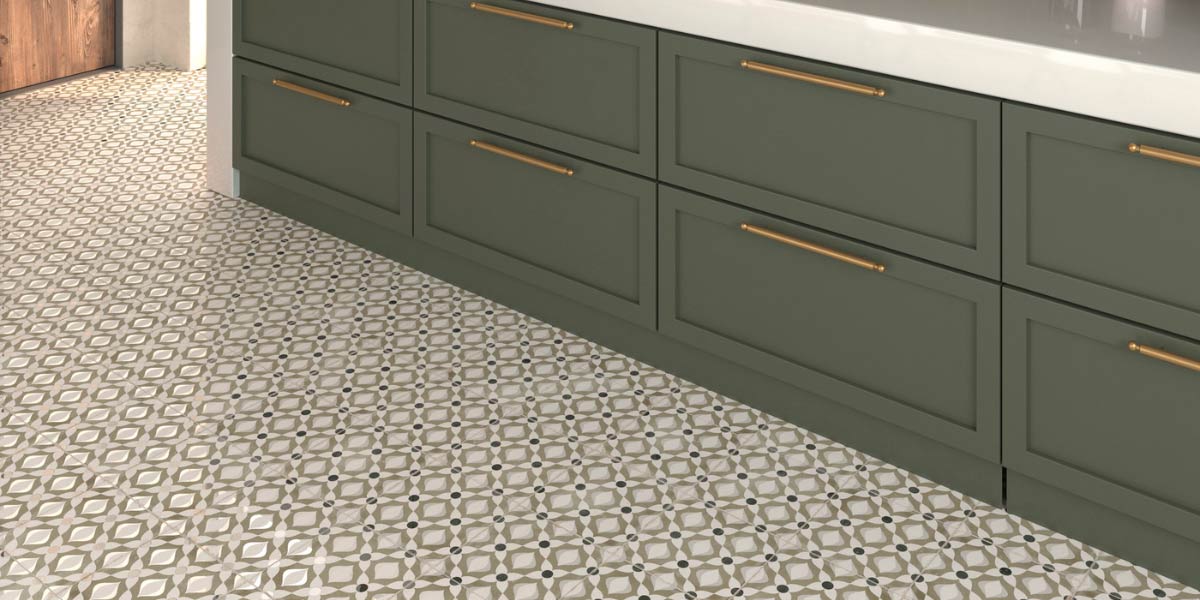
Some modern handcrafted-effect tile models, especially those inspired by hydraulic designs, are perfect for indoor floors. They are used in kitchens, bathrooms, or entryways to add dynamism and a distinctive decorative touch.
Modern traditional tiles combine aesthetics and durability here, offering a long-lasting alternative to other materials.
Outdoor spaces with handcrafted tiles
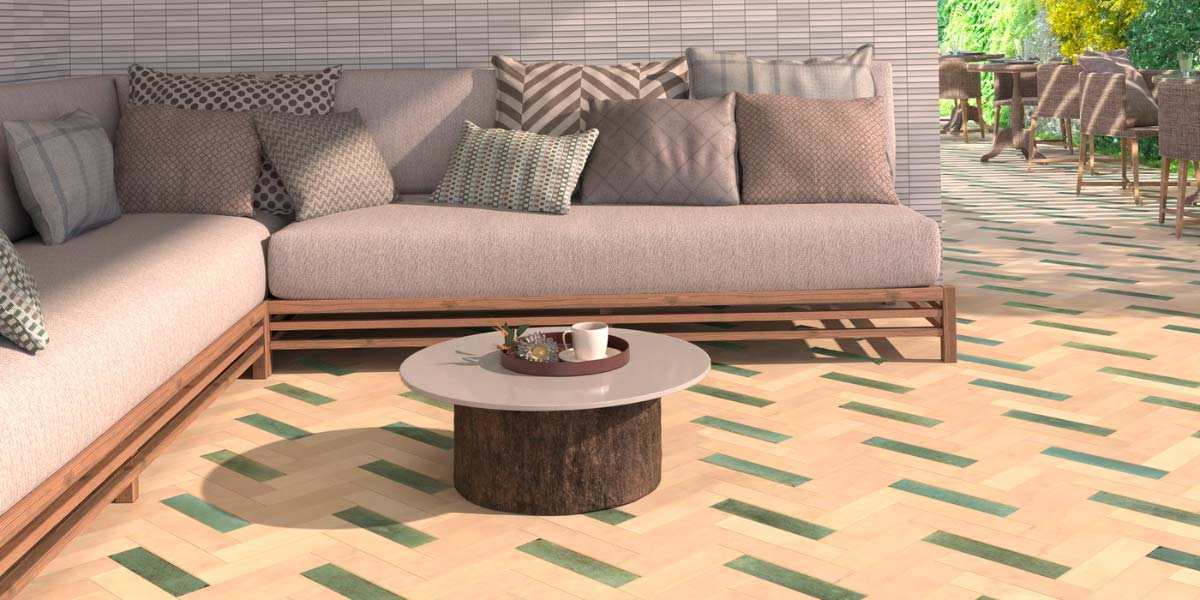
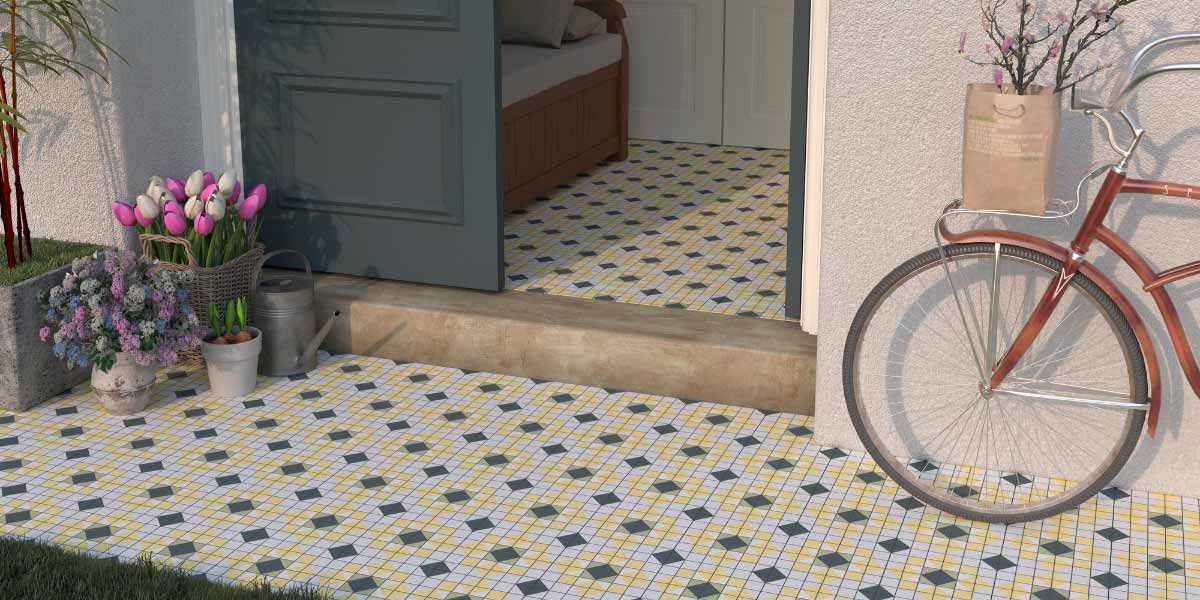
Depending on the type of material, artisan-style tiles can also be used outdoors, such as on terraces, patios, or porches. Their finish provides continuity between indoor and outdoor spaces, especially in Mediterranean-style projects.
In these cases, it is important to select ceramic products with the appropriate technical performance to ensure their behavior against climate changes.
Trends in handcrafted-effect tiles
Artisan-style ceramics are constantly evolving to adapt to new interior design trends. Today, these trends combine traditional inspiration with contemporary approaches, resulting in more natural, balanced spaces with their own identity.
Contemporary Mediterranean aesthetics
One of the main trends is the reinterpretation of the Mediterranean style. Artisan-style tiles in light tones, with slightly irregular finishes, evoke the traditional ceramics of southern Europe, adapted to modern interiors.
This approach favors bright spaces, natural materials, and a soft color palette, where handcrafted-effect ceramics bring freshness and authenticity.
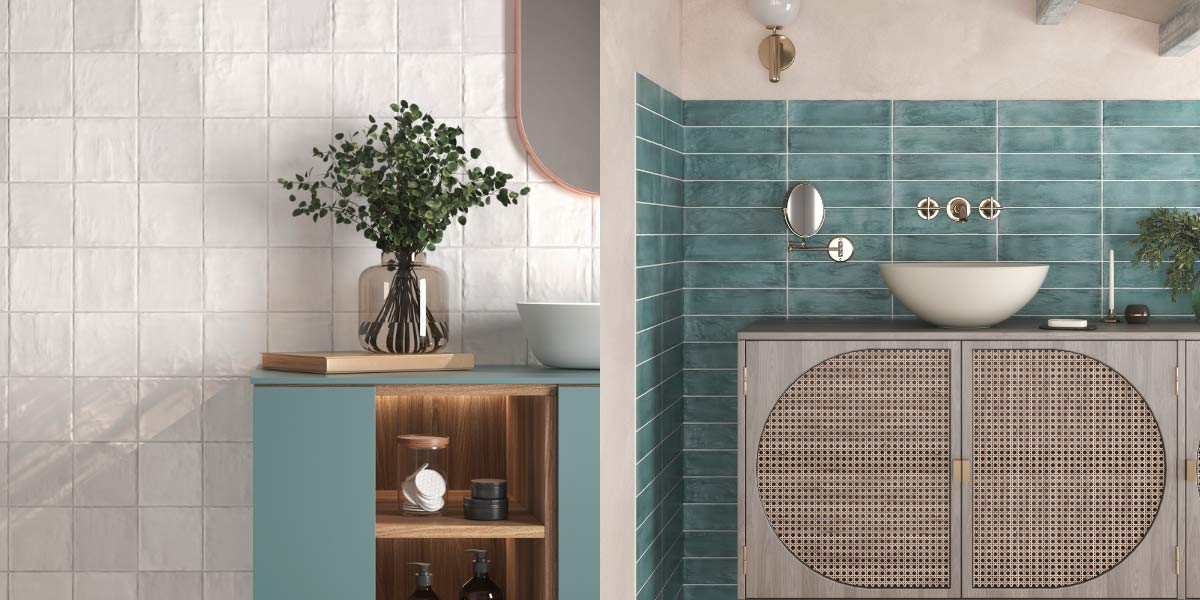
Zellige inspiration
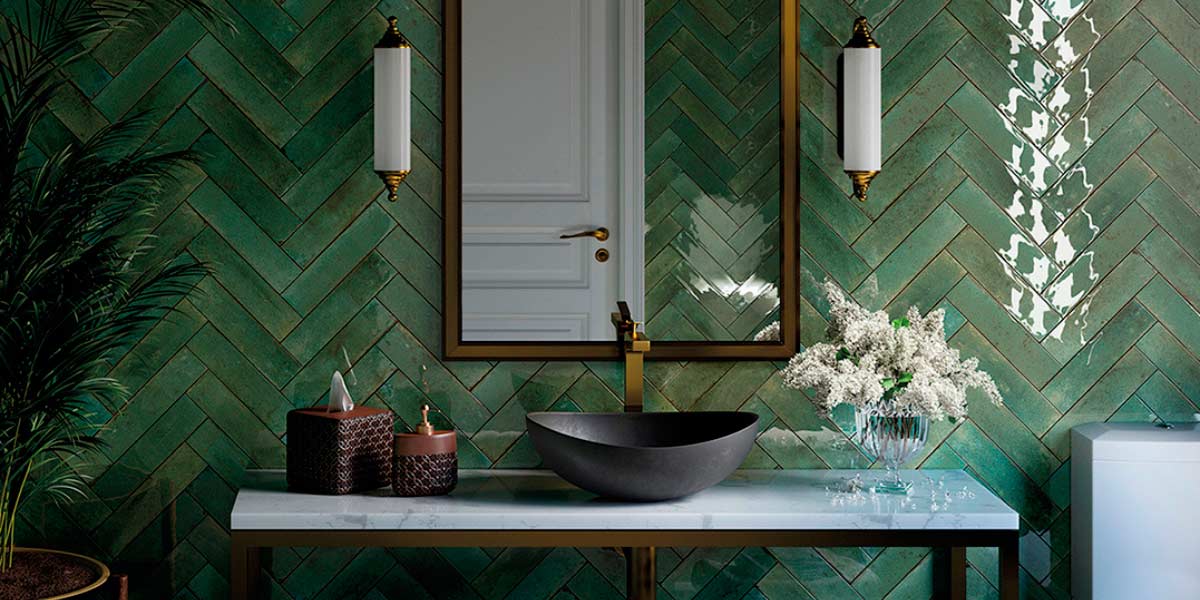
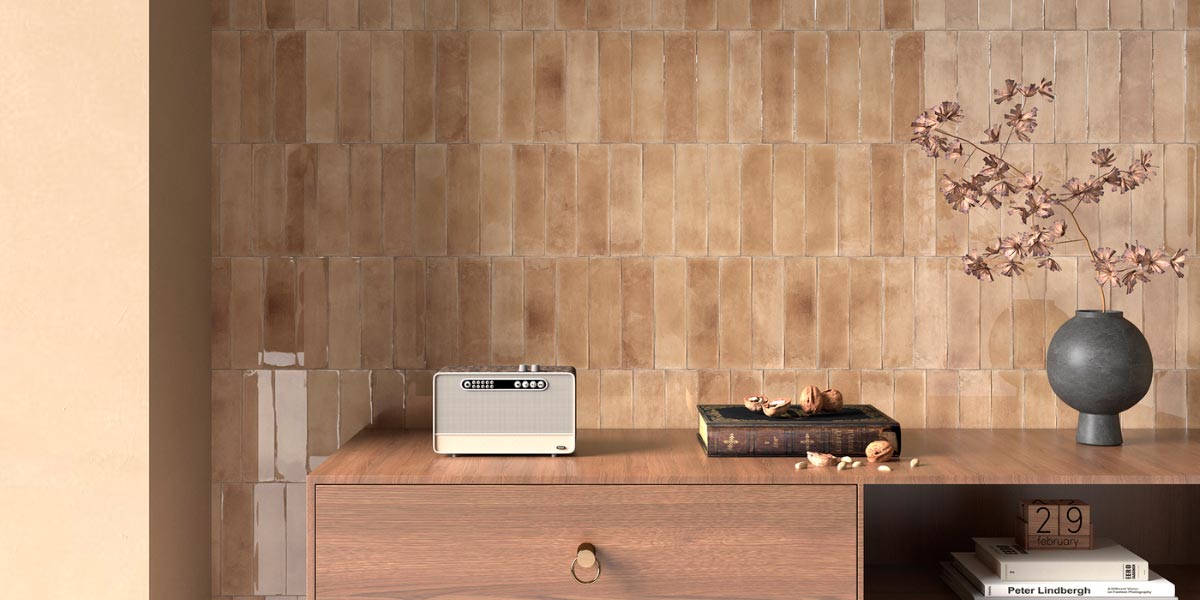
Tiles inspired by Moroccan zellige are a key reference within handcrafted-effect tiles. They are characterized by their glossy surfaces, tonal variations, and dynamic layouts that create a vibrant visual effect.
This trend is especially popular in bathrooms and kitchens, where tiles with a handcrafted look become the focal point thanks to their ability to reflect light.
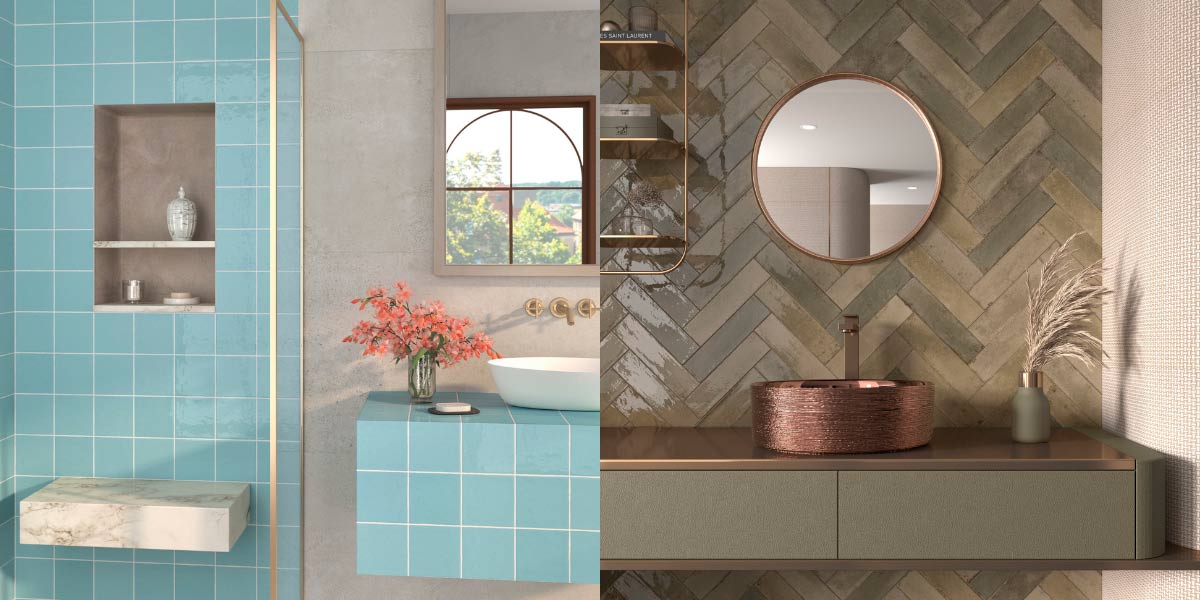
Natural and soft colors
Neutral, earthy, and desaturated tones dominate the new collections of modern handcrafted-effect tiles. Colors such as beige, sand, olive green, or off-white help create relaxed and timeless environments. These modern traditional tiles make it easy to combine with other materials and reinforce a sense of calm within the space.
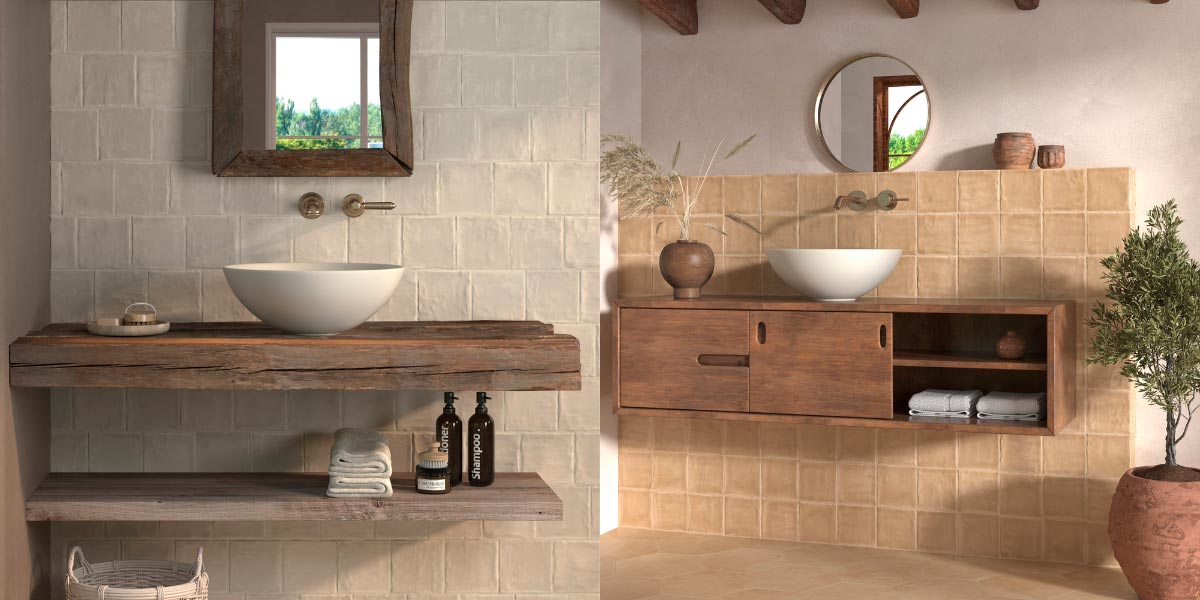
Combination with modern materials (wood, metal)
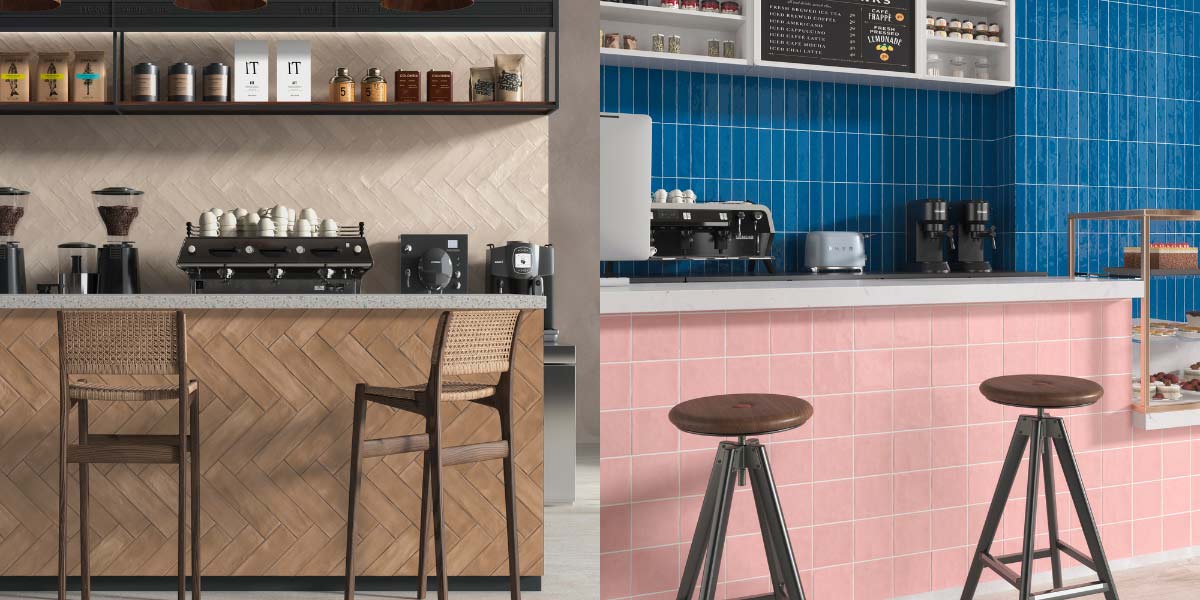
Another key trend is the combination of handcrafted-effect tiles with contemporary materials such as wood, metal, or microcement. This mix creates interesting contrasts between warmth and industrial elements, bringing balance to the design.
The versatility of handcrafted-effect ceramics allows them to be easily integrated into modern projects without losing their traditional essence.
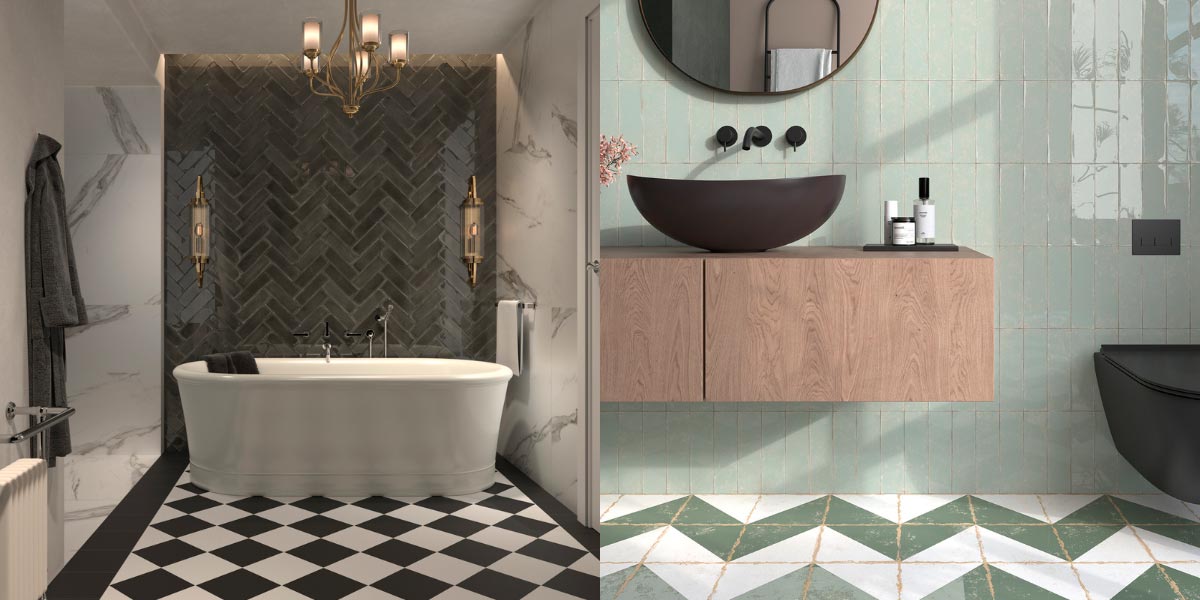
How to choose handcrafted-effect tiles
Choosing the right handcrafted-effect tiles is essential to achieve a balanced result both aesthetically and functionally. There are several factors to consider that will help adapt handcrafted-effect ceramics to each space and need.
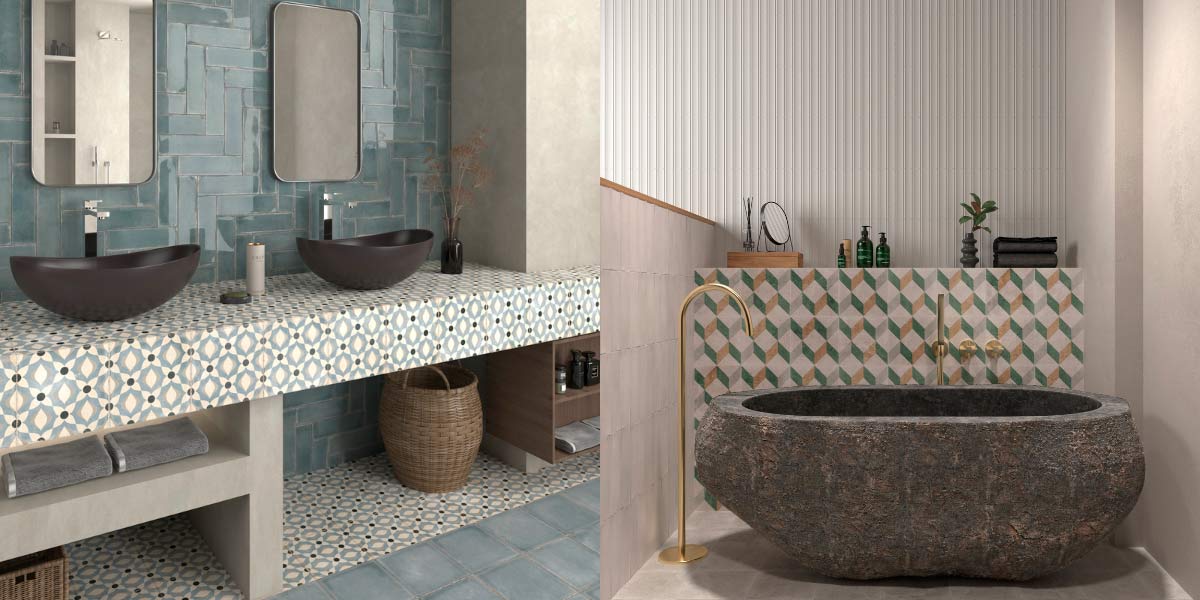
According to the style of the space
The first step is to define the decorative style. Artisan-style tiles can adapt to different environments: from Mediterranean and rustic spaces to modern or minimalist interiors.
For more traditional styles, handcrafted-look tiles in warm tones and classic designs can be chosen. On the other hand, for contemporary settings, more neutral pieces with soft finishes and more balanced combinations work better.
According to color and finish
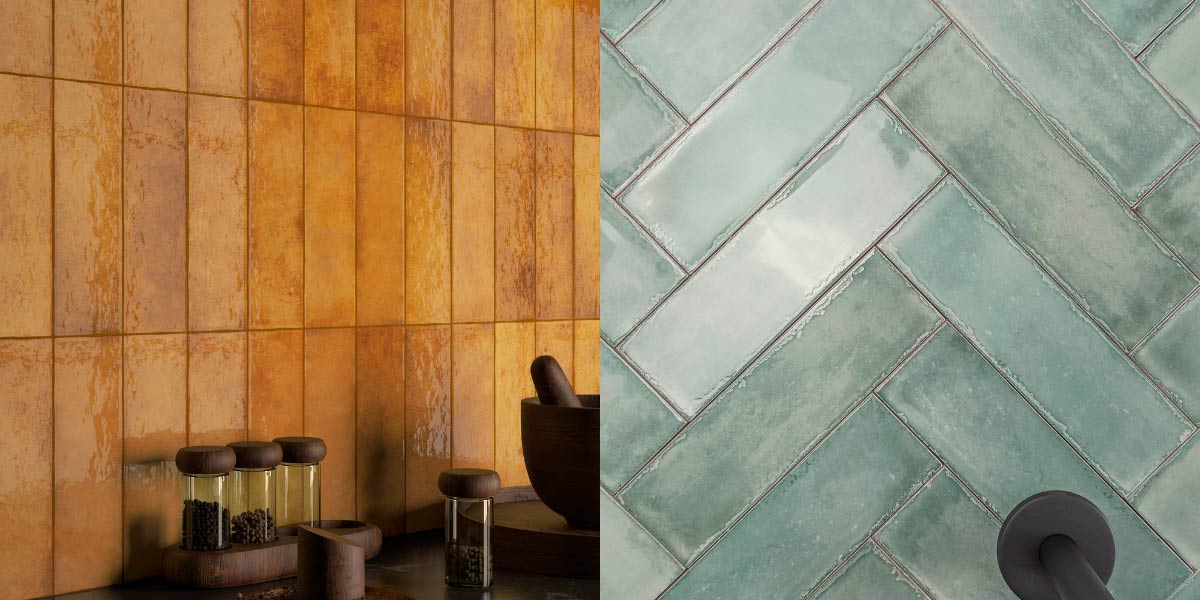
Color is key to defining the atmosphere of a space. Light tones bring brightness and a sense of spaciousness, while more intense colors create contrast and personality.
In terms of finish, handcrafted-effect tiles may feature irregular gloss, a satin effect, or more pronounced textures. These details influence how light interacts with the surface, an important aspect in bathrooms and kitchens.
According to use: wall or floor
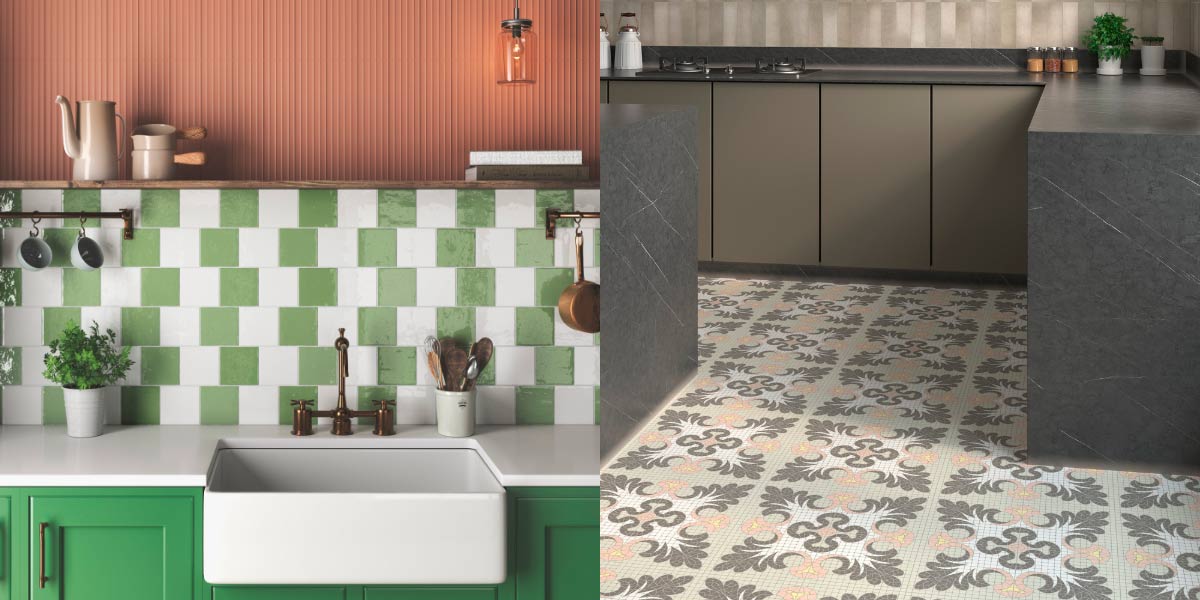
It is essential to choose the type of handcrafted-effect tiles according to their use. For walls, aesthetic finish and texture are prioritized, with relief or glossy coverings being ideal.
For floors, especially in high-traffic areas, it is recommended to opt for modern traditional tiles with greater resistance and anti-slip properties. This ensures durability and safety without compromising design.
Decorating ideas with handcrafted-effect tiles
Handcrafted-effect tiles offer multiple decorative possibilities, adapting to different styles and allowing the creation of unique spaces. Below are some key ideas for incorporating this type of ceramic into the home.
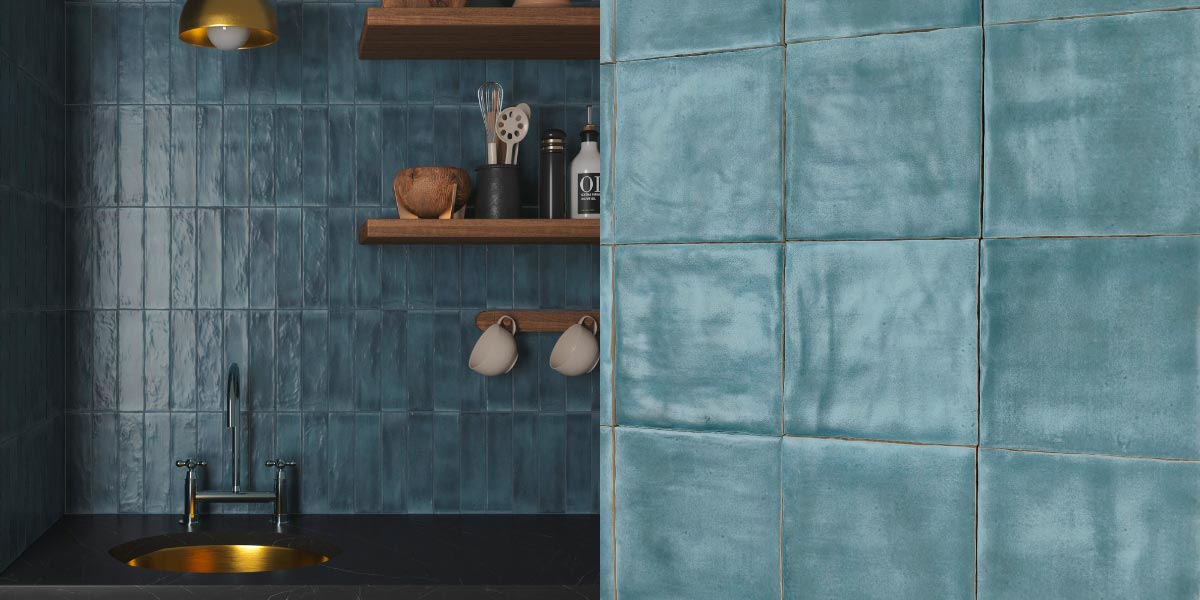
Modern kitchens with an industrial touch
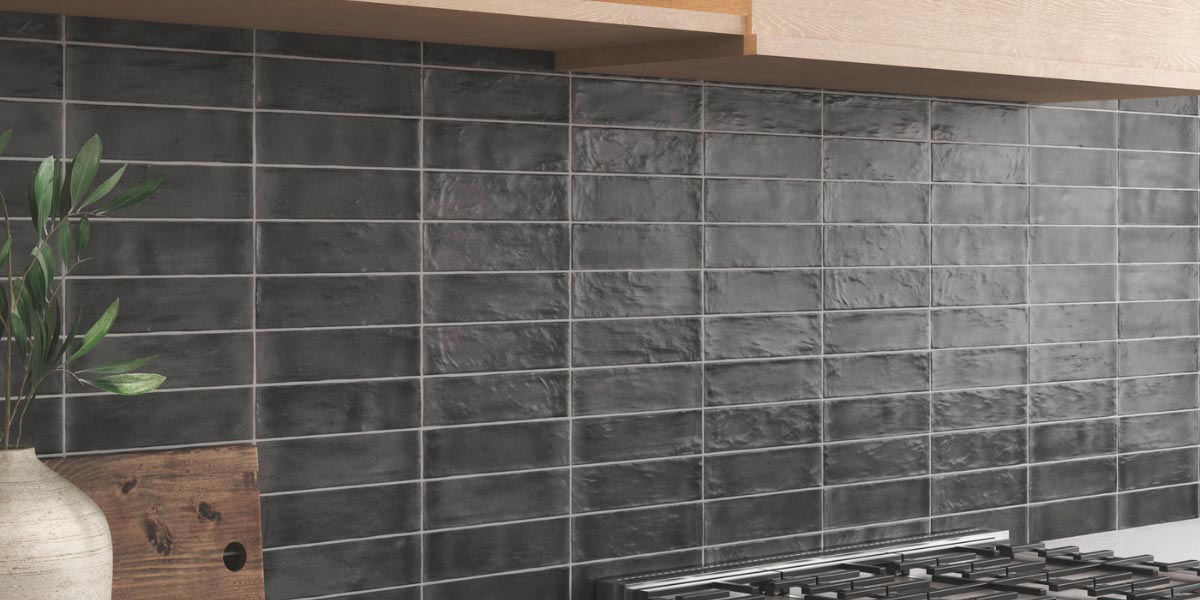
The combination of artisan-style tiles with industrial elements such as steel, iron, or dark finishes is one of the most current trends. In this type of kitchen, tiles bring warmth and texture, balancing the coldness of industrial materials.
Using handcrafted-effect tiles with industrial elements such as steel, iron, or dark finishes is one of the most current trends. In these kitchens, tiles add warmth and texture, balancing the coldness of industrial materials.
Bathrooms with a spa or Mediterranean aesthetic
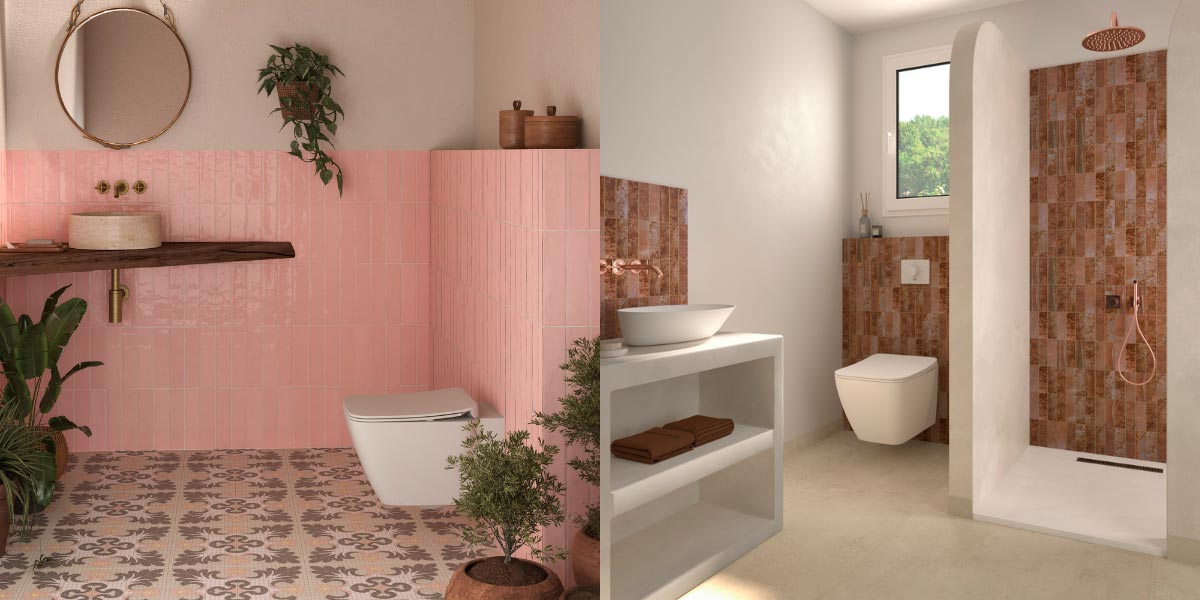
Handcrafted-effect tiles for bathrooms are ideal for designing relaxing spaces. In spa-style bathrooms, soft tones and natural finishes are used to create a calm and immersive atmosphere.
On the other hand, in Mediterranean-style settings, tiles with a handcrafted look in whites, blues, or greens evoke freshness and brightness, creating cozy and timeless spaces.
Combination of natural materials
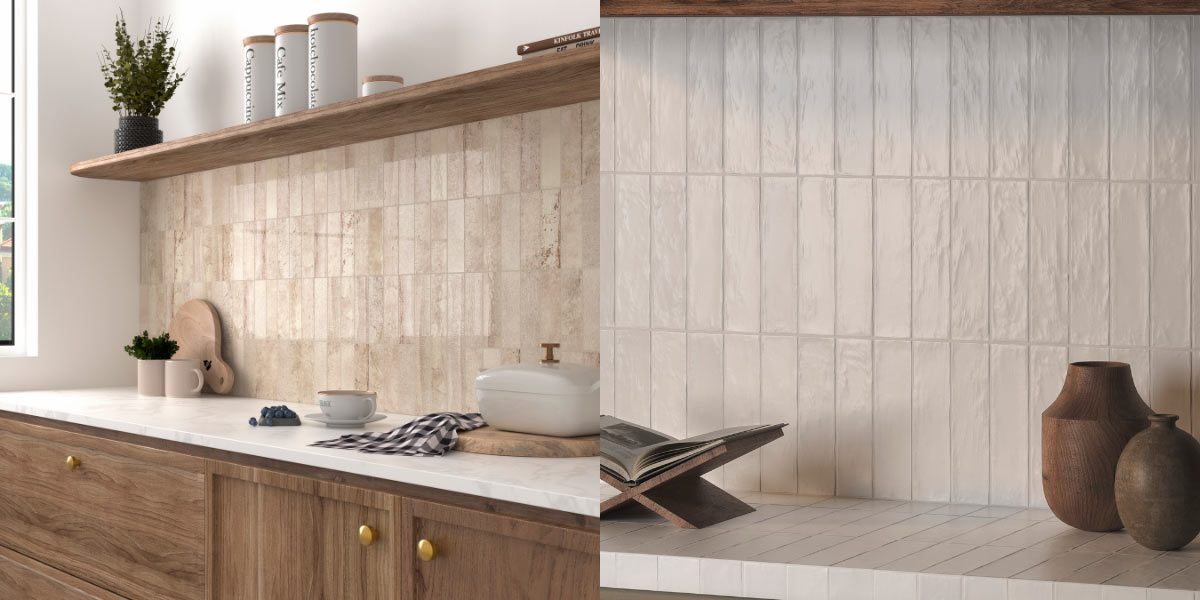
Another key idea is to combine handcrafted-effect ceramics with materials such as wood, stone, or natural fibers. This mix reinforces the connection with organic elements and brings balance to the design. Modern traditional tiles work especially well in this type of composition, integrating naturally into warm and contemporary spaces.
Geometric or patchwork compositions
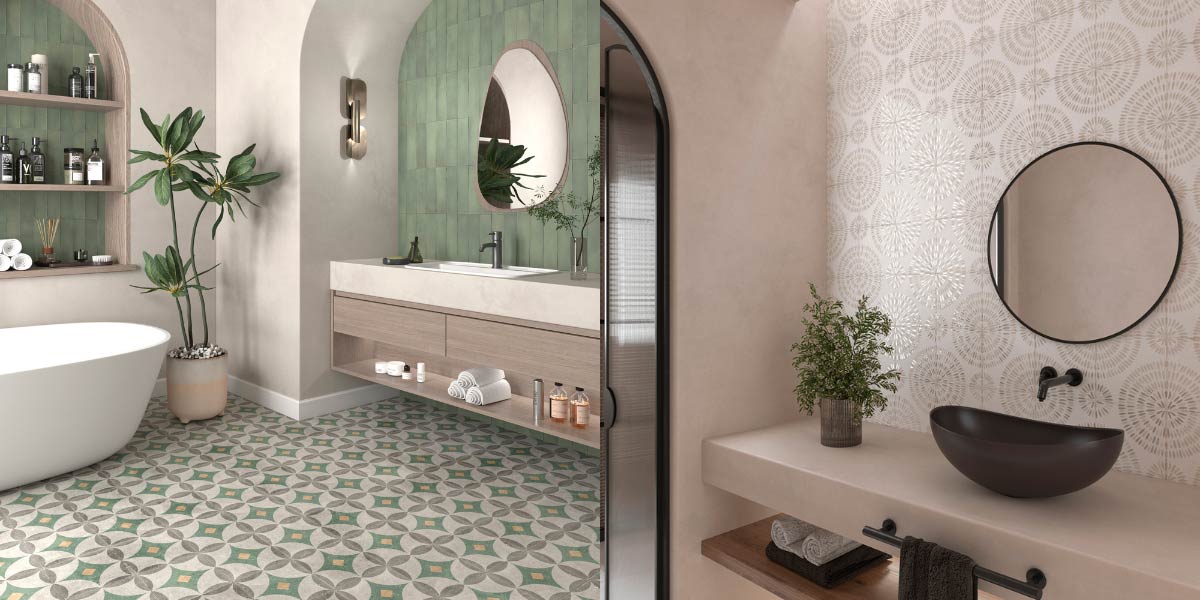
For those seeking a more creative approach, modern handcrafted-effect tiles allow the creation of geometric or patchwork-style compositions. These solutions add dynamism and personality, especially on floors or decorative walls.
The variation of tones and designs in handcrafted-effect tiles makes it easy to create unique surfaces, where each composition has its own identity.
Why choose handcrafted-effect tiles in current projects
Handcrafted-effect tiles have become one of the most valued options in contemporary interior design, thanks to their ability to combine aesthetics and functionality in a single material.
- They allow character to be incorporated without sacrificing technical performance. One of the main reasons to choose handcrafted-effect tiles is their balance between design and performance. They provide the visual richness of traditional ceramics, with nuances, textures, and irregularities, while offering the advantages of modern ceramics. This makes handcrafted-effect ceramics an ideal solution for both residential and contract projects.
- They fit both classic and contemporary spaces. Artisan-style tiles stand out for their aesthetic versatility. They work perfectly in interiors inspired by classic or Mediterranean styles, but also in contemporary spaces where the aim is to introduce texture and warmth. Modern traditional tiles allow for balanced transitions between the old and the new, adapting to different decorative styles.
- They respond to the trend for design with personality. Current interior design favors spaces with their own identity, moving away from uniformity. In this context, tiles with a handcrafted look gain special relevance, as they bring character and uniqueness to each project. Their imperfect aesthetic and visual richness align with trends such as emotional design, where nuances tell a story and create experiences.
Handcrafted-effect tiles today represent a way of reinterpreting tradition through a contemporary lens, where material, texture, and light play a leading role. Inspired by historical ceramic techniques and the beauty of imperfection, these materials make it possible to create spaces with identity, capable of conveying sensations and emotions.
Thanks to technological advancements, handcrafted-effect ceramics combine authenticity and aesthetics with high performance, offering durable and versatile solutions for the home. Each piece, with its nuances and variations, contributes to building unique surfaces where design is perceived in a natural and timeless way.
In a context where interior design increasingly seeks personality and a connection with the essential, handcrafted-effect tiles are established as a key choice for current projects, providing a balance between tradition and modernity, between design and functionality.