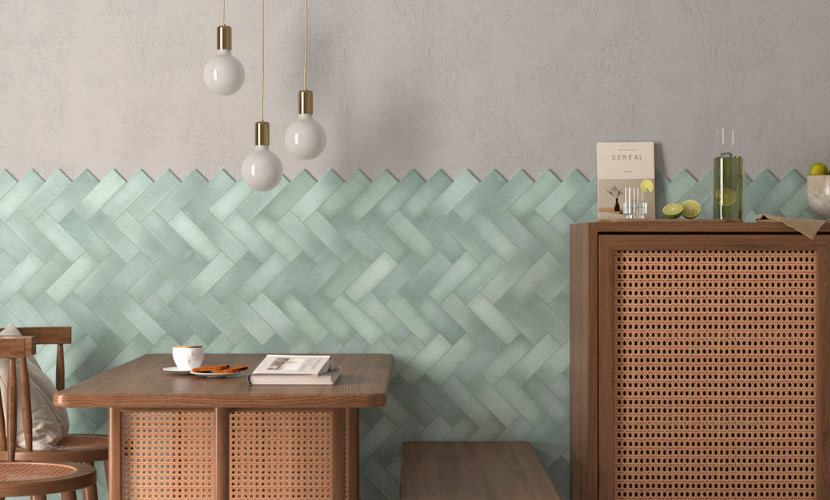

Decorating trends for 2026: colours and tiles that will define interior design
Decoration in 2026 moves toward a more conscious, emotional, and sensory conception of spaces. Far from fleeting fashions, the new trends focus on interiors that convey calm, authenticity, and a connection with nature, without giving up sophistication or technical innovation. In this context, ceramics are consolidating their position as one of the leading materials in contemporary design, thanks to their aesthetic versatility, durability, and ability to adapt to new ways of living.
Colors, textures, and ceramic formats are evolving to respond to a lifestyle that prioritizes well-being, sustainability, and the personalization of spaces. Kitchens, bathrooms, outdoor areas, swimming pools, and contract projects find in tiles a key tool for creating atmospheres with their own identity. These are the decoration trends for 2026 that will shape the future of interior design and architectural design.
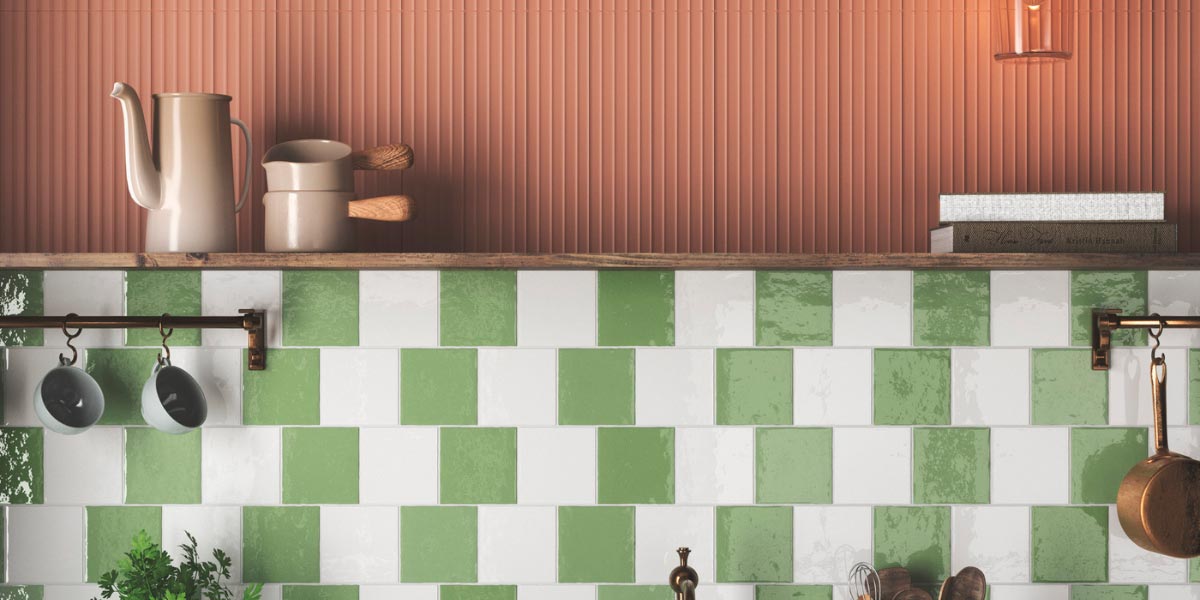
Decoration in 2026: a return to the essentials with a contemporary perspective
The year 2026 consolidates a clear trend: spaces are no longer merely functional but become environments that generate sensations. Decoration is oriented toward the sensory, with strong inspiration drawn from nature, organic landscapes, and honest materials. Interior design seeks balance, achieved through colors that evoke calm, surfaces that invite touch, and compositions that convey visual harmony.
In this scenario, ceramics play a fundamental role. Their ability to reinterpret natural materials such as stone, clay, or raw earth makes it possible to create spaces with a warm, timeless aesthetic, while still offering the technical performance required by today’s projects. In addition, their sustainable nature and long lifespan make ceramics a choice aligned with the values that define decoration in 2026.
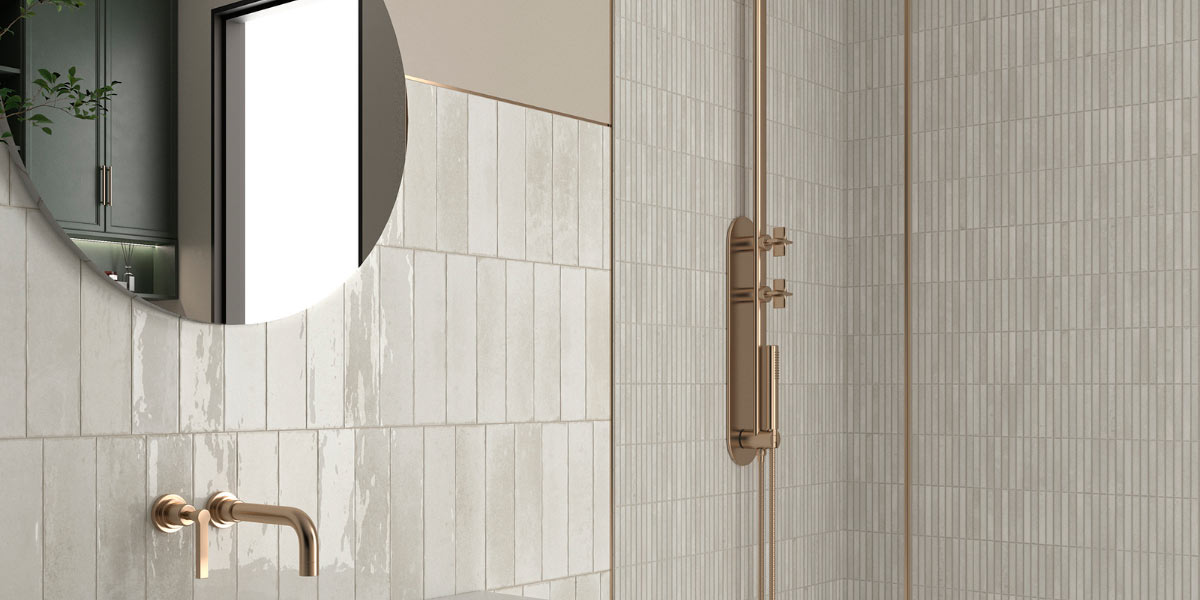
Trend colors in decoration for 2026
In 2026, color becomes one of the main emotional vehicles of interior design. Beyond a purely aesthetic choice, the color palette responds to a need for well-being, a connection with nature, and the creation of spaces that convey balance and authenticity. Colors become more complex, with subtle nuances, visual depth, and a direct relationship with the materials that accompany them. Ceramics, in particular, benefit from this chromatic evolution, as they allow color to be explored through texture, finish, and interaction with light.
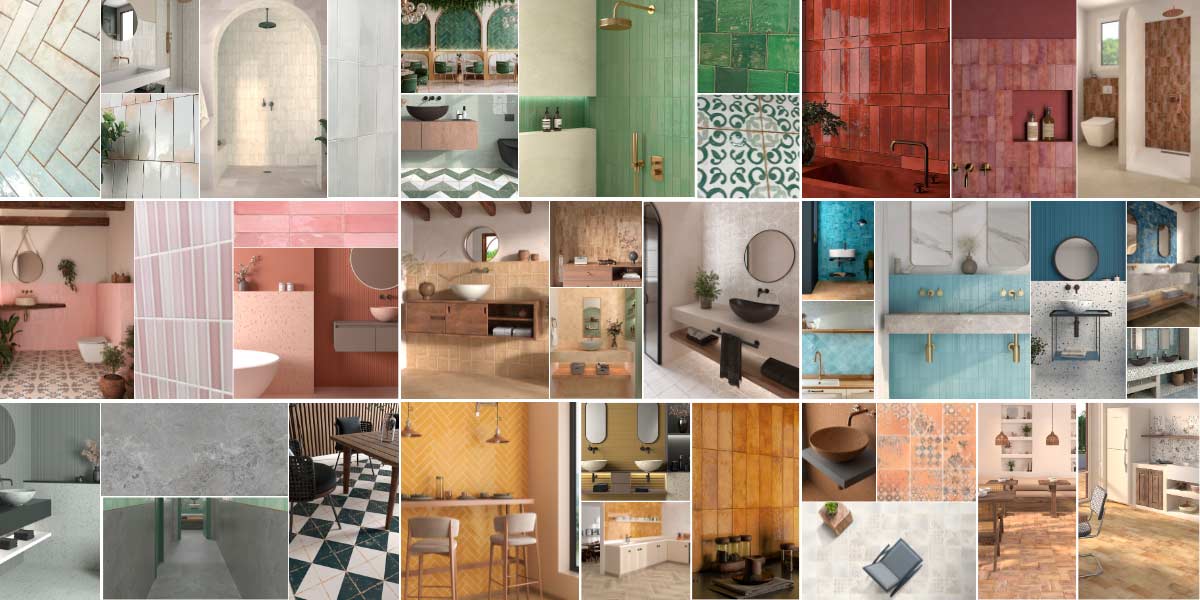
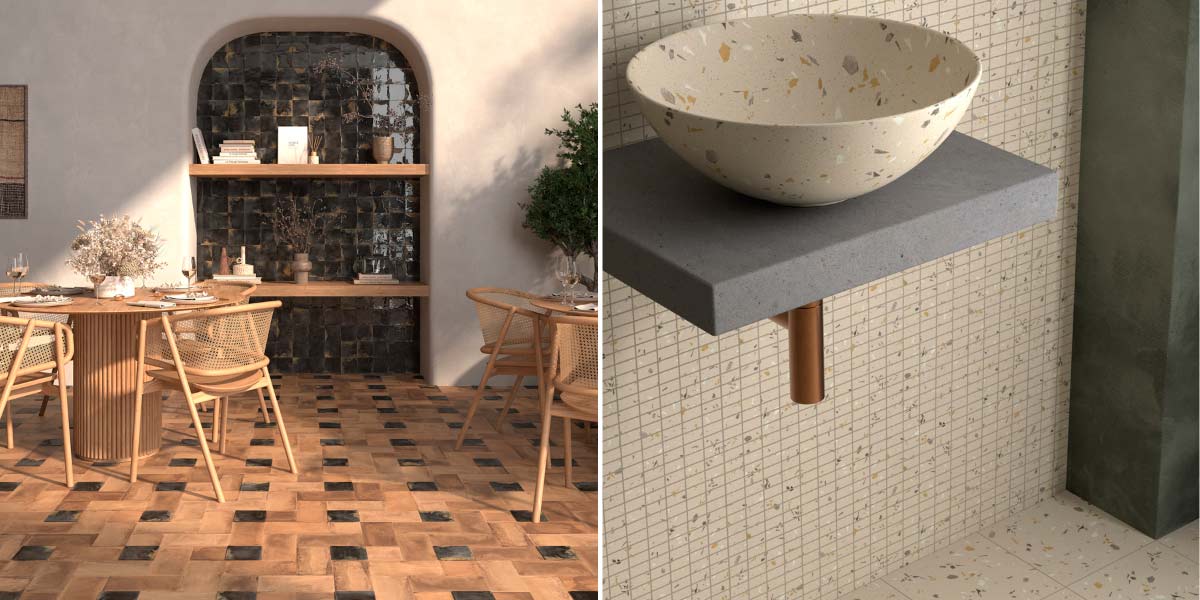
Evolved earth tones: clay, sand, and soft terracotta
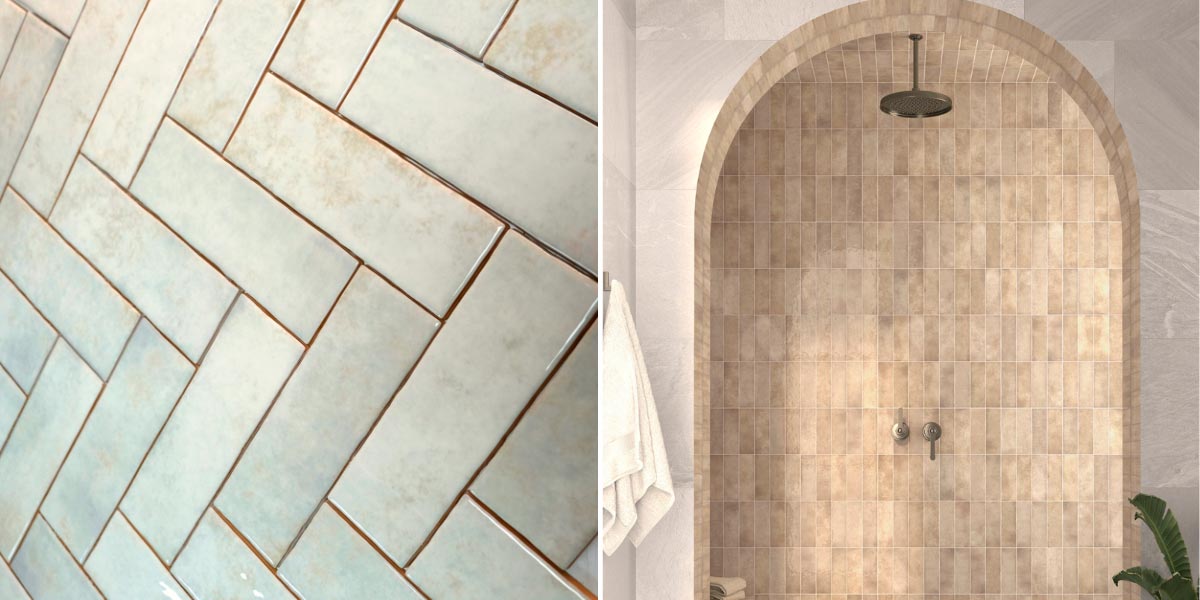
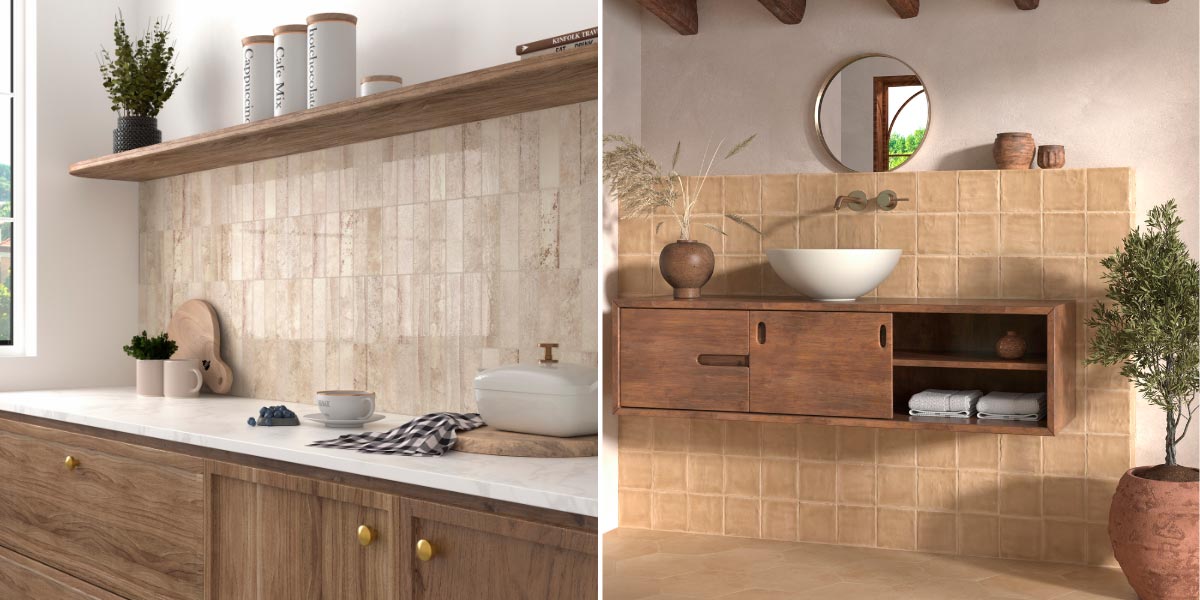
Earth tones continue to be one of the strongest chromatic foundations in decoration for 2026, but they do so with a clear evolution compared to previous years. These are no longer flat or overly rustic colors, but refined, softened tones reinterpreted through a contemporary lens. Powdery clays, warm sands, and desaturated terracottas become the protagonists of interiors that seek to convey calm, stability, and an honest connection with the natural environment.
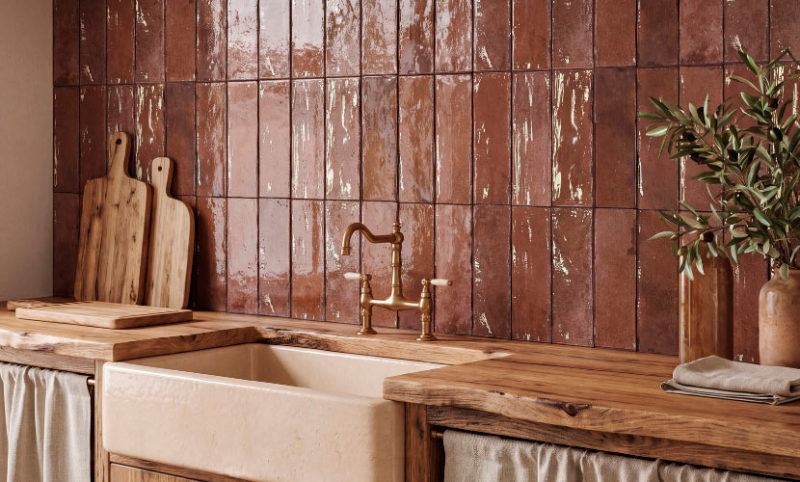
In ceramics, these colors acquire an especially rich dimension. Tiles in earth tones allow for the creation of enveloping surfaces that provide a sense of refuge and visual comfort. Thanks to matte finishes, slight textures, or subtle chromatic variations, these colors gain depth and avoid monotony. Soft terracotta, for example, leaves behind its more traditional associations to become an elegant and versatile color, capable of adapting to both residential spaces and contract projects.
Sand and clay tones work particularly well on large ceramic surfaces, where visual continuity reinforces a sense of harmony. These colors interact perfectly with natural light, softening it and creating warm environments without feeling heavy. In 2026, these tones are used in both flooring and wall coverings, consolidating themselves as a timeless chromatic base on which to build the rest of the project.
Organic greens and mineral blues
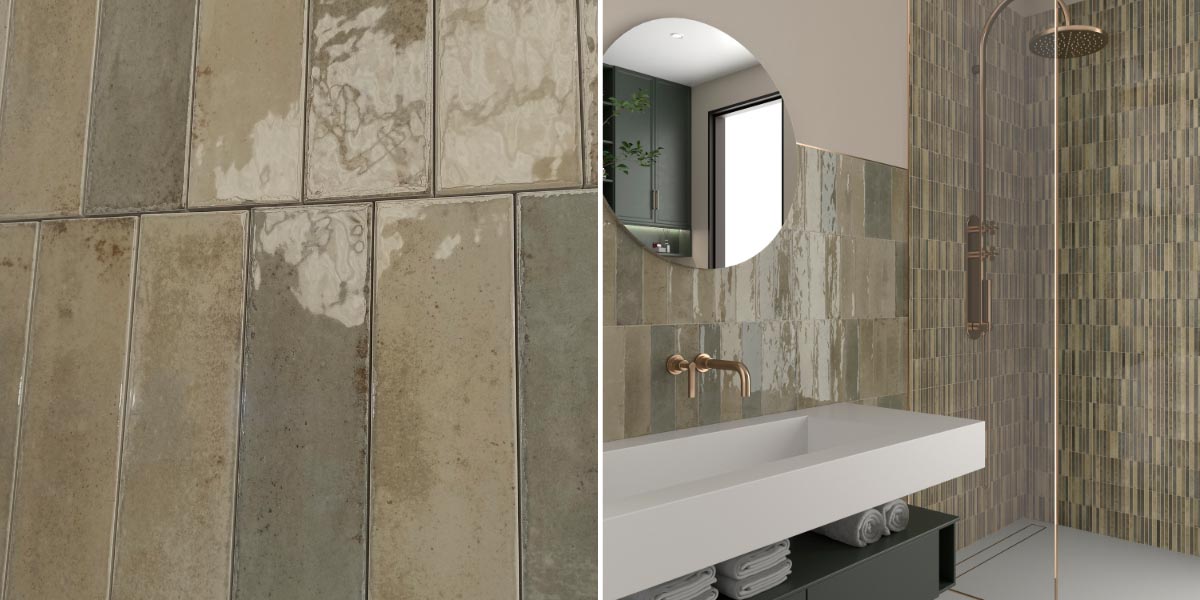
Greens and blues maintain their presence in color trends for 2026, but they evolve toward more natural, deep, and organic versions. Directly inspired by vegetation, water, and mineral landscapes, these colors bring freshness and serenity while reinforcing an emotional connection with nature.
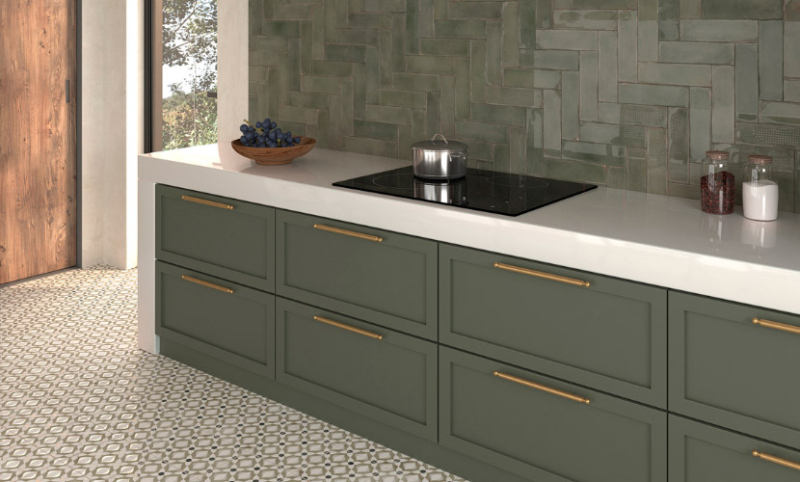
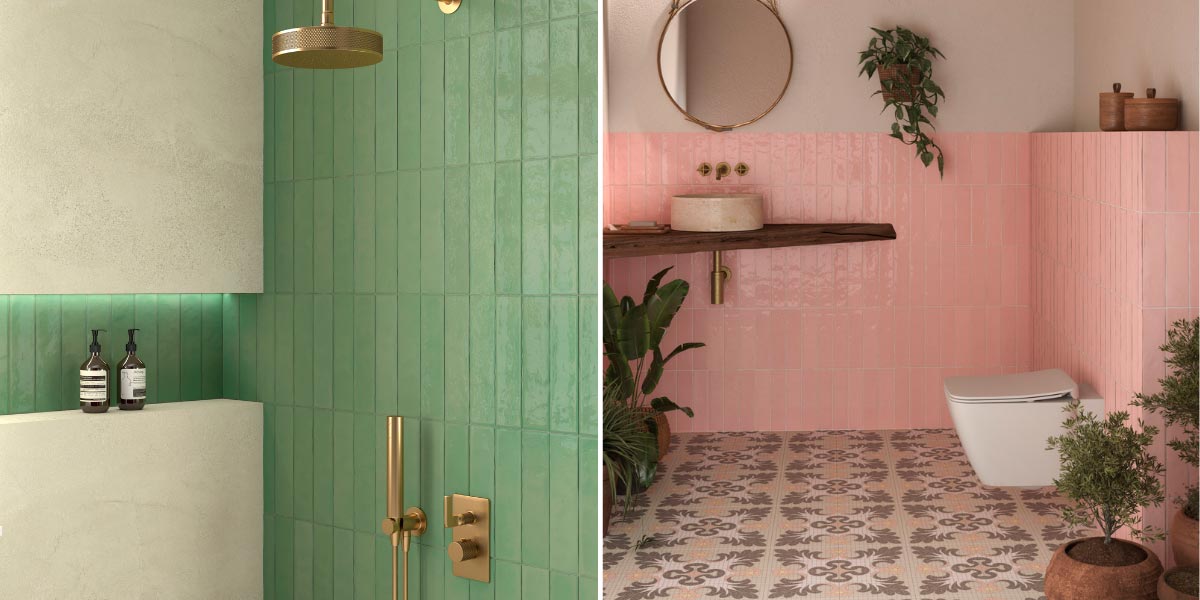
Greens move away from overly saturated tones and adopt more complex shades such as moss green, olive, sage, or eucalyptus. In ceramics, these colors are expressed through green tiles with tonal variations that recall natural processes, adding visual richness and a sense of a living material. These types of greens are especially suitable for bathrooms, home spas, and wellness spaces, where the goal is to create relaxing and enveloping atmospheres.
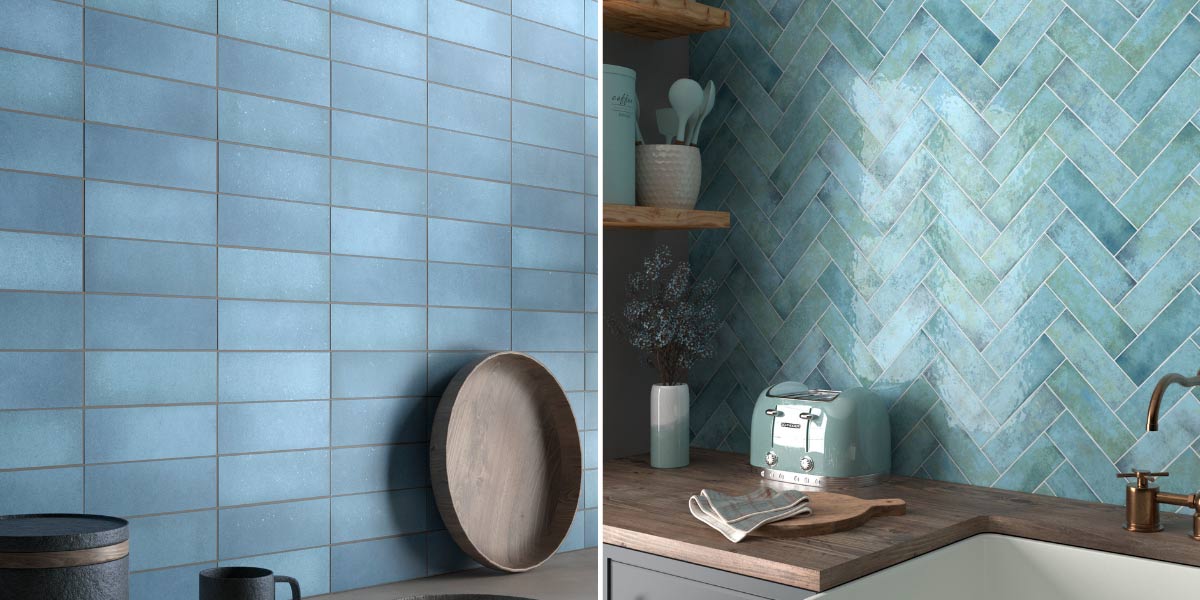
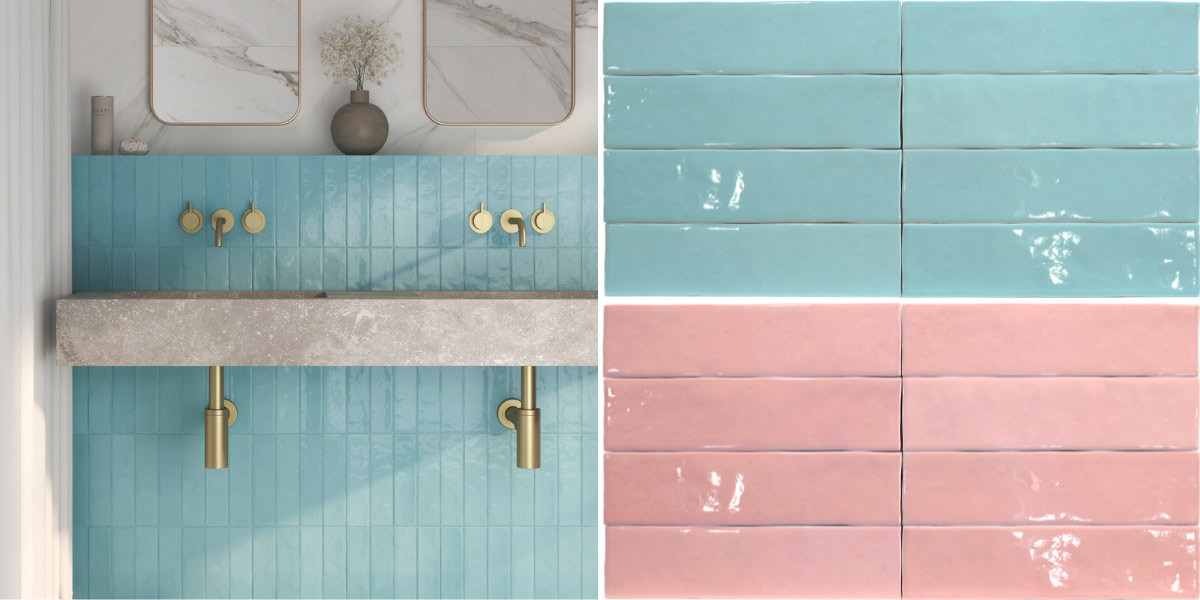
Mineral blues, on the other hand, are inspired by the sea, the sky, and wet stone. Shades such as deep blue, grayish blue, or petrol blue are consolidated as sophisticated and timeless options. In blue tiles, these colors acquire a new dimension thanks to satin finishes or subtle glosses that capture the light and generate depth. In 2026, mineral blues are used both on full surfaces and as focal elements, adding character without overwhelming the space.
Warm and sophisticated neutrals
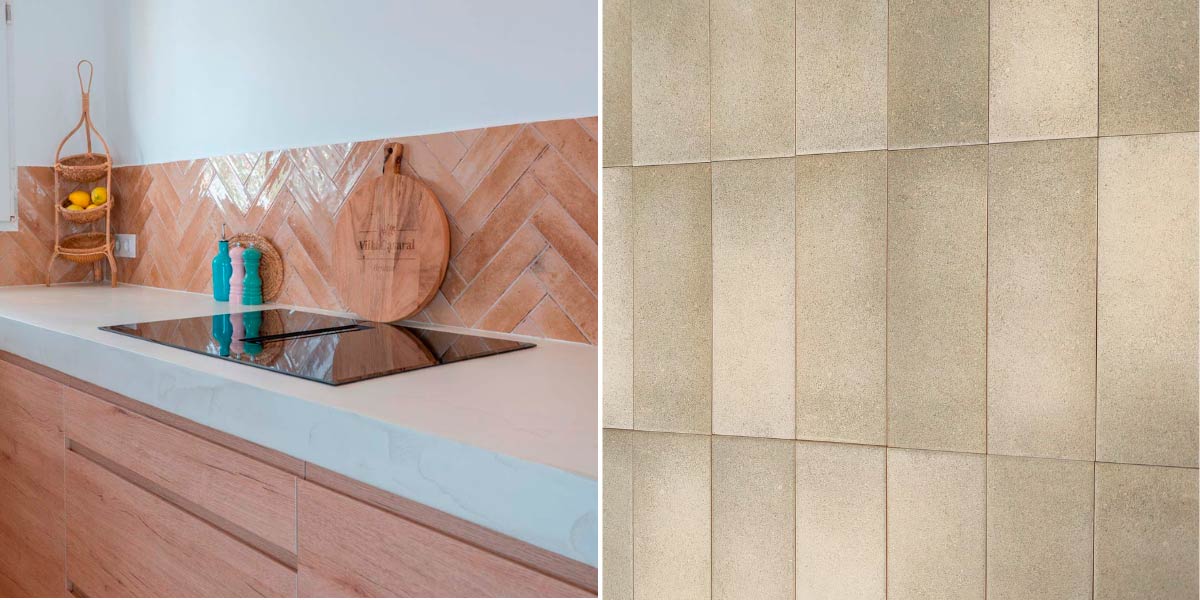
Neutrals remain essential in decoration for 2026, but they are reinterpreted from a warmer and more sophisticated perspective. Cool whites and harsh grays give way to a range of beiges, ivories, stone tones, and soft grays with warm undertones. These colors make it possible to create bright and elegant spaces with a much more welcoming feel.
In ceramics, warm neutrals become a fundamental tool for generating visual continuity and enhancing the architecture of the space. Tiles in these tones, especially in large formats, reinforce a sense of spaciousness and order, becoming the perfect backdrop for introducing other decorative elements or materials.
The key to these neutrals in 2026 lies in texture and finish. Matte, silky, or slightly granular surfaces add visual interest without the need for strong chromatic contrasts. This approach allows the space to breathe and ensures the design remains relevant over time. In addition, warm neutrals work as an excellent starting point for professional projects, as they facilitate customization and adaptation to different styles.
Intense colors as accents: wine, indigo, and chocolate
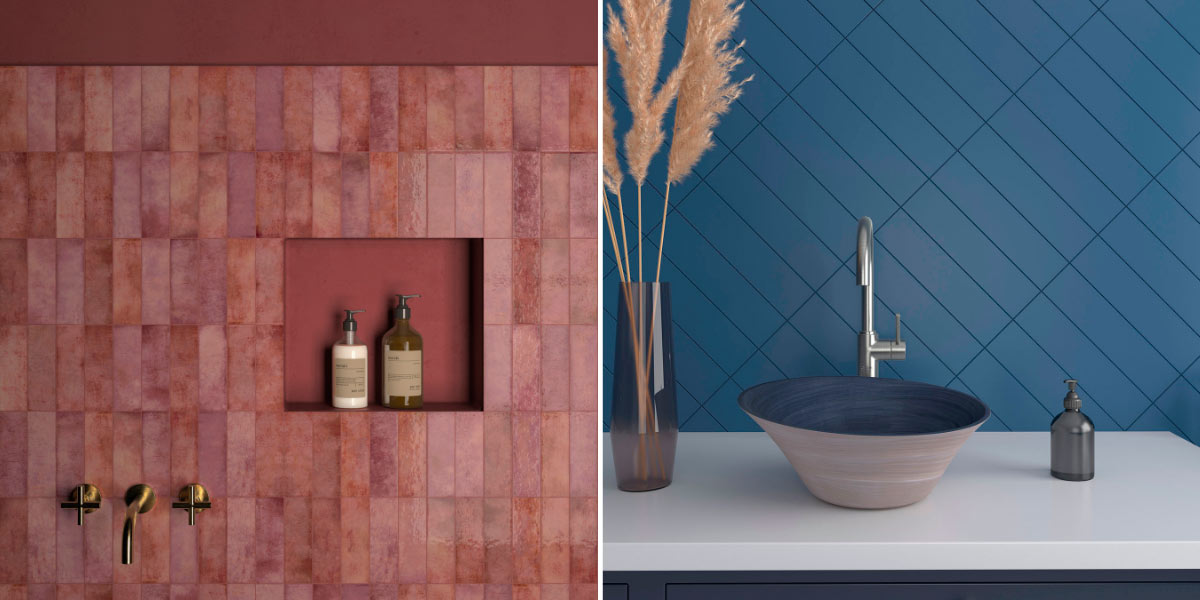
Although the 2026 palette is characterized by balance and naturalness, intense colors continue to play an important role when used strategically. Deep tones such as wine, indigo, or chocolate bring sophistication, character, and a sense of understated luxury, as long as they are integrated as accents rather than dominant elements.
In ceramics, these intense colors are expressed in a particularly powerful way. Tiles in wine or burgundy tones, for example, acquire extraordinary depth when combined with glossy or satin glazes, creating surfaces that change depending on how light hits them. Indigo, for its part, connects with a more contemporary and artistic aesthetic, working equally well in residential spaces and in hospitality projects seeking to stand out.
Chocolate tones and deep browns are making a strong comeback, but through a more refined interpretation. In 2026, these colors are used to add warmth and elegance, especially when combined with neutral or earth tones. Applied on focal walls, decorative flooring, or ceramic elements with relief, they create points of interest that elevate the design without overwhelming it.
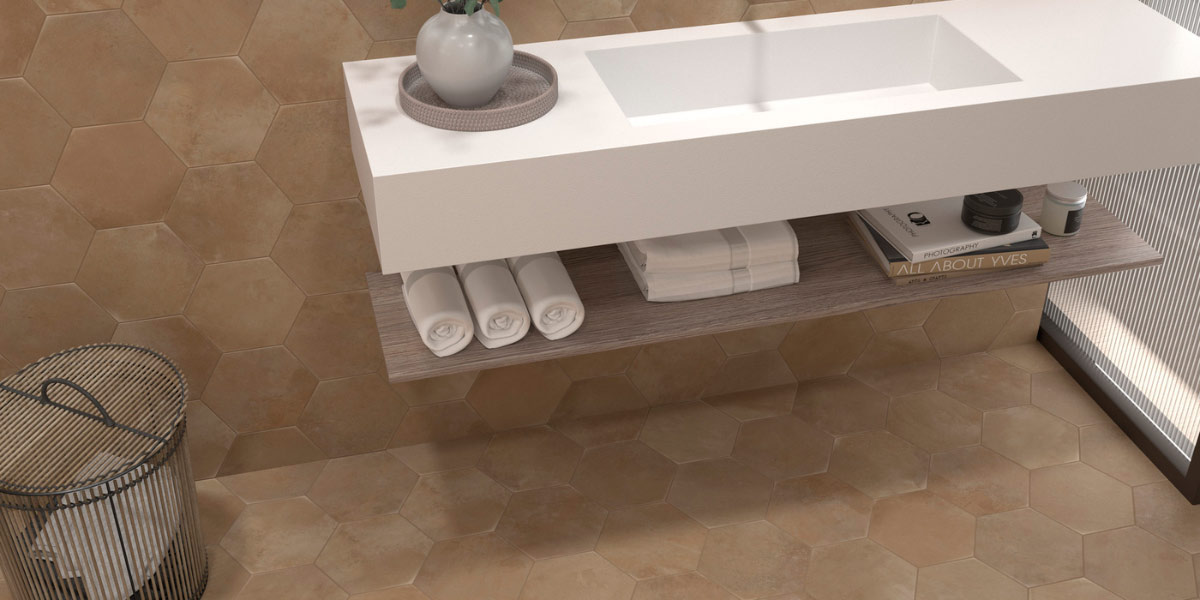
These intense colors allow ceramics to become an expressive element capable of conveying identity and reinforcing the character of the space—something especially valued in contract and commercial projects.
Tile trends for 2026
In 2026, ceramics are firmly established as one of the most influential materials in interior and exterior design. Tiles are no longer seen as a simple functional covering but as an expressive resource capable of defining the character of a space. Tile trends for 2026 reflect a clear evolution toward the natural, the tactile, and the emotional, combining technical innovation with an aesthetic increasingly close to original materials.
Ceramic design moves between two complementary poles: on the one hand, the search for continuity, visual purity, and large surfaces; on the other, the value of craftsmanship, texture, and detail. This duality allows for enormous creative freedom, both in residential projects and in contract spaces, where ceramics act as the guiding thread of the design.
Natural-effect tiles: stone, clay, and raw earth
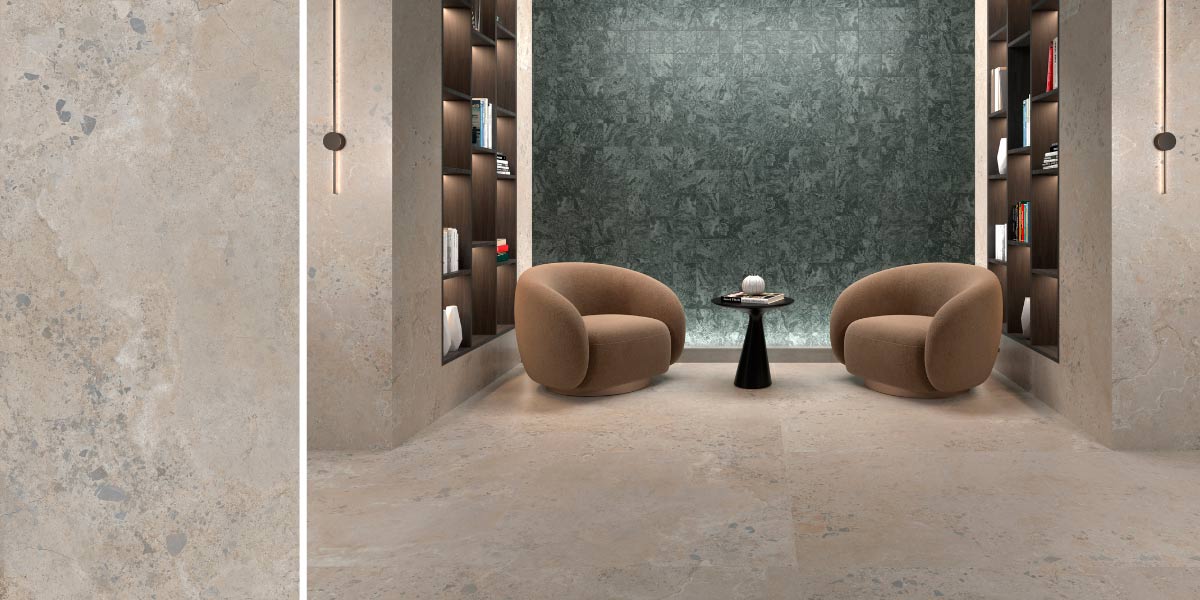
Naturally inspired tiles continue to be one of the strongest trends in 2026, but they evolve toward more authentic and sensory interpretations. Ceramics are no longer limited to reproducing the appearance of stone or clay; instead, they aim to capture their essence, texture, and visual behavior in relation to light.
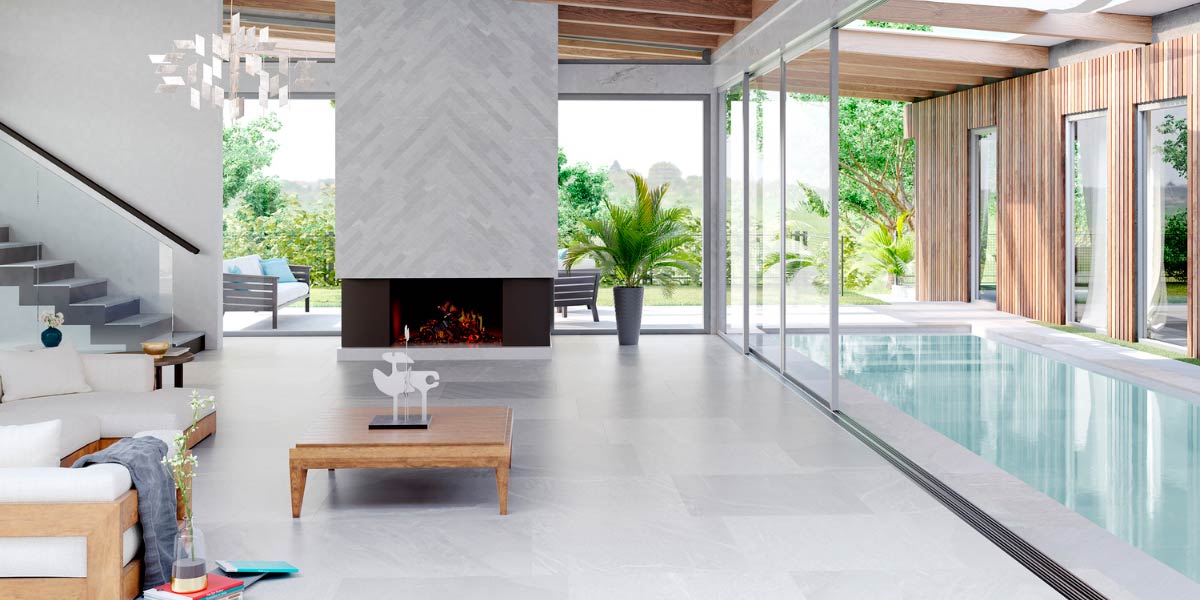
Stone-effect ceramic surfaces adopt a softer, more organic aesthetic. Balanced tones, delicate veining, and matte finishes reminiscent of time-worn stone take center stage. This type of tile makes it possible to create elegant and timeless spaces where naturalness is immediately perceived. In 2026, these designs are used in both interior and exterior applications, reinforcing continuity between the two.
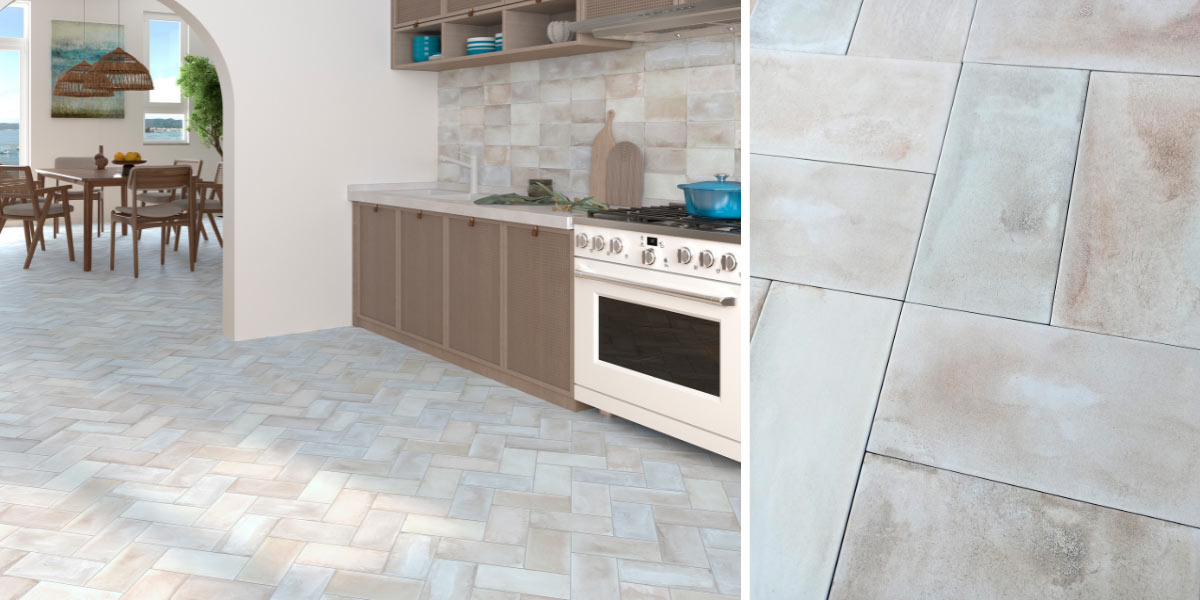
Ceramics inspired by clay and raw earth take on a particularly prominent role. Warm colors, slightly irregular surfaces, and subtle textures evoke artisanal processes and connect with a more primitive and essential aesthetic. These tiles work especially well in projects seeking to convey authenticity and warmth, providing a sense of honest, approachable materiality.
Artisanal ceramics and imperfect finishes
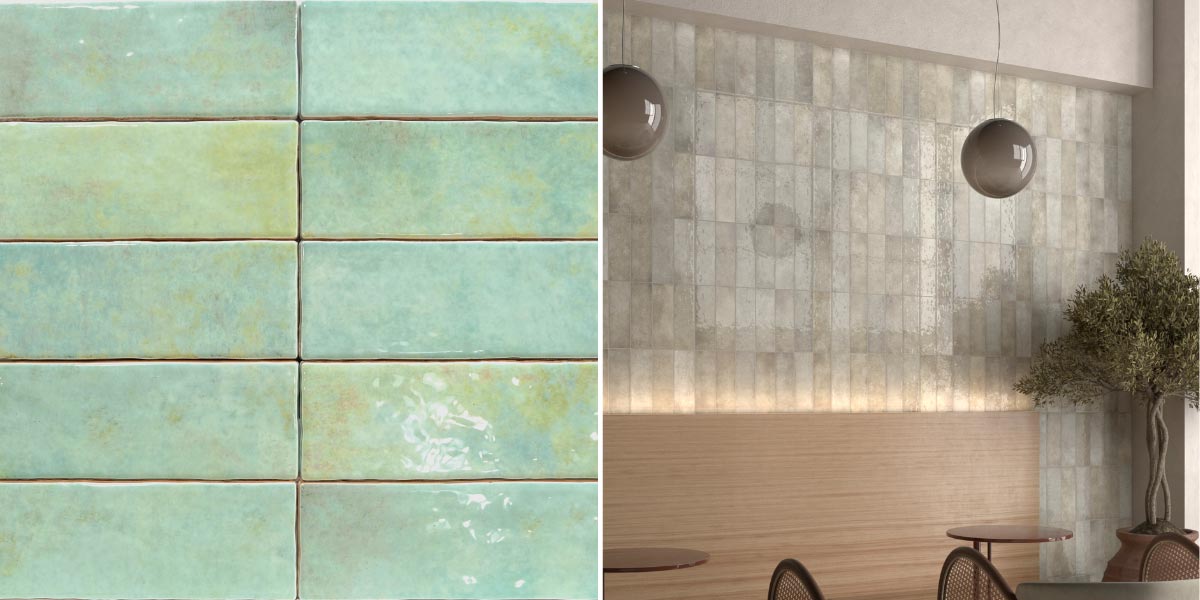
Controlled imperfection becomes an aesthetic value in 2026. In contrast to absolute uniformity, ceramic design recovers the artisanal spirit, reinterpreted through a contemporary lens. Tiles with slight tonal variations, deep glazes, and surfaces that are not completely uniform add visual richness and humanize spaces.
This trend responds to a growing need for authenticity in decoration. Imperfect finishes convey history, process, and materiality—qualities that are increasingly valued in interior design. In ceramics, this aesthetic translates into pieces that react differently to light, creating living, ever-changing surfaces.
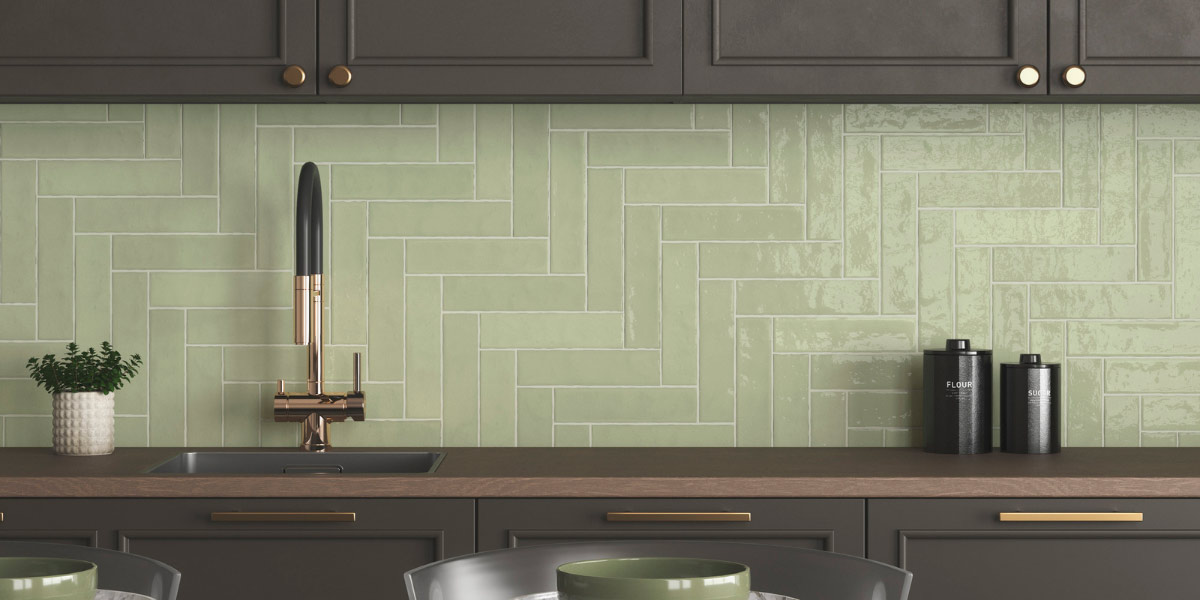
In 2026, artisanal ceramics are integrated into both contemporary styles and more classic or Mediterranean proposals. Their versatility allows them to be used on feature walls, kitchen backsplashes, bathrooms, or commercial spaces where a strong identity is desired. Far from appearing rustic, these tiles bring sophistication thanks to the balance between tradition and contemporary design.
Organic formats and relief tiles
Tile format takes on new relevance in the trends of 2026. Alongside traditional rectangular pieces, organic formats, soft curves, and freer geometries emerge, breaking away from visual rigidity. These pieces allow for more dynamic and expressive compositions, adding movement and personality to surfaces.
Relief becomes a fundamental resource for enriching ceramic design. Far from rigid geometric patterns, the reliefs of 2026 are inspired by natural forms, gentle undulations, and subtle textures. The interplay of light and shadow they create adds depth and transforms walls into architectural elements.
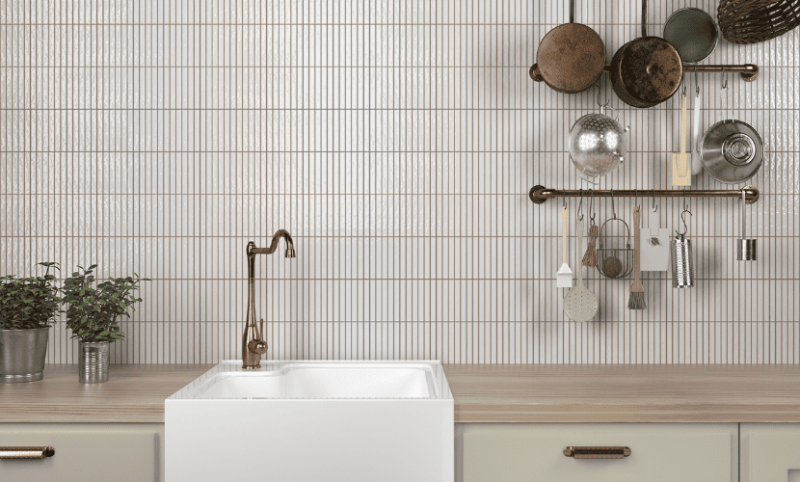
These types of tiles are particularly interesting in projects seeking strong visual impact without relying on color. Relief allows design to be expressed through materiality, creating sophisticated and contemporary spaces. In addition, volumetric pieces add a tactile dimension that reinforces the user’s sensory experience.
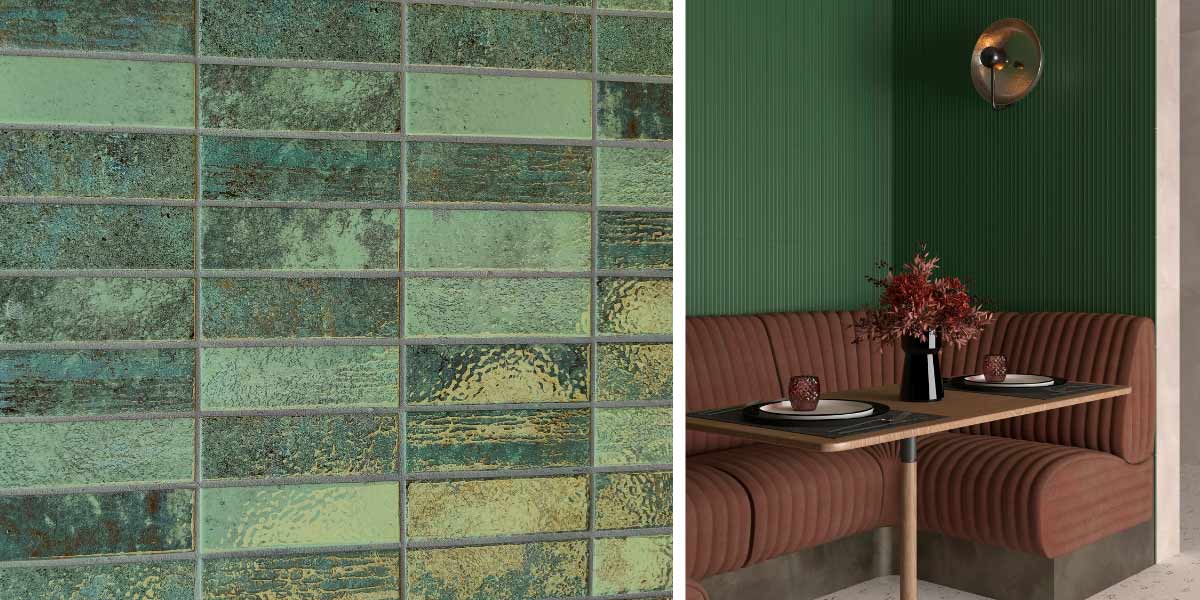
At Dune, we always work with a close eye on trends, which is why our latest launch incorporates elements of all these tile trends for 2026. We invite you to explore our catalog here and discover them.
Ceramic textures and finishes that define 2026
The importance of touch is one of the key elements of decoration in 2026. Ceramic surfaces are designed to be both seen and touched, incorporating finishes that enhance the sensory experience of the space. Deep, silky mattes replace excessive gloss, bringing discreet and contemporary elegance.
Glazes with depth, combining more opaque areas with subtle reflections, add visual richness without being overpowering. These finishes work especially well with intense colors, enhancing their character and sophistication.
Reliefs, far from being purely decorative, are naturally integrated into the design. Inspired by organic forms and soft patterns, they add texture without overwhelming the space. In 2026, relief is understood as a tool for creating enveloping and dynamic environments.
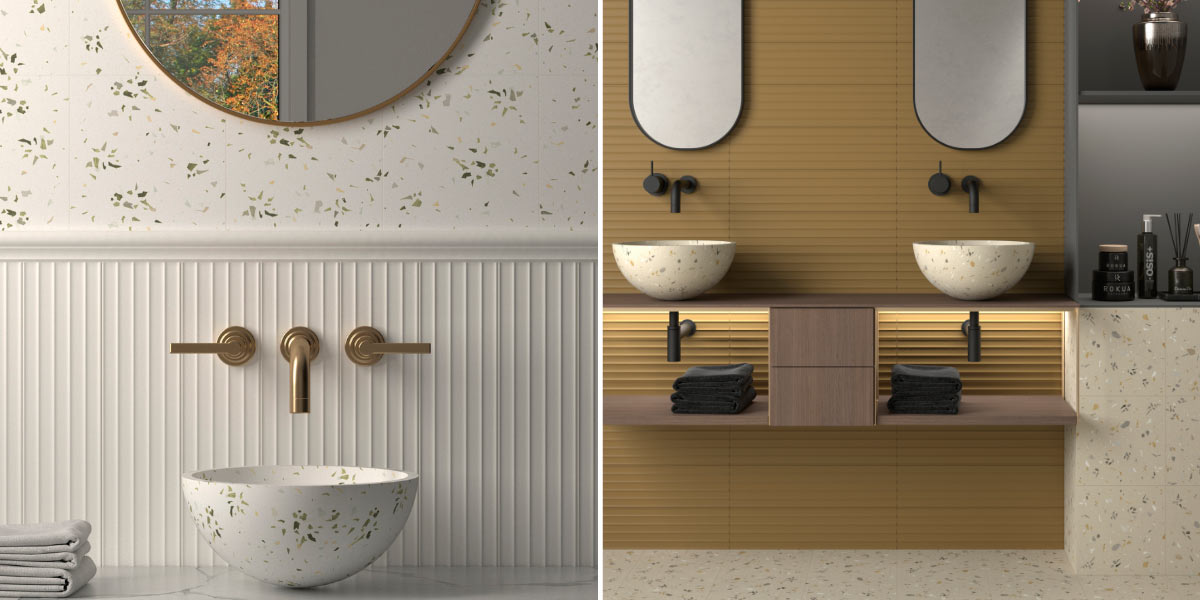
Application of 2026 ceramic trends in different spaces
In kitchens, ceramics are firmly established as a key material for both flooring and wall coverings. Large-format tiles in neutral or earth tones create elegant and functional spaces, while relief tiles or those with artisanal finishes are used to highlight specific areas, such as the backsplash. The kitchen of 2026 is an integrated space within the home, where design and functionality go hand in hand.
In bathrooms, trends favor a spa-like aesthetic, where natural colors, soft textures, and visual continuity create a sense of calm and well-being. Stone- or clay-effect tiles, combined with green or mineral blue tones, reinforce this connection with nature. Ceramics make it possible to create durable, easy-to-maintain spaces without compromising on design.
Outdoor areas and swimming pools are gaining increasing importance in contemporary decoration. In 2026, these spaces are conceived as a natural extension of the interior, and ceramics are the material that makes this continuity possible. Durable, slip-resistant tiles with natural finishes adapt perfectly to outdoor environments, creating elegant and long-lasting spaces.
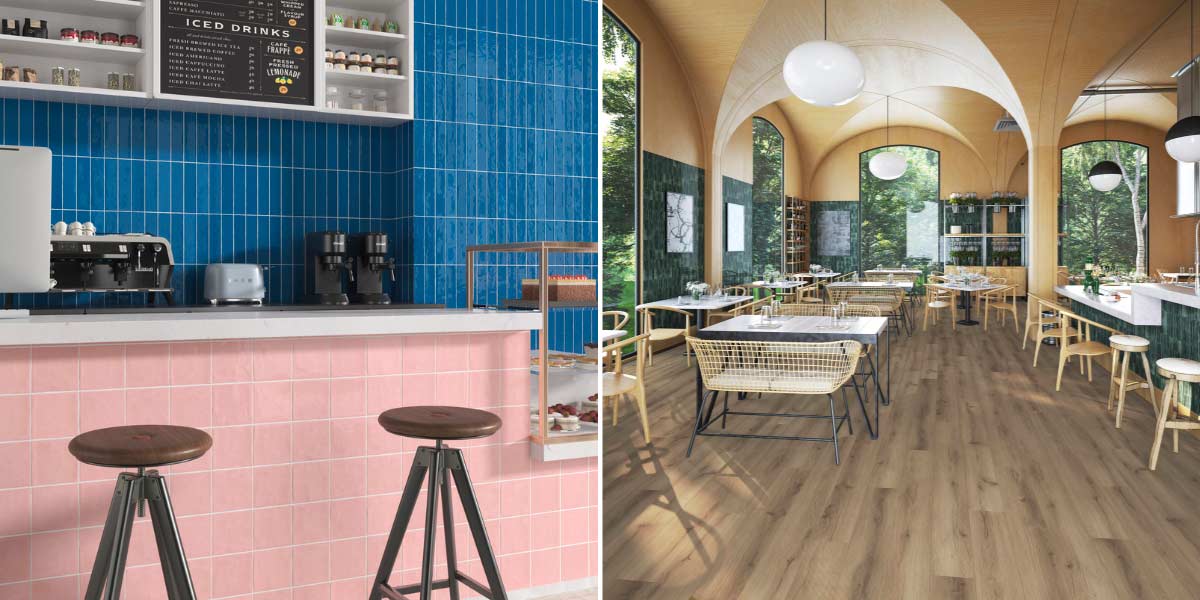
In contract and hospitality projects, ceramics become a strategic tool for conveying identity and standing out. Characterful tiles, deep colors, and distinctive finishes make it possible to create memorable spaces capable of generating experiences and reinforcing brand image.
How to integrate 2026 decoration trends into professional projects
For architects, interior designers, and designers, integrating the trends of 2026 means understanding ceramics as a project element, not just as a surface covering. The choice of colors, formats, and textures must respond to a global vision of the space, taking into account light, volumes, and final use.
The key lies in combining innovation with timelessness. Choosing high-quality ceramic materials with designs that dialogue with their surroundings makes it possible to create spaces that endure over time and maintain their aesthetic value.
Within this evolving design context, at Dune we position ourselves as a brand capable of anticipating trends and transforming them into ceramic solutions with high aesthetic and technical value. Our commitment to design, innovation, and quality allows us to meet the new demands of contemporary interior design. Decoration trends for 2026 find in our ceramics the perfect ally for creating unique, emotional, and long-lasting spaces, where every detail matters and every surface contributes to building a complete experience.