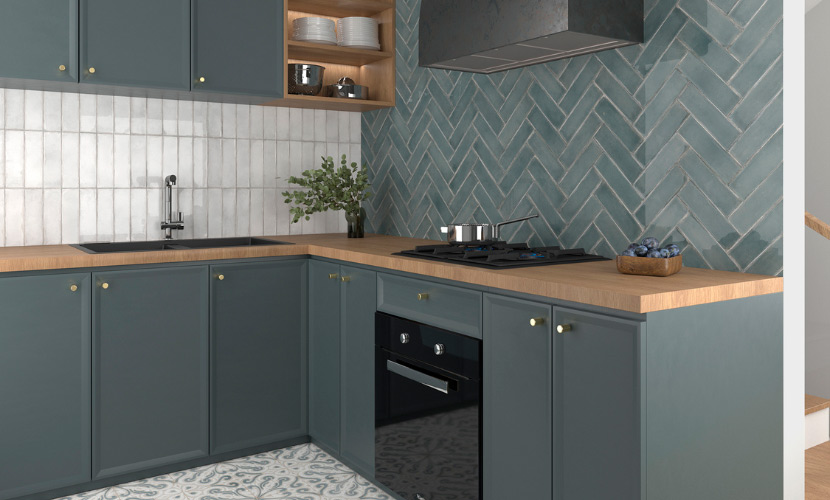

The 10 kitchen trends that will transform your home
The kitchen has ceased to be merely a functional space to become the true heart of the home. Today, it’s a meeting point where cooking, sharing, and daily enjoyment come together — a stage that reflects our lifestyle and personality.
In this context, new kitchen trends are embracing sustainable, durable, and high-quality materials that combine aesthetics and performance. Ceramic has established itself as the undisputed star thanks to its versatility and resistance, extending its presence beyond traditional floors and walls.
That’s why it’s increasingly common to see it on countertops, central islands, and decorative backsplashes, where it brings a touch of contemporary design without sacrificing functionality. With its multiple finishes, textures, and formats, ceramic allows the creation of unique, personalized spaces designed to stand the test of time.
Below, we explore the key trends that will shape kitchen design in the coming months and inspire you to transform yours into a beautiful, practical, and soulful space.
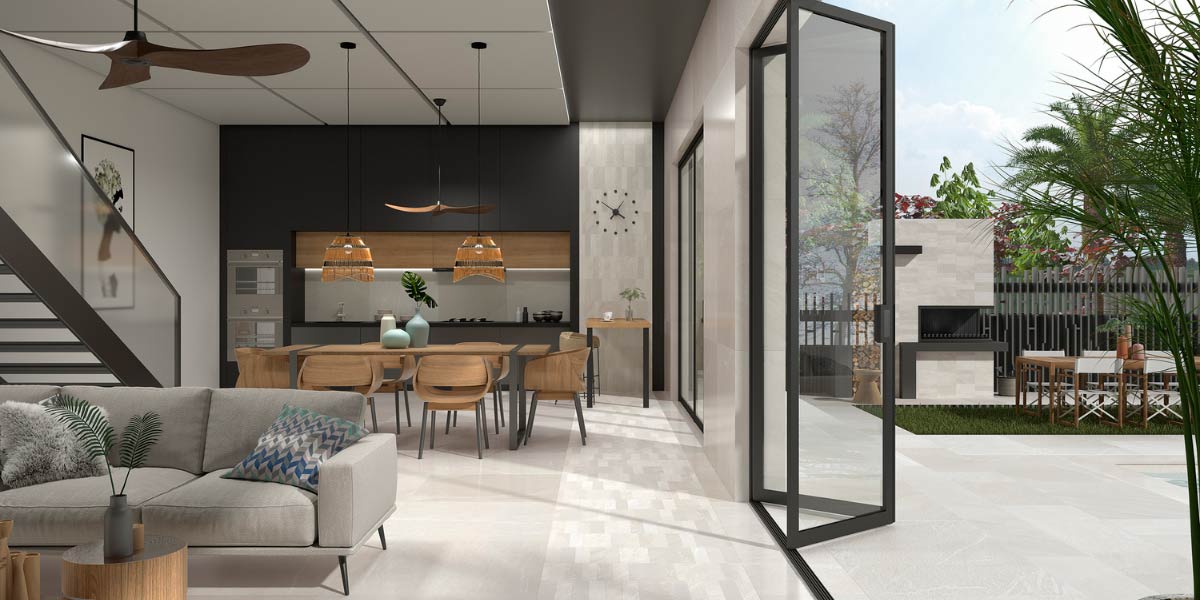
Tile trends for kitchens
The kitchen is constantly evolving, and tiles are key to defining its style. Every season brings new proposals that combine design, functionality, and personality. From colors and textures to formats and finishes, current trends invite you to create unique, practical spaces full of character.
Large-format ceramics: continuity and minimalism
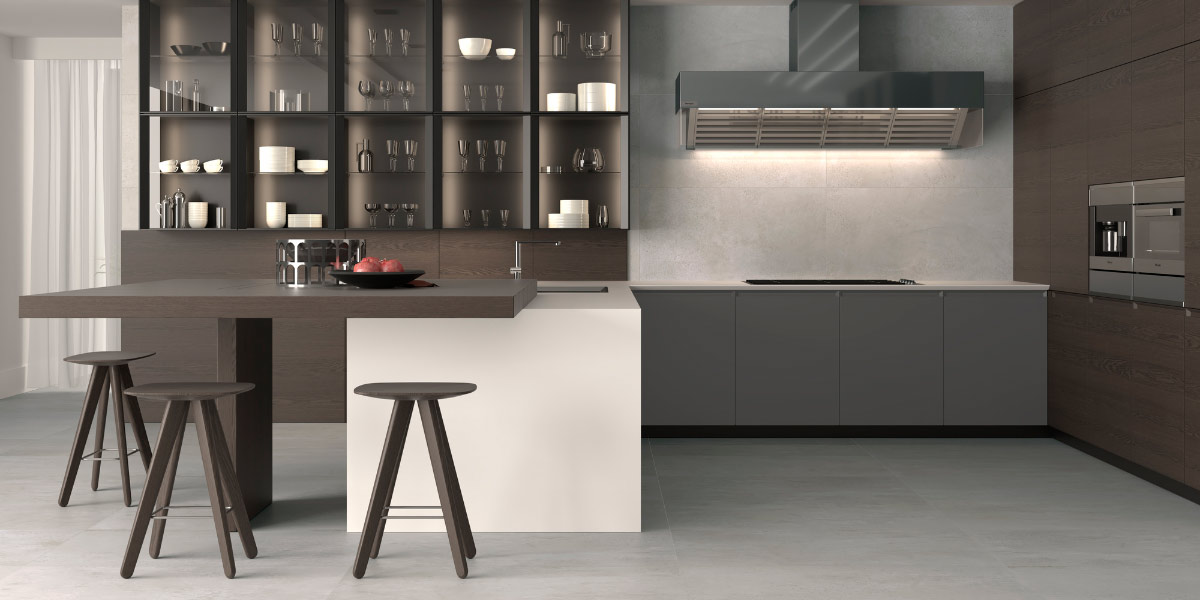
Contemporary design seeks fluid, organized, and visually spacious environments. In this regard, large-format ceramics have become one of the most prominent trends in kitchen design.
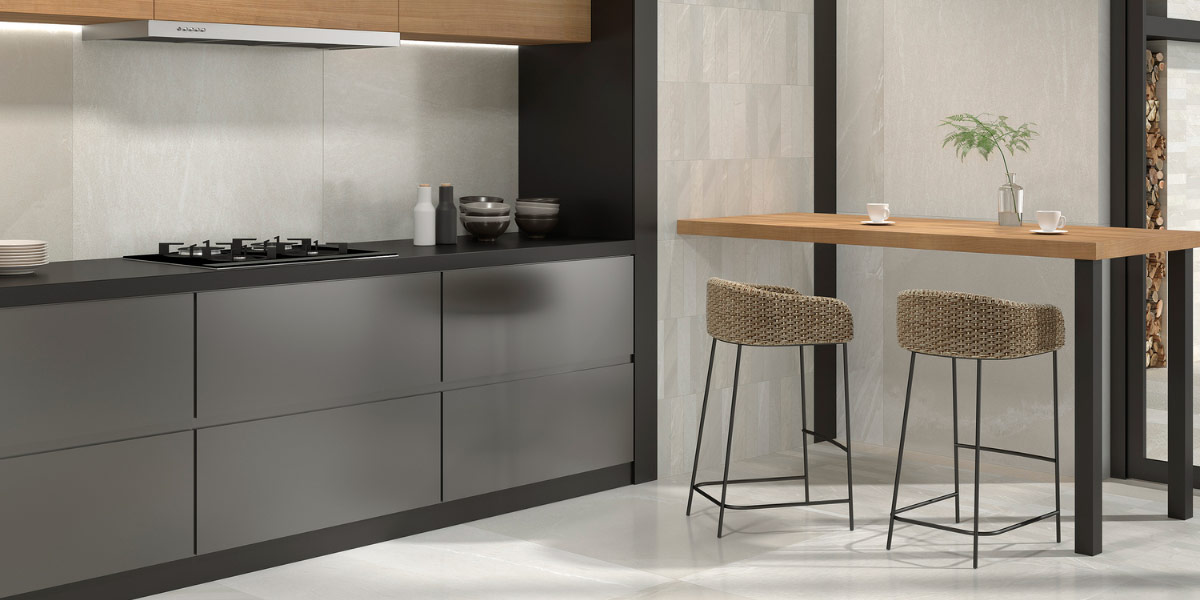
XXL formats create clean, continuous surfaces with minimal joints, providing a sense of visual harmony. This not only reinforces minimalist style but also facilitates cleaning and maintenance — essential qualities in a space used daily.
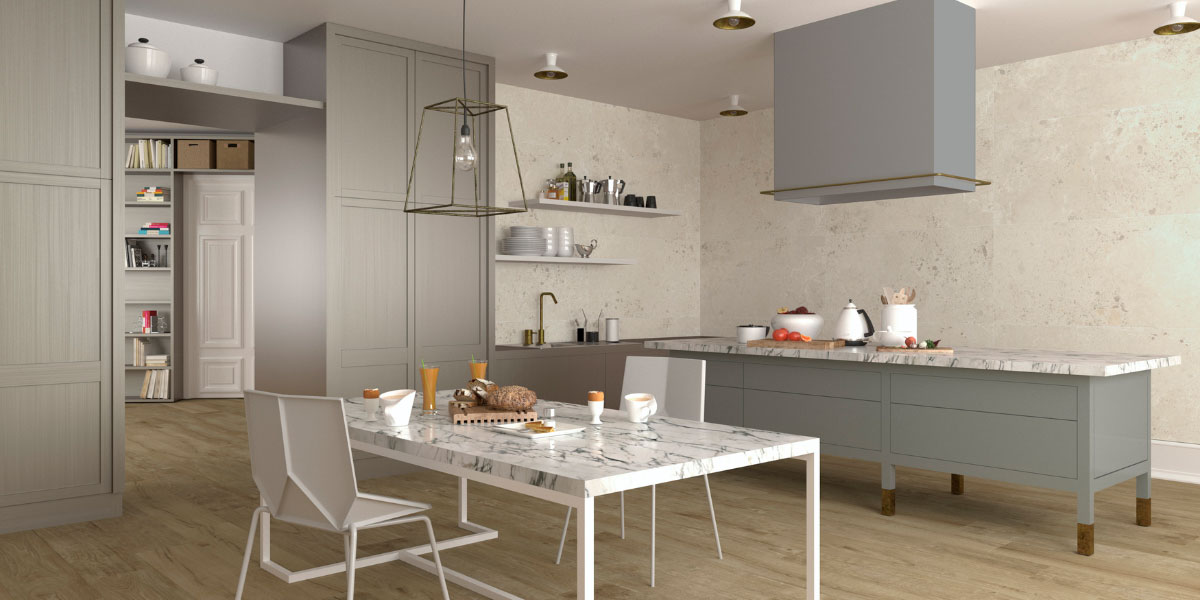
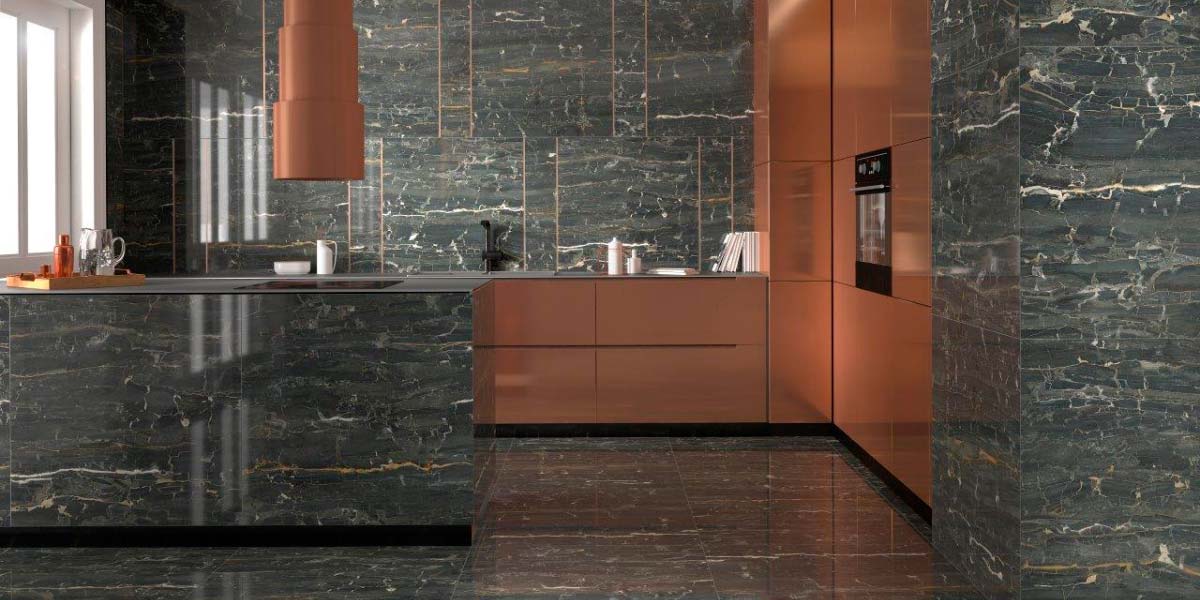
Their versatility makes these pieces ideal for countertops, backsplashes, and even walls, generating aesthetic coherence throughout the kitchen. Thanks to technological advances in printing and finishing, it’s now possible to faithfully reproduce the textures of stone, marble, or cement, achieving a sophisticated and natural effect that elevates design to another level.
Ceramic countertops replacing other materials
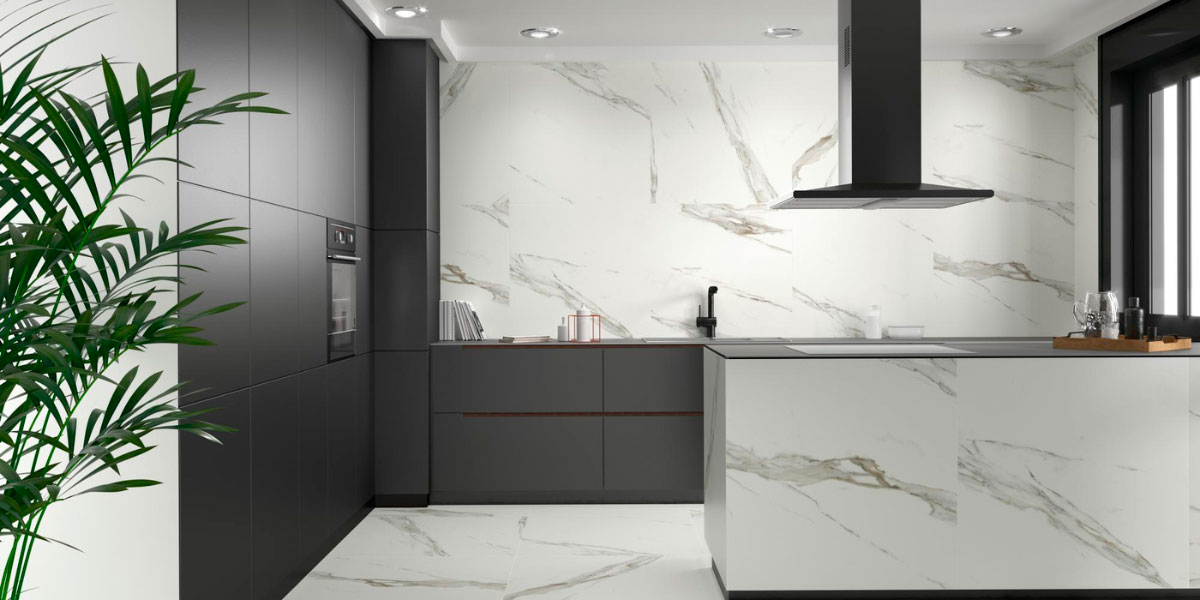
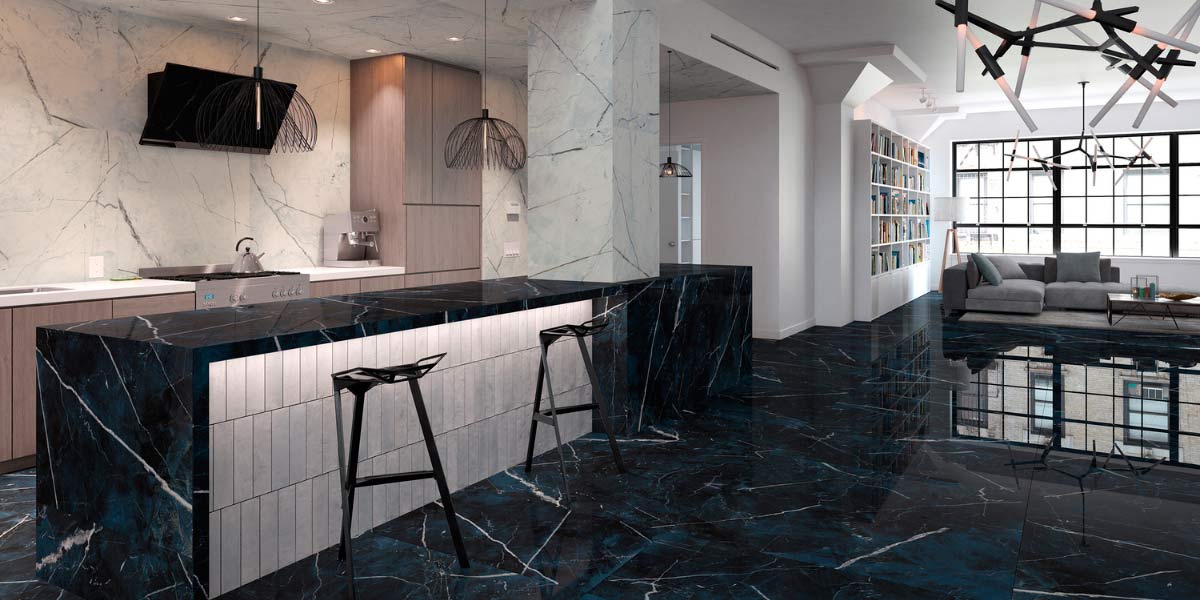
The search for materials that combine beauty and functionality has positioned ceramic countertops at the forefront of contemporary kitchens. Thanks to technological innovation, ceramics can now realistically reproduce the elegance of marble, the sobriety of cement, or the natural appeal of stone, offering a sustainable and durable alternative.
These surfaces stand out for their resistance to heat, scratches, and stains, making them ideal for intensive use without compromising on premium aesthetics. Their easy maintenance and timeless appearance make them an intelligent choice for those seeking sophisticated, hygienic, and low-maintenance countertops.
Available in a wide range of finishes — from classic polished gloss to natural matte textures — ceramic countertops recreate the essence of natural marble with versatility that expands design possibilities in any kitchen style.
Decorative ceramic backsplashes
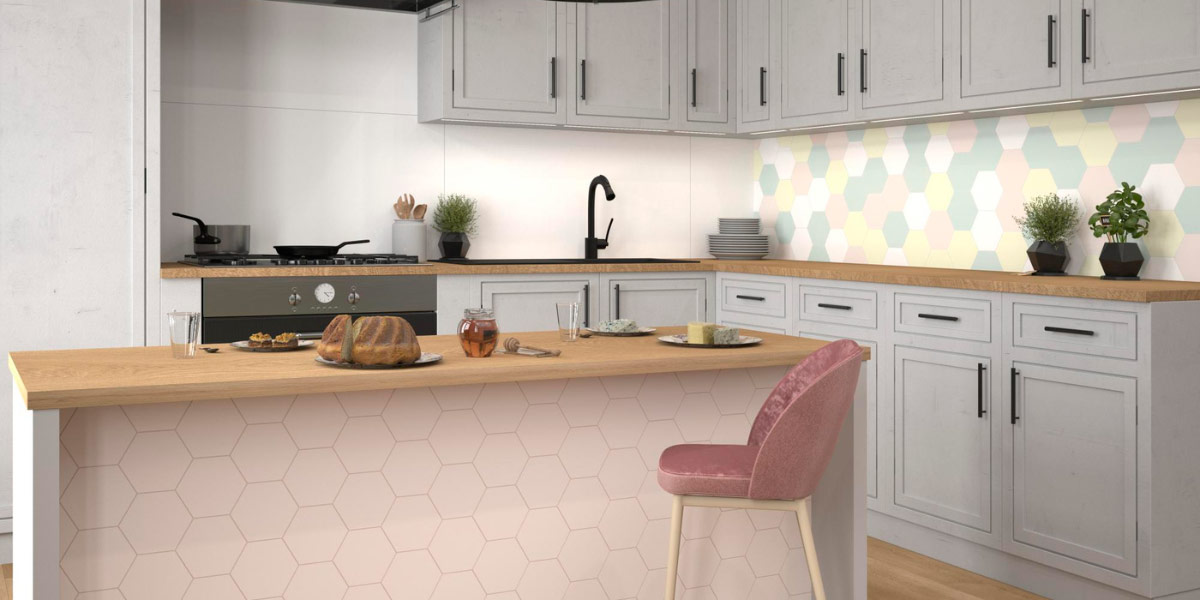
In contemporary kitchens, the backsplash has evolved from a purely functional element into a true decorative feature. Its strategic location makes it a focal point — a perfect surface to experiment with color, texture, and format.
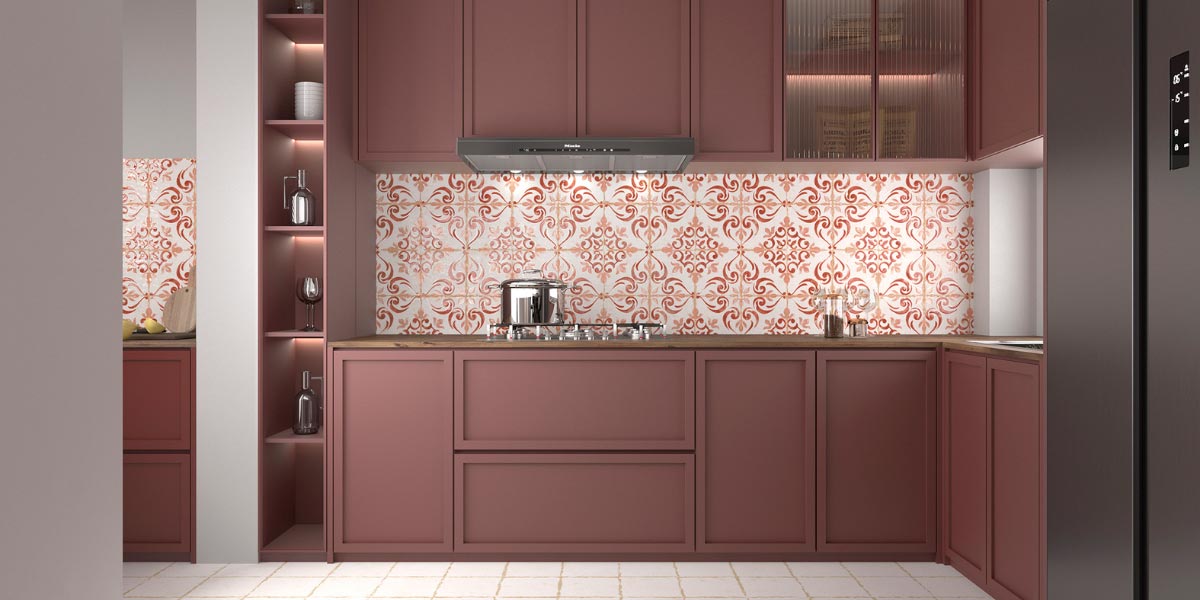
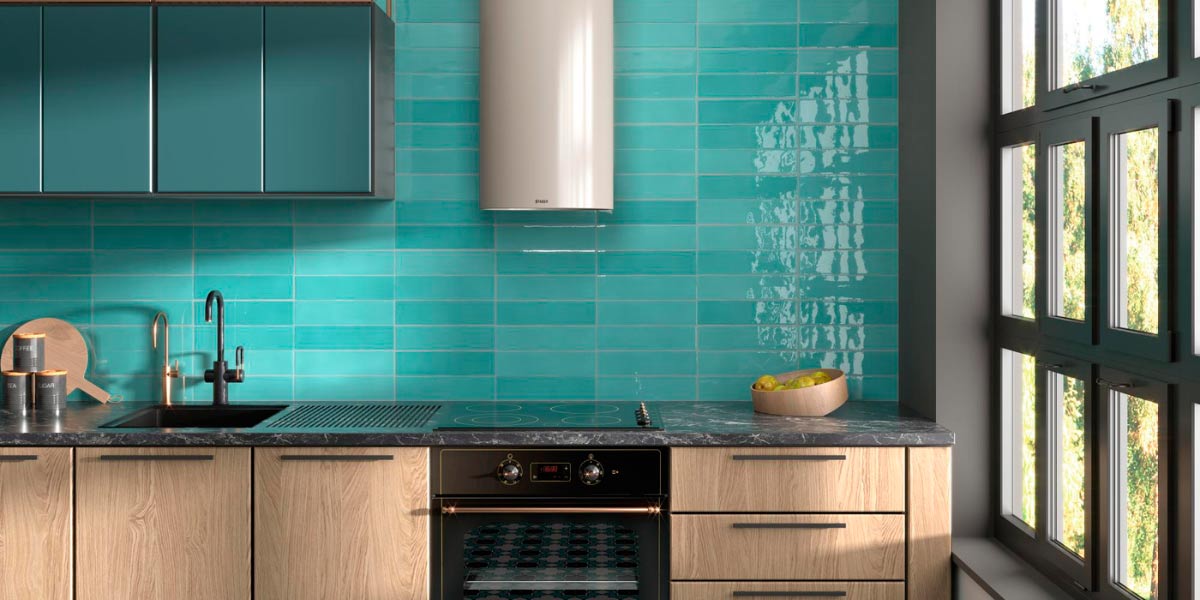
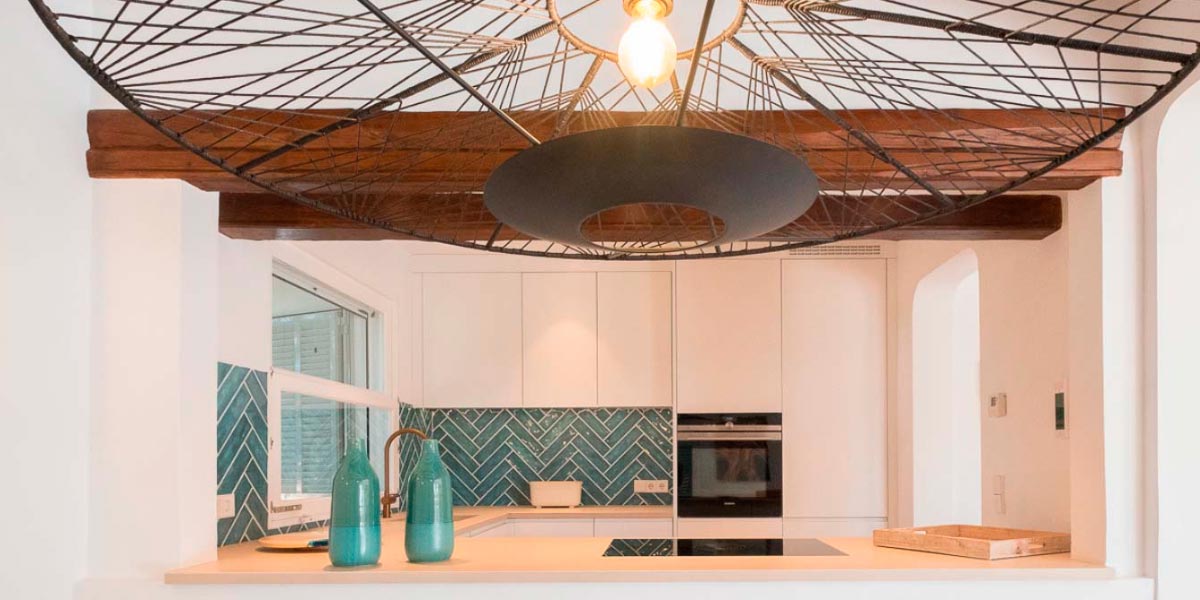
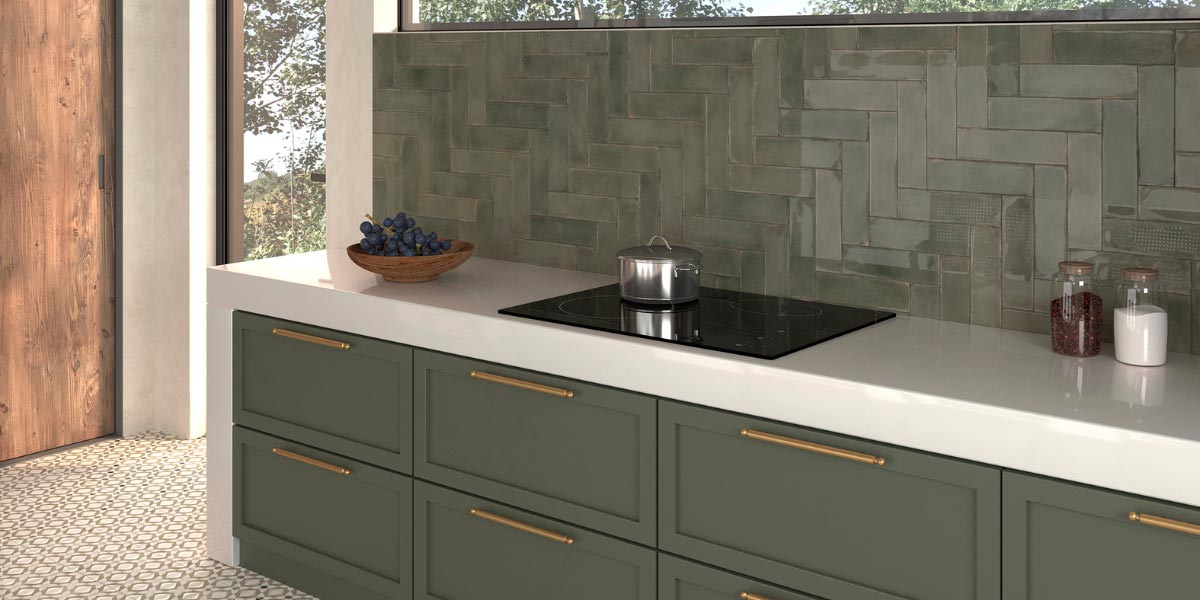
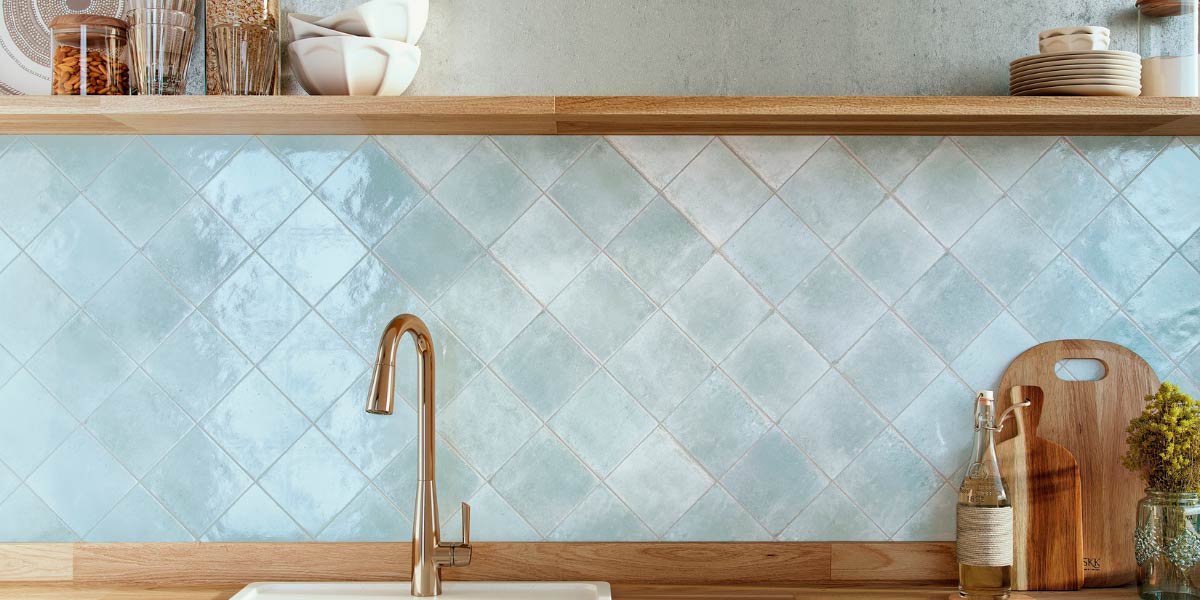
New decorative ceramic designs offer endless possibilities: from subtle reliefs or 3D volumes to geometric mosaics, artisanal effects, or color combinations that bring visual dynamism. These designs personalize the kitchen and give it a distinctive identity.
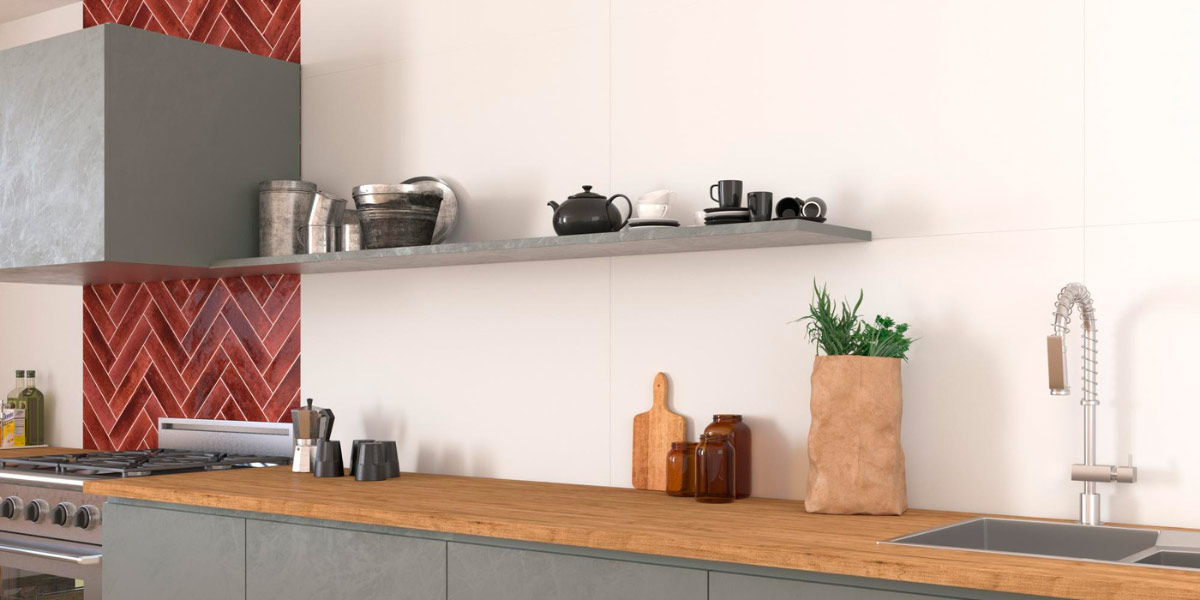
When combined with smooth or monochrome countertops, decorative ceramic backsplashes create an elegant and balanced contrast, highlighting the texture and depth of the material. Beyond aesthetics, ceramic remains hygienic, durable, and easy to clean, making it as practical as it is beautiful.
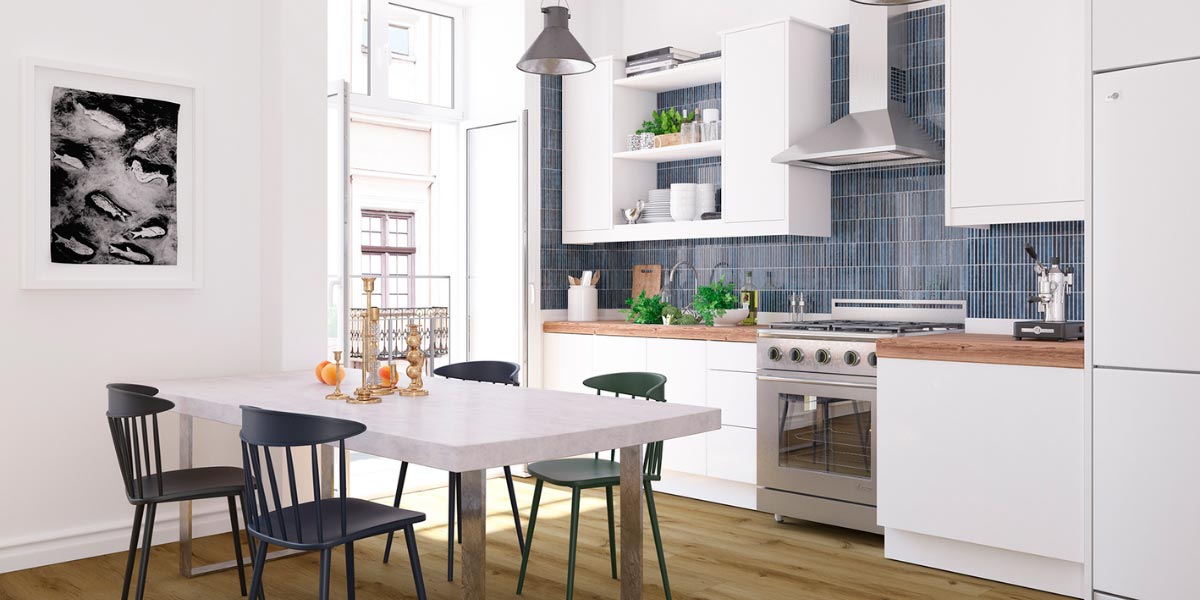
Natural effects: stone, clay, and wood-look ceramics
The connection with nature continues to guide interior design, and the kitchen is no exception. Materials that evoke authenticity and natural warmth are timeless trends. In this context, ceramics become the perfect ally to recreate stone, clay, or wood effects with striking realism.
Collections inspired by natural stone bring elegance and visual solidity, while earthy clay tones convey calm and balance. Wood-look ceramics provide the warmth and texture of real wood but with ceramic durability — ideal for high-traffic or work areas.
This trend enables cozy, organic kitchens full of nuances, where every detail invites reconnection with the essentials. The combination of natural finishes and advanced ceramic technology shows that beauty and sustainability can go hand in hand.
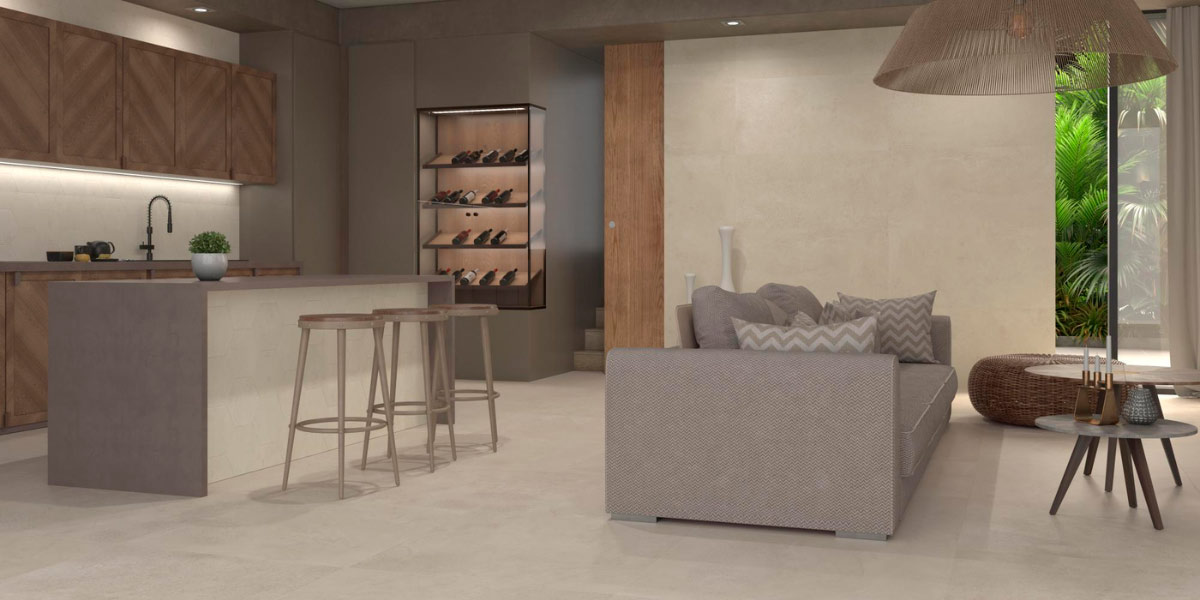
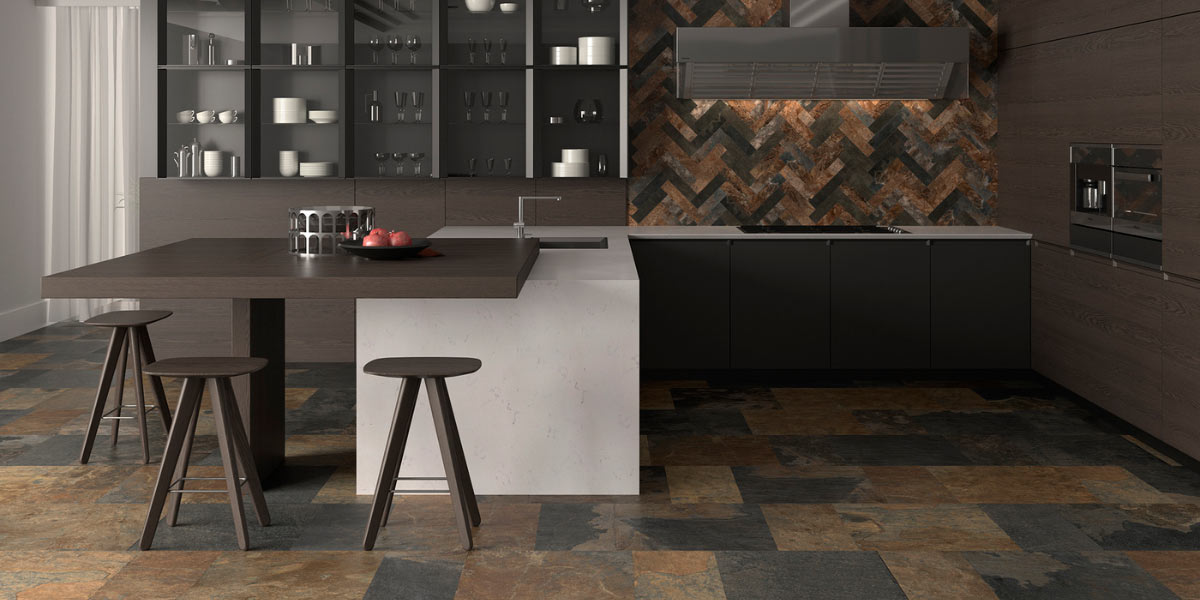
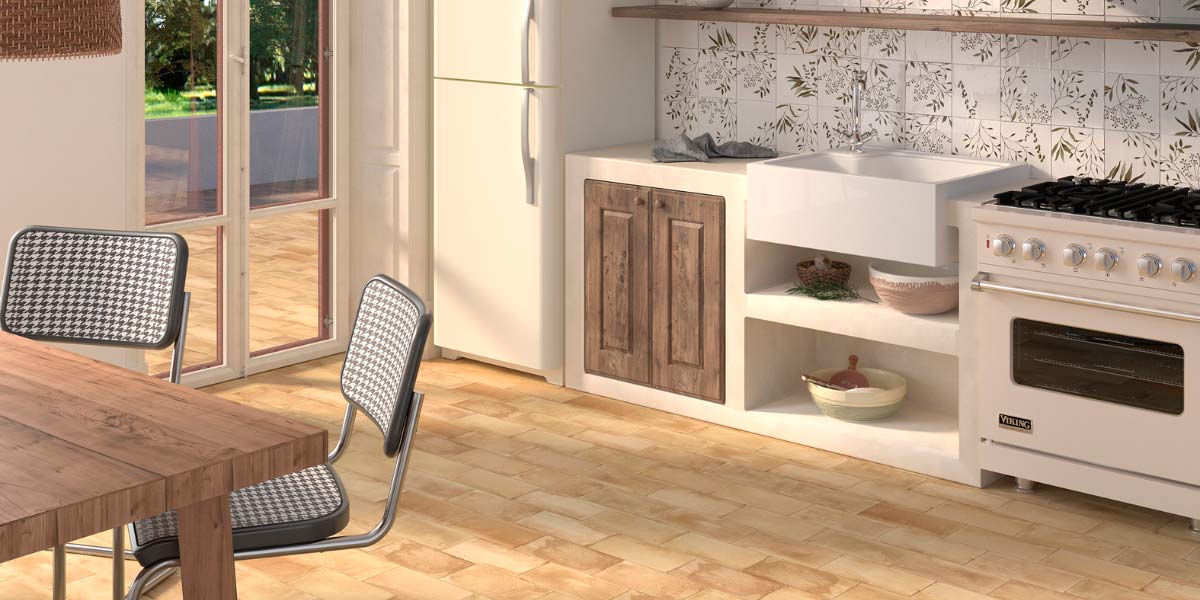
Warm and earthy ceramic colors
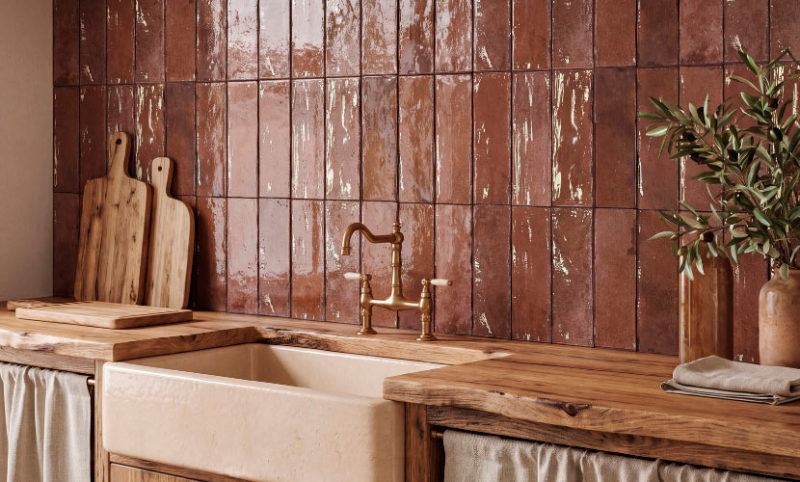
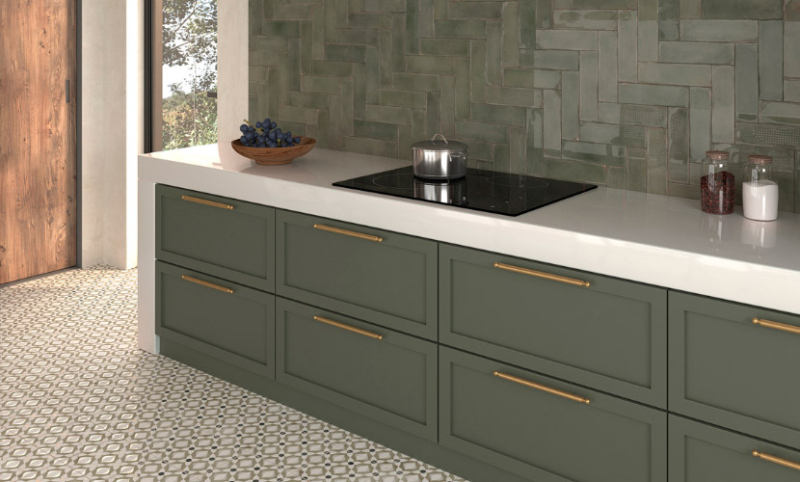
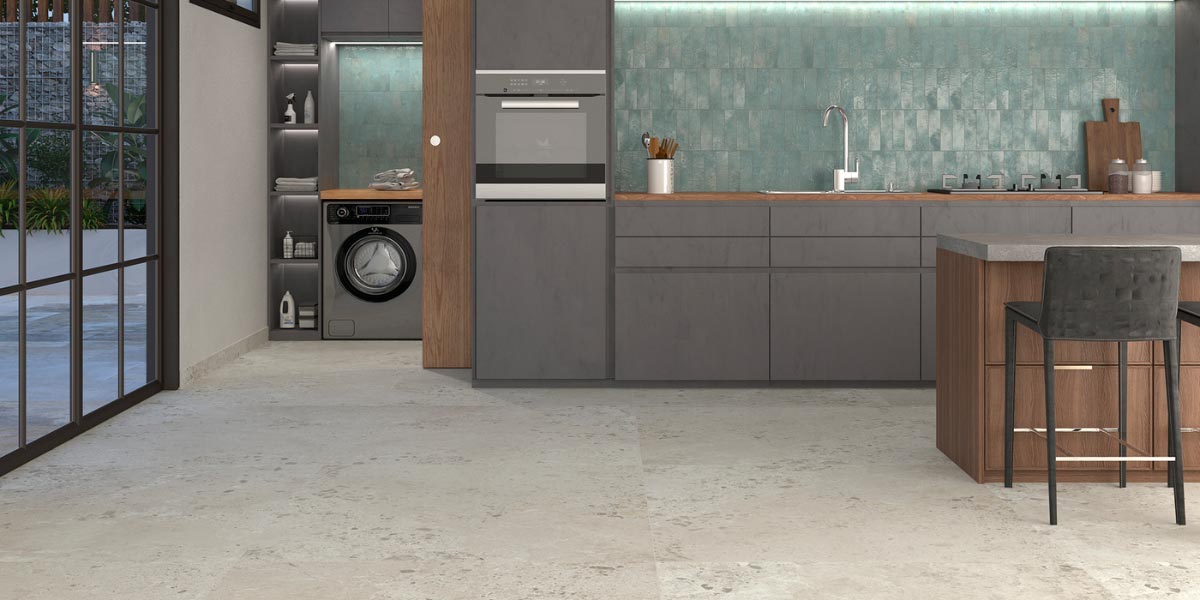
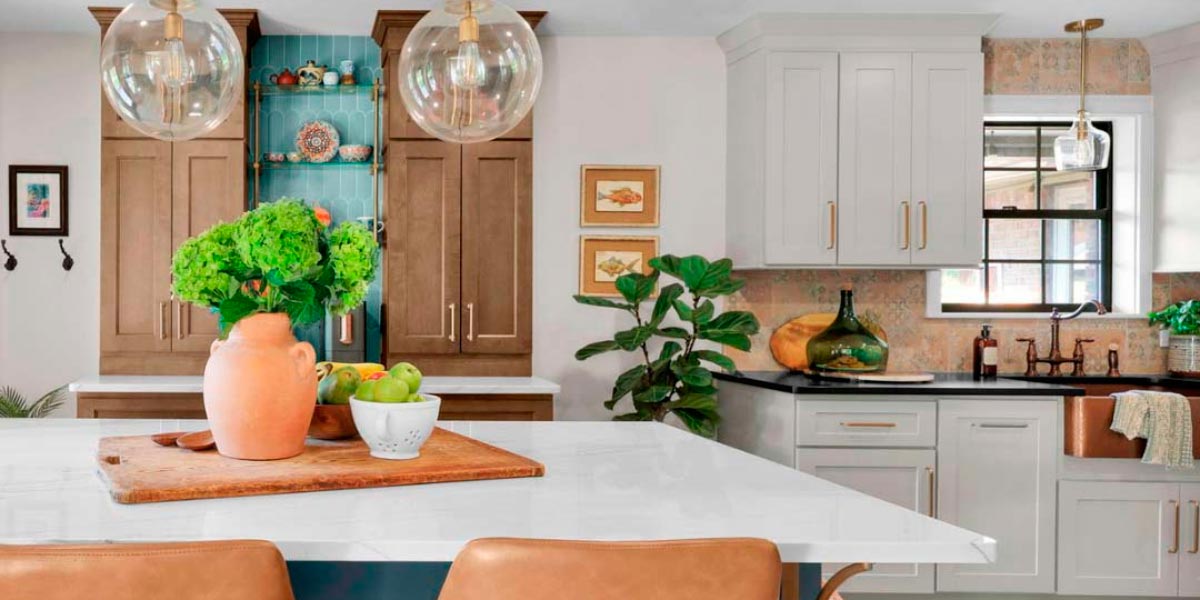
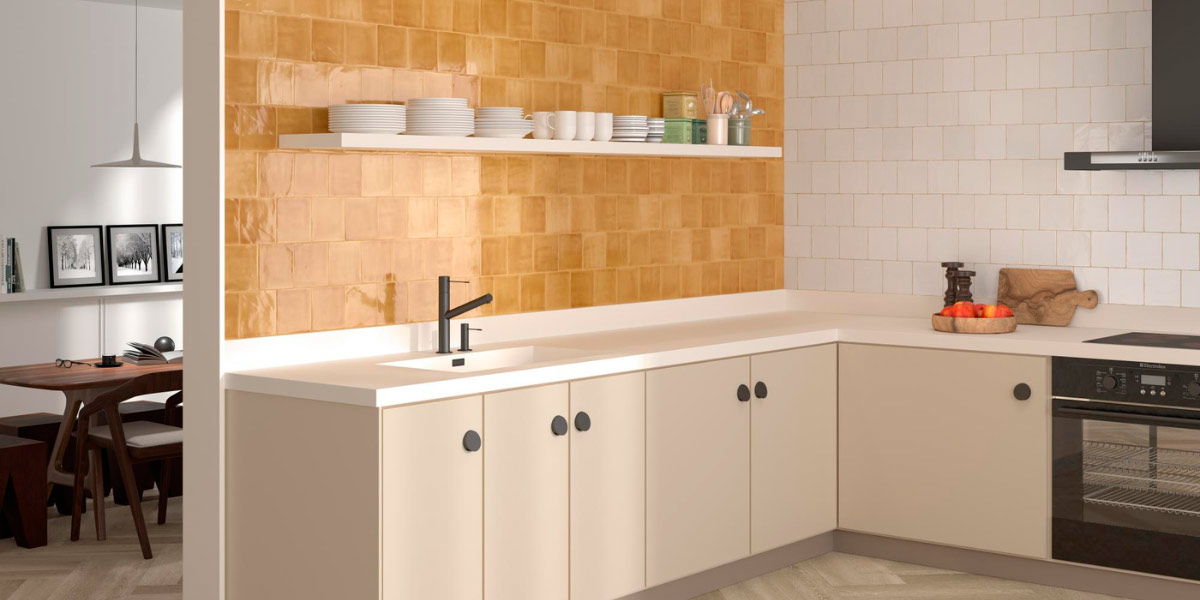
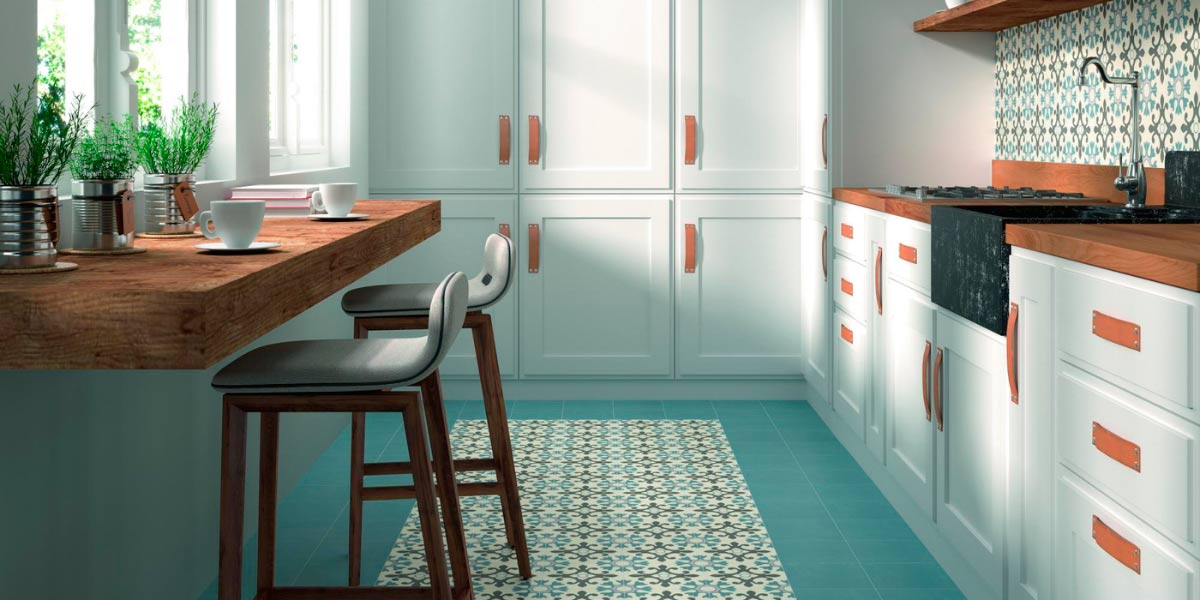
As kitchen design evolves, cold minimalist tones are giving way to warmer, more enveloping palettes. Ceramics now embrace nature-inspired shades: soft beiges, artisanal terracottas, olive greens, and sandy hues that evoke calm, balance, and a connection to the earth.
These colors bring timeless coziness, turning the kitchen into a space of well-being. Their versatility also makes them easy to combine with metal elements, wood accents, or neutral surfaces — achieving the perfect balance between contemporary and natural aesthetics.
The shift toward earthy tones reflects a search for authenticity and visual comfort, values enhanced by ceramic texture and finish. Whether used on walls, floors, or countertops, these shades transform the kitchen into a harmonious space where design and warmth coexist.
Matte textures and soft finishes
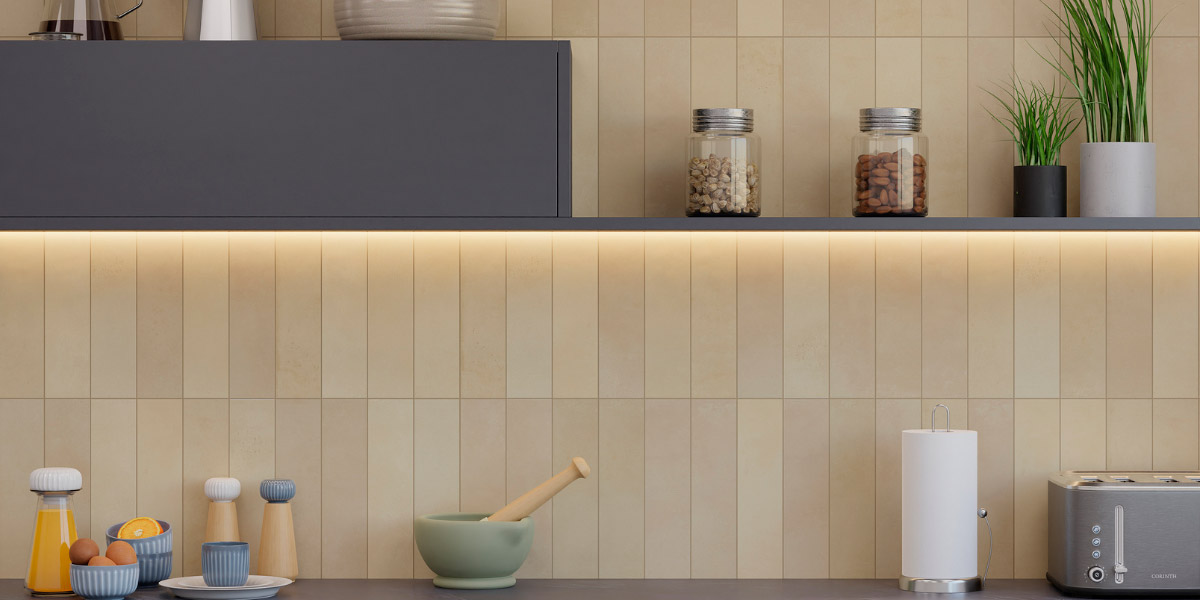
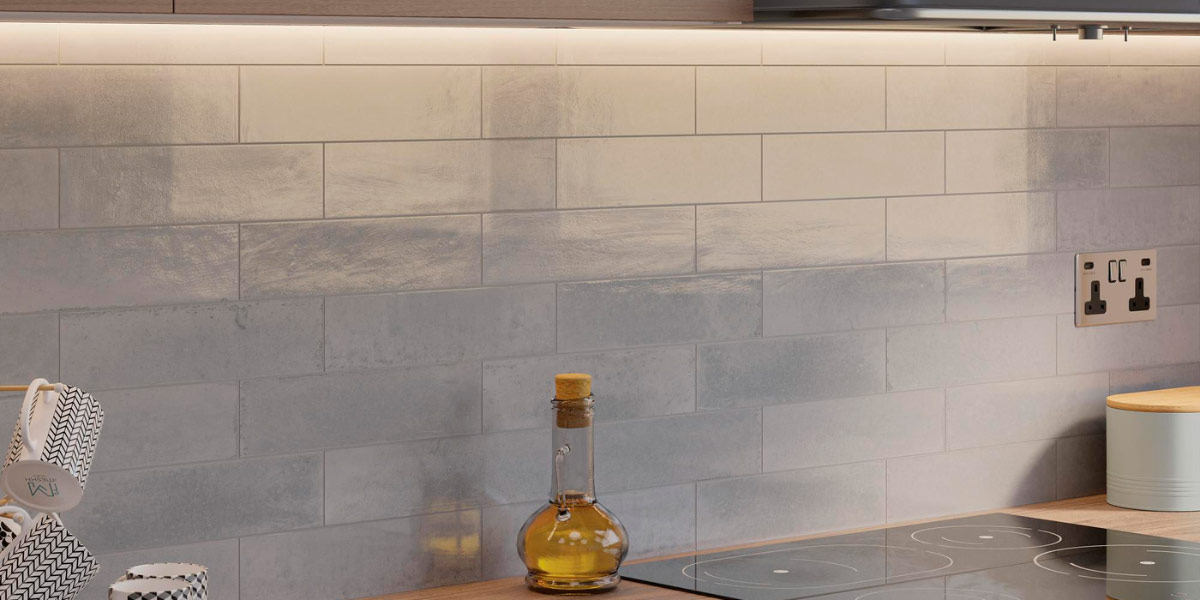
Glossy surfaces are giving way to a new era of finishes that prioritize subtlety and calm. Matte or satin finishes, along with soft-touch textures, are establishing themselves as one of the year’s strongest kitchen trends.
These surfaces, pleasant to the touch and visually refined, create an atmosphere of serenity — perfect for contemporary spaces. The absence of reflections fosters a more natural and immersive aesthetic, giving rise to kitchens that invite relaxation and daily enjoyment.
This finish also enhances harmony with other materials — such as stone, wood, or artisanal ceramics — resulting in balanced spaces where calm design takes center stage. In short, a trend that blends technology, functionality, and aesthetic sensitivity to redefine the culinary experience.
Ceramic transitions between kitchen and living room
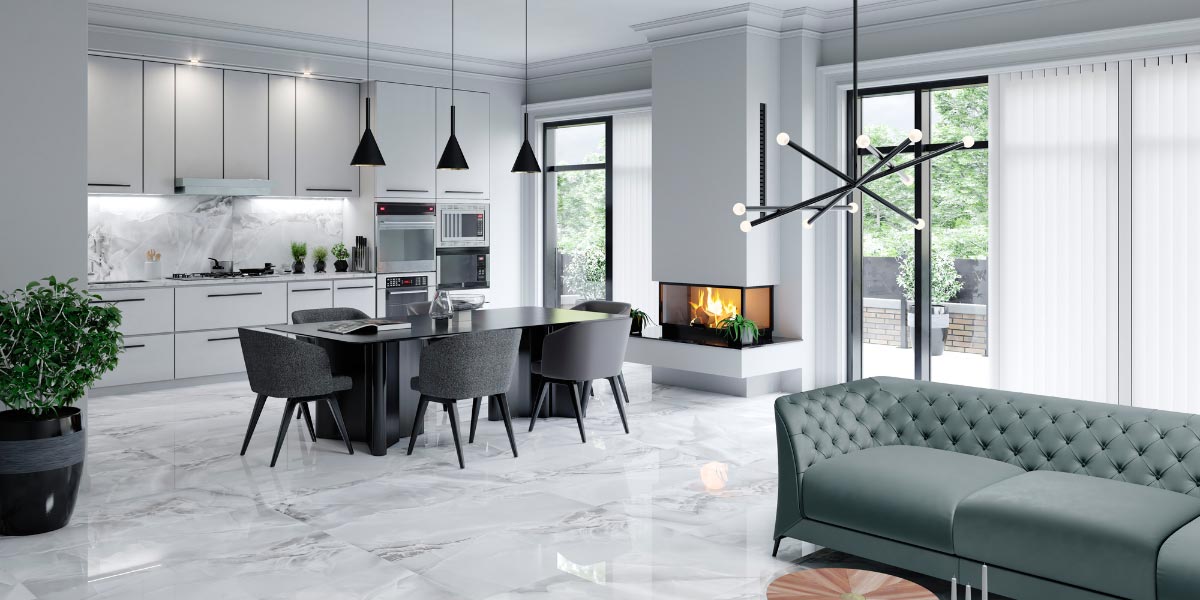
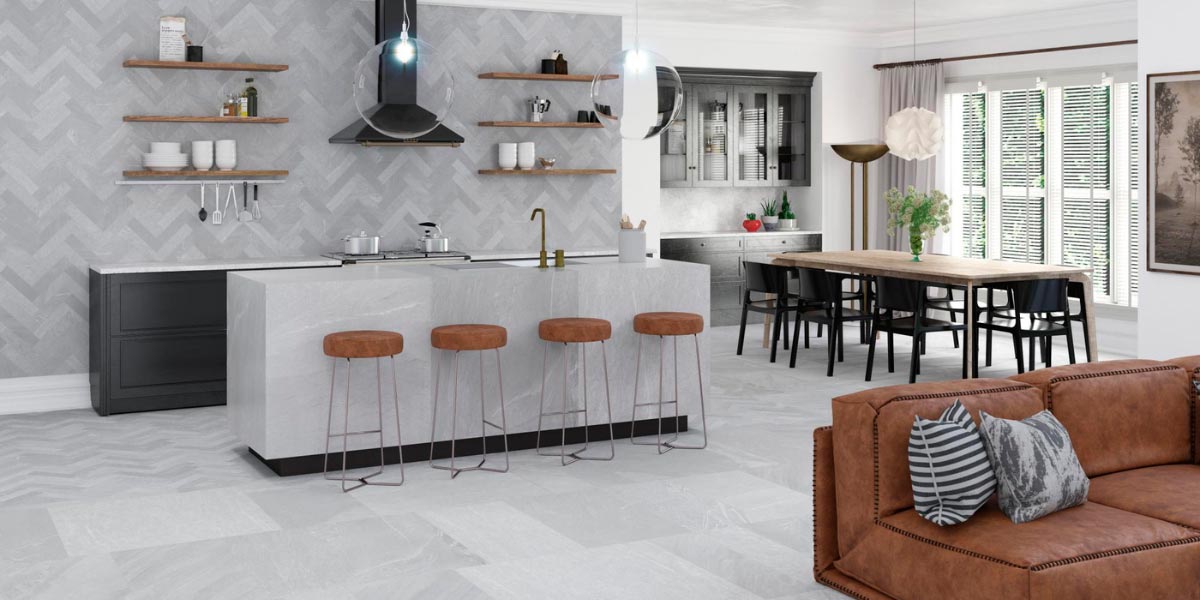
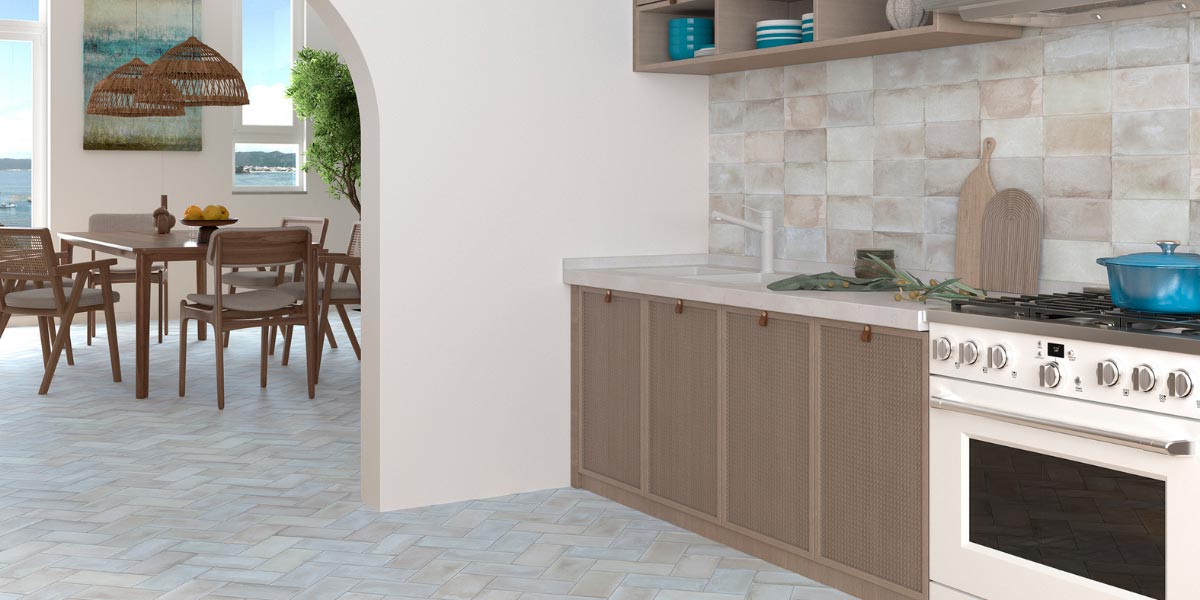
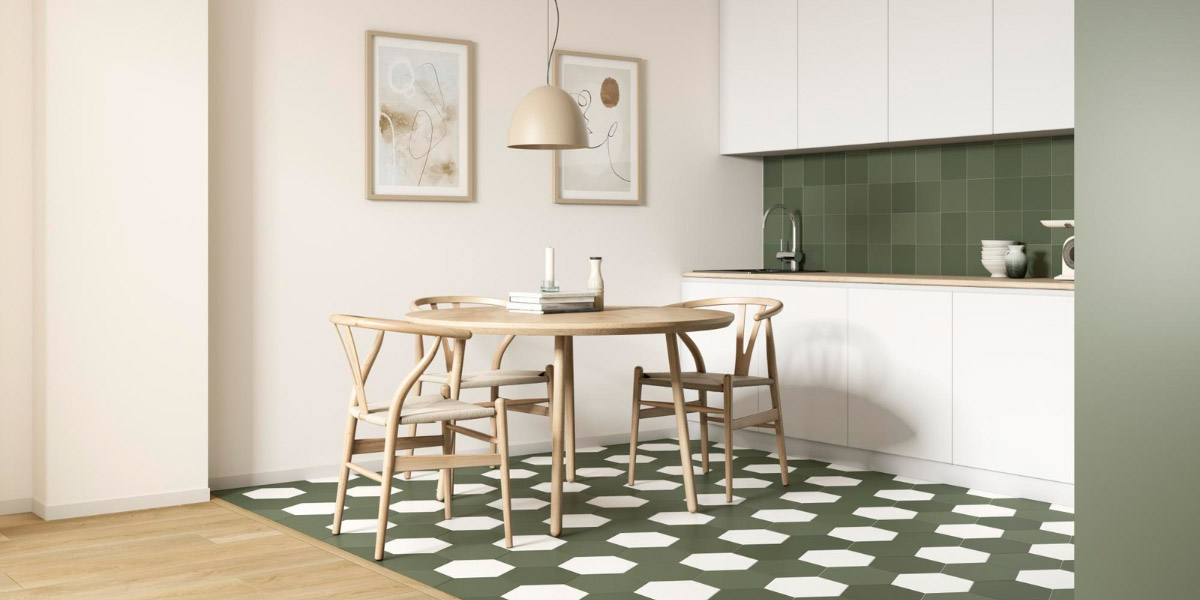
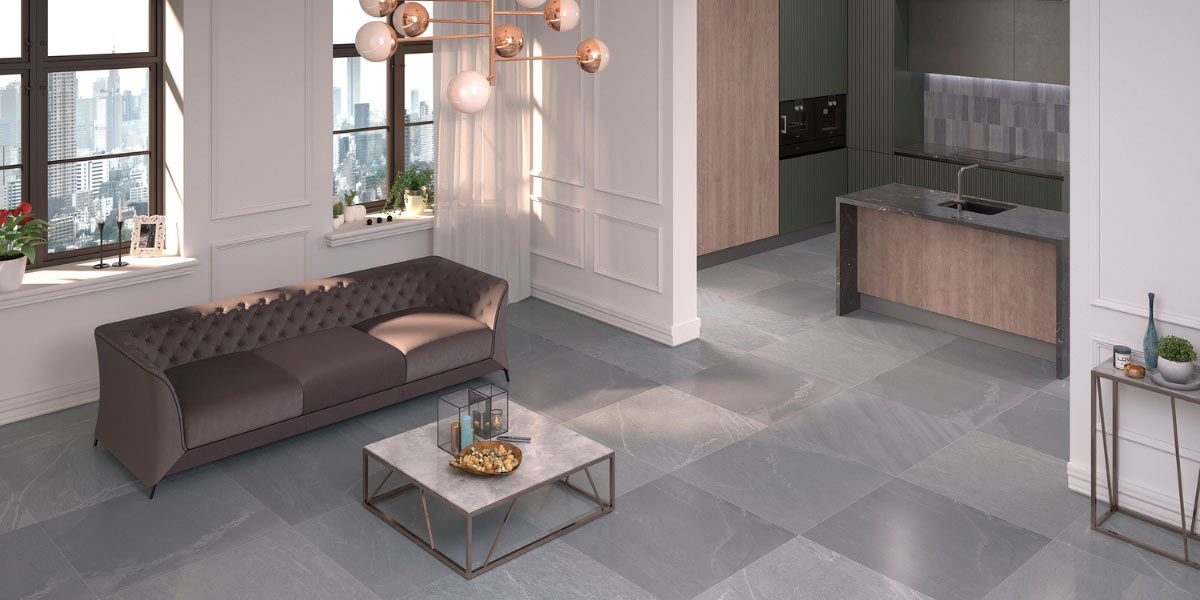
Open-plan kitchens have become the heart of modern homes, bringing the need to unify spaces fluidly and elegantly. In this context, ceramics are the ideal material for creating natural, seamless transitions between areas.
Thanks to their versatility in formats, finishes, and colors, ceramic floors maintain visual continuity from kitchen to dining or living areas, generating harmony and a sense of spaciousness.
Using the same ceramic surface across both spaces not only ensures stylistic unity but also offers practical advantages: durability, easy maintenance, and resistance to daily use. The result is integrated, balanced spaces with a modern aesthetic that celebrates togetherness and functionality.
Reliefs and volume: 3D ceramic effects
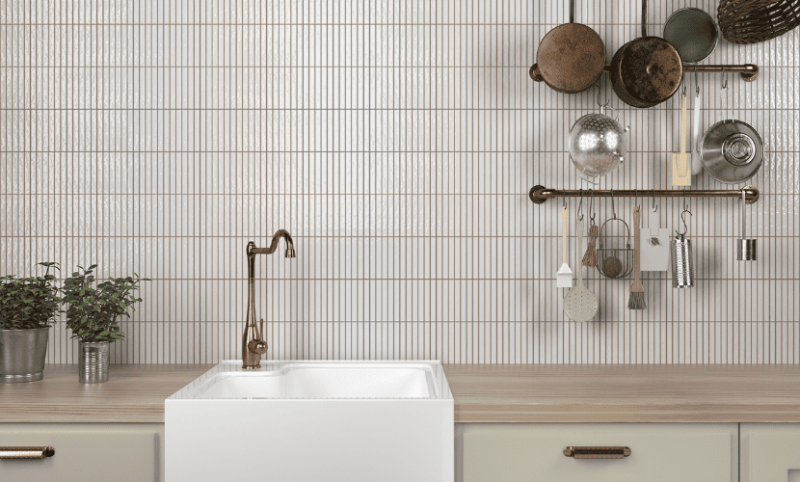
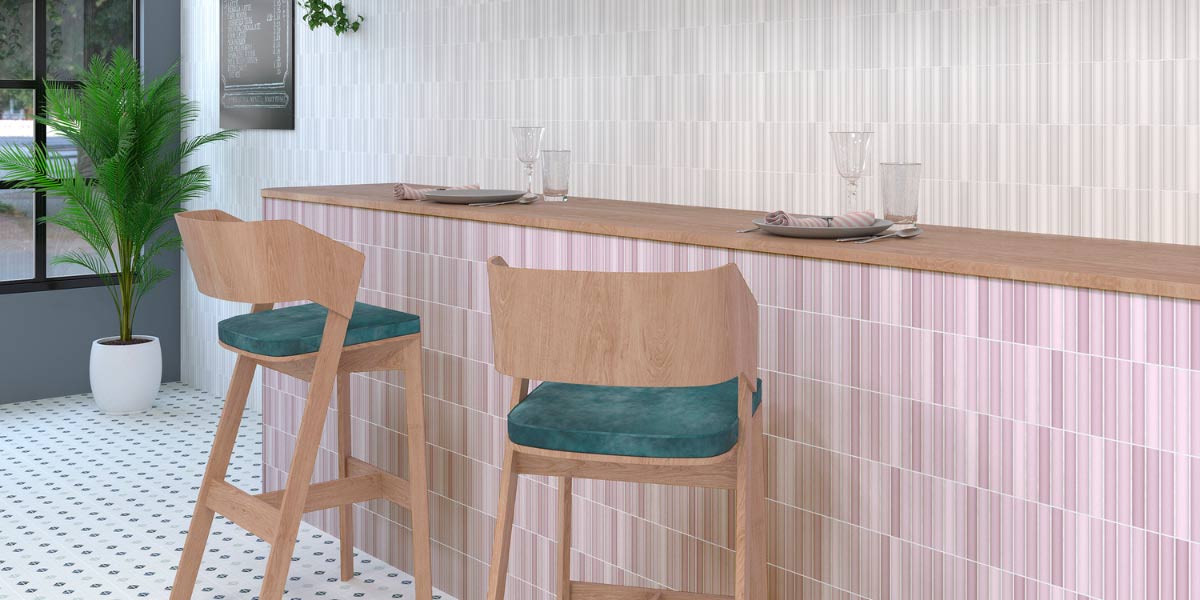
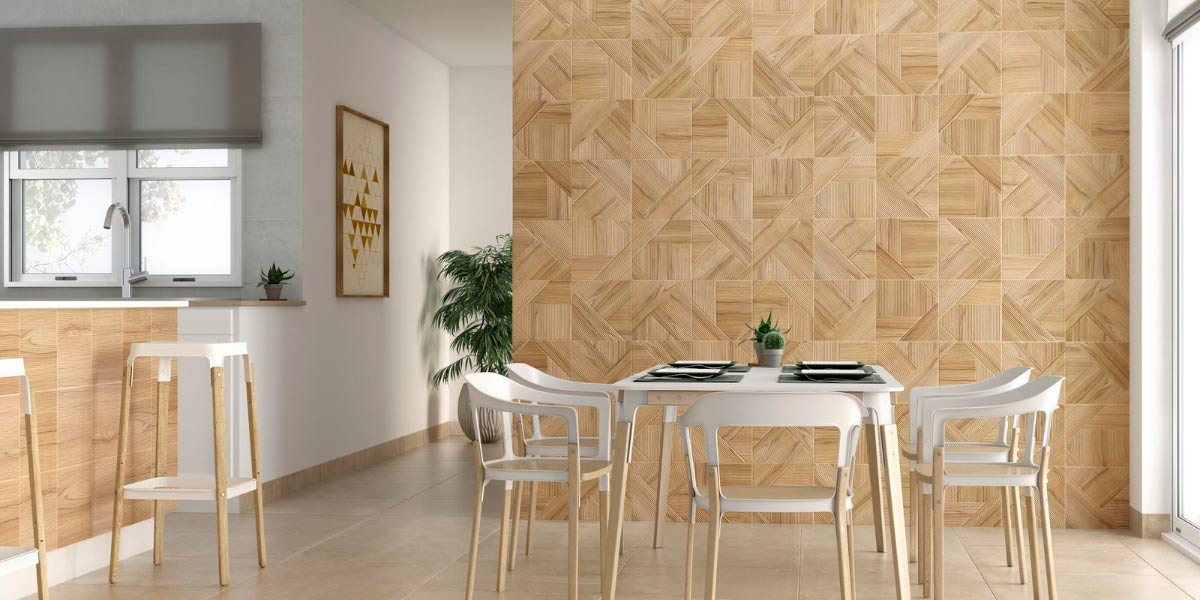
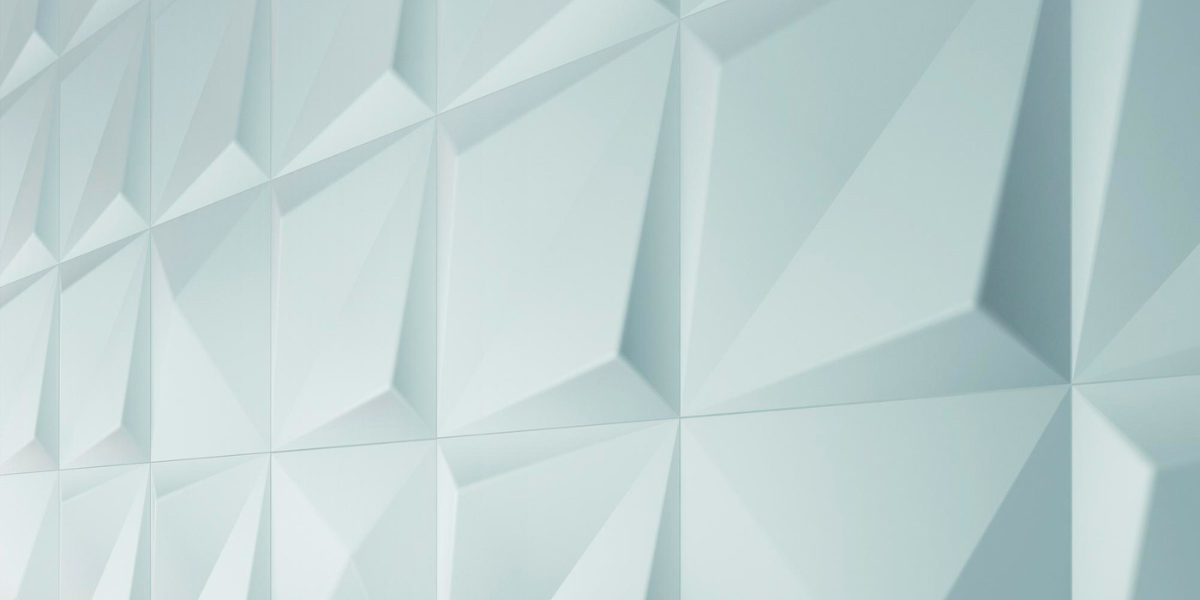
Modern ceramic design goes beyond smooth surfaces. This year, relief tiles — grooved or three-dimensional geometric forms — are gaining prominence, adding depth and dynamism to kitchen walls.
These pieces become true decorative elements, playing with light and shadow to create a visual effect full of depth and variation. Applied to backsplashes or feature walls, 3D ceramics become focal points that add character and personality without needing bold colors.
Grazing light — whether natural or artificial — enhances this trend, highlighting reliefs and every texture detail. The result is kitchens with tactile, architectural beauty, where ceramics become a creative tool for three-dimensional design.
Sustainable and technological ceramics
Sustainability has become a pillar of contemporary design, and ceramics are part of this transformation. New material generations embrace responsible manufacturing, using recycled raw materials and low-impact processes that minimize water and energy consumption.
The result is products that blend aesthetics, functionality, and environmental awareness — offering solutions that beautify spaces while contributing to well-being. Sustainable, high-tech ceramics represent the perfect union of responsible design and advanced innovation.
Combining ceramics with other materials
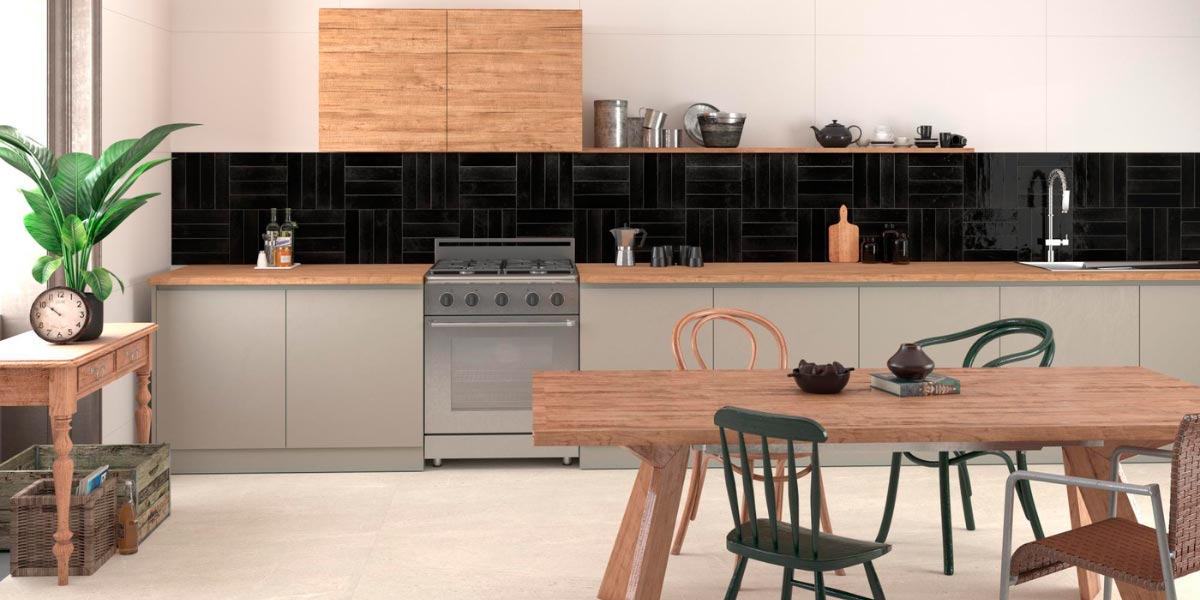
Modern kitchen design seeks both balance and contrast, and one of the most sophisticated ways to achieve this is through material combinations. Ceramics act as the perfect canvas to complement other textures like wood, glass, or metal — creating spaces full of character and nuance.
Wood brings warmth and naturalness, metal adds a contemporary industrial touch, and glass contributes lightness and brightness. In this context, porcelain serves as a neutral, versatile base that enhances the beauty of complementary materials without overpowering them.
This trend reflects a search for sensory balance, where organic and technological elements coexist in perfect harmony. The result is timeless kitchens where ceramics not only clad surfaces but connect materials and styles to form unique compositions.
This year’s ceramic kitchen trends revolve around three key pillars: naturalness, sustainability, and sophistication. Ceramic establishes itself as a material that brings warmth and elegance while meeting the needs of a functional, eco-conscious home.
At Dune Cerámica, our collections embody these principles, offering wall and floor coverings and decorative details that combine aesthetics and technology. Every piece is designed to create harmonious, long-lasting, and stylish spaces where quality, design, and environmental awareness coexist in perfect balance.
Thus, your kitchen ceases to be just a workspace — it becomes a sophisticated, welcoming environment connected to the latest ceramic design trends, where every texture, finish, and material speaks of care, innovation, and timeless style.