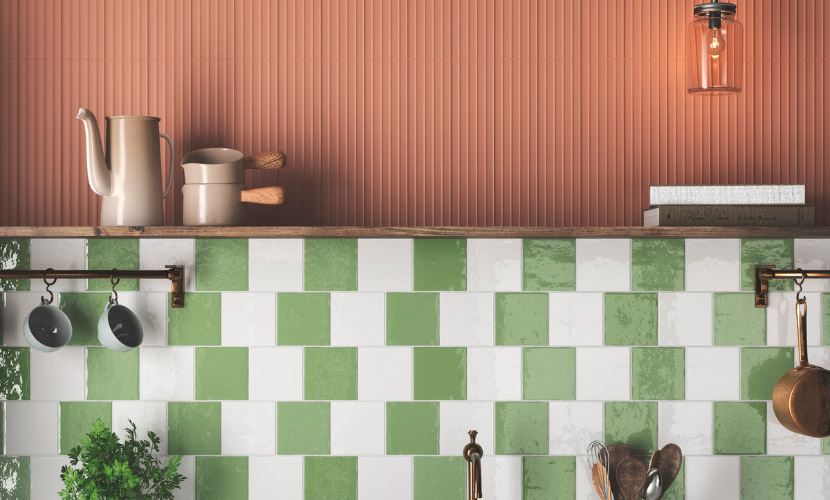

Tiling a wall with ceramic tiles: styles and designs for every space
Cladding a wall with ceramic pieces is one of the most effective ways to completely transform any room. Tiles have evolved to become a key decorative element: they are no longer used only for their moisture resistance or easy maintenance, but also for their ability to provide design, personality, and added value to the space.
Today, the wide range of ceramic formats, colours, textures, and finishes makes it possible to create endless atmospheres, from minimalist proposals to highly decorative compositions. Below, we present an inspiring guide to help you clad a wall with ceramic pieces.
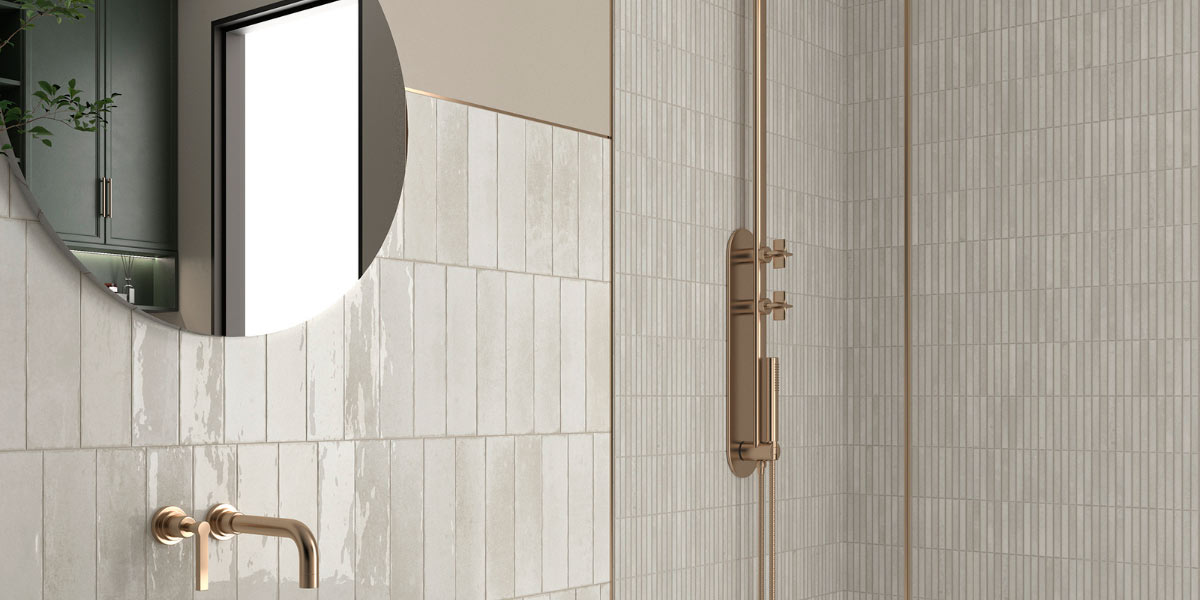
Types of ceramic pieces for wall cladding
When cladding a wall with ceramic pieces, it is important to understand the different available options in order to choose the material that best suits the style, function, and personality of the space. Each type of piece offers unique qualities and a distinctive aesthetic impact. Below, we explore the most commonly used categories in interior design:
Tiles
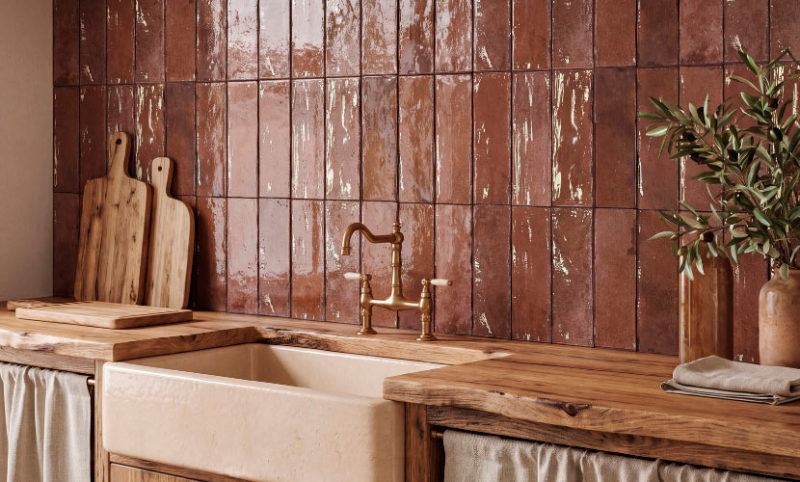
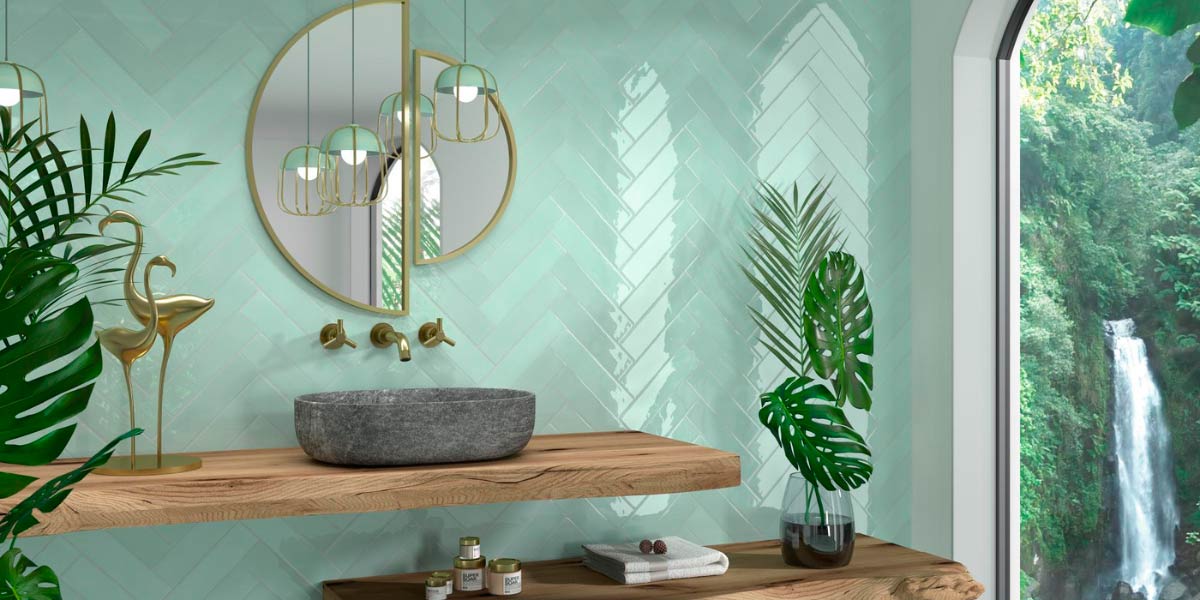
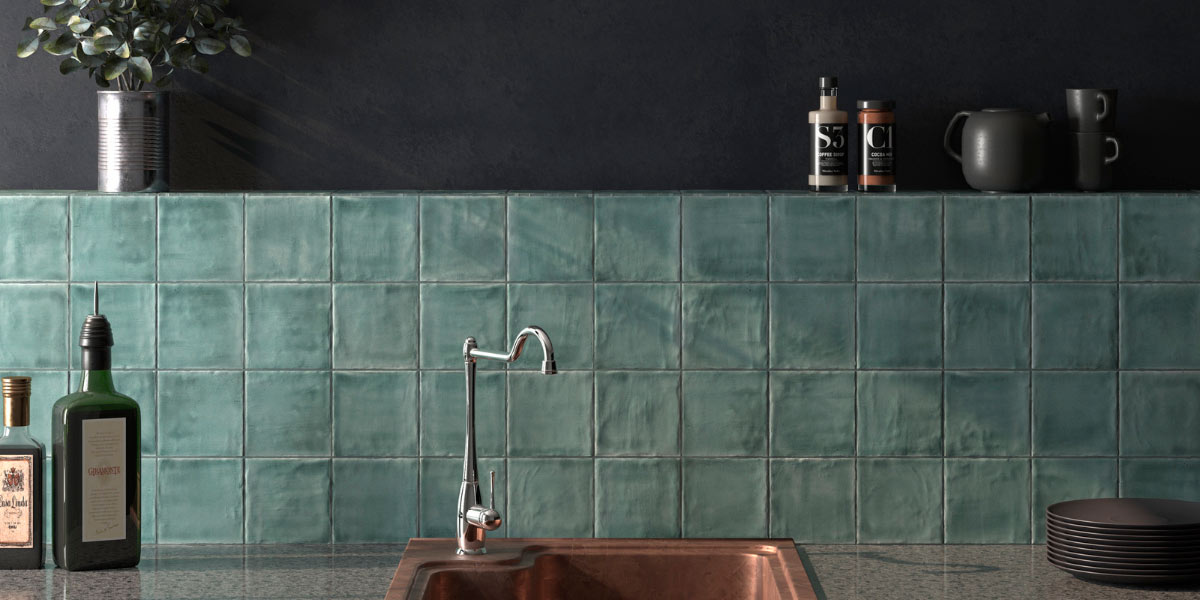
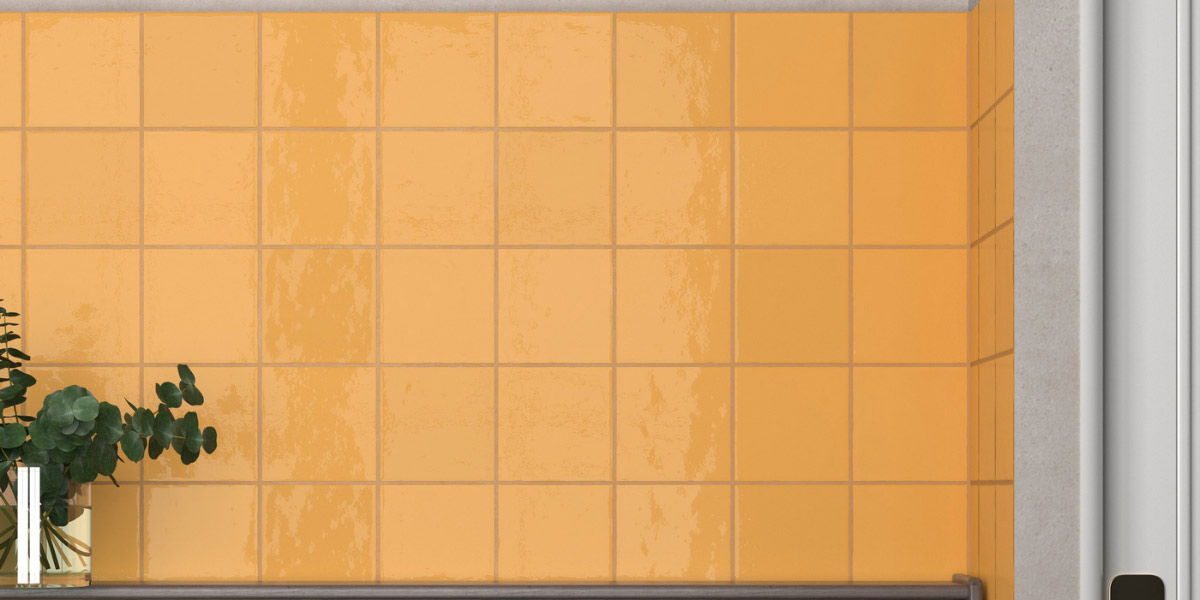
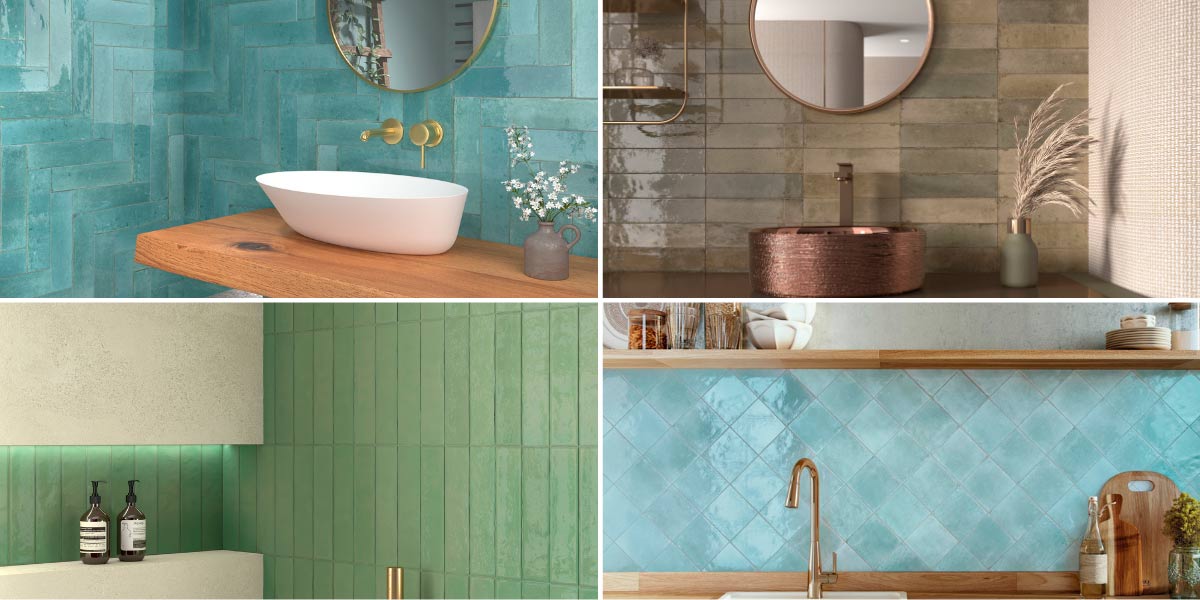
Traditional wall tiles are one of the most popular solutions for wall cladding, thanks to their ease of cleaning, variety of colours and finishes, and excellent value for money. Their glazed surface brings brightness, luminosity, and strong decorative potential. They range from neutral tones to vibrant colours, including handcrafted effects and satin finishes. They are ideal for cladding any room in the home—bathrooms, kitchens, or living areas that require a resistant and visually appealing covering.
Mosaics
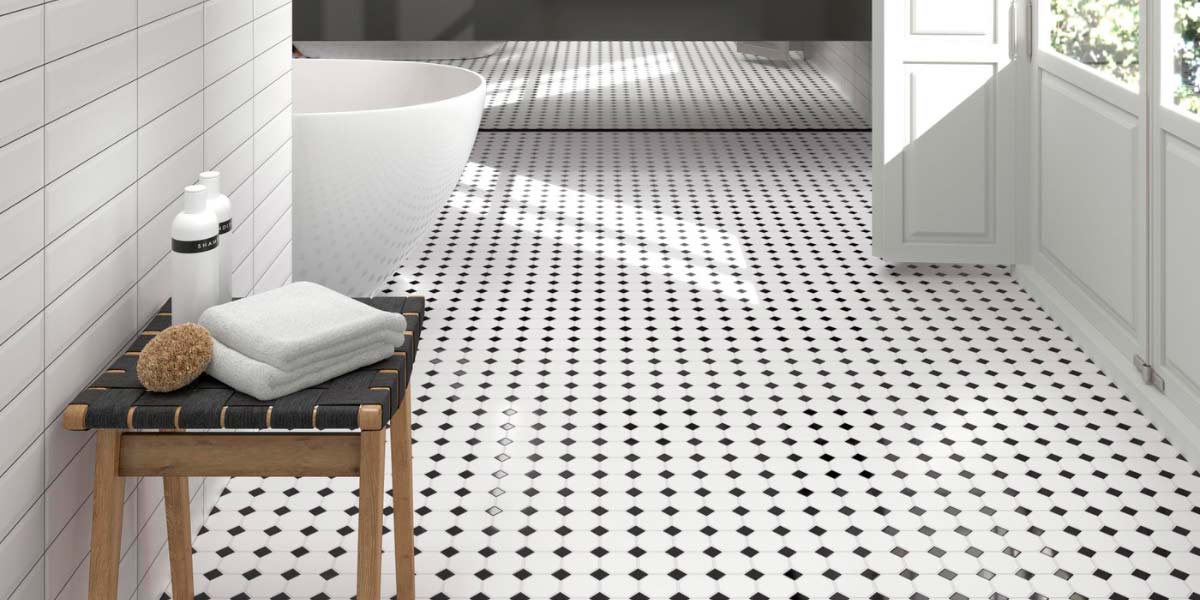
Mosaics stand out for their small format and endless creative possibilities. They can be made of ceramic, glass, stone, or combinations of materials. Their reduced size allows them to cover curved surfaces, shower niches, or decorative walls with great detail and precision. Moreover, their installation creates dynamic patterns that add character and sophistication. They are perfect for visual accents, columns, countertops, and any environment where a distinctive finish is desired.
Porcelain stoneware
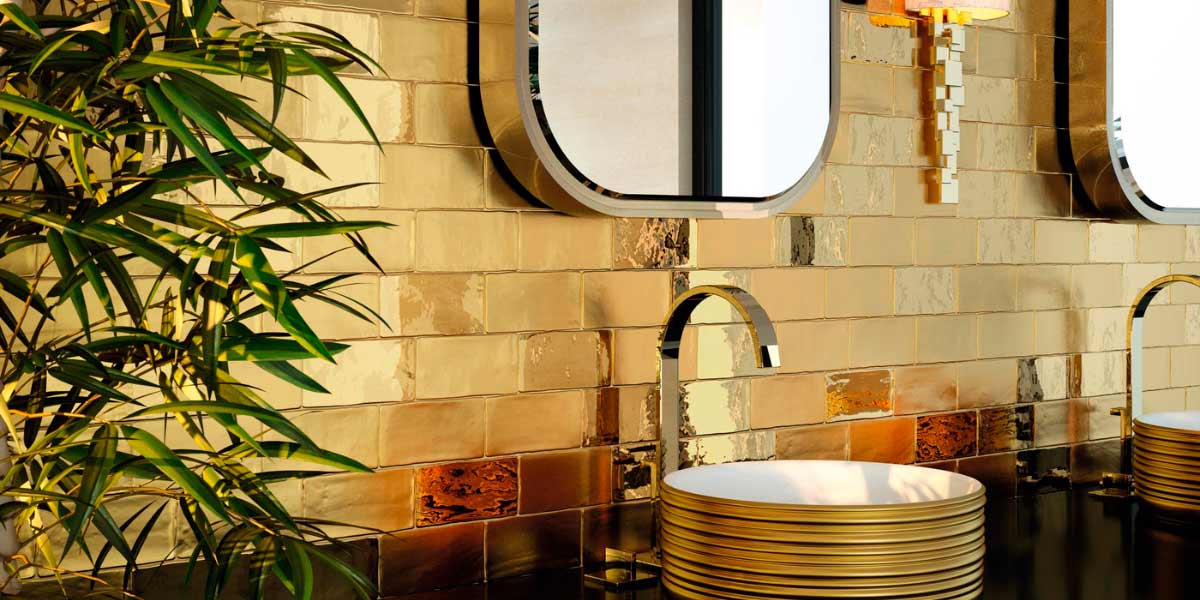
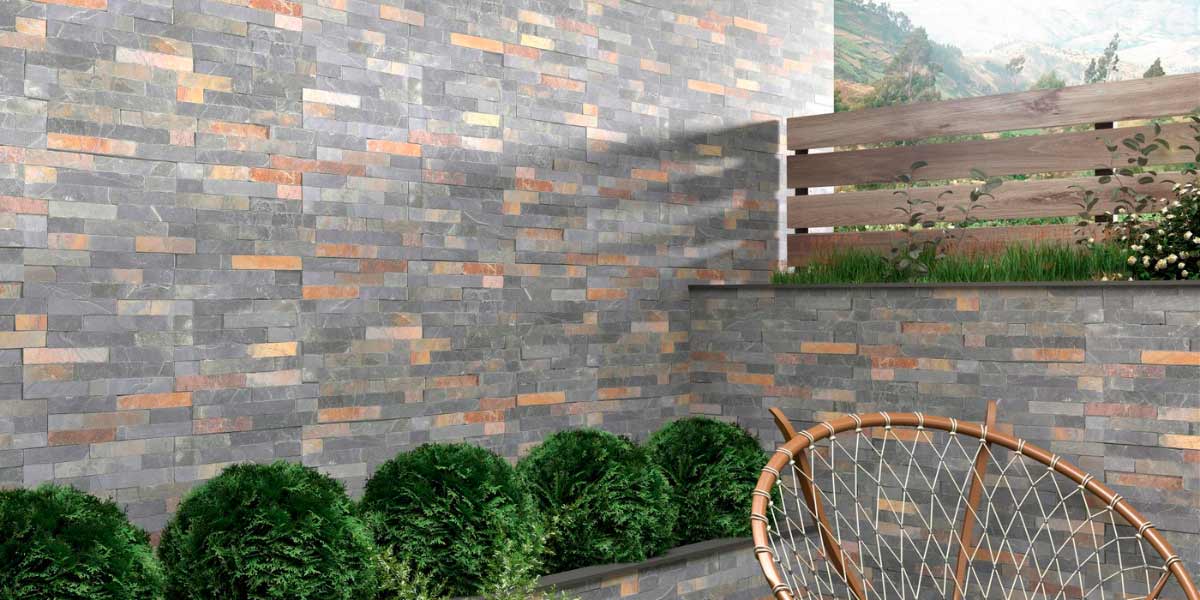
Porcelain stoneware is one of the most versatile and resistant materials on the market. Fired at high temperatures, it offers superior durability, low water absorption, and very easy maintenance. It is ideal for high-traffic areas, bathrooms, kitchens, or exterior walls. In addition, thanks to digital technology, it can realistically reproduce effects such as cement, marble, stone, or metal, enabling the creation of modern, sober, or highly elegant wall coverings.
Tips for cladding a wall with ceramic pieces
Cladding a wall with ceramic pieces involves not only choosing an attractive material but also planning the tile layout to achieve a balanced, functional, and aesthetically appealing result. Here are some key tips to ensure a professional finish:
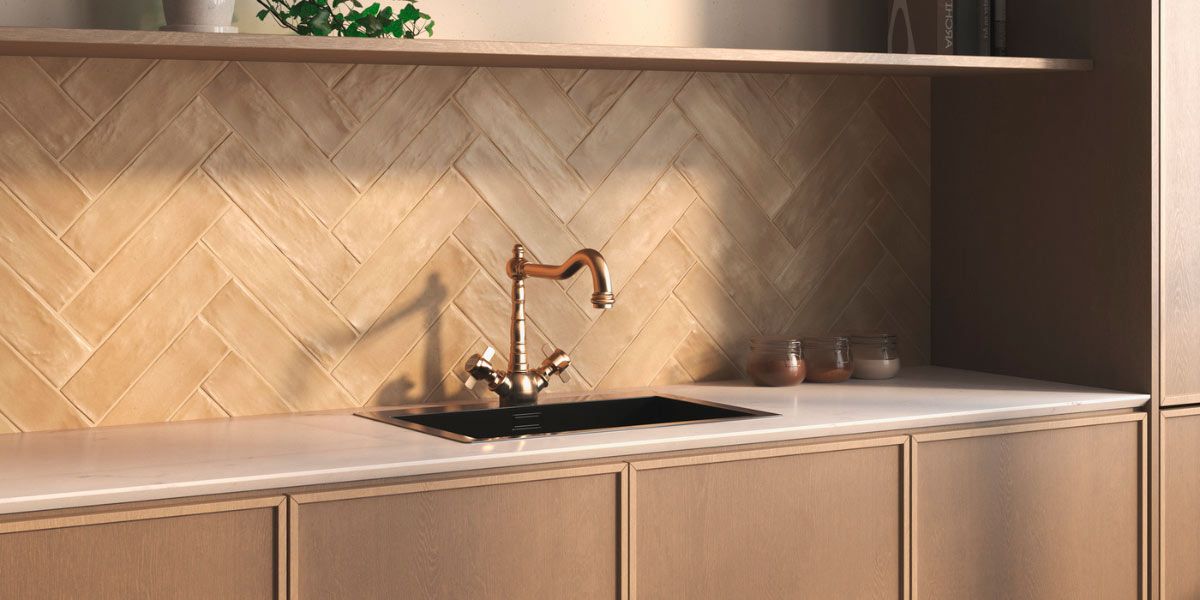
- Plan the layout of the pattern. Before beginning installation, it’s essential to define how the tiles will be positioned. Drawing a layout or doing a dry run will help you visualise the final pattern and avoid unnecessary cuts in visible areas. Whether horizontal, herringbone, or vertical, proper planning ensures a harmonious and well-proportioned design. It will also help you foresee how the joints align and guarantee a coherent flow across the entire wall.
- Choose the right design for your space. Each room has its own aesthetic and functional needs. Using glossy or matte tiles, or opting for large or small pieces, will drastically influence the personality of the environment.
- Consider the lighting. Light completely transforms the look of a ceramic-clad wall. Reliefs and textured tiles come to life with side or focal lighting, creating shadow effects that add depth and dynamism. Glossy finishes reflect more light, enhancing brightness, while matte finishes absorb part of it, generating calmer environments. Before choosing the cladding, think about how it will behave under both natural and artificial light—this can make all the difference in the final result.
Decorative ceramic styles for your walls
Cladding a wall with ceramic pieces is a decision that completely transforms a space. Ceramics offer a unique combination of design, durability, and versatility, allowing each environment to adapt to the decorative style that best matches your personality. From clean, modern proposals to warm Mediterranean aesthetics, the right ceramic cladding can turn a functional space into a truly inspiring one.
Below, we present a selection of decorative styles that stand out for their character and ability to integrate into different rooms in the home or contract settings.
Modern and minimalist style
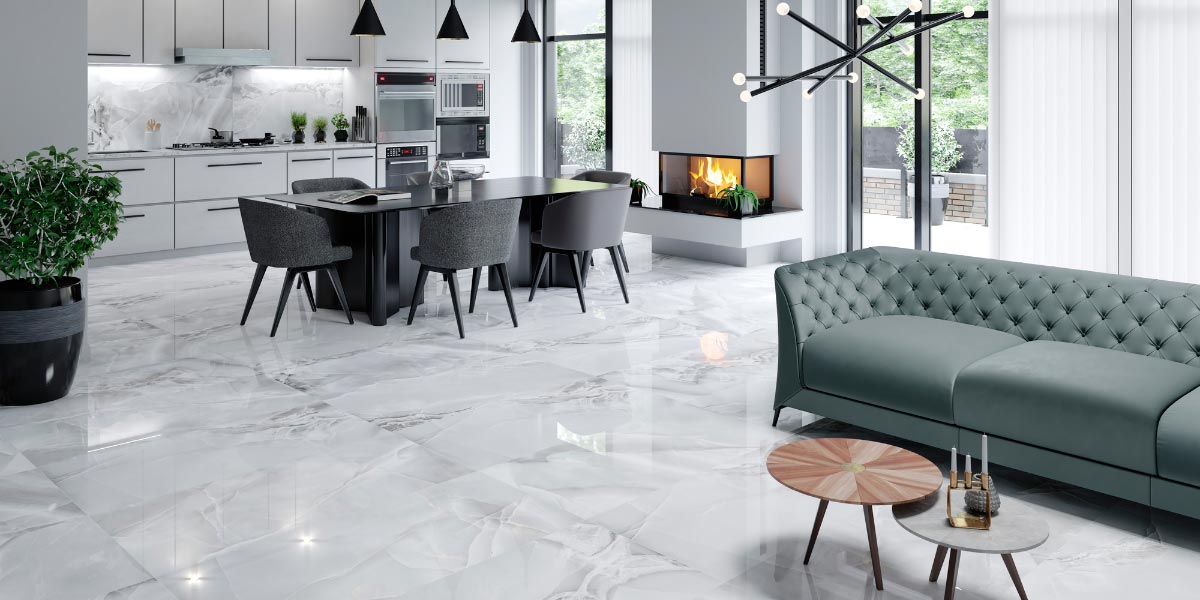
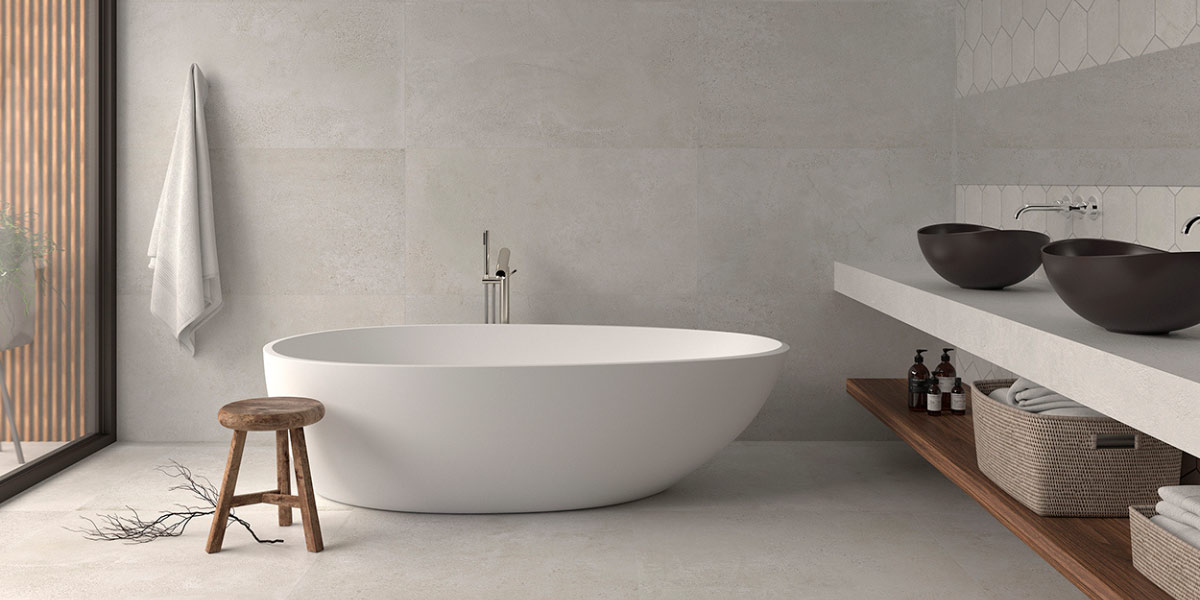
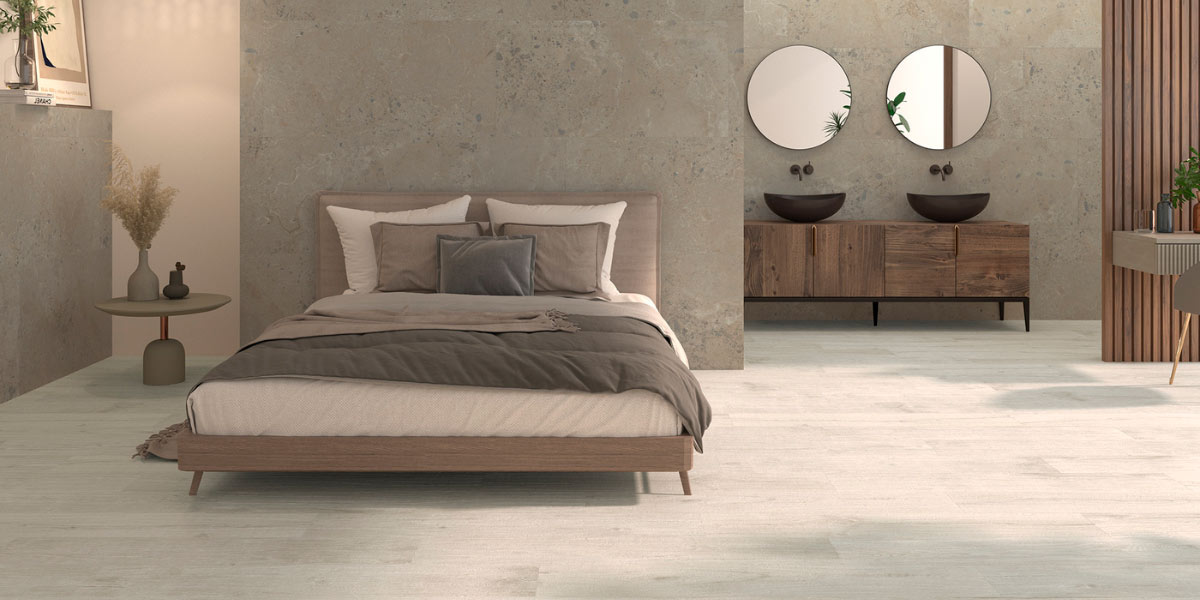
The modern and minimalist style is synonymous with clean lines, visual order, and spaces that breathe tranquillity. Ceramics are particularly suitable for this approach thanks to their aesthetic precision and the subtlety of their finishes:
- Neutral and balanced colour palette: white, light grey, beige, and black create a timeless and elegant base. These tones make it easy to integrate decorative elements without disrupting the harmony of the space.
- Large-format pieces: they reduce joints and create continuity, resulting in clean and visually expansive walls. Ideal for rooms where enhancing the sense of spaciousness is a priority.
- Matte, satin, or ultra-smooth finishes: these reinforce the minimalist aesthetic, adding sophistication without excess.
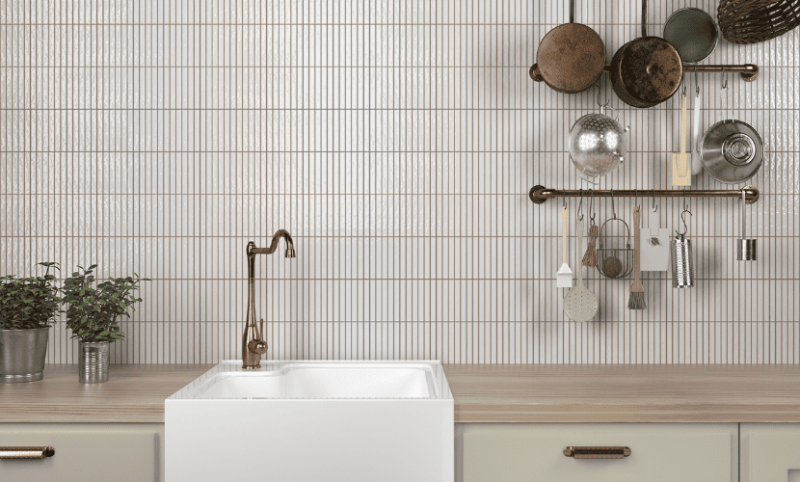
- Subtle reliefs: delicate patterns add texture without compromising the overall simplicity.
This style is perfect for contemporary kitchens, spa-like bathrooms, or living rooms that seek to convey serenity and design in equal measure.
Rustic and natural style
The rustic style celebrates natural materials, tradition, and authenticity. Ceramics can recreate this aesthetic with added durability and a level of performance far superior to natural stone or wood:
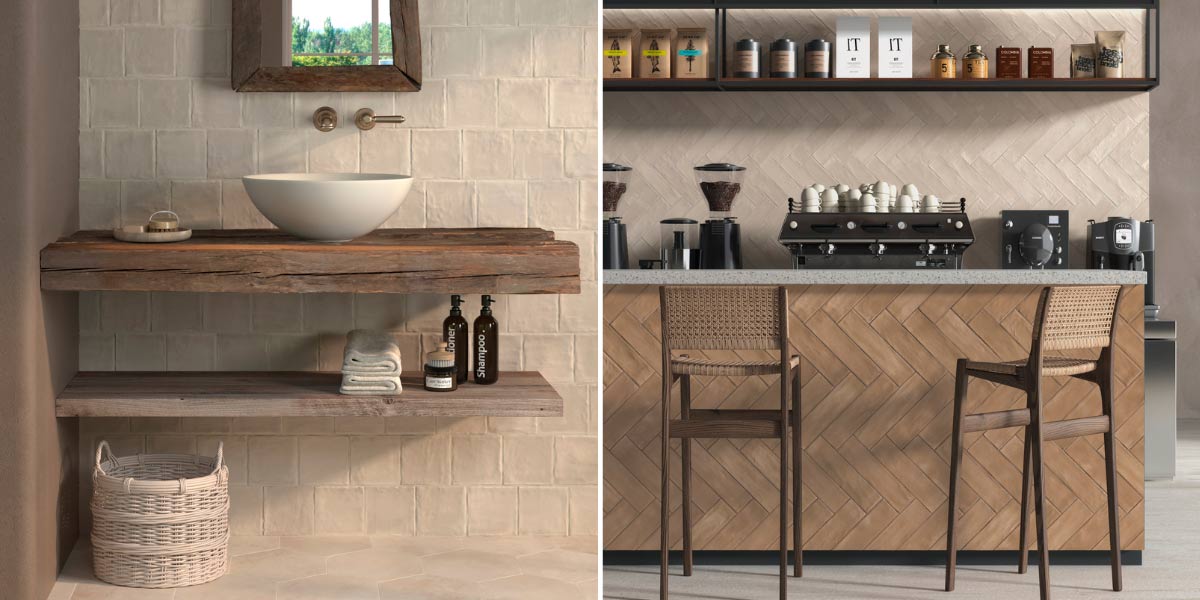
- Ceramics that mimic stone, clay, or wood: they offer the charm of natural materials without their limitations. Stronger textures provide a genuine and immersive feel.
- Warm colour palette: ochres, browns, terracottas, and earthy tones that evoke calm and create an immediate sense of comfort.
- Organic reliefs and irregular finishes: reminiscent of handcrafted pieces, highly valued in today’s rustic interiors.
- Small formats or traditional tiles: perfect for conveying the essence of renewed rustic charm in cosy spaces.
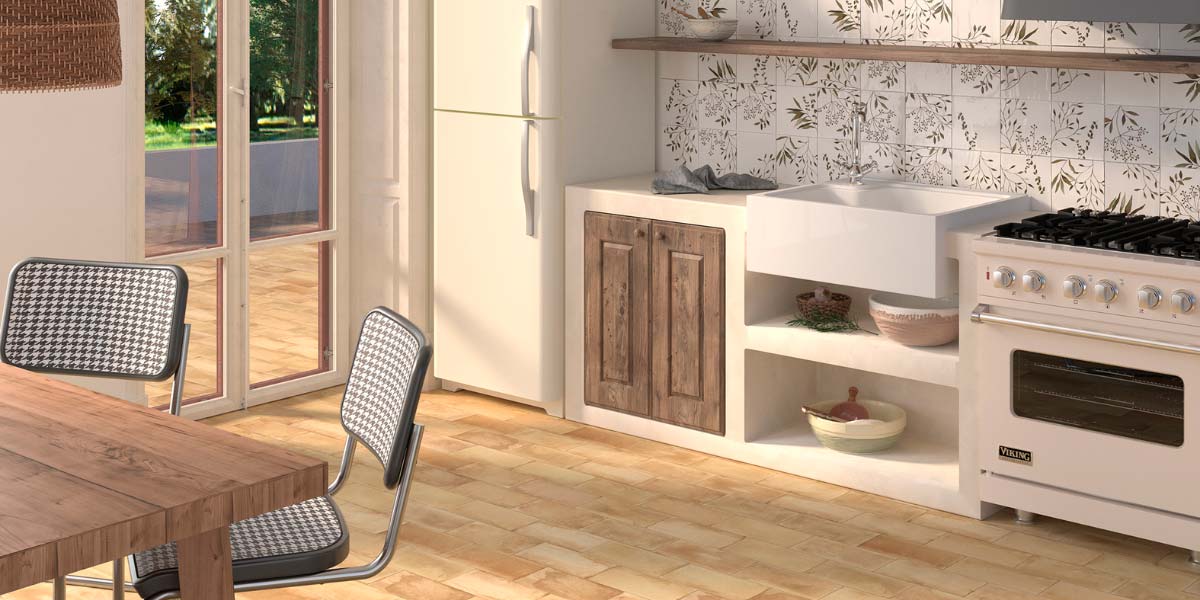
This style works wonderfully in charming rural kitchens, fireplace areas, family dining rooms, and even boutique hotels looking to express natural warmth.
Industrial style
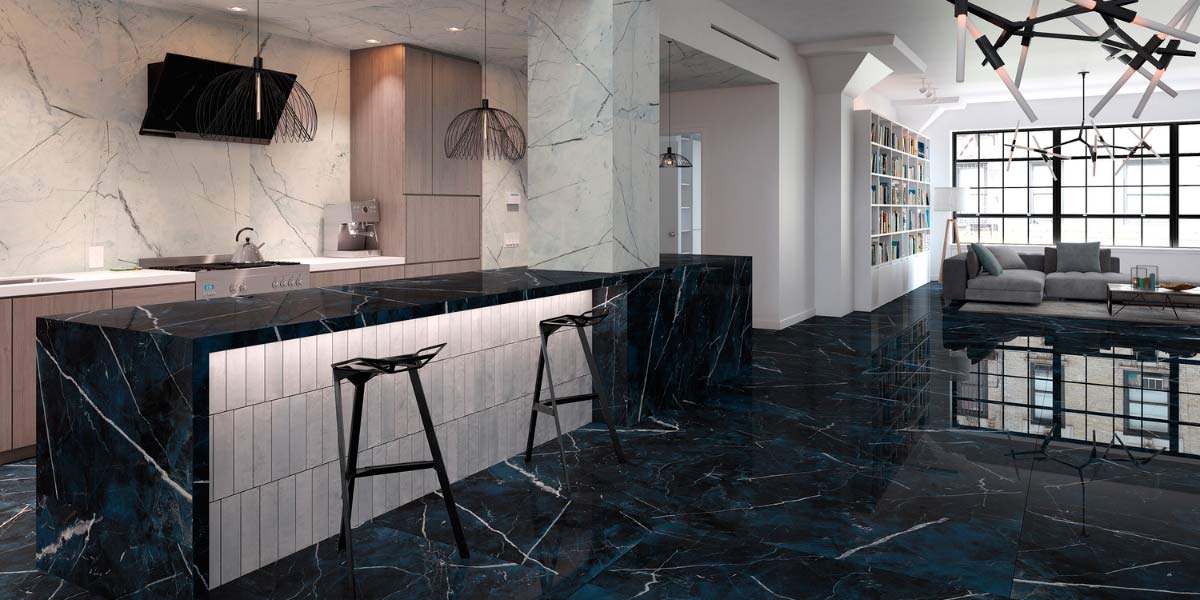
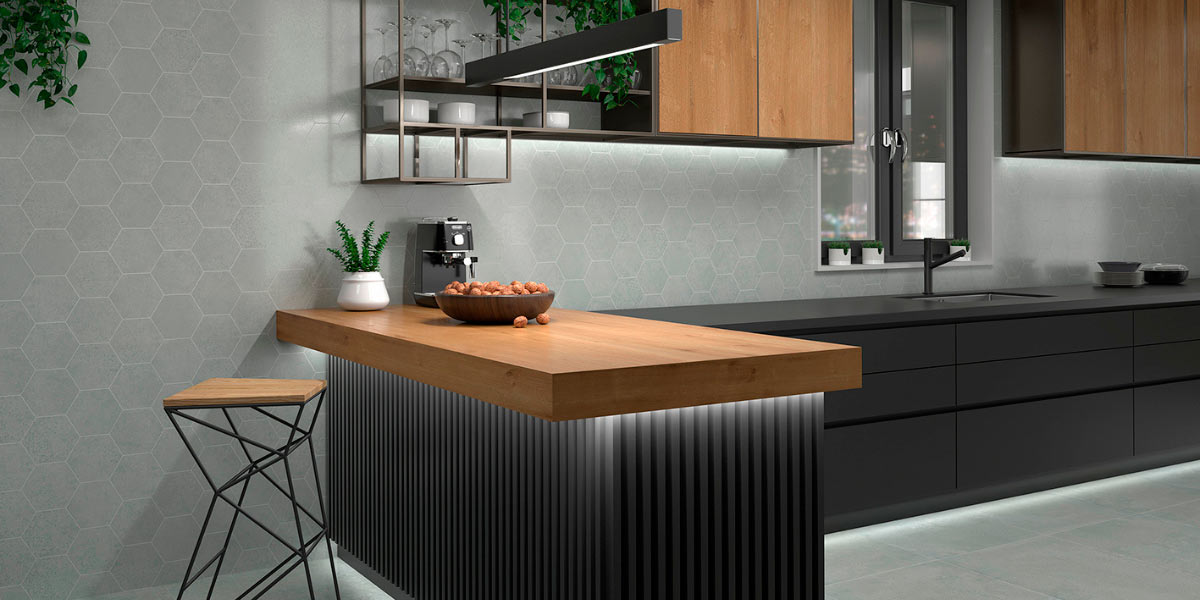
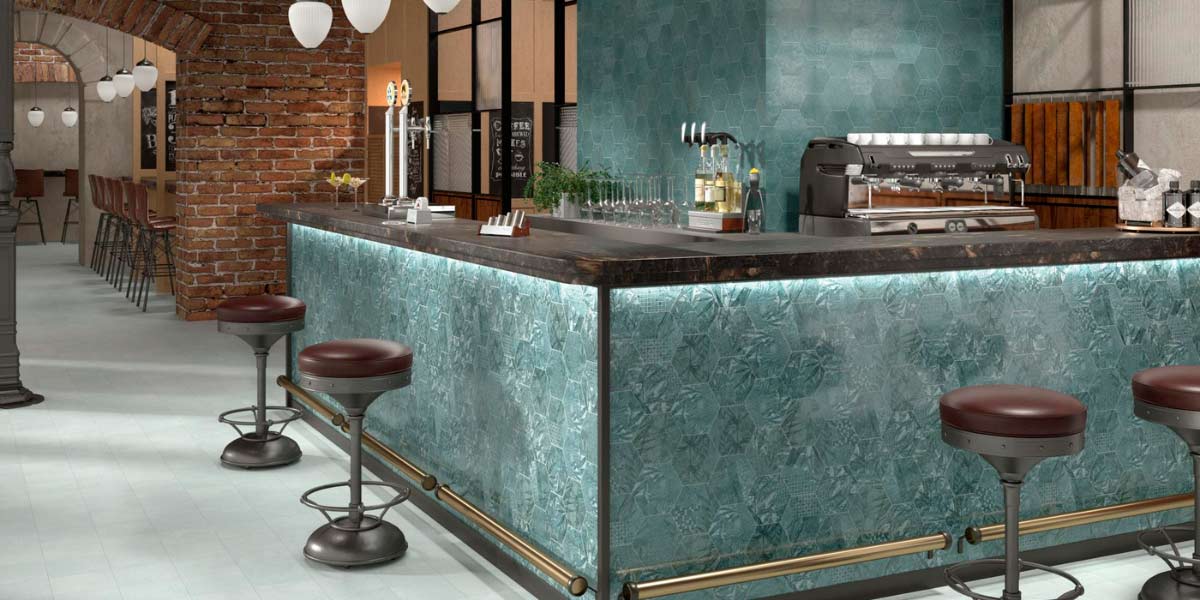
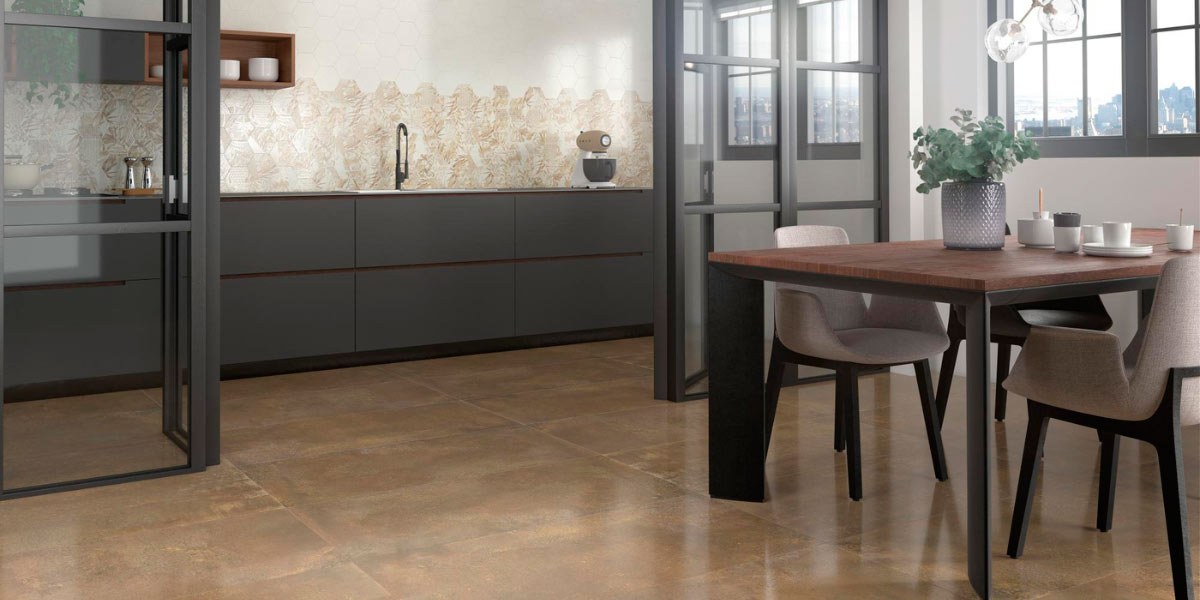
The industrial style blends urban aesthetics with functionality. Inspired by factories, warehouses, and New York lofts, it highlights raw materials and a bold attitude. Ceramics are an excellent resource for recreating this look while maintaining easy maintenance and high resistance:
- Cement, metallic, or rust-effect finishes: offer a strong, contemporary character, ideal for feature walls with immediate visual impact.
- Deep and intense colours: anthracite grey, black, and aged browns reinforce the industrial look.
- Brick-like or rectangular formats: ideal for recreating exposed brick walls typical of urban lofts.
- Pairing with iron, reclaimed wood, or technical lighting: ceramics serve as a solid base for building an authentic industrial atmosphere.
Perfect for open kitchens, loft-style living rooms, creative offices, or commercial spaces with a bold personality.
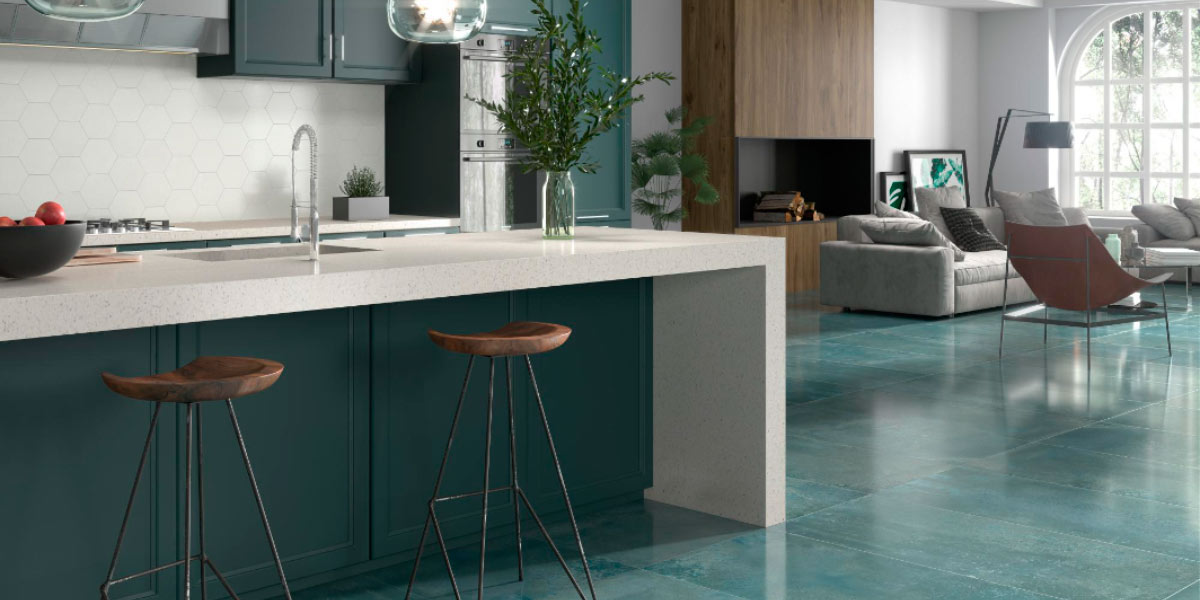
Mediterranean style
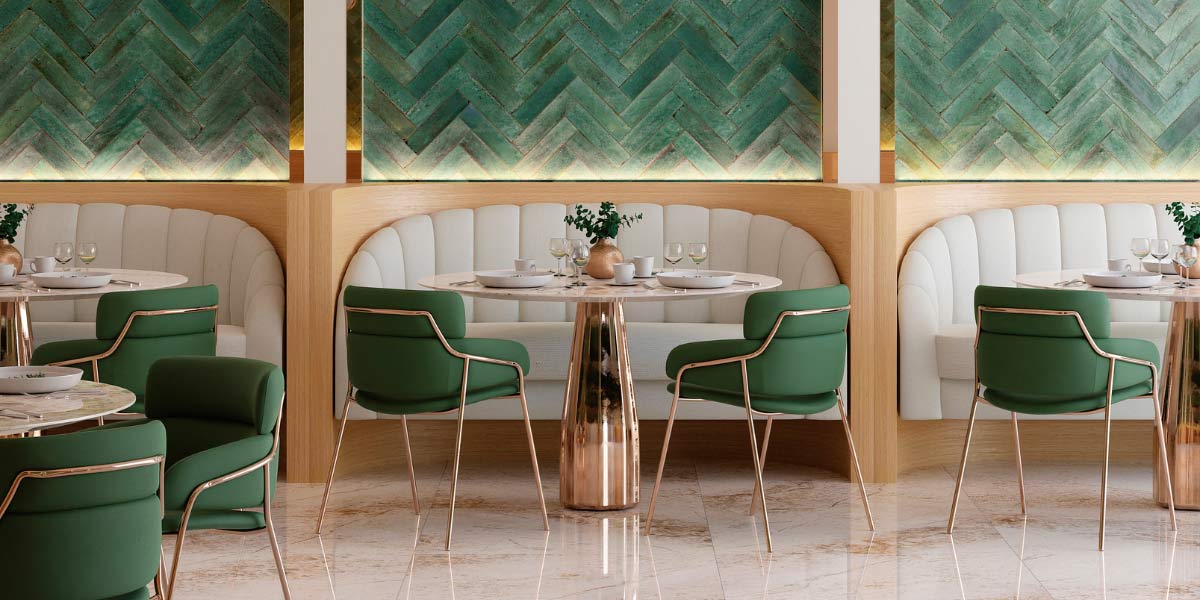
The Mediterranean style is bright, fresh, and deeply inspiring. Rooted in artisanal ceramics, sea-inspired colours, and organic shapes, it is the perfect environment for ceramic walls. Ceramics are the star material in this style due to their decorative possibilities and durability:
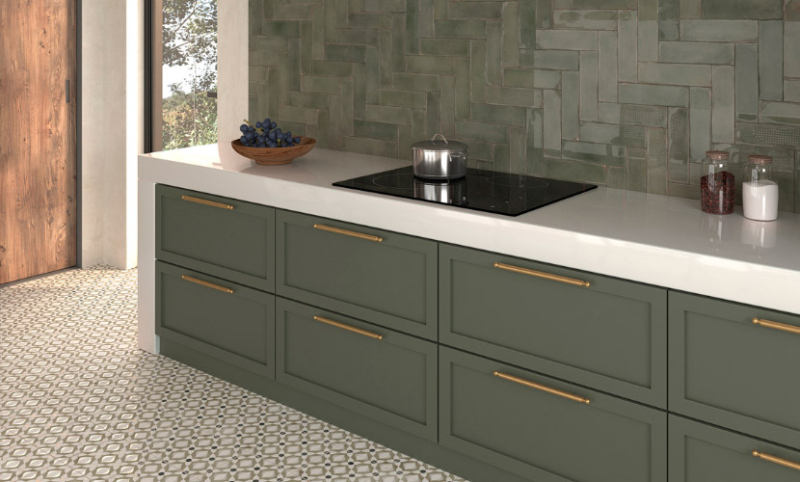
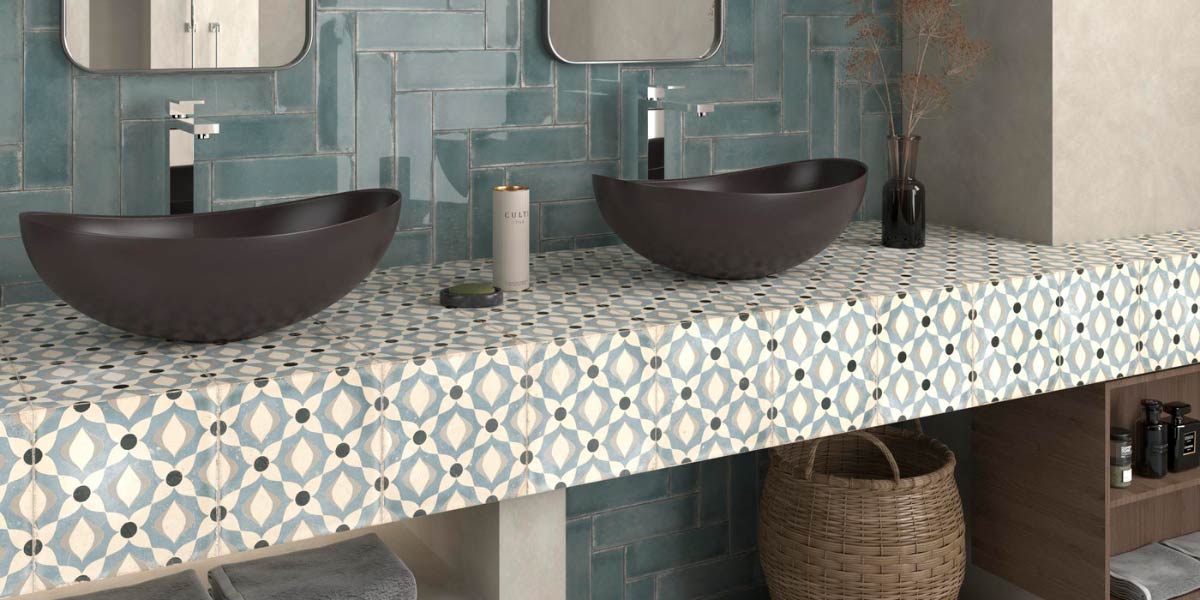
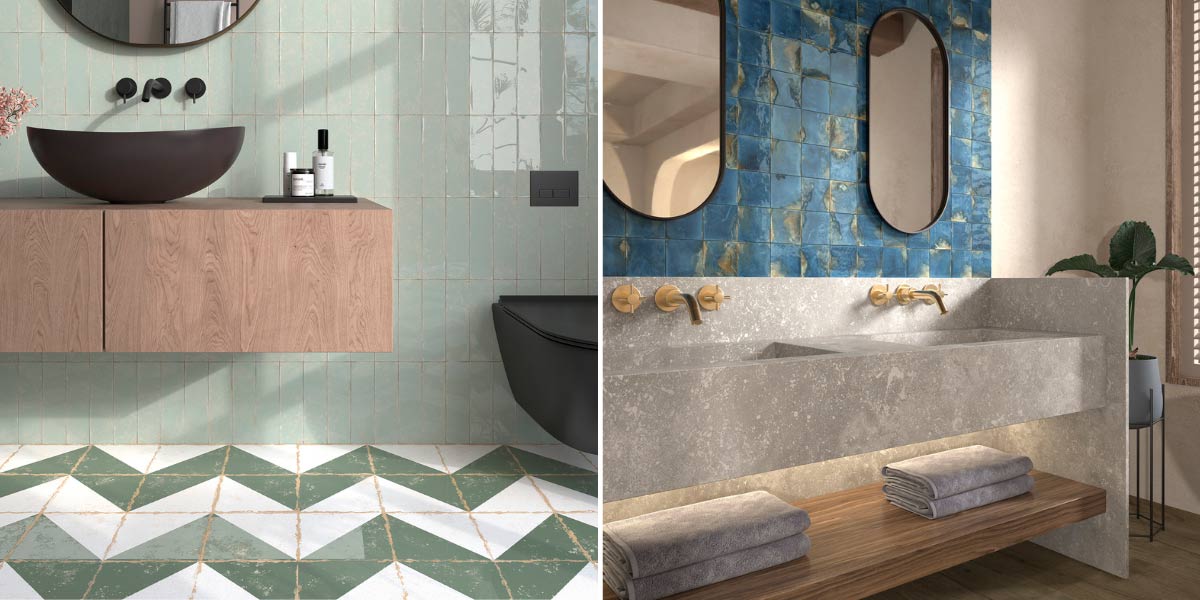
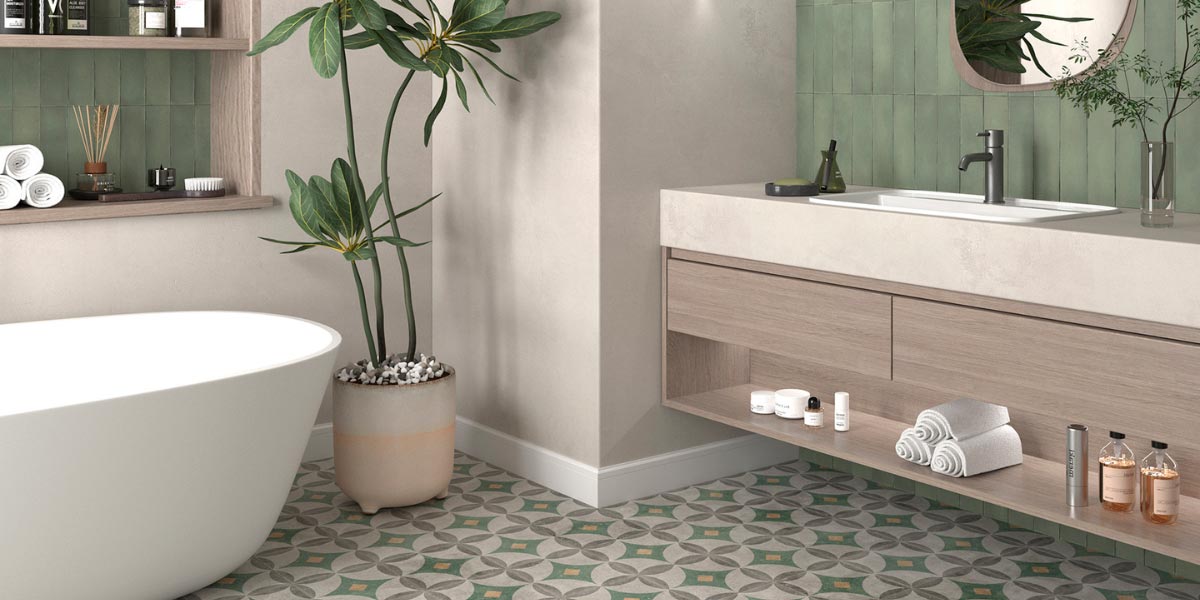
- Combinations of whites, blues, and soft greens: evoke the sea, sky, and natural light characteristic of Mediterranean architecture.
- Geometric and floral decorations: ideal for creating vibrant, character-filled walls.
- Small pieces or ceramic mosaics: bring a traditional, artistic feel—perfect for wet areas or spaces seeking an artisanal touch.
- Glossy or glazed finishes: reflect light and amplify brightness, a key feature of this aesthetic.
Ideal for Mediterranean kitchens, bright bathrooms, terraces, patios, and even pool areas where ceramic becomes the protagonist.
How to combine ceramics with other materials for a unique design
Ceramics and wood
When thinking about cladding a wall with ceramic pieces, combining them with wood stands out as one of the most attractive and balanced options in interior design. Ceramics offer resistance, durability, and a wide variety of textures and finishes, while wood introduces warmth, naturalness, and a cosy atmosphere that connects with the senses. Together, they transform any environment into a harmonious space filled with character and personality.
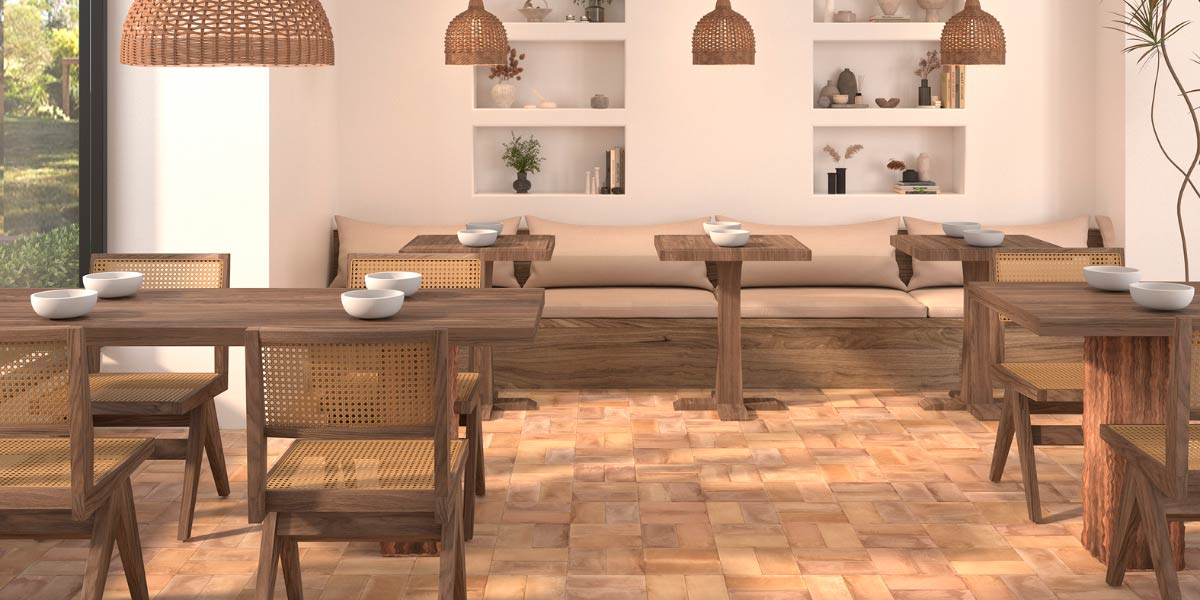
This combination also allows for visually interesting contrasts: cool ceramic surfaces paired with the warmth of wood, glossy finishes next to matte textures, or ceramic reliefs combined with smooth wood slats. These contrasts enrich the design and bring dynamism, turning the wall into a focal point.
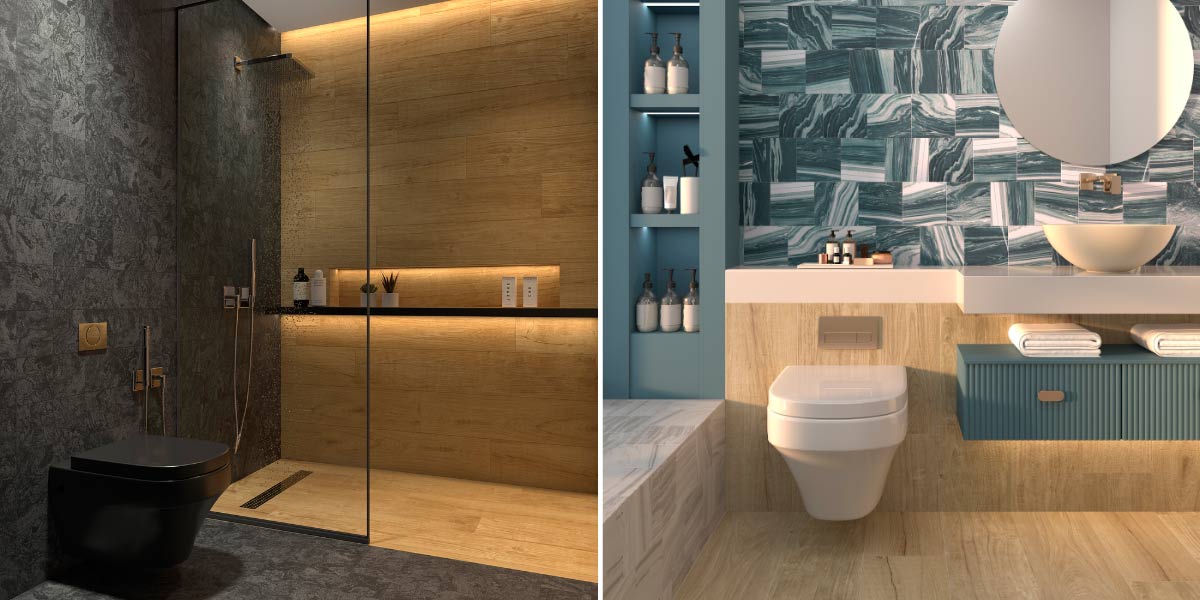
From a practical point of view, cladding a wall with ceramic pieces combined with wood is an excellent choice for humid or high-traffic areas such as bathrooms, kitchens, or entryways. Ceramics ensure resistance to water and daily use, while wood—whether natural or reproduced through wood-look ceramics—adds beauty, balance, and a truly natural feel.
Ceramics and paint
Combining ceramics and paint is one of the most effective and versatile ways to clad a wall with ceramic pieces without overwhelming the space and maintaining visual balance. This combination allows you to play with colours, textures, and volumes to create spaces full of personality, from the most minimalist to the most daring.
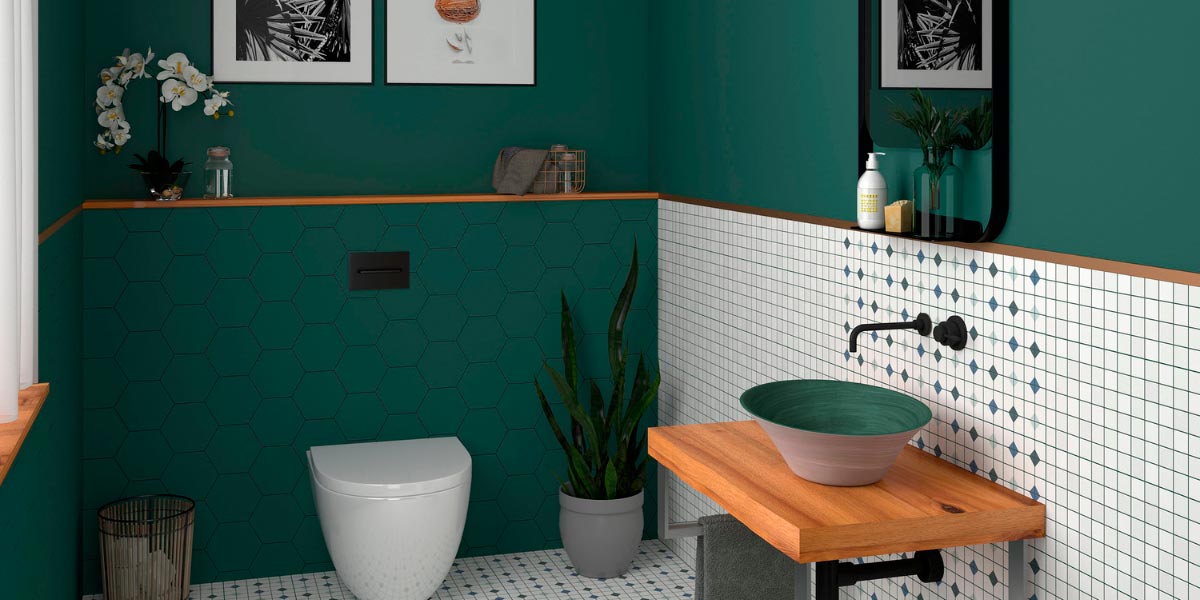
One of the great advantages of this pairing is its ability to visually divide areas within the same room. Cladding the lower part of a wall with ceramic tiles, for example, offers protection and ease of cleaning in bathrooms or kitchens, while painting the upper part allows you to introduce colour, soften the atmosphere, or follow the aesthetic line of the rest of the home. This transition adds dynamism and helps the ceramic stand out even more.
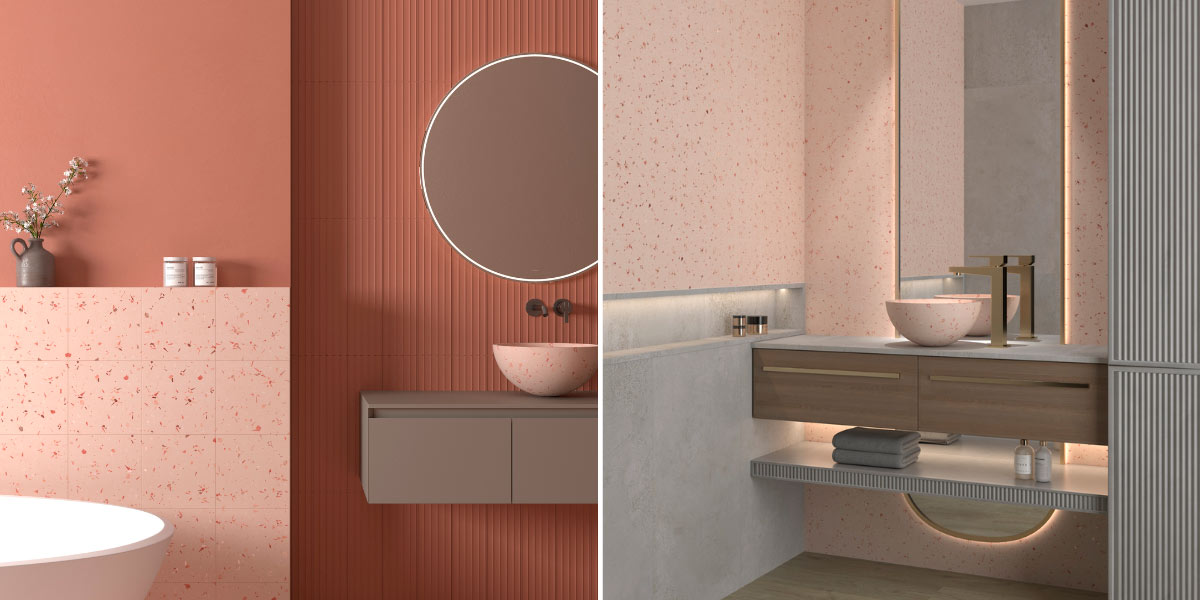
Cladding a wall with ceramic pieces is much more than an aesthetic solution: it is an opportunity to completely transform a space and infuse it with personality, balance, and durability. At Dune Cerámica, we offer collections specifically designed for wall cladding, created to meet the needs of all types of projects. Each series is conceived to provide texture, colour, and design, allowing you to create unique rooms with the unmistakable signature of decorative ceramics.