
Stone-effect ceramic tiles: key features, benefits and best combinations
Natural stone has always held a privileged place in architecture and interior design. Its timeless beauty, strength, and character make it a benchmark material. However, today’s construction reality demands lighter, more sustainable, and versatile solutions capable of meeting the technical and aesthetic challenges of new projects. This is where stone-effect ceramic cladding emerges as the best alternative: it combines the aesthetic fidelity of stone with the technical advantages of porcelain, offering countless creative possibilities.
At DUNE, as experts in stone-effect coverings, we have been researching and designing collections for years that reinterpret stone from a contemporary perspective, providing both technical and aesthetic solutions for residential, contract, and hospitality projects. In this article, we explore the key factors when choosing stone-style coverings, the distinctive benefits of ceramics compared to natural stone, and the most inspiring combinations for industry professionals to transform any project.
Benefits of stone-effect ceramic cladding
- Hyper-realistic aesthetics. Today’s digital printing technology in the ceramic industry allows veins, reliefs, and textures to be reproduced with great precision, achieving a visual and tactile realism that conveys the essence of natural stone.
- Durability and resistance. Porcelain is unaffected by humidity, temperature changes, or common cleaning products, making it an ideal ally for high-traffic spaces such as hotels, restaurants, spas, or airports.
- Versatility of application. Although mainly used for cladding, stone-effect tiles can also be applied to floors, façades, terraces, or pool areas, with non-slip versions that comply with safety regulations for public and contract spaces.
- Easy maintenance and sustainability. Unlike natural stone, which requires protective treatments, ceramic cladding is easy to clean, lighter, and has a lower environmental impact in its production process.
Key factors when choosing a stone-style cladding
- Overall decorative style: the cladding should integrate into the aesthetic narrative of the project, providing continuity to the design.
- Format and finish: large formats create continuity and luxury; matte finishes convey naturalness, while polished ones add brightness and sophistication.
- Application area: for façades and exteriors, it is advisable to choose technical and non-slip pieces; in interiors, finishes may vary depending on the desired atmosphere.
- Combination with other materials: stone-effect ceramics pair very well with smaller tiles or with wood- and metal-effect finishes.
- Regulations and safety: especially in hospitality and wellness, the choice should consider ease of cleaning, anti-slip safety, and wear resistance.
Professional combinations: inspiration for projects
The true richness of stone-effect ceramic cladding lies in its ability to interact with other materials and aesthetics. Below, we present strategic combinations that inspire professionals to create unique spaces:
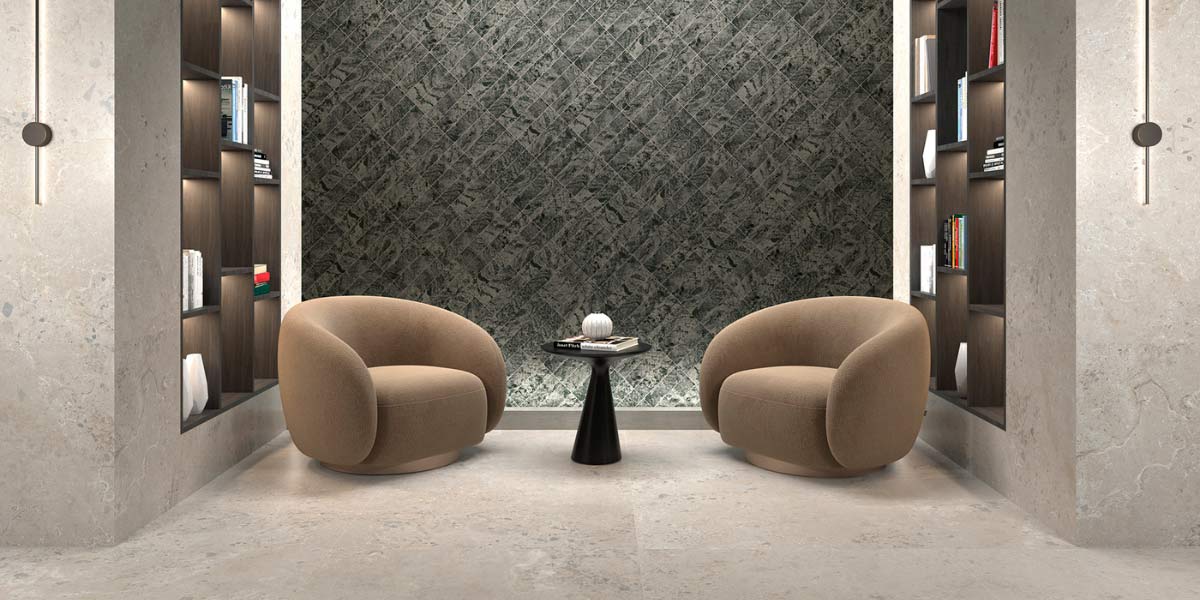
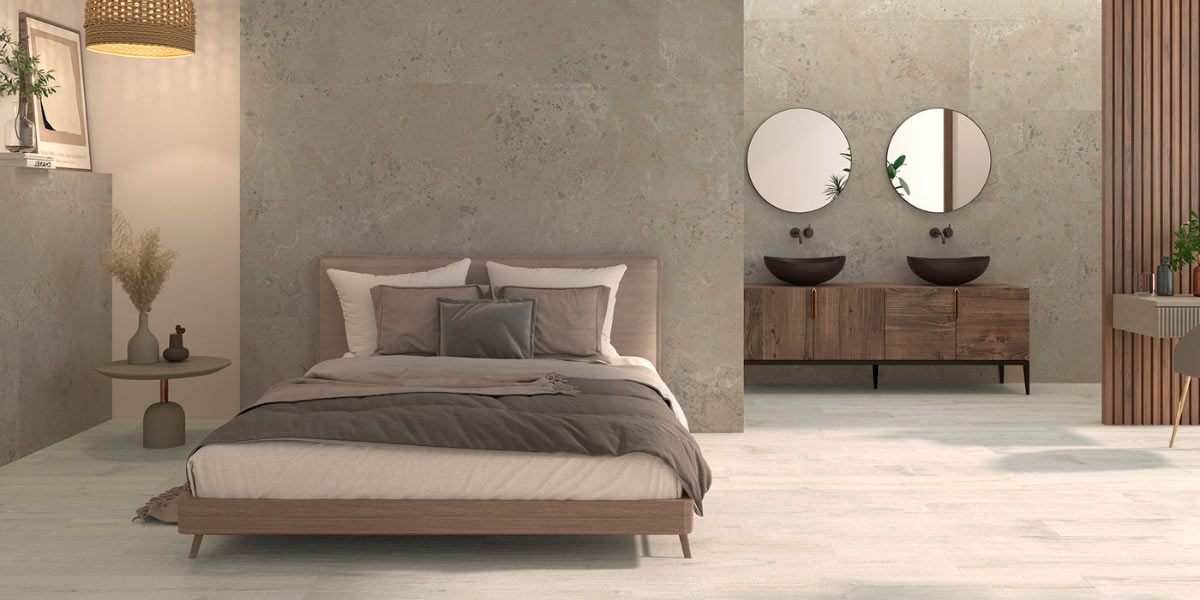
1.- Warm minimalism. Combining light-toned stone with natural wood and soft textiles creates serene atmospheres, perfect for wellness areas, spas, boutique hotels, or minimalist design homes. Porcelain provides continuity and durability, while organic elements soften the overall effect.
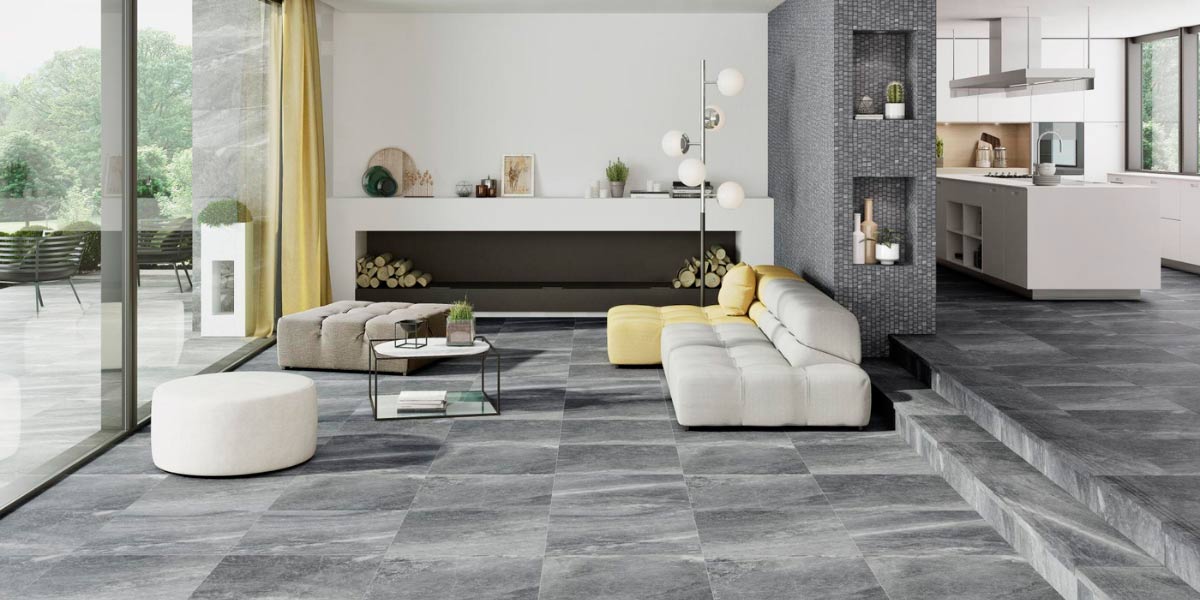
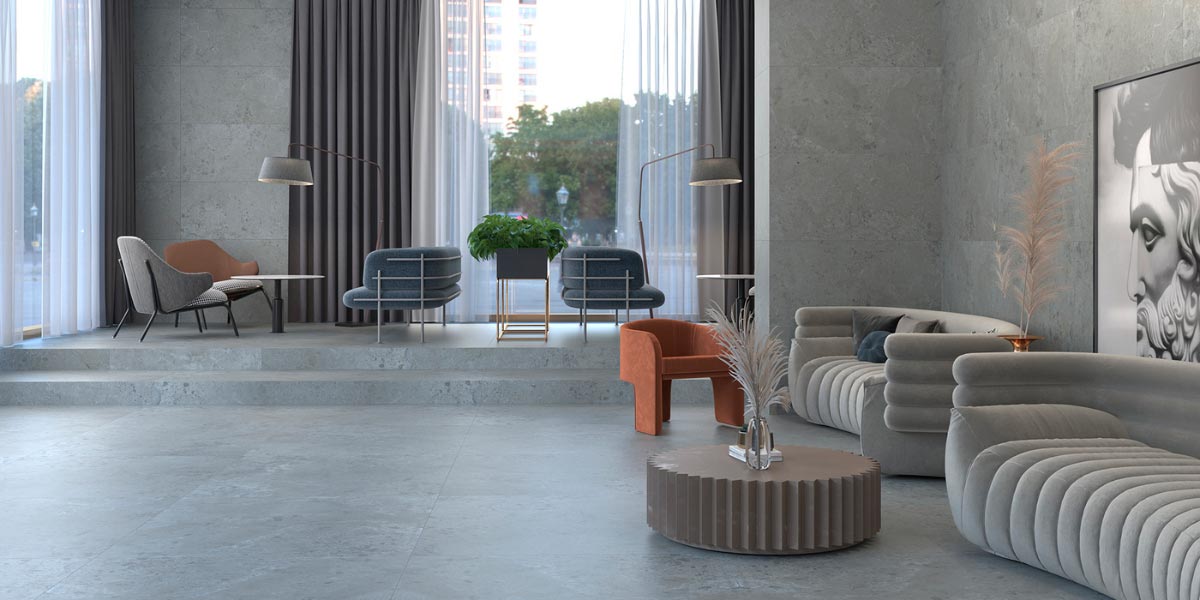
2.- Contemporary elegance. In high-end residential projects with a contemporary style or premium contract spaces, a base of grey or anthracite stone can contrast with white lacquered furniture, metallic details in brass or brushed steel, and designer lighting. The result is a sophisticated atmosphere, balancing sobriety and modernity.
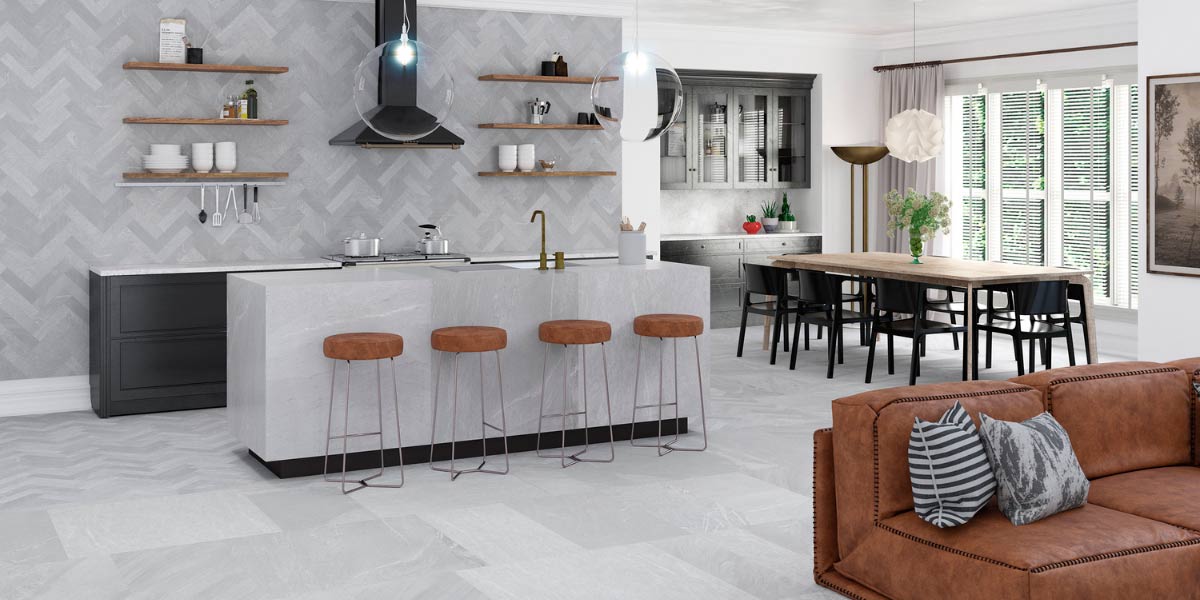
3.- Renewed industrial style. The combination of matte-finished stone with cement, oxides, and aged wood is ideal for urban restaurants, signature cafés, or coworking spaces. Ceramic cladding reinforces the industrial aesthetic, but with the advantage of being more resistant and easier to maintain than materials like concrete or raw stone.
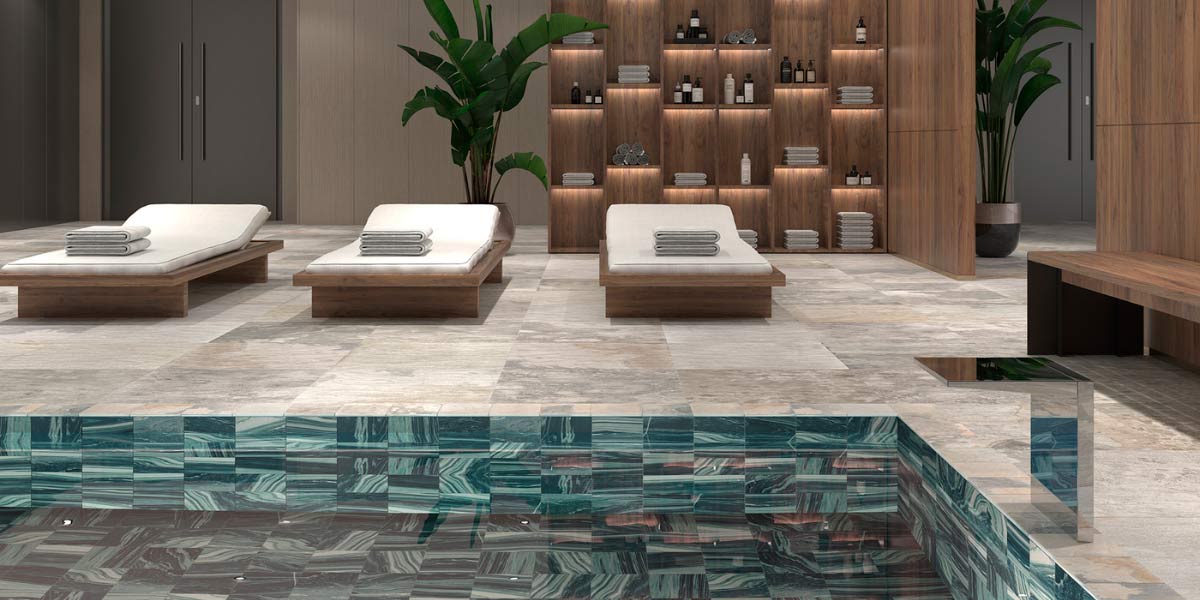
4.- Contrasts in bathrooms and wellness areas. In contemporary bathrooms, using large formats of dark stone without joints creates a continuous, luxurious effect. This can be balanced with white marble sinks or wooden countertops, creating elegant contrasts. In spas and pools, combining ceramic stone with non-slip tiles provides safety and visual dynamism.
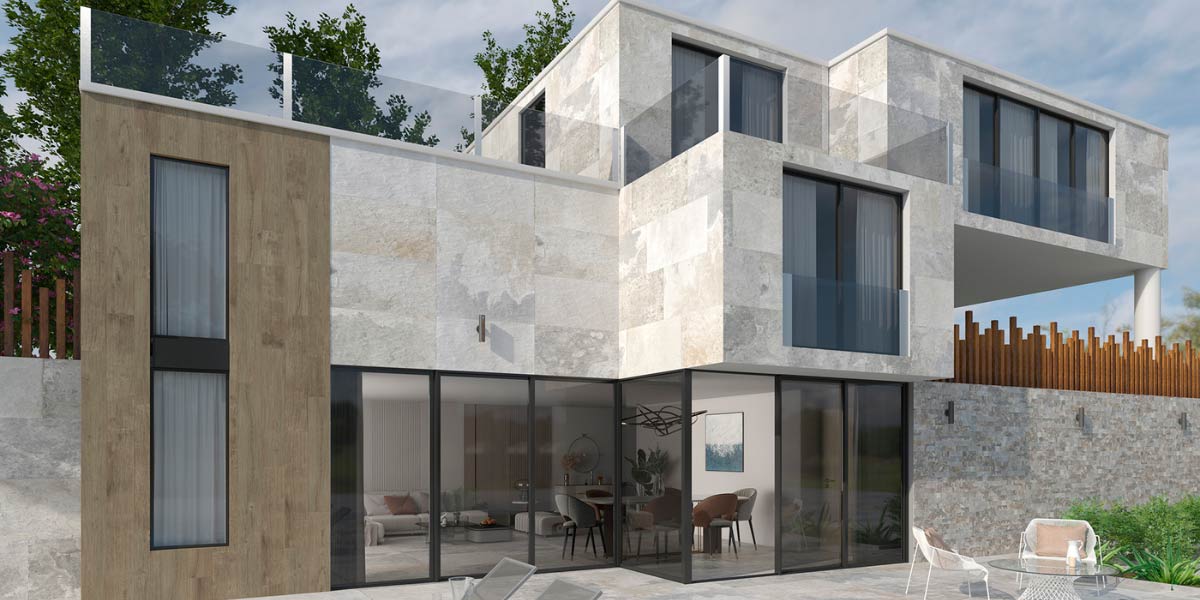
5.- Dynamic façades. Stone-effect porcelain for exteriors offers the possibility of playing with different formats and finishes. Designs alternating large pieces with mosaic details or vertical strips generate visual rhythm and give personality to hotels, residential buildings, and commercial premises.
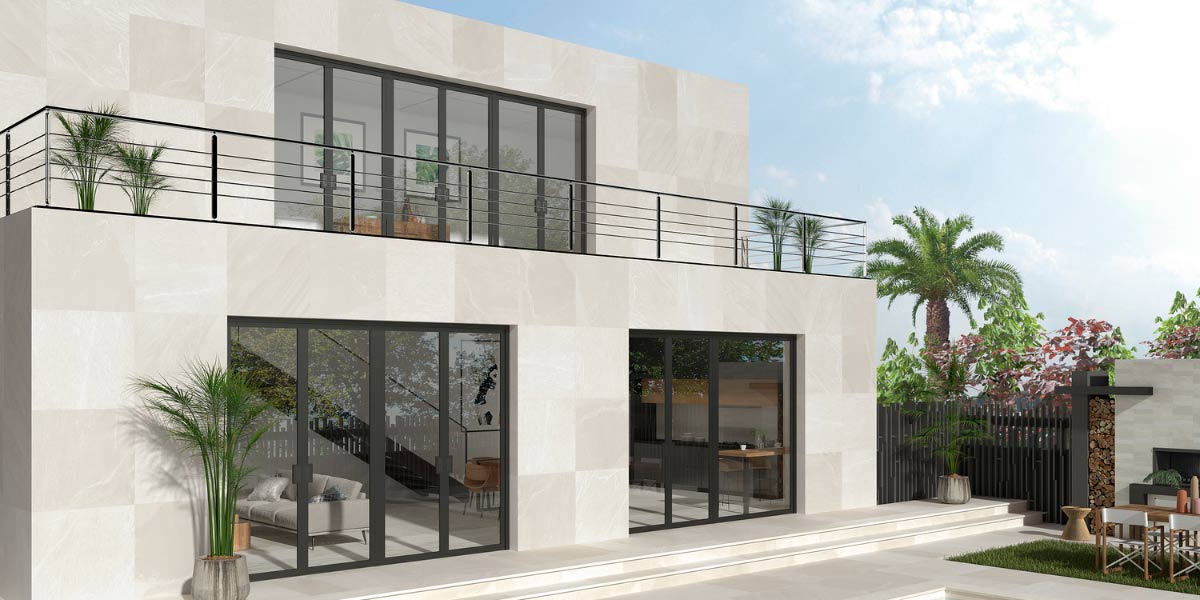
6.- Mediterranean-inspired spaces. Stone in sandy tones combined with encaustic or hexagonal tiles in specific areas enhances a handcrafted feel without losing functionality. This option is highly valued in Mediterranean-style restaurants and coastal second homes, applied in both kitchens and bathrooms.
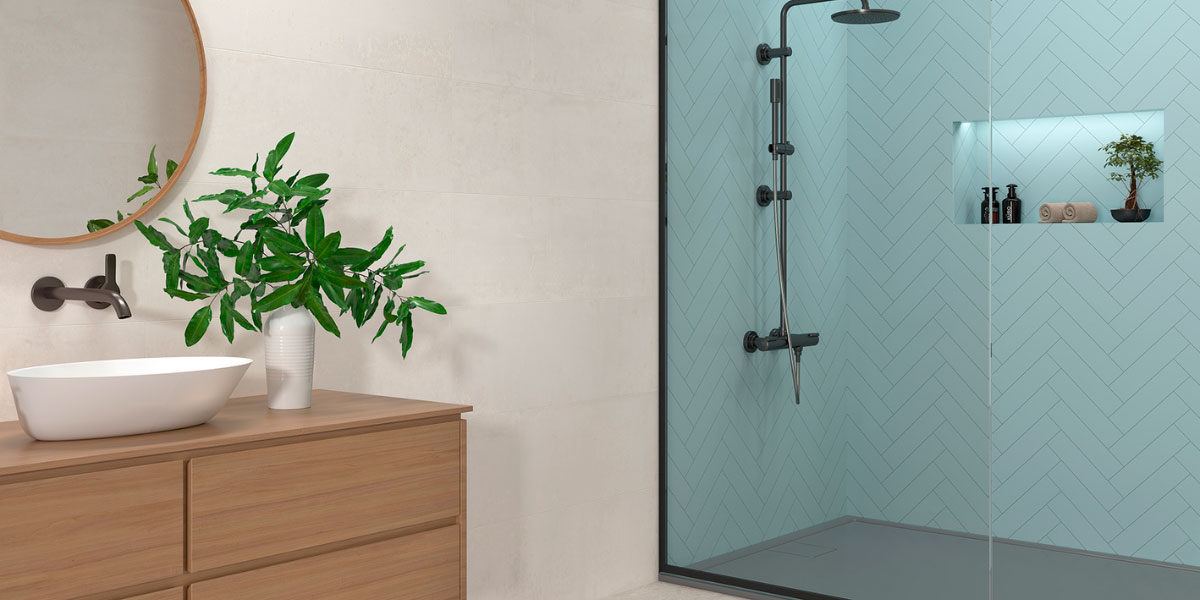
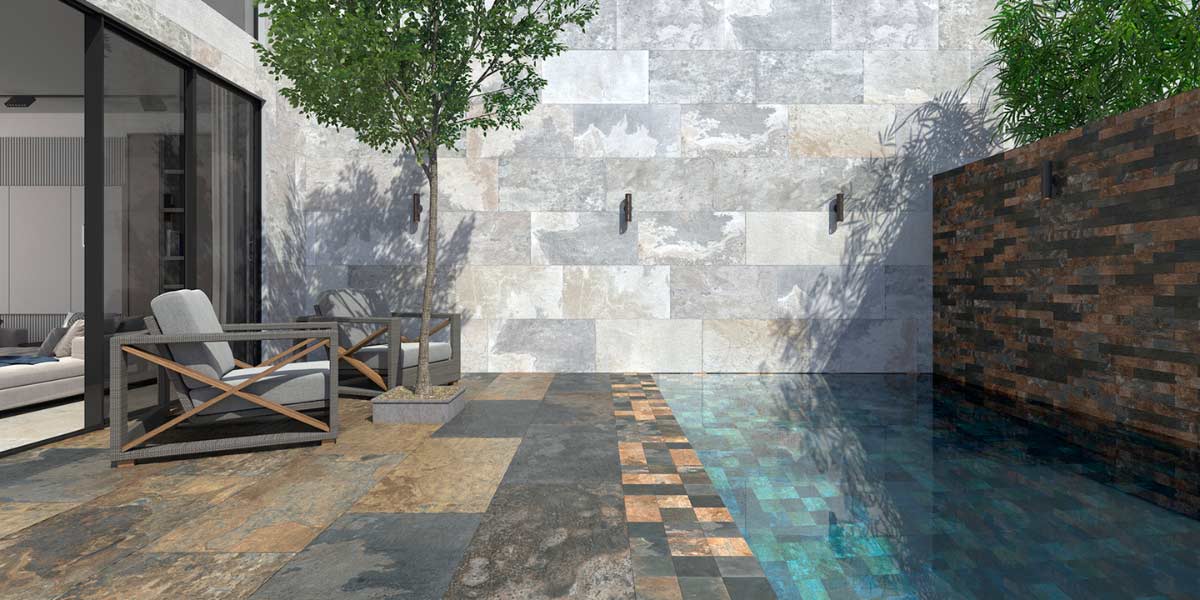
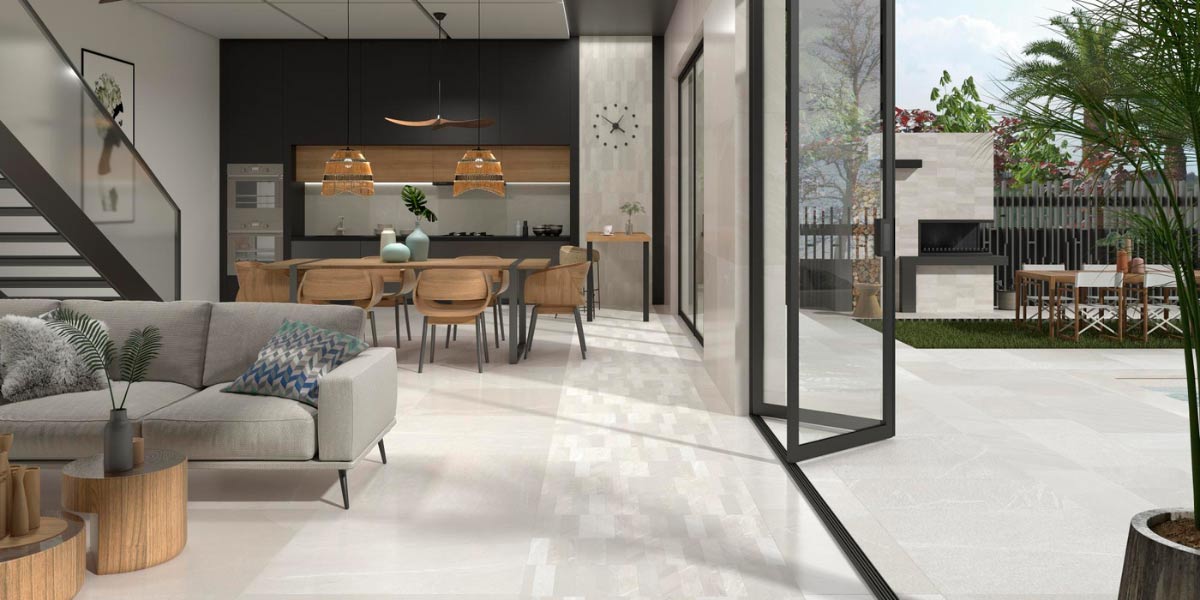
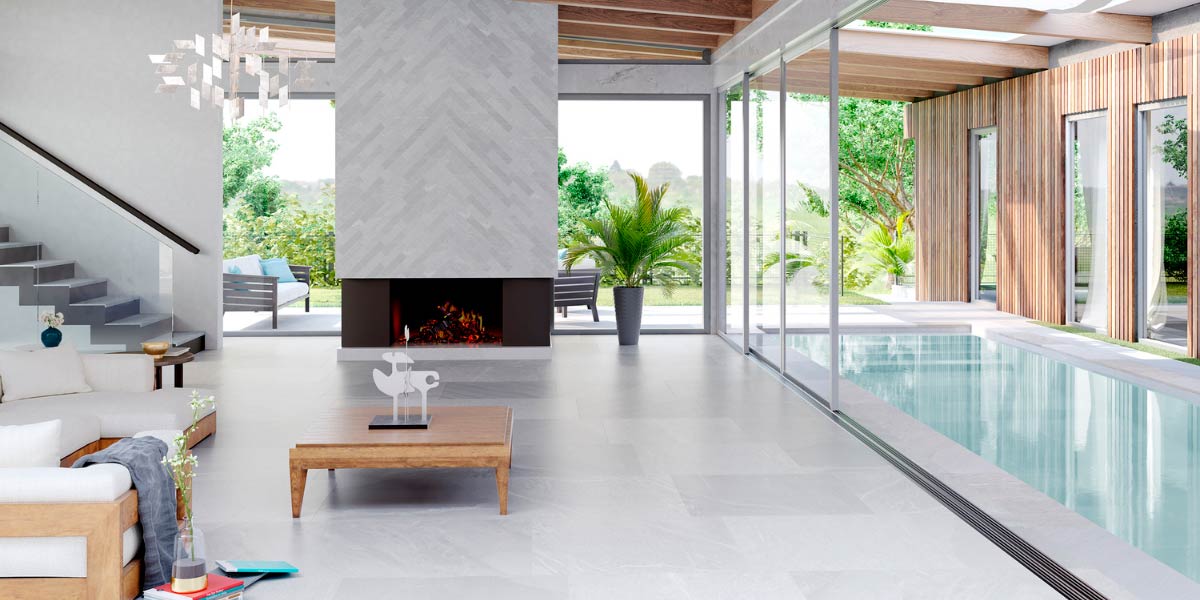
7.- Integrated outdoor spaces. One of porcelain’s greatest advantages is the possibility of aesthetic continuity between indoor and outdoor areas. Applying the same cladding in living rooms and connected terraces, or in lounge areas with pools, creates a fluid and coherent design experience. Collections such as Pietrasanta or Ardesia are perfect, as they offer the same design with different finishes, including anti-slip, for in&out flooring projects.
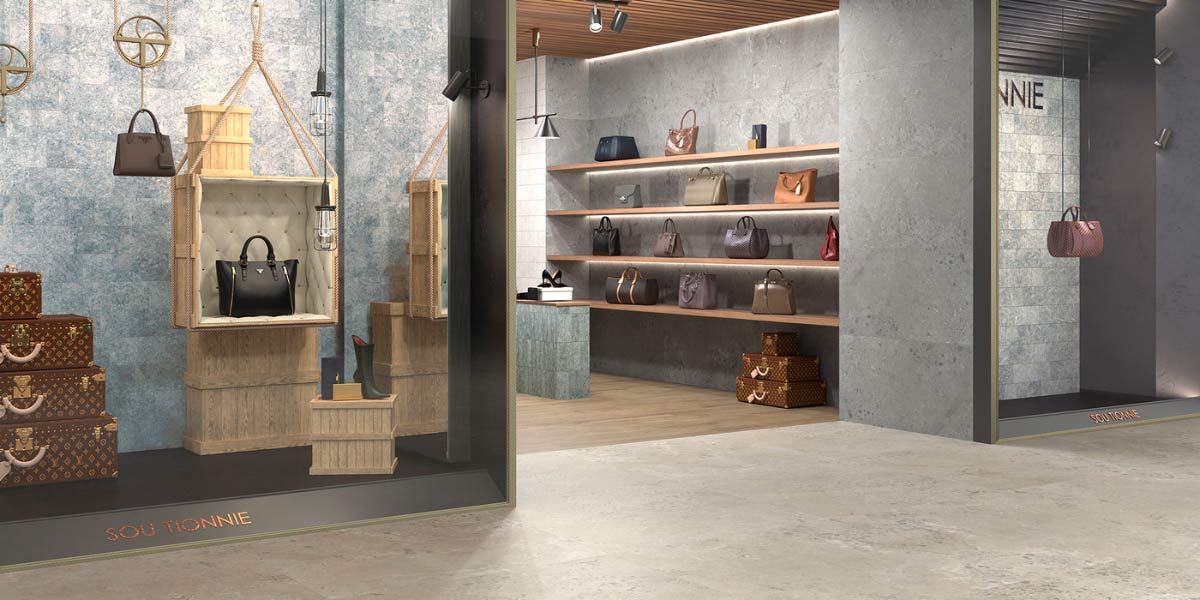
8.- Retail and commercial spaces. In fashion stores or luxury spaces, dark stone combined with mirrors and accent lighting enhances the sense of exclusivity and sophistication. Porcelain makes it possible to create floors resistant to heavy traffic without losing elegance.
How to introduce stone-effect cladding in different spaces
Stone-effect ceramic is a versatile material that can adapt to a wide variety of contexts. Its flexibility makes it valuable both in residential projects and in contract spaces, always offering a balance between aesthetics, functionality, and ease of maintenance.
Residential spaces
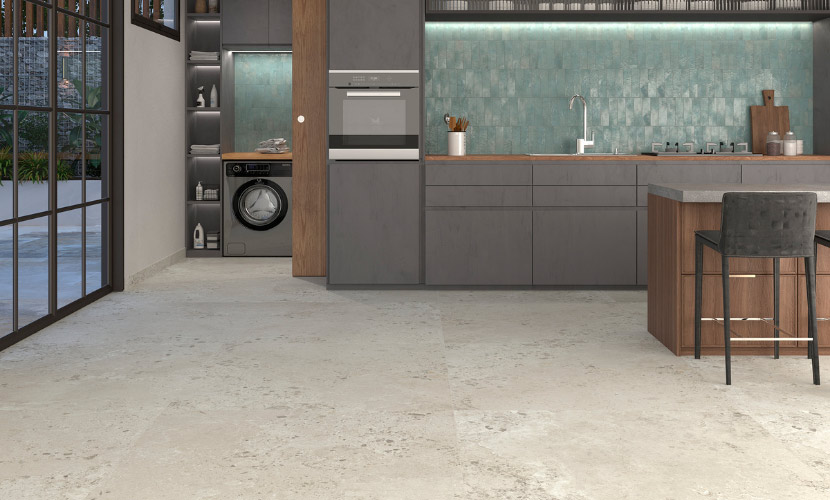
In kitchens, ceramic stone brings a contemporary touch that combines beauty and practicality. Porcelain flooring withstands heavy foot traffic and is easy to clean, while large-format countertops and backsplashes help reduce joints and maintain a clean look. On islands and worktops, finishes that imitate marble or slate turn the kitchen into a sophisticated and durable space, where technical materials coexist with the warmth of wood and the shine of metals.
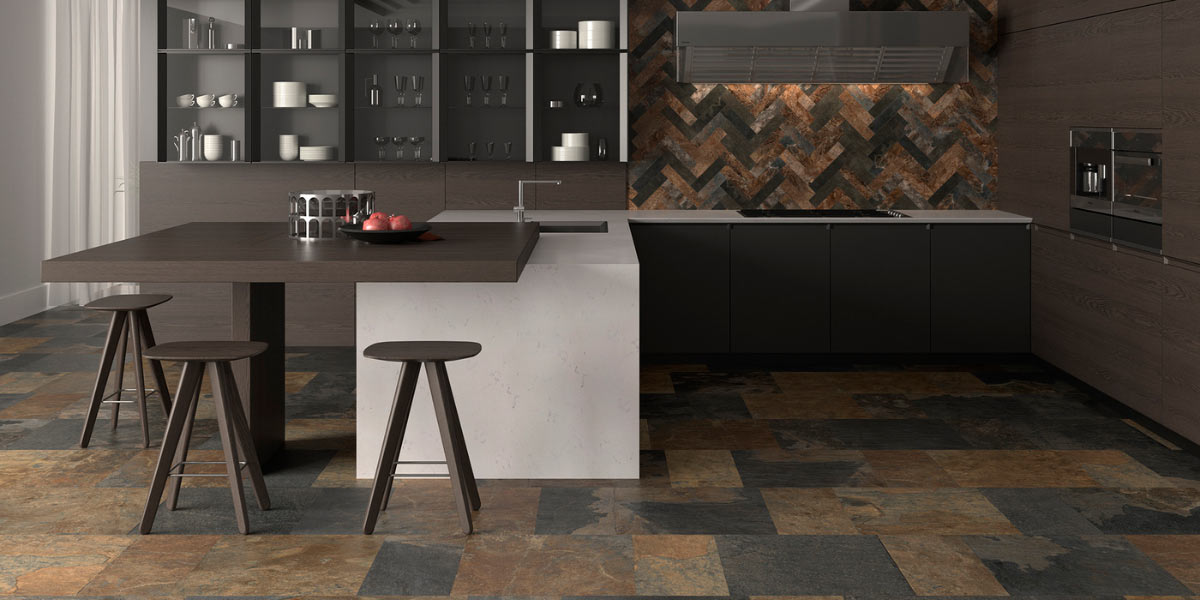
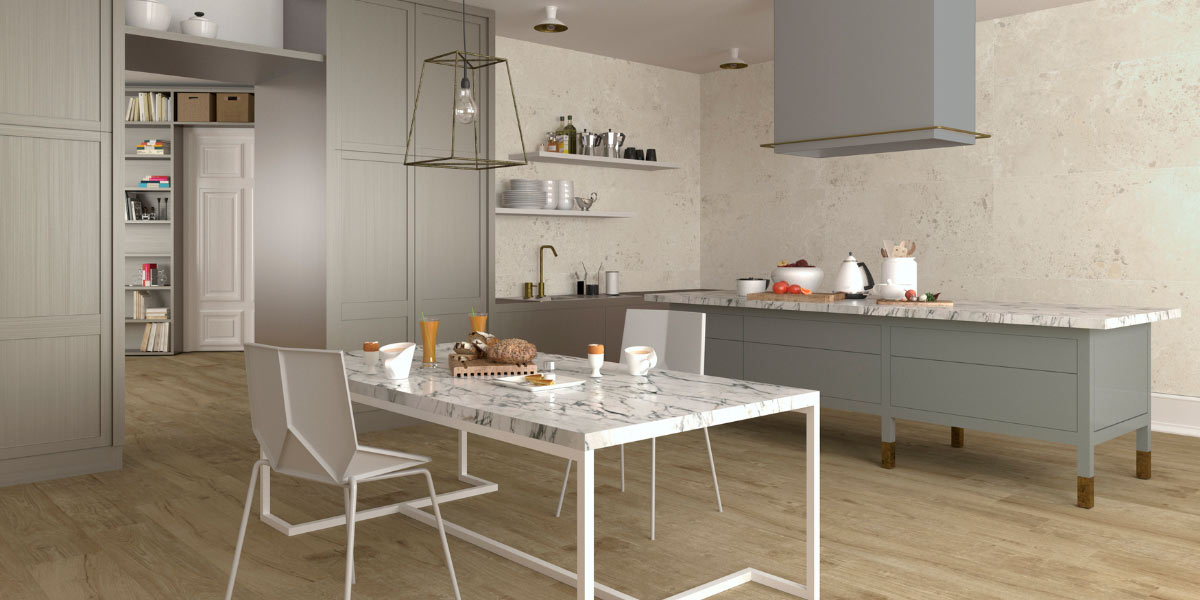
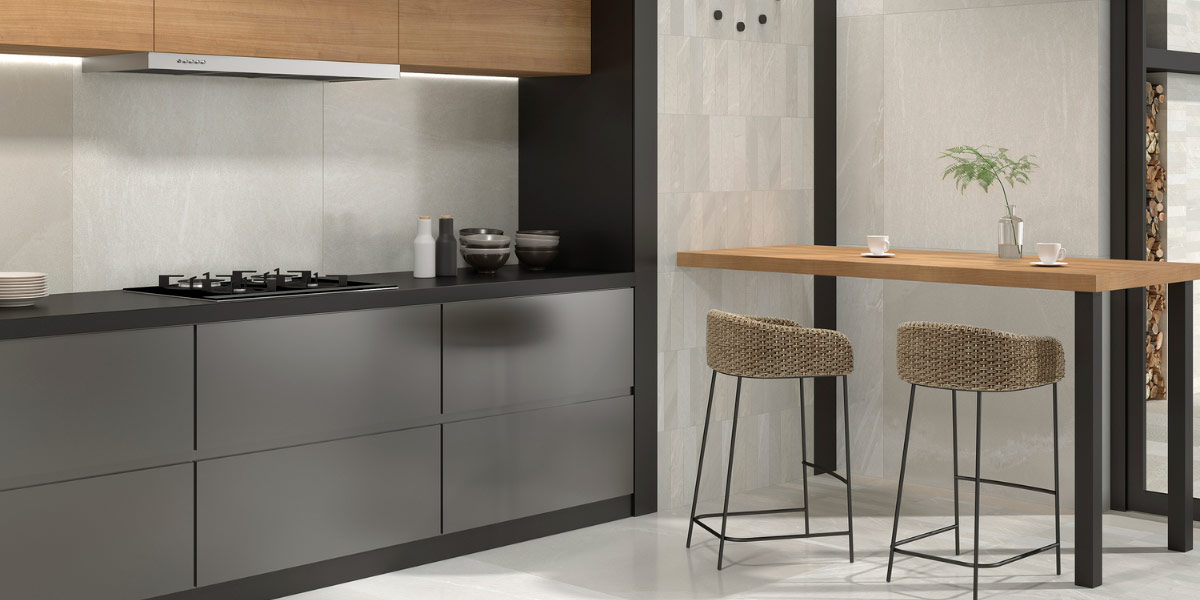
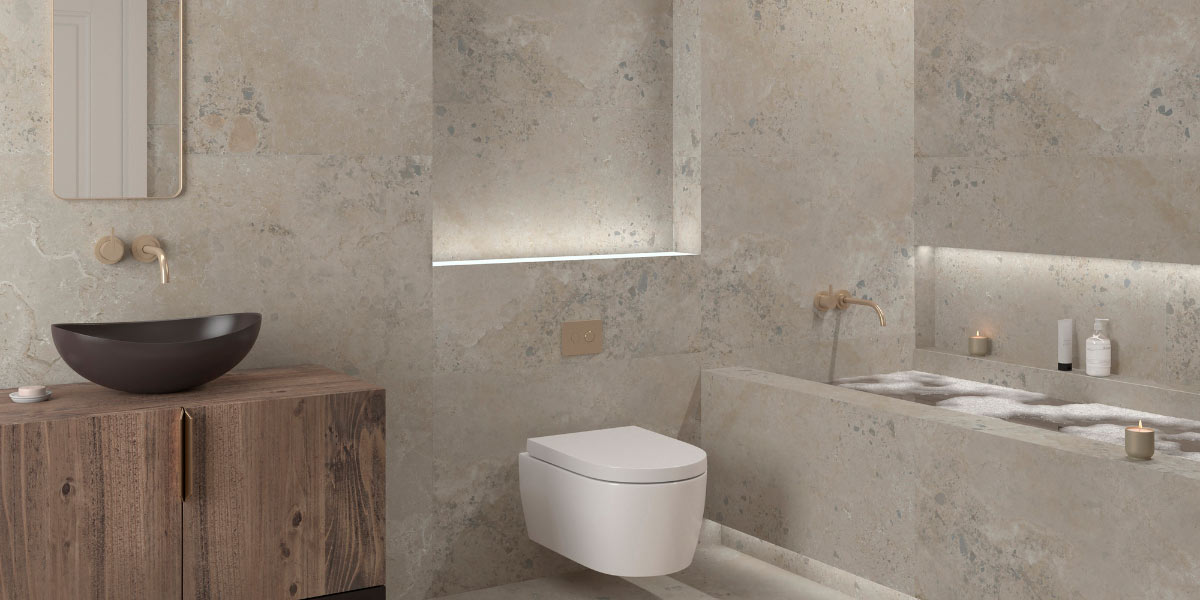
In bathrooms, the stone effect helps to create a spa-like atmosphere of well-being. Used on floors and walls, porcelain tiles envelop the space with a sense of continuity, conveying calm and elegance. In showers and wet areas, non-slip versions ensure safety without compromising visual appeal, while large-format accent walls reinforce the character of the space. The result is contemporary bathrooms that are easy to maintain and have a distinct air of exclusivity.
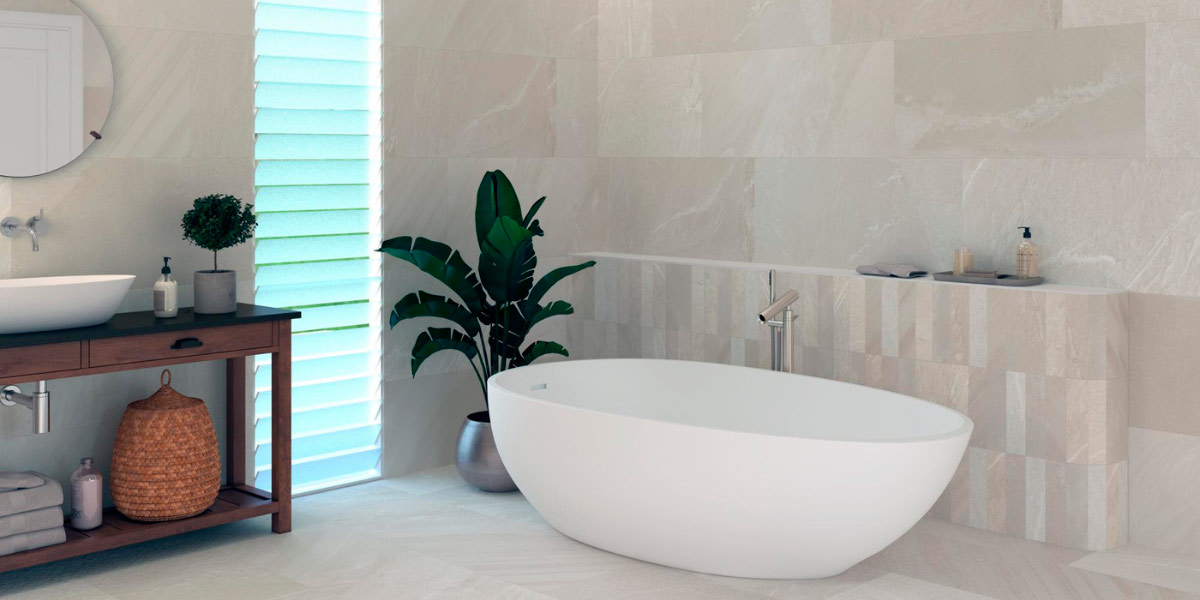
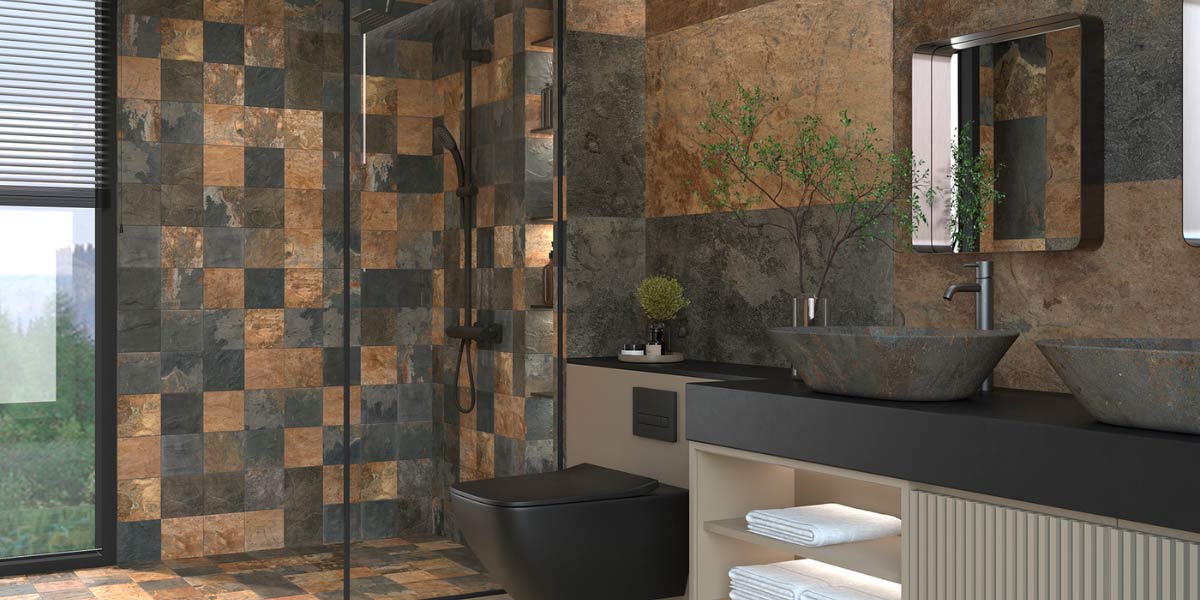
The living room, as the heart of the home, also benefits from the presence of stone-effect wall tiles. A feature wall clad in natural tones behind the fireplace or sofa can become the focal point of the room. Large-format floors provide an elegant and continuous base, complemented by rugs, textiles or designer furniture to soften the aesthetic and add warmth. Light tones visually enlarge the space, while darker tones create intimate and sophisticated atmospheres.
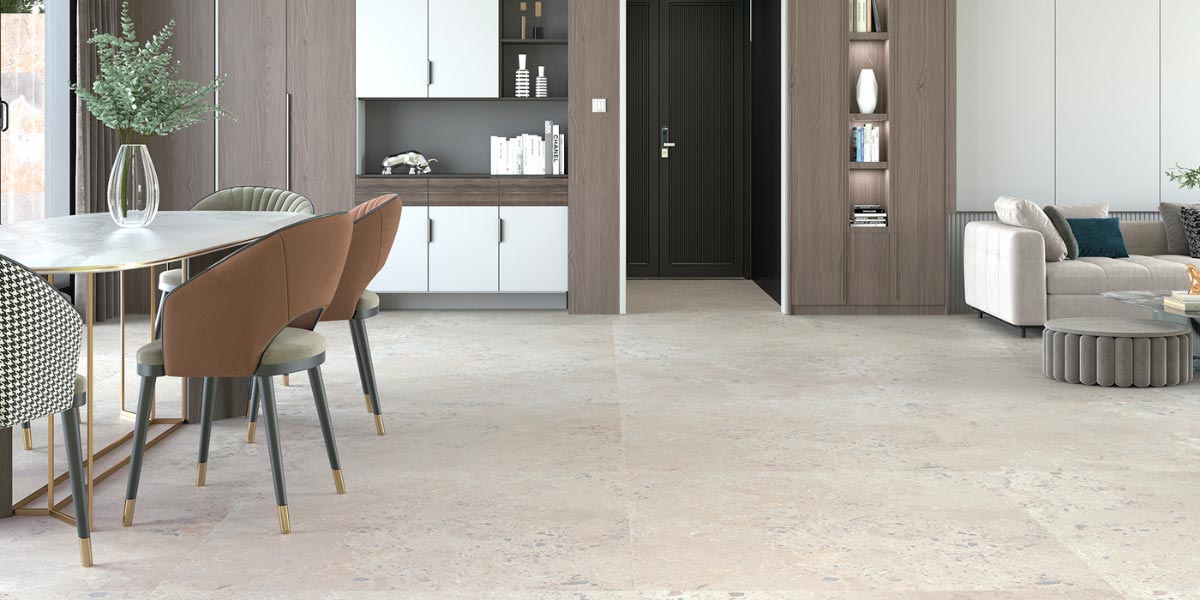
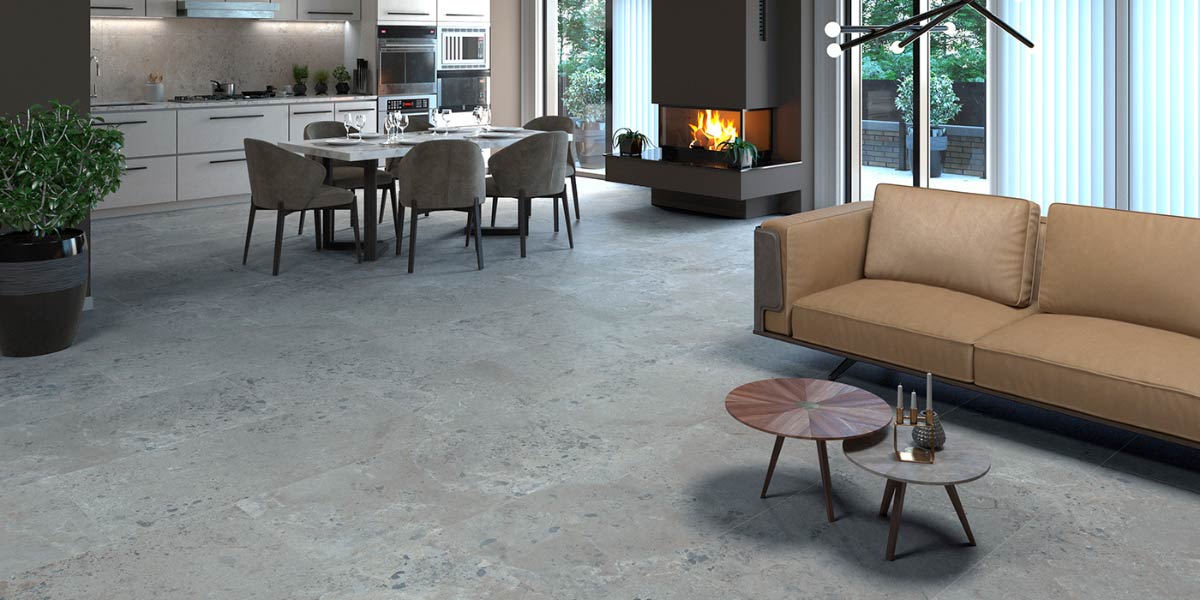
Contract spaces
In hotels, ceramic stone helps maintain a consistent aesthetic narrative from the entrance to the rooms. In lobbies, polished floors convey luxury and resistance to traffic. In rooms, accent walls on headboards or in private bathrooms create comfortable and memorable environments. And in common areas, porcelain tiles ensure the necessary durability without sacrificing aesthetics. Thus, they become a strategic ally for designing unique and timeless experiences.
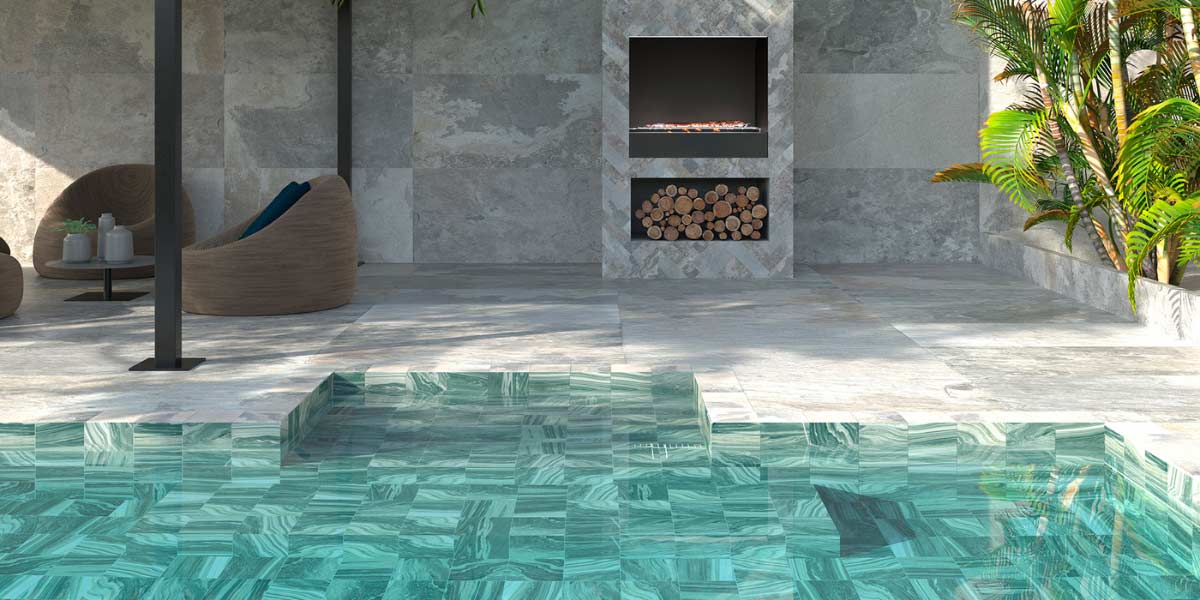
Spas and wellness centres, meanwhile, find this material to be the ideal solution for combining natural beauty and safety. Non-slip flooring in saunas, swimming pools, or shower areas meets the technical requirements of the sector, while walls with stone finishes evoke the serenity of nature. Combined with wood and soft lighting, ceramic tiles create spaces where calm and functionality coexist in perfect harmony.
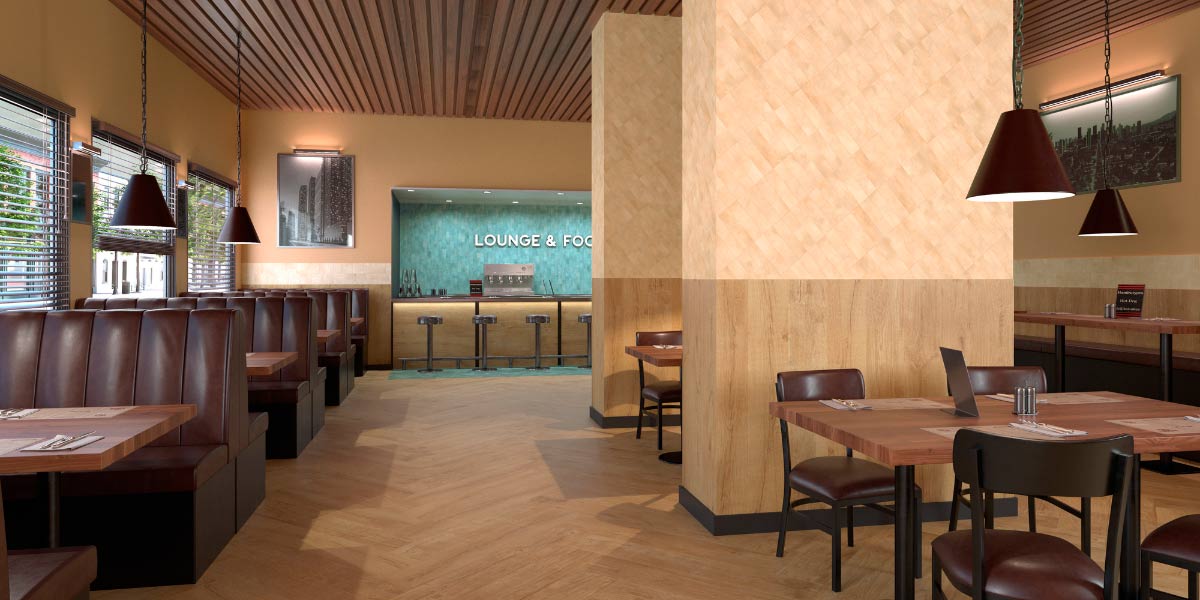
In the restaurant industry, stone-effect porcelain tiles add character and personality to restaurants and cafés. Floors that are resistant to stains and heavy traffic ensure that they look good over time, while clad bars and walls reinforce the visual identity of the establishment. Light-coloured stones fit in with fresh, Mediterranean-style environments, while dark tones enhance the character of gourmet or industrial-style spaces. In addition, the ease of cleaning ensures compliance with hygiene regulations, a fundamental aspect in the hospitality sector.
How to combine stone-effect coverings with small tiles
The combination of stone-effect tiles and small-format pieces is one of the most interesting trends in interior design and contract projects. While stone-effect porcelain tiles provide a solid, elegant and continuous base, small tiles introduce dynamism and detail, creating compositions that go beyond the purely functional to become a first-rate aesthetic resource.
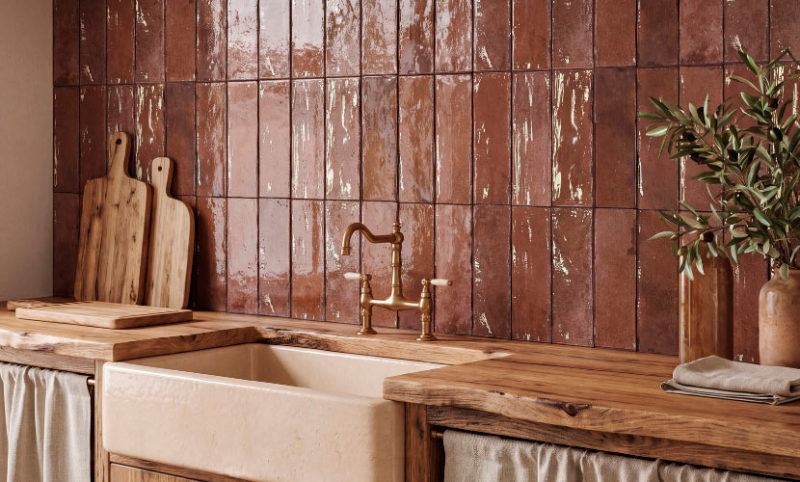
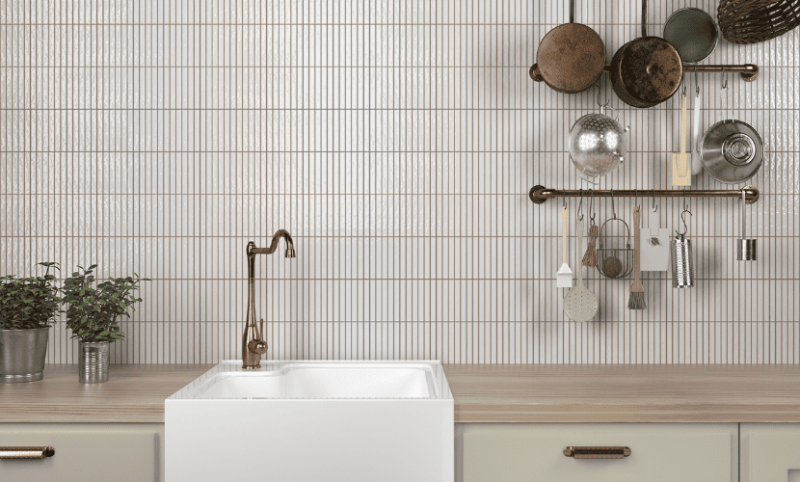
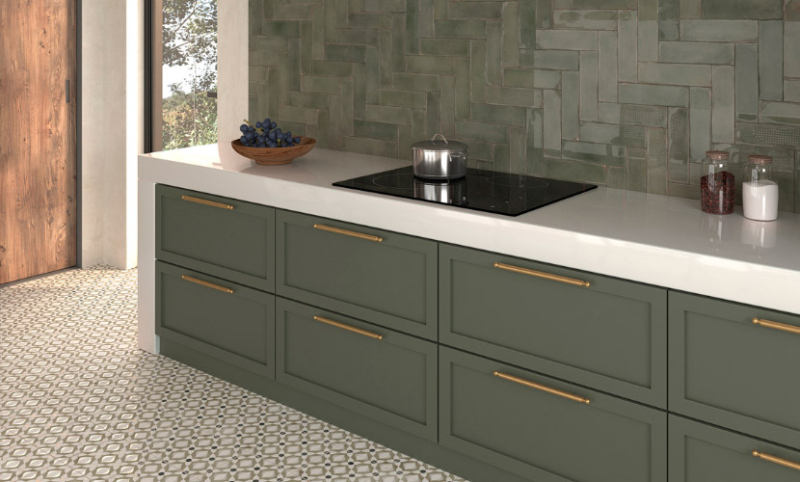
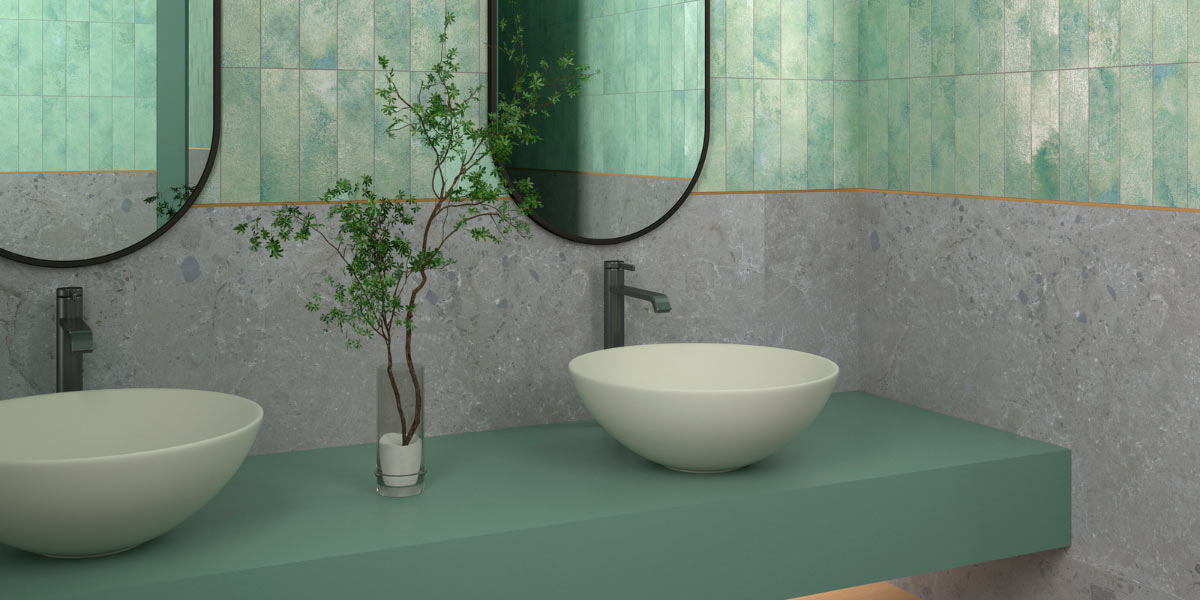
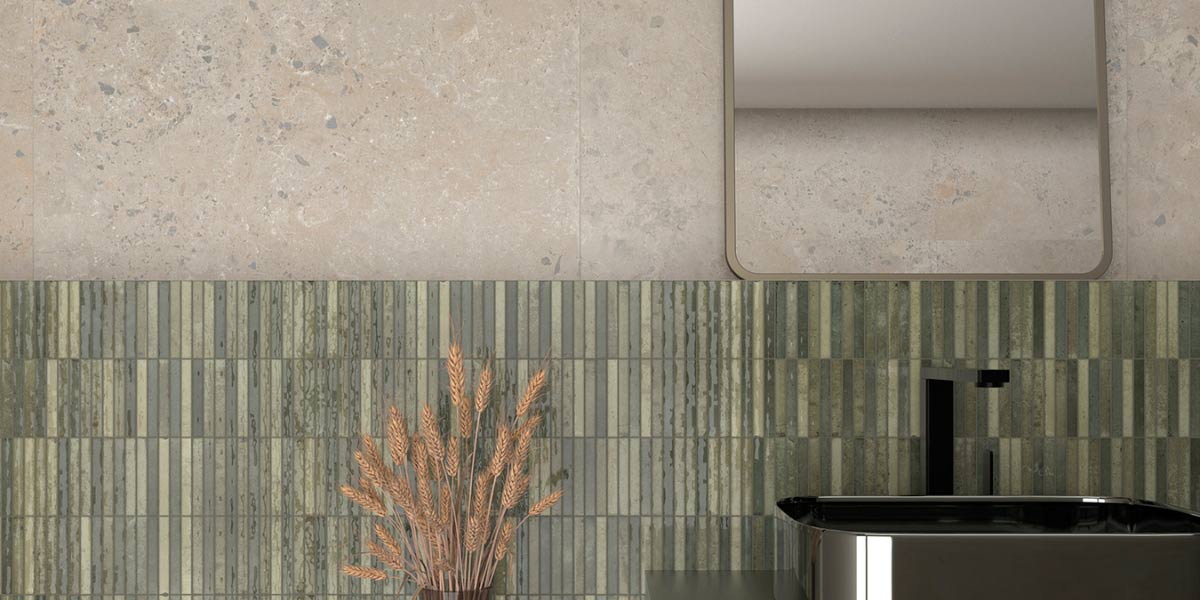
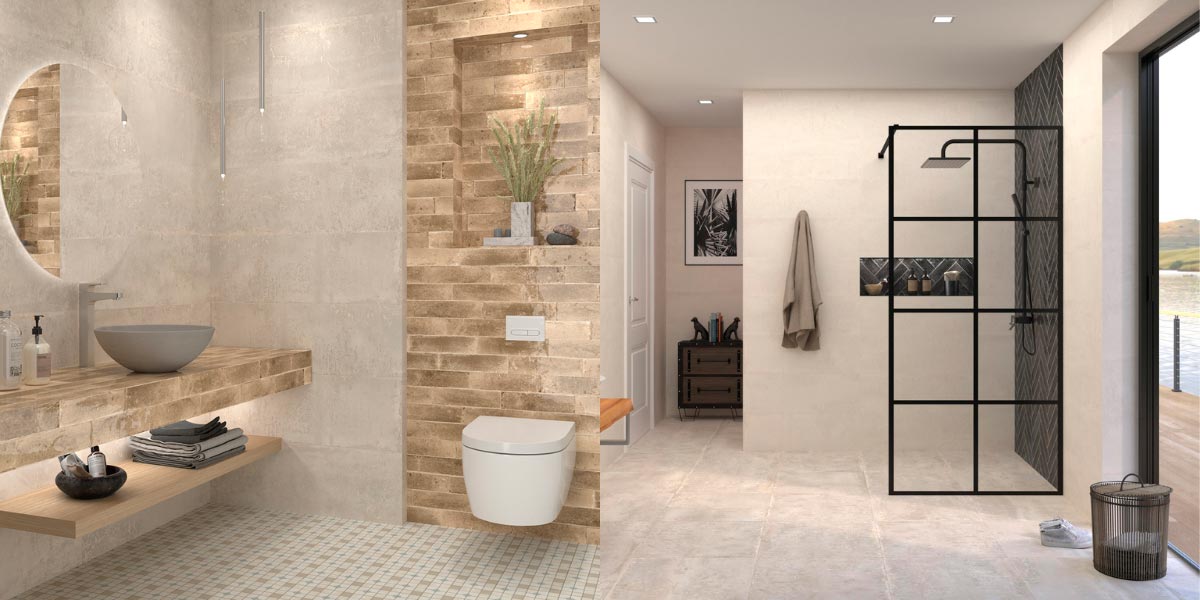
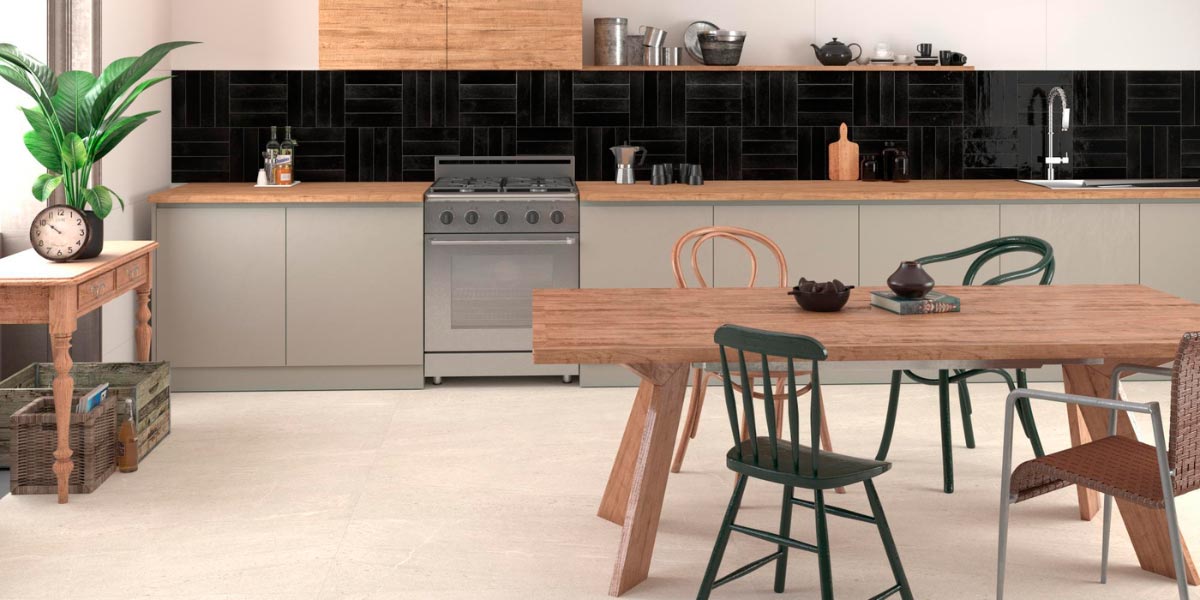
This combination is particularly effective in residential kitchens and bathrooms. Large-format stone-inspired flooring can be paired with a mosaic-style splashback, creating a contrast between the visual strength of the stone and the delicate craftsmanship of the small tiles. Similarly, a bathroom clad in neutral tones can gain personality with a shower niche or a secondary wall covered with small tiles in contrasting colours, achieving a vibrant effect without losing the overall harmony of the space.
In the contract sector, mixing stone coverings and small tiles multiplies the creative possibilities. Hotels, spas and restaurants can use this combination to reinforce their aesthetic identity. For example, an industrial-style restaurant can use dark stone-effect porcelain floors and highlight the bar with hexagonal or metro-style tiles. In a spa, non-slip porcelain flooring with a stone look can be complemented with small mosaics in watery tones to enhance the pool or jacuzzi areas. In both cases, the contrast of formats and textures adds visual richness and turns each space into a unique and memorable experience. Here are some examples:
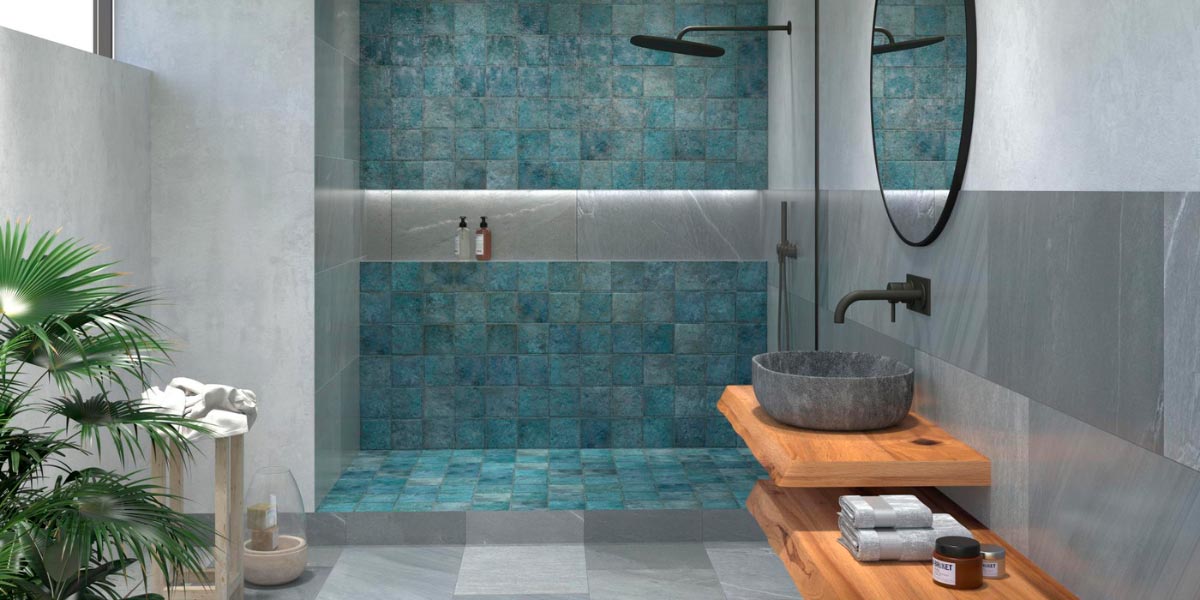
Stone-effect ceramic tiles are much more than just an alternative to natural stone: they are a creative tool that allows architects, interior designers and developers to design spaces with personality, consistency and added value. The combination with other materials, the diversity of formats and the possibility of indoor and outdoor application make porcelain tiles an essential resource for projects that seek aesthetics, durability and functionality.
At DUNE, we understand that every project is unique, which is why we offer ceramic solutions that inspire and accompany professionals in the creation of memorable environments. Shall we talk?