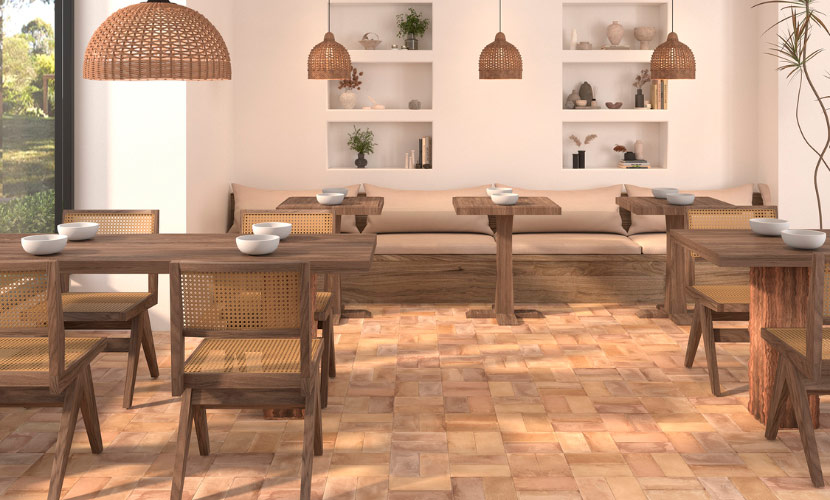

Rustic design with terracotta tiles: a return to basics
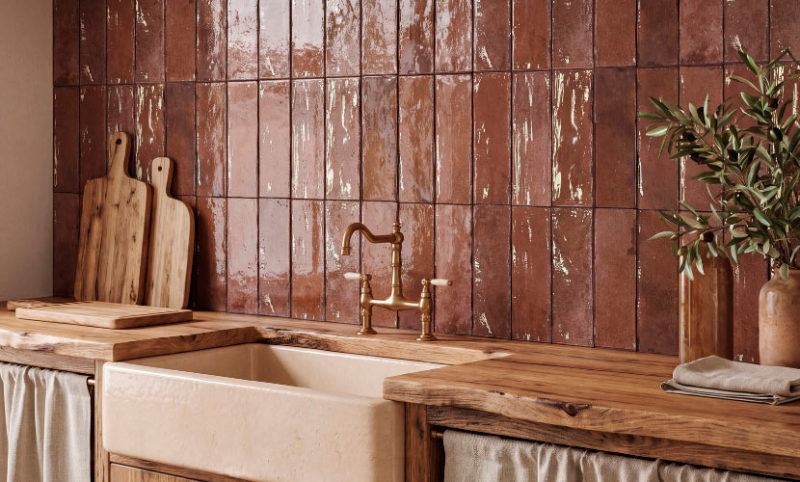
Rustic style is experiencing a new boom in the world of interior design. The search for cosy environments, natural materials and organic textures has led designers and architects to rediscover warm finishes such as terracotta. In this context, tiles that imitate terracotta have become a practical and aesthetic solution for those who wish to fuse tradition and modernity in their spaces.
This is a booming trend, where important trade fairs such as Milan Design Week and Casa Decor are being clear showcases for the return of rustic and Mediterranean aesthetics, with terracotta as one of its undisputed protagonists. This trend is no coincidence: it responds to an emotional, sensorial and functional need. The texture and warm colour of terracotta evoke tradition, calm and comfort, three key elements in today's home.
Faced with the disadvantages of traditional materials, such as porosity, fragility and maintenance, terracotta-look porcelain tiles are emerging as an alternative and an indisputable resource thanks to their versatility, strength and aesthetic ability to faithfully reproduce the handcrafted look of terracotta, providing not only functionality but also texture and emotion.
Next, we take a closer look at the rise of rustic design with imitation terracotta tiles and their multiple applications in bathrooms, kitchens and outdoor spaces, and how our latest Xàbia series has become the perfect ally for creating enveloping, authentic and timeless atmospheres.
If you are thinking of renovating your home and want to find the perfect balance between tradition and functionality, read on. We will show you how the aesthetics of terracotta can be integrated into today's projects, creating versatile and resistant spaces that express and communicate a connection with the natural, the emotional and the organic.
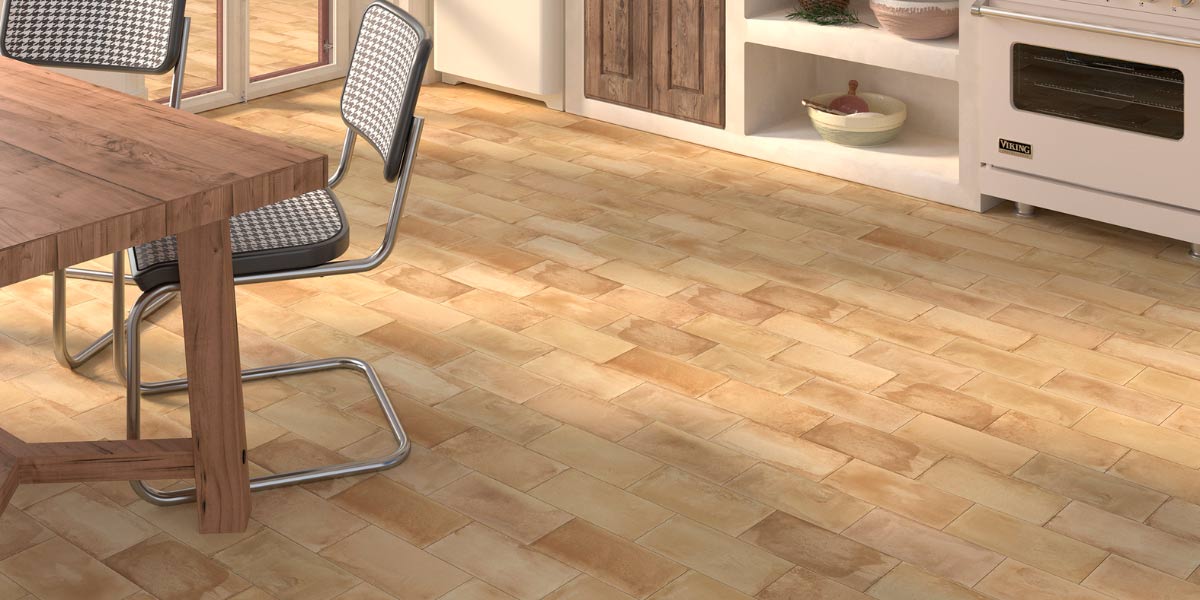
The terracotta trend: timeless warmth
Casa Decor 2025: terracotta as the protagonist of emotional interior design
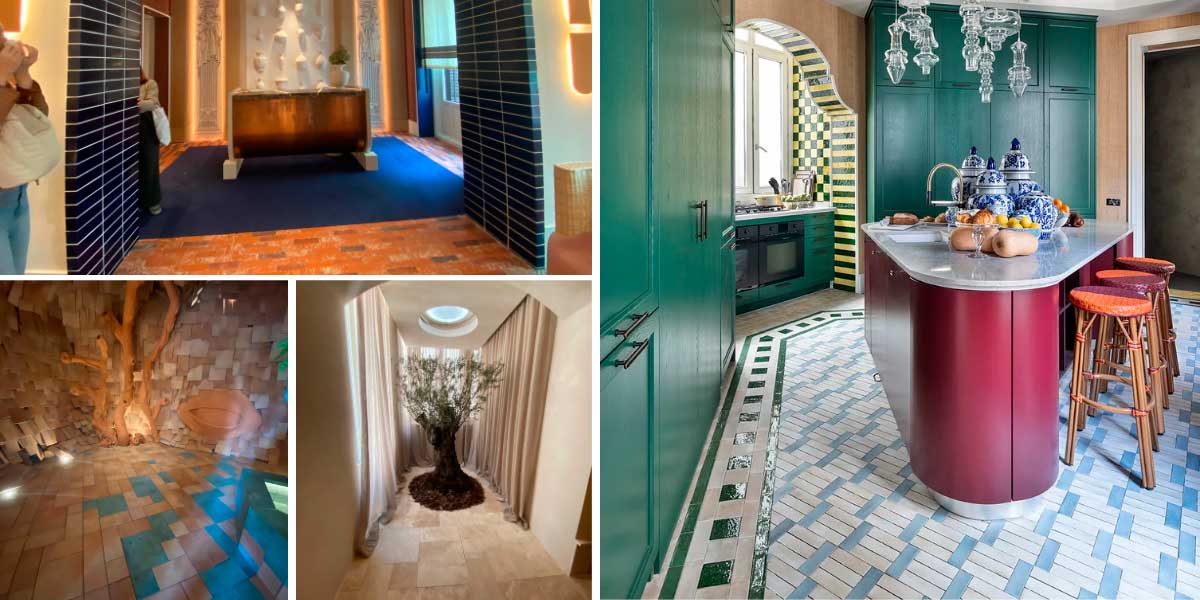
Casa Decor 2025 has highlighted one of the most powerful currents in current design: the return to the origin. This edition, held in the historic Sagasta 33 building in Madrid, has featured proposals in which natural materials, imperfect textures and earthy colours have been the protagonists. In this context, terracotta has not only been present: it has been the great star.
One of the most talked-about spaces was the "Baño de dos. Vibrant energy", by Blanca San Martín for Jacob Delafon. In it, the porcelain floor imitating terracotta provides a warm and vibrant base, reinforced by clay colours on walls and textiles. This type of tile evokes Mediterranean courtyards and the traditional floors of rural homes, but with a polished and sophisticated design.
Also noteworthy with the use of terracotta is the “Esencia Gran Hotel”, a space that evokes the lobby of a hotel, designed by Miguel Muñoz and which invites you to reconnect with the authentic and highlight the value of the traditional and handmade. Finally, Toujours à Madrid, Schmidt's kitchen, is a fantasy of colours and textures, designed by Jean Porsche. In the words of Architectural Digest: ‘it is a space in which to live stories and is, in itself, a tribute to the city of Madrid’.
Milan Design Week 2025: the sophistication of the organic
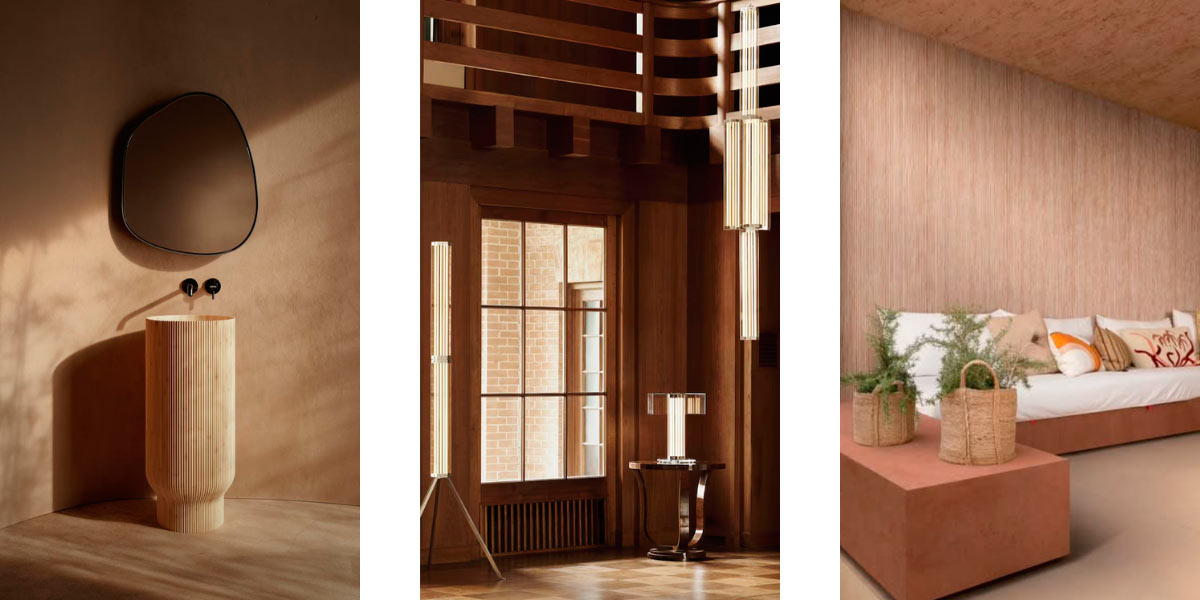
The Salone del Mobile and the side events of Milan Design Week 2025 have consolidated a shift towards ‘natural luxury’. The use of organic textures, noble materials and earth-inspired palettes has been recurrent among designers, brands and architectural studios. In this context, terracotta has reappeared not only in its classic form, but also as a reinterpreted element in wall coverings, objects and furniture.
Italian interior design brands such as Mutina and Florim have shown new collections where terracotta is integrated into three-dimensional tiles, ceramic lamps and even coffee tables. But it has been in conceptual interior design projects where it has shown off the most: environments inspired by Mediterranean courtyards, reinvented Tuscan kitchens and spa bathrooms with floors and baseboards in porcelain tiles imitating terracotta.
This trend is not nostalgic, but evolutionary. Terracotta in 2025 is more refined, more resistant, more versatile. And this balance between the rustic and the avant-garde is precisely what defines its rise.
Rustic style applications with imitation terracotta in bathrooms, kitchens and outdoors
Bathrooms: warmth and authenticity in intimate spaces
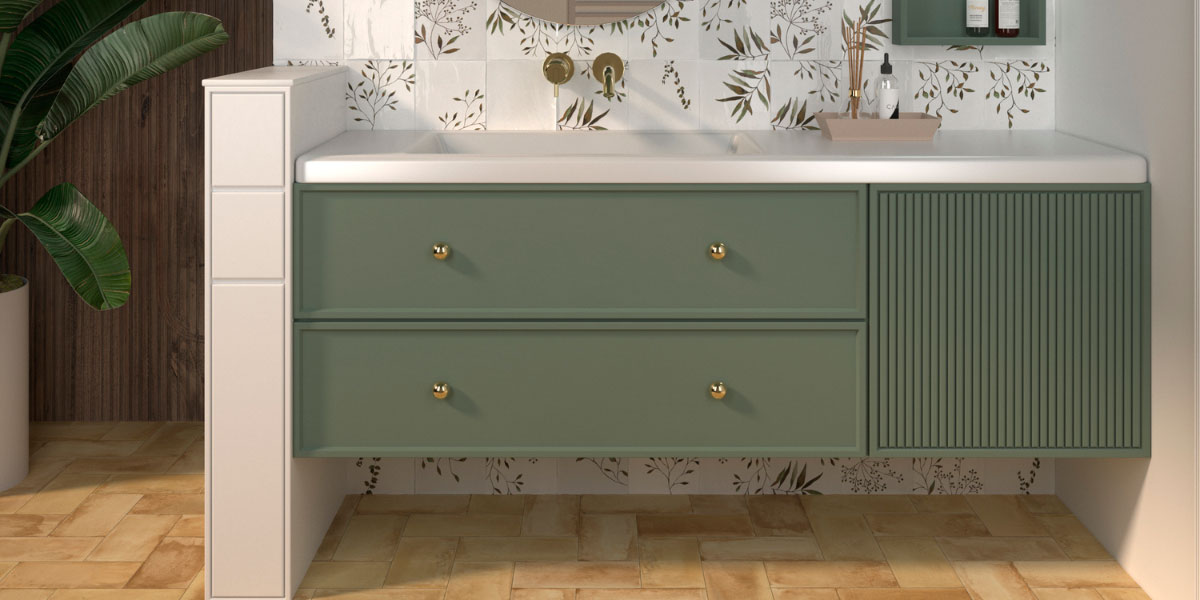
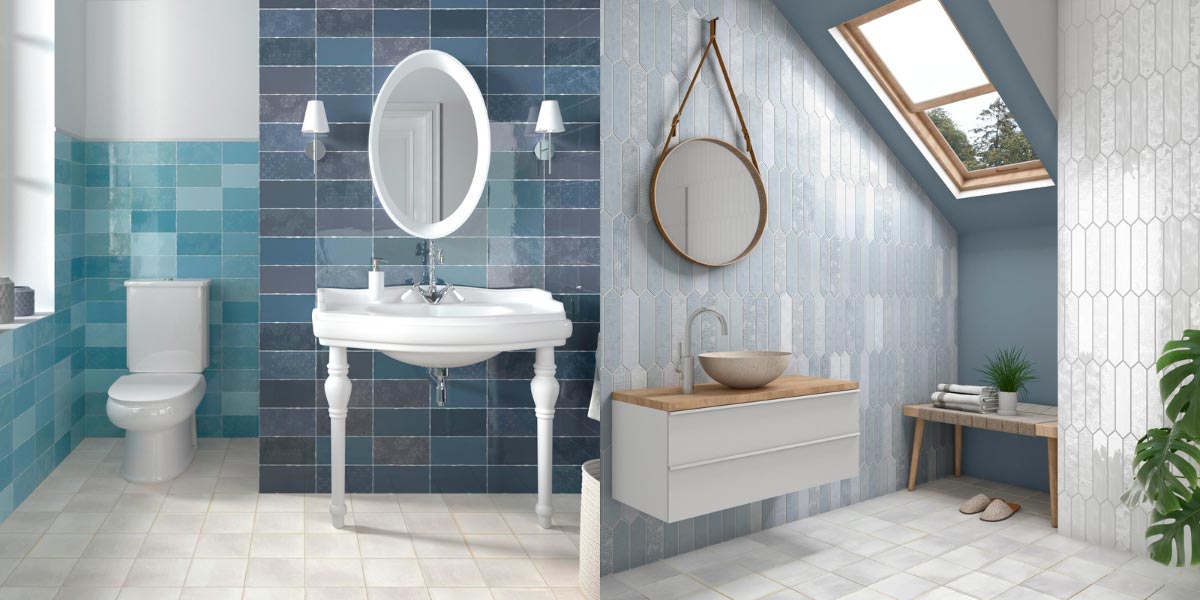
The bathroom has gone from being a purely functional room to become a personal refuge, a space for care and well-being. Imitation terracotta tiles provide an organic and relaxing touch, ideal for this type of environment. Thanks to their soft tones and slightly irregular textures, these tiles allow you to design bathrooms with a rural spa feel.
They are perfect for both flooring and shower cladding, creating a uniform and welcoming aesthetic. Combined with natural wood elements, taps in bronze or copper tones, and linen or cotton textiles, they create a harmonious and serene atmosphere. A growing trend is the wrap-around bathroom: using the same tile pattern on walls and floor to create a sense of continuity and spaciousness.
Kitchens: tradition reinvented with modern functionality
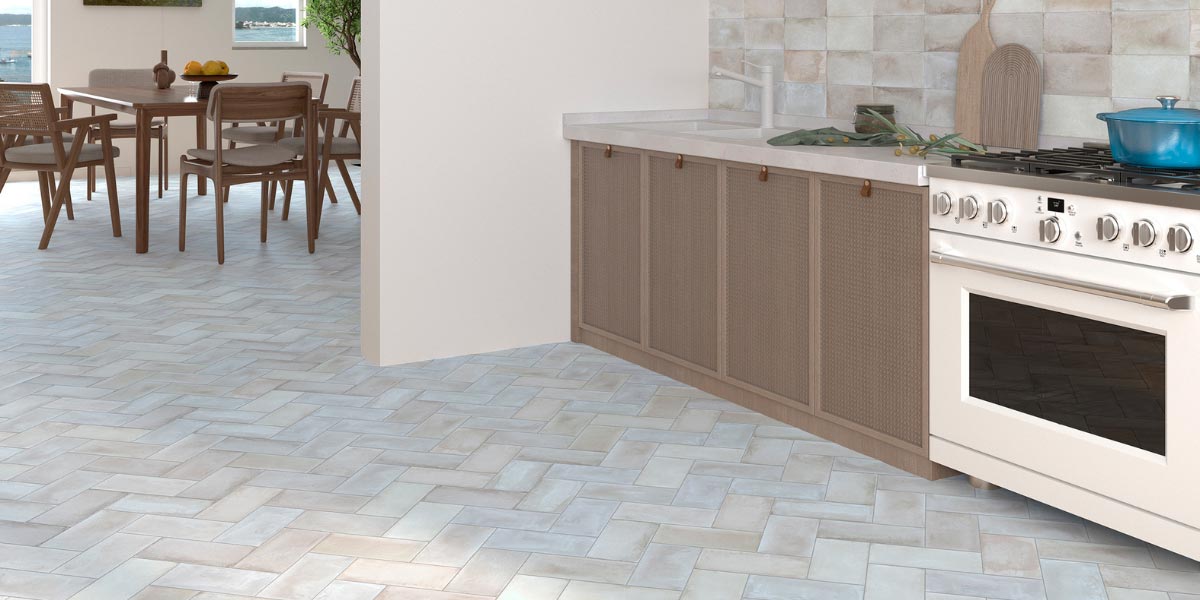
The kitchen is the heart of the home, and also the place where the durability of materials is most valued. With the terracotta aesthetic in ceramic version, it is possible to create kitchens with rustic personality without compromising ease of cleaning or resistance to heat and intensive use.
Our Xàbia series offers multiple options for covering walls, floors or even central islands. A very effective combination is that of terracotta tiles with natural stone worktops or marble effect surfaces, achieving a balance between rusticity and elegance.
In kitchens that open onto the living room, using the same ceramic tiles on the floor helps to visually unify the space and provides stylistic coherence. In addition, its warm palette harmonises perfectly with dark wood furniture, matt finishes and black or brushed steel appliances.
Outdoors: patios, terraces and porches with a Mediterranean soul
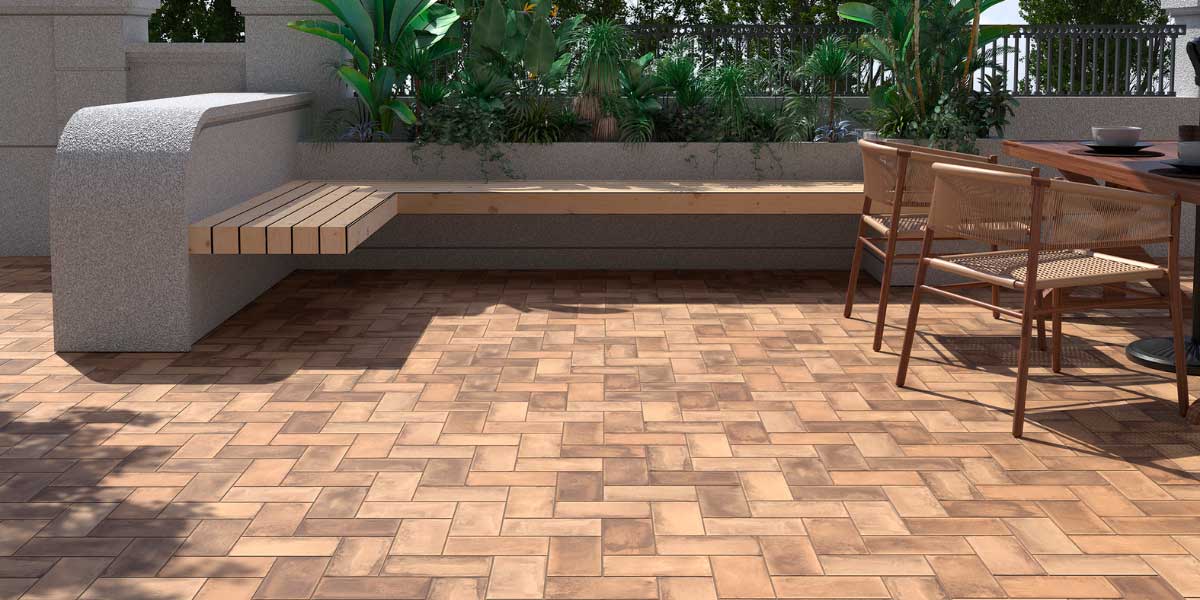
Outdoor spaces also benefit greatly from the aesthetic and technical qualities of faux terracotta tiles. Our latest Xàbia release features a high degree of slip-resistance, making it an ideal choice for areas such as patios, terraces, porches or pool surrounds.
Inspired by the traditional floors of Mediterranean villages, these tiles create a perfect base on which to build relaxed and characterful environments. They can be combined with natural fibre furniture, wooden pergolas and native vegetation such as olive trees, lavender or rosemary, achieving a complete sensory experience.
Another important advantage is its resistance to temperature changes, sun exposure and adverse weather conditions. This makes the Xàbia collection a practical and aesthetic option for outdoor use, maintaining its beauty and texture over time.
Combinations and styles: how to integrate terracotta tiles into contemporary projects
The aesthetic versatility of terracotta imitation tiles makes it possible to create combinations ranging from the purely rustic to more contemporary styles with ethnic, Mediterranean or even industrial touches. The key lies in the balance of textures and tones.
The beauty of contemporary design lies in its ability to reinterpret traditional elements with a contemporary approach. Imitation terracotta tiles, such as those in our Xàbia series, lend themselves particularly well to this play of contrasts and harmonies. Here we present specific and stylistically cohesive ideas for introducing this aesthetic into modern projects, without falling into the merely rustic:
Japandi style with warm Mediterranean accents
The Japandi style fuses the serenity of Japanese design with the warmth of Scandinavian. Introducing terracotta tiles in this context adds a warm and enveloping note. For example, Xàbia tiles can be used on the floor combined with beige micro-cement walls, clean-lined furniture in light wood and natural textiles. The result is a minimalist, functional and cosy space with a handcrafted soul.
Industrial loft with a hint of craftsmanship
Contemporary industrial style tends to be cold due to the predominance of metal and concrete. Incorporating terracotta is a way of humanising these spaces. Use Xàbia tiles in their modular format as flooring, in contrast with exposed brick walls or graphite grey paint. Add matte black luminaires and recycled wood and you will achieve an environment with an urban character that finds balance in its connection with the earth.
Refined Mediterranean aesthetics
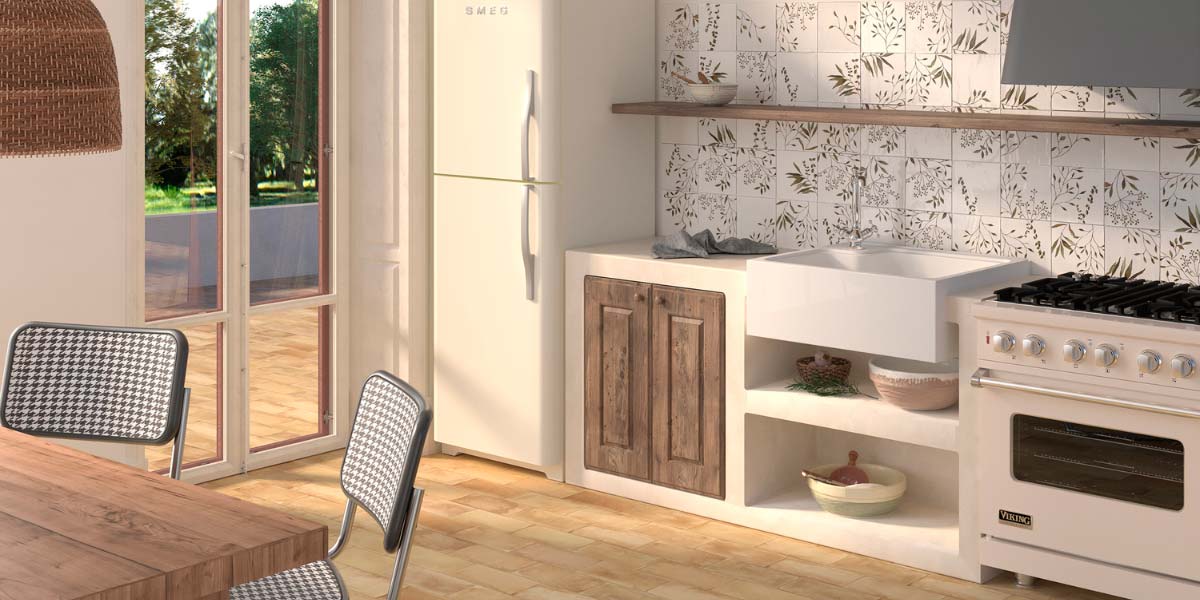
Beyond the traditional rustic style, the Mediterranean aesthetic can be reinterpreted with clean lines, contemporary proportions and handcrafted details. Combine Xàbia tiles on the floor of an open-plan kitchen with solid wood shelving, white glazed or Mediterranean patterned ceramics and stone worktops. The result is a bright, modern space reminiscent of Ibizan or Tuscan homes, but without resorting to decorative excess.
Commercial spaces with an earthy identity
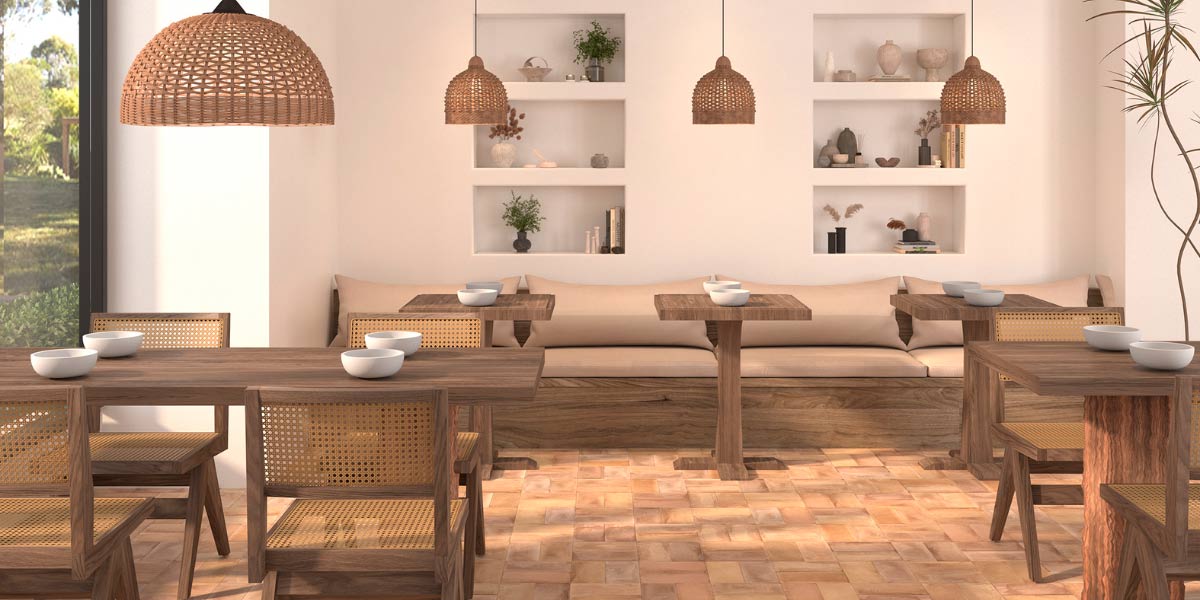
Terracotta aesthetics are not just for the home. Shops, cafés and coworking spaces can benefit from the emotional power of simulated terracotta. Use our faux terracotta tiles on the floor and combine them with warm lighting, hanging greenery and raffia furniture to create a space with personality, that invites you to linger and connects with the values of sustainability and authenticity.
A mix of geometries and styles
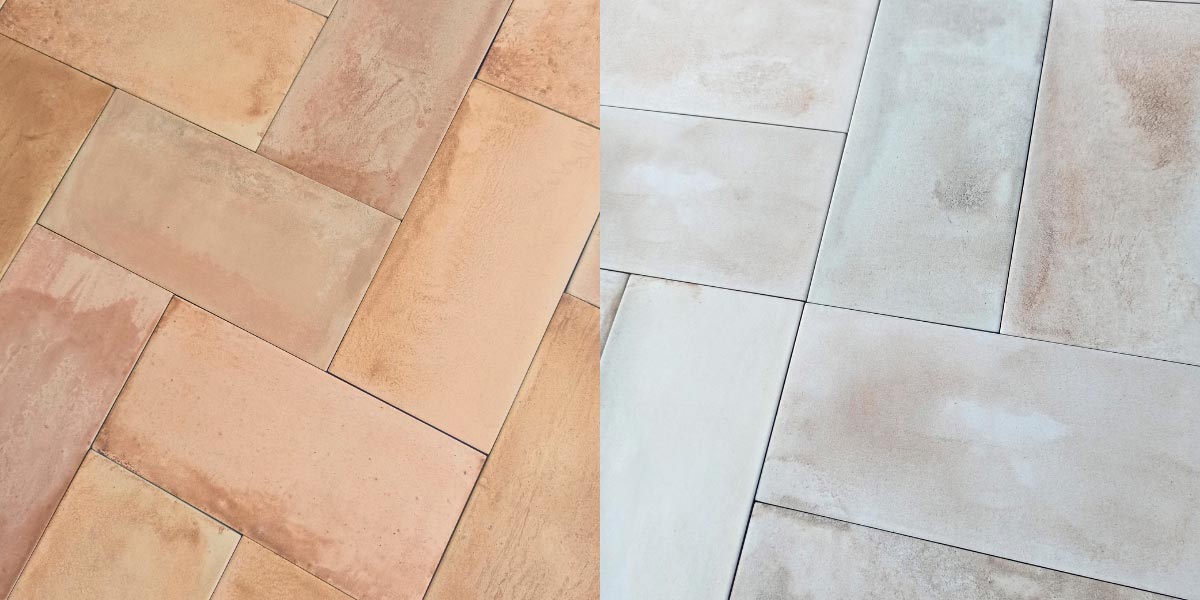
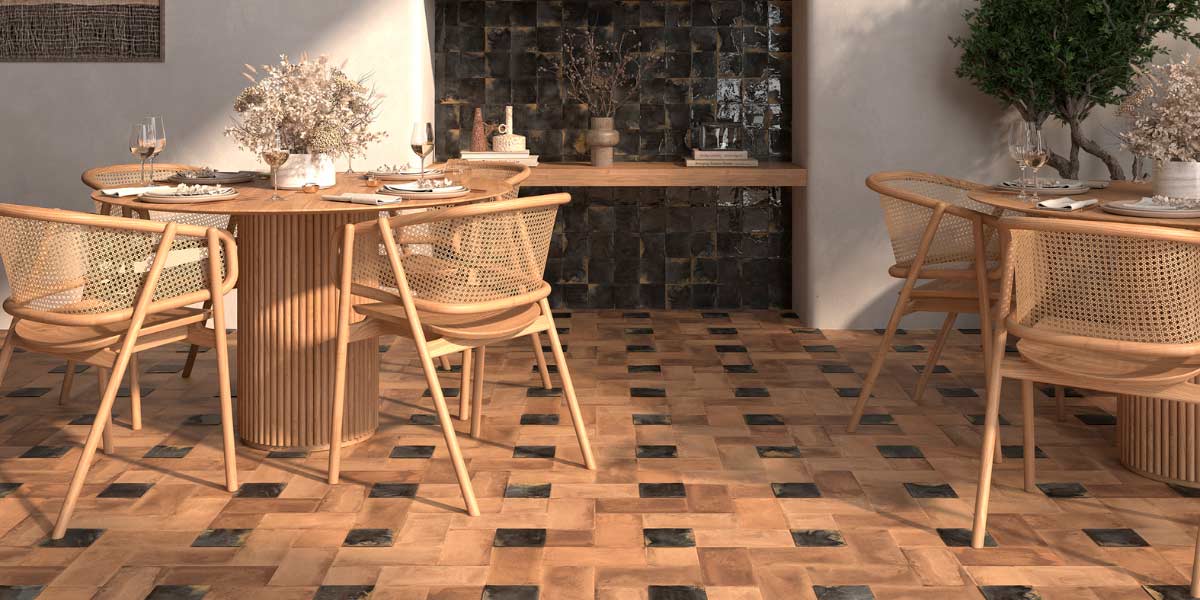
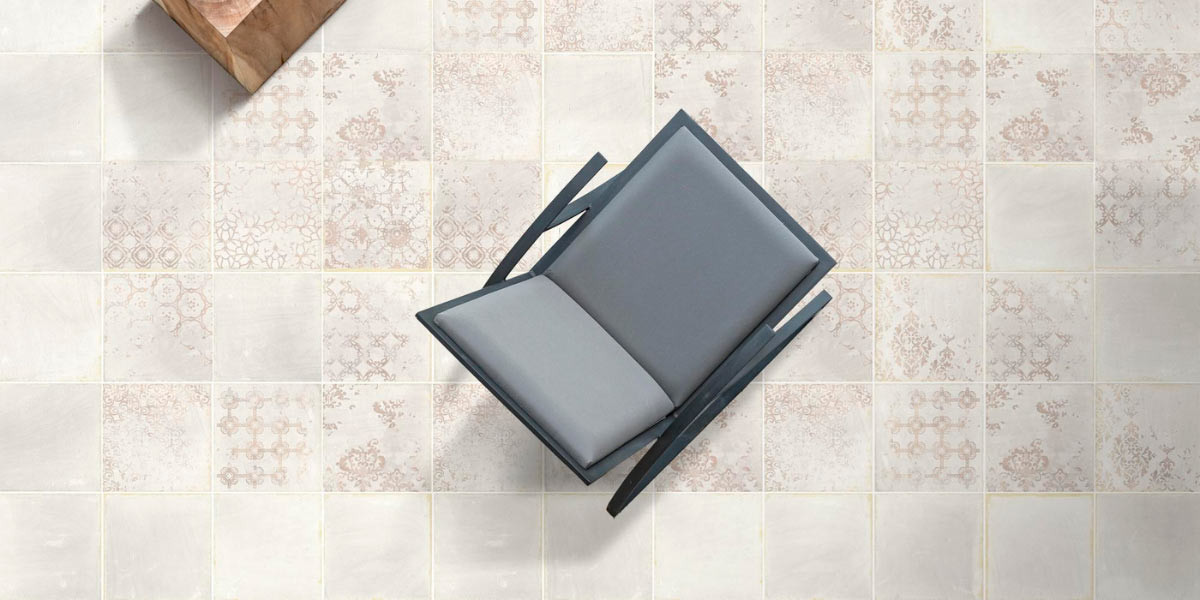
The format of the tiles can also be a creative ally and this is the case with our Xàbia series. Different orientations can be combined to introduce dynamism without losing chromatic coherence and can be combined with our Grandella series, thanks to its modular format that fits together. This creates a harmonious visual interplay that makes the most of the versatility of ceramic design.
Terracotta tiles: renewed tradition for spaces with soul
The return of rustic design is not just a passing fad, but a profound response to the emotional and functional needs of contemporary homes. In an environment where well-being, sustainability and authenticity are priority values, terracotta imitation tiles are positioned as an aesthetic and practical solution in equal parts.
Through the proposals seen in reference events, it is clear that terracotta, reinterpreted in a ceramic key, connects with a modern sensibility that values craftsmanship without renouncing innovation. And our Xabia collection, but also the Terracotta series, perfectly synthesise this vision: resistant and durable materials that retain all the emotional, visual and tactile charge of traditional terracotta.
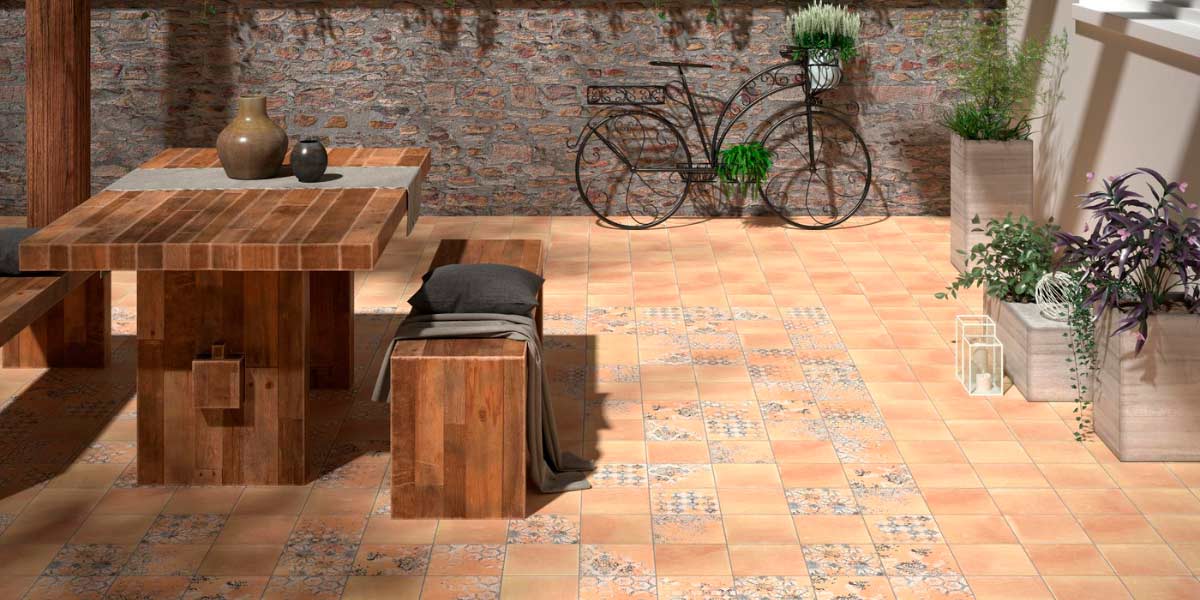
Whether in serene bathrooms, vibrant kitchens, charming terraces or even commercial spaces, both series allow you to create cosy, natural and timeless atmospheres. Because rustic, when designed with intention and quality, is not a style of the past: it is a way of looking to the future with your feet firmly rooted in authenticity. And you, do you like this new decorative trend?