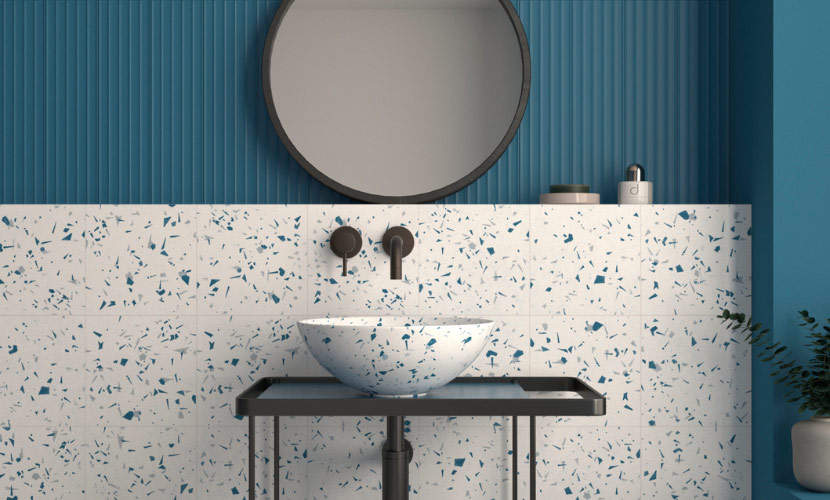

Terrazzo flooring: a trend that still being in the limelight
Terrazzo flooring has once again taken center stage in contemporary interior design and architecture projects. Its unique combination of durability, aesthetics, and versatility makes it one of the most valued options for both residential spaces and high-traffic environments, especially in hospitality, restaurants, hotels, and pool areas.
In recent years, terrazzo has evolved thanks to new production processes, more sophisticated finishes, and designs that reinterpret its traditional appearance to suit current trends. Today, it is possible to find modern terrazzo floors with vibrant colors, varied grain sizes, and formats that allow for highly expressive environments without sacrificing functionality.
If you are looking for a durable, low-maintenance flooring option with strong visual character, terrazzo becomes an exceptional alternative to other materials. In this article, we take an in-depth look at what terrazzo is, its advantages, and why it has become one of the preferred choices for high-traffic and wet areas, as well as our collections that embrace a modernized form of terrazzo. Let’s get started!
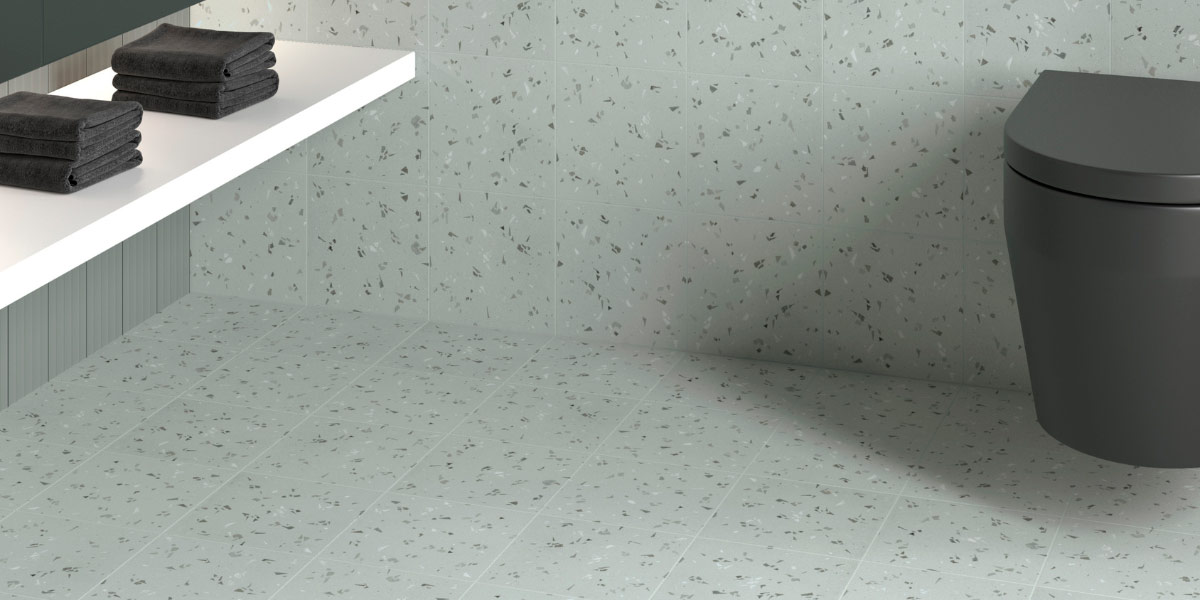
What is terrazzo?
Terrazzo is a composite material traditionally used as flooring, made from a mixture of marble, quartz, granite, or other natural stone fragments bound together with cement or resins. This combination is poured, compacted, and later polished to achieve a continuous, glossy, and highly resistant surface. Its origin dates back to 15th-century Venice, where artisans reused marble remnants to create floors that were economical yet visually appealing. Over time, this artisanal technique evolved to become one of the most widely used flooring solutions in public buildings, homes, and commercial projects.
In its classic version, terrazzo was produced as a continuous in-situ floor, poured and polished directly on site. However, industrialization led to the development of terrazzo tiles, which simplified installation, reduced execution times, and increased the variety of available formats. Today, in addition to traditional cement-based terrazzo, there are more artistic versions that offer greater chromatic stability, improved chemical resistance, and broader decorative possibilities.
The aesthetic of terrazzo has also undergone a profound transformation. Far from being limited to its characteristic speckled appearance, today it is available in a wide range of compositions, from pieces with fine grain and neutral tones to more daring designs featuring large aggregates, intense colors, and geometric patterns. This versatility has made it one of the favorite materials in contemporary interior design, as it allows for personalized spaces while maintaining its artisanal essence.
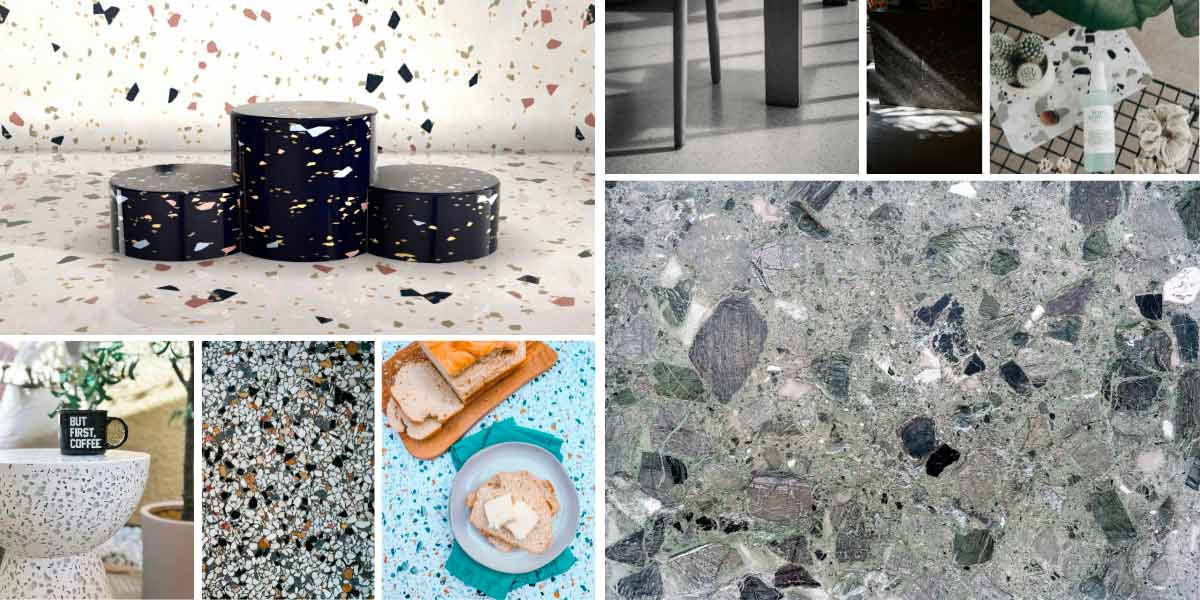
Characteristics of terrazzo flooring
Terrazzo stands out for its excellent technical performance. Its wear resistance, low porosity —especially in resin-based versions— and its ability to maintain a flawless appearance for decades make it an ideal flooring material for high-traffic areas. Added to this is its easy maintenance and sustainable nature, as many manufacturers use recycled materials and efficient production processes.
- Easy clean: clean a terrazzo floor enough using water and neutral soap. You do not need any more. Thanks to its composition and features, its cleanness is easy.
- Resistance and hardness: no matter how much time passes, if the maintenance of the terrazzo floor is done correctly, the tiles will be as good as the first day. Its composition and hardness allow the durability of this type of flooring.
- Elegant aspect: thanks to the small marble inlays and polished effect, terrazzo flooring is very elegant, and sophistication to all the rooms is taken.
- Sustainability: terrazzo floors made with glass, marble, stone or porcelain pieces are leftovers used in construction. Therefore, there is a process of recycling and use of material which, without this use, it would be lost. Its use reduces the impact on the environment by generating less waste.
In short, terrazzo is a material that combines tradition, design and performance, capable of adapting to both contemporary projects and more classic environments. Its timeless aesthetics, together with its high performance, explain why it continues to be one of the preferred options for flooring in hotels, shops, homes and outdoor areas such as terraces or swimming pools.
Is there a difference between indoor and outdoor terrazzo flooring?
When it comes to differentiating interior terrazzo floor and exterior, we have to take into account the thickness of the pieces. This feature determines if a tile is suitable to support more or fewer people traffic because of its intensity and the number of people who flow would be able to concern the worn floor. The materials composition and the plan format will also be other variables to take into account.
So, generally speaking, an exterior terrazzo floor will have more thickness than an interior terrazzo floor because of understanding exterior spaces as spaces subject to atmospheric conditions and with more flow of people. That is why, yes. There are differences between terrazzo interior and exterior floors.
Where can terrazzo be used?
In Dune, we think that the terrazzo flooring uses are infinite. Since a living room and bathroom, without forgetting a kitchen or a terrace. We don’t have any doubt that terrazzo flooring is suitable for all the rooms in a home! The most important thing is to be clear about the style we want to bring into a home and decide in which room we want to use a terrazzo floor.
However, with the ceramic techniques development and industrial technologies used, ceramics allows terrazzo creation effect tiles and get pieces with the desired end and, with high technical benefits, not only to the flooring but also lining.
Ideal terrazzo applications in hospitality and pool areas
Terrazzo has become one of the most valued materials in hospitality projects and spaces linked to pool environments, thanks to its balance of aesthetics, durability, and ease of maintenance. These areas require specific technical qualities—such as high foot traffic resistance, constant exposure to moisture, and the need for non-slip surfaces—that terrazzo, in its various versions, is able to meet with great efficiency.
Terrazzo in hospitality: bars, restaurants, and hotels
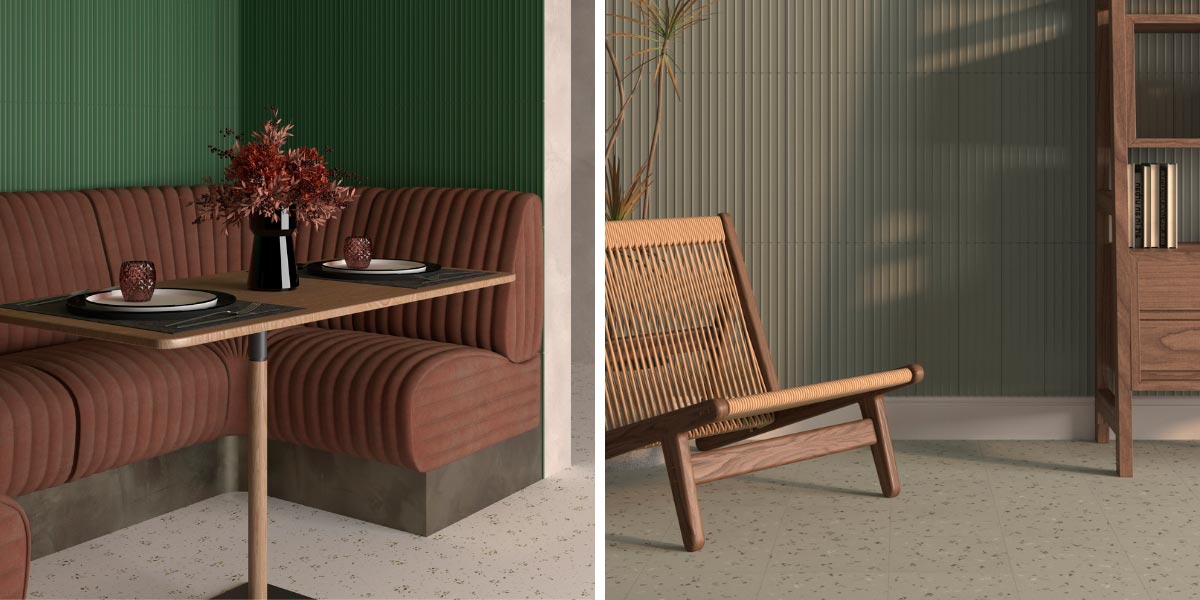
Hospitality venues require flooring that can withstand intensive use while maintaining a pristine appearance. In these settings, terrazzo offers a great advantage due to its wear resistance, durability, and elegant look, which fits both contemporary designs and more classic spaces.
Its compact structure reduces stain absorption and makes it easier to clean spills commonly found in kitchens, dining rooms, and service areas. This translates into simplified maintenance and a surface that preserves its appearance over time. In addition, the ability to produce pieces with customized grain sizes and colors allows terrazzo to adapt to the visual identity of each business—from sophisticated atmospheres in boutique hotels to bold designs in creative restaurants or modern cafés.
In large areas, terrazzo also offers visual continuity, minimizing joints and enhancing the feeling of spaciousness. All these qualities make it an ideal material for hotel lobbies, waiting rooms, hallways, dining rooms, and even outdoor terraces.
Terrazzo in pool areas and wet zones
Spaces surrounding pools—both indoors and outdoors—require flooring that combines safety, durability, and reliable performance against moisture. Terrazzo, especially in its non-slip and low-porosity versions, is an optimal solution for these environments. Its resistance to water and temperature changes makes it suitable for pool edges, solariums, spas, and wellness areas.
One of its key advantages is the possibility of producing surfaces with textured or micro-textured finishes that improve grip without compromising visual appeal. This reduces the risk of slipping, an essential factor in areas that are constantly wet.
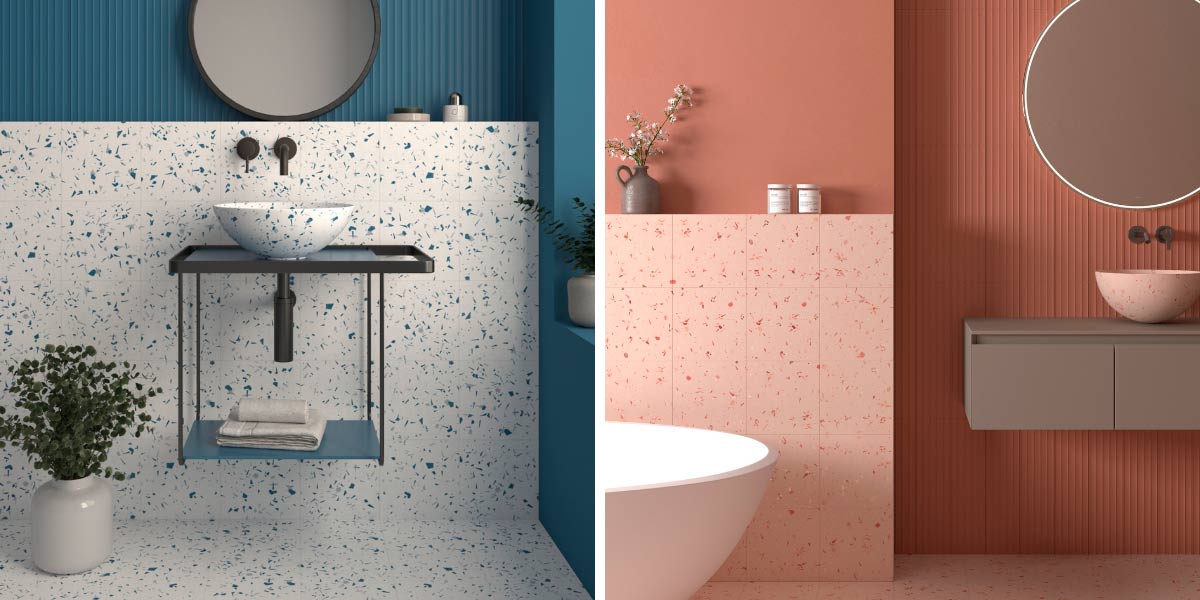
Whether in hospitality or pool environments, projects share similar needs: safe, durable, and visually appealing surfaces. Terrazzo meets all these requirements thanks to its versatility, range of finishes, and strong technical performance. Its combination of contemporary style and long-lasting properties makes it an ideal flooring choice for spaces where design and functionality must go hand in hand.
Terrazzo combinations to create unique spaces
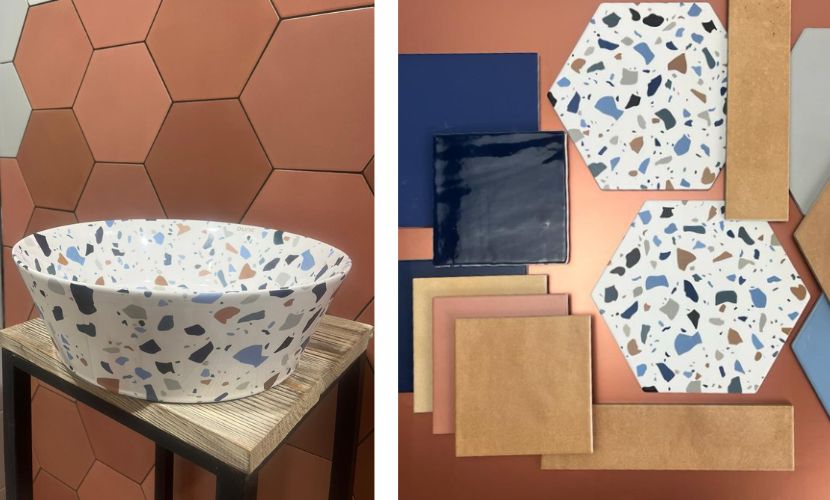
At Dune Cerámica, we approach design as a complete concept: we do not think of floors or walls as isolated elements, but as part of the overall experience of a fully designed space. This philosophy has given rise to collections such as Fragmenta and the Terrazo hexagon from the Chicago series, which allow for the combination of pieces, formats, and matching washbasins to create bathrooms, hospitality spaces, or residential projects with character, aesthetic coherence, and strong technical performance.
Fragmenta series: an artistic reinterpretation of terrazzo
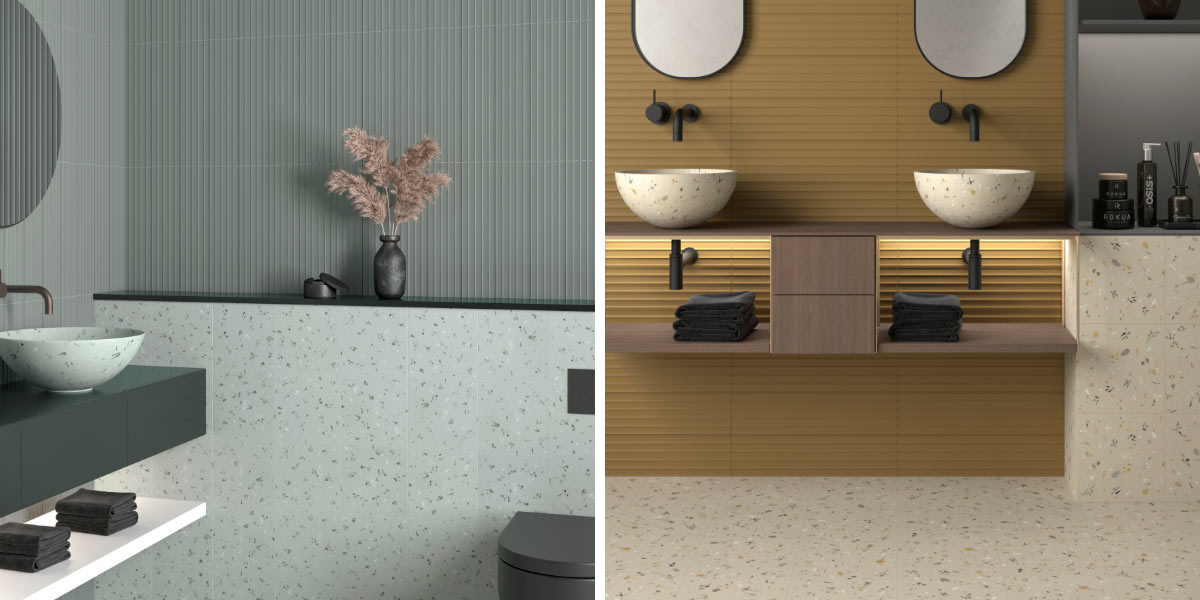
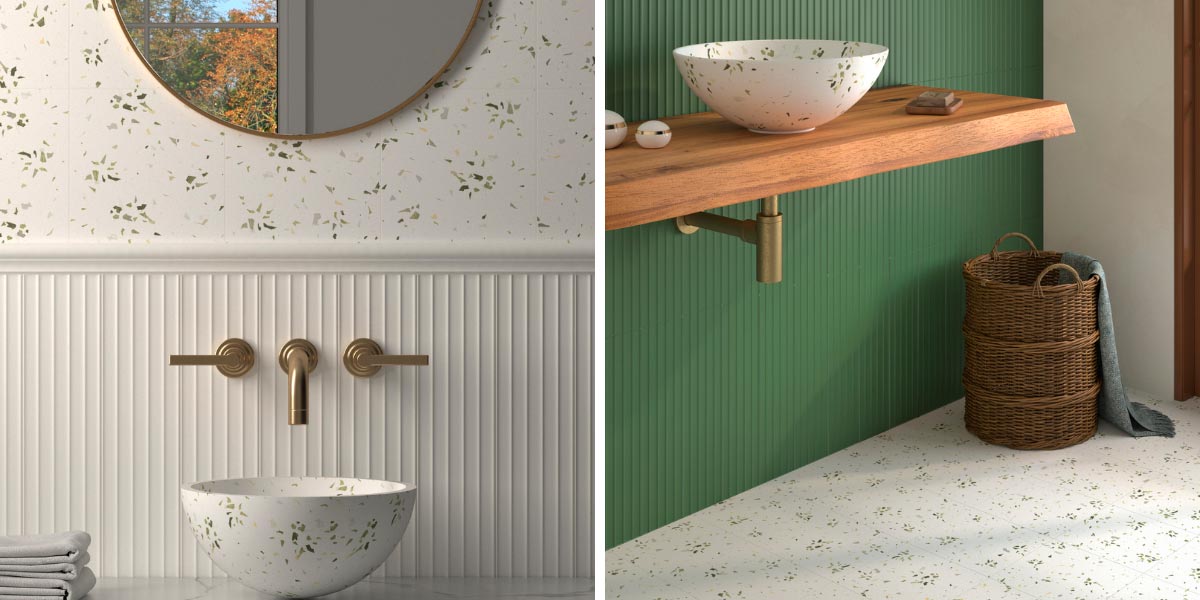
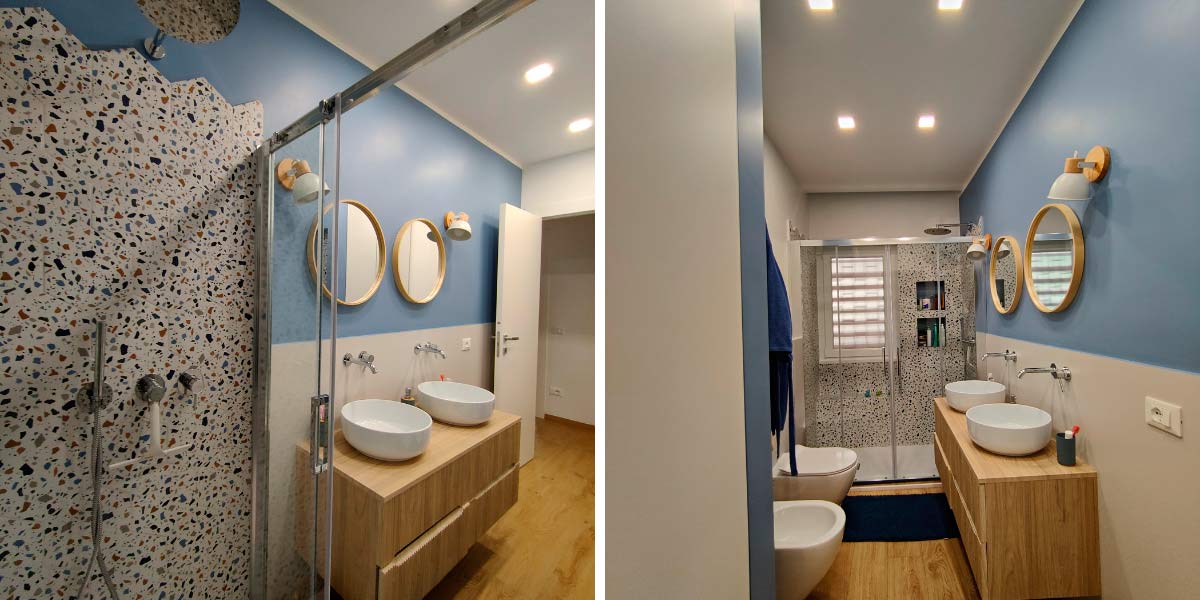
The Fragmenta series takes inspiration from traditional terrazzo but reinterprets it with a contemporary, artistic perspective. Each 20×20 cm piece is hand-painted, with color fragments floating over soft or vibrant backgrounds, creating a visually dynamic effect. Its Soft & Safe texture provides a pleasant touch and non-slip safety, making it suitable even for wet areas.
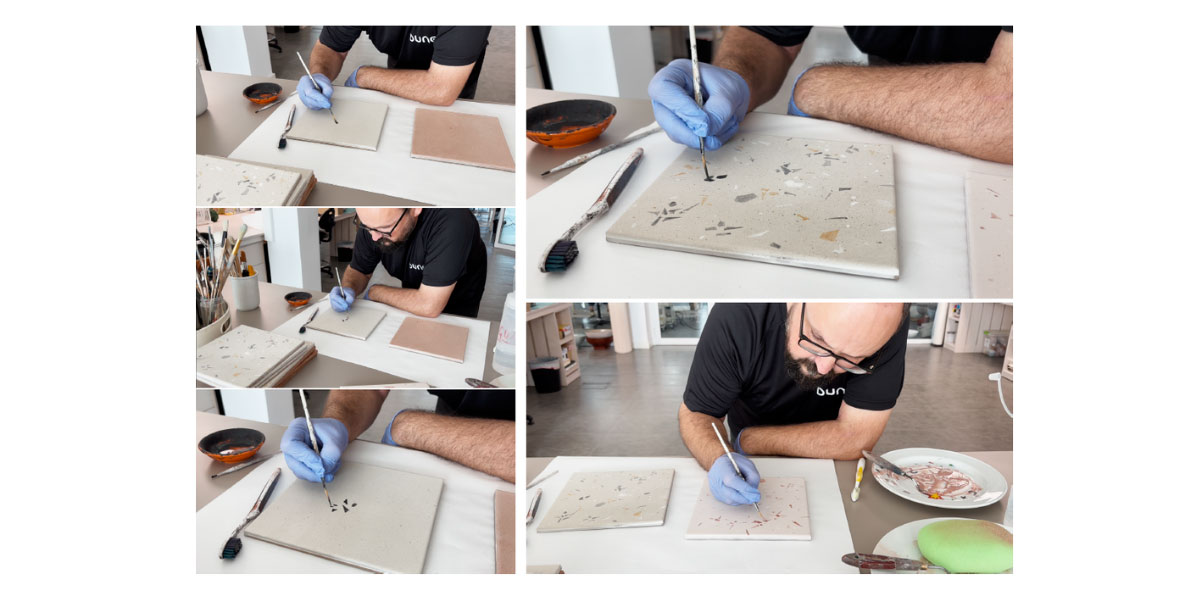
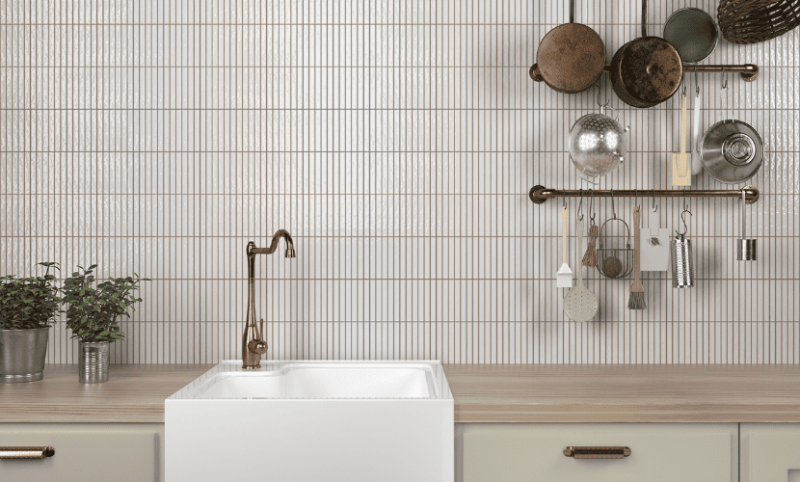
What makes this collection particularly powerful is that it not only includes the tile but also matching ceramic washbasins and a ribbed white-body wall tile available in six colors that pair perfectly with the terrazzo tones.
How we combine it and what it brings to the design
- Fragmenta can be used as the main flooring in bathrooms or communal areas, extending the design to the washbasin to create visual continuity and elevate the level of detail.
- Thanks to its colored fragments, it can be combined with the monochrome IMA tiles, avoiding visual saturation while maintaining chromatic harmony.
- It is ideal for boutique hospitality or character-driven projects where the tile needs to stand out as a differentiating design element without sacrificing functionality.
Terrazo Hexagon: Urban and Dynamic Style
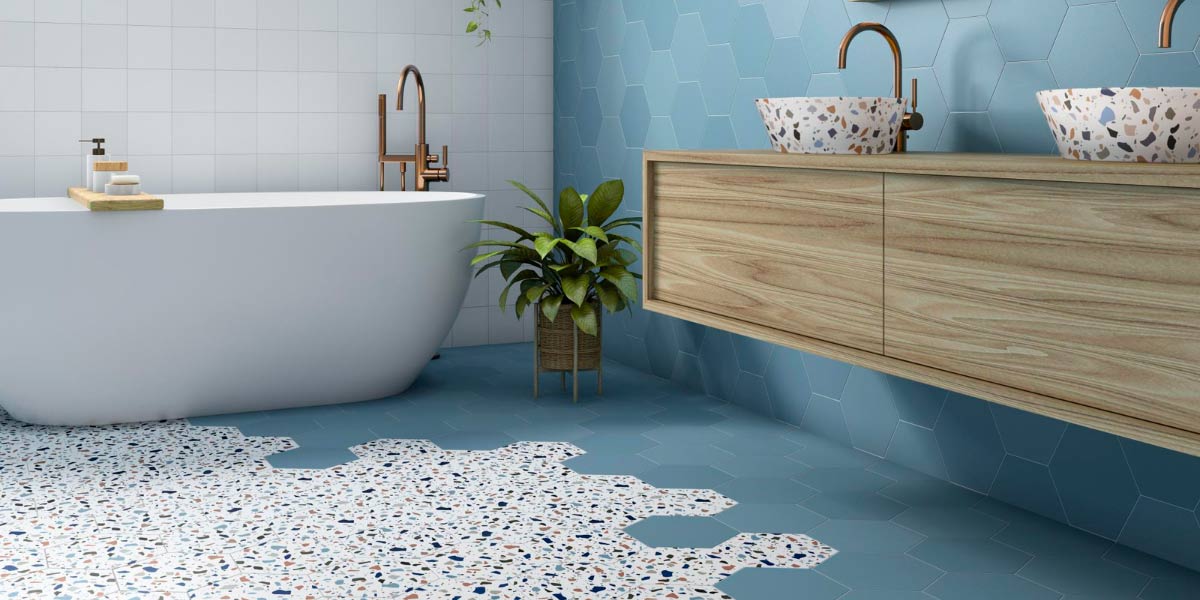
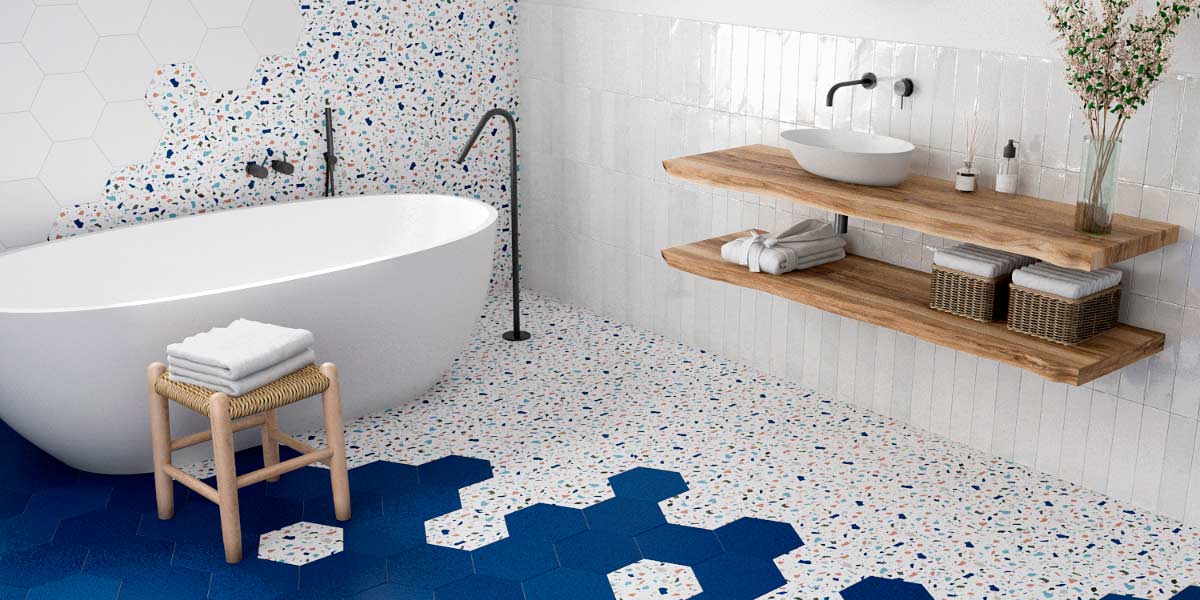
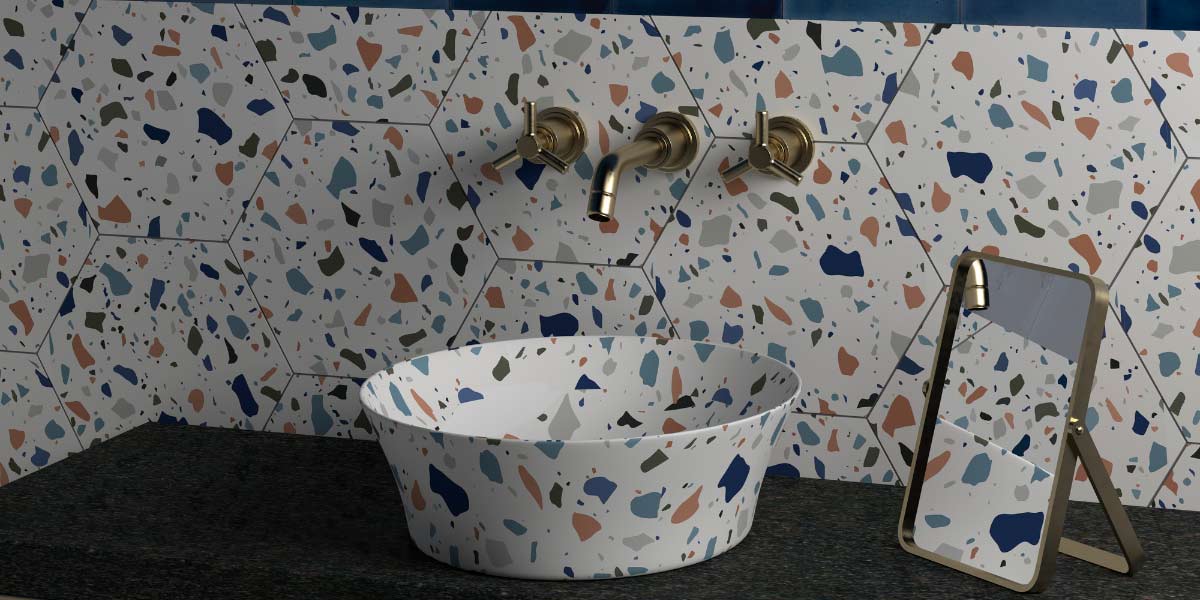
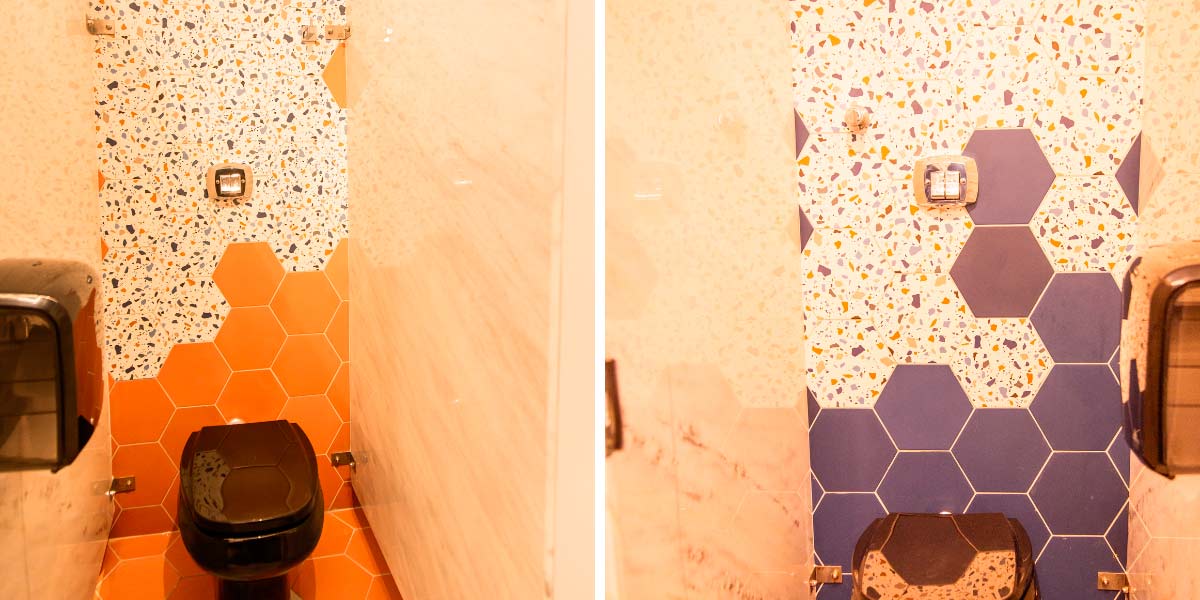
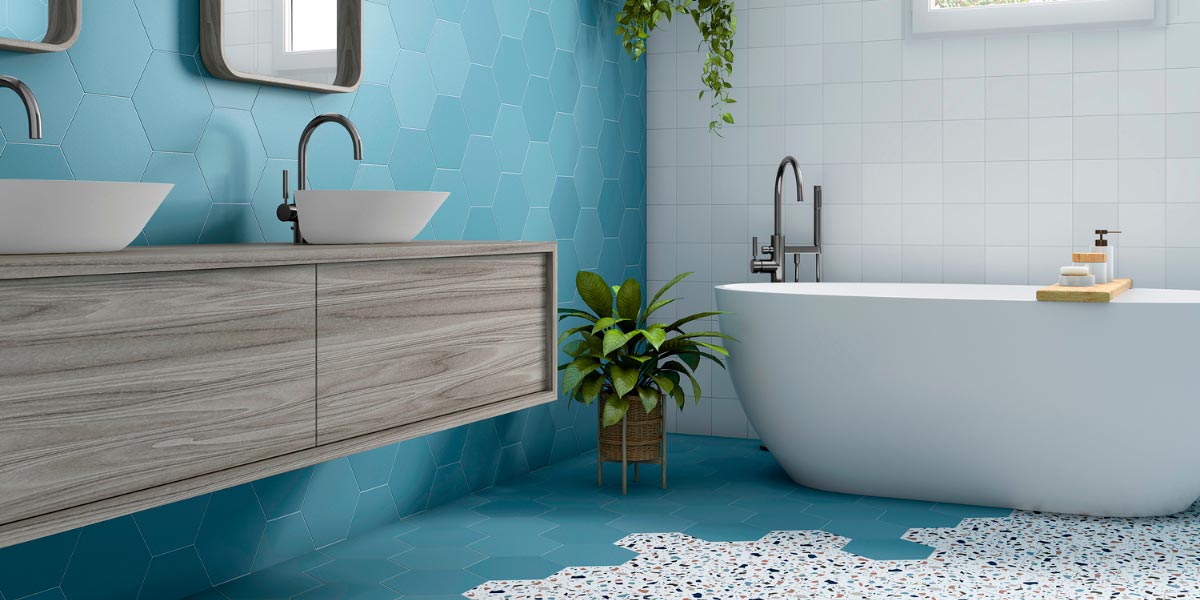
The Chicago collection draws inspiration from a modern, urban aesthetic, offering varied formats and a bold color palette. Within the collection, the ‘Terrazo’ piece stands out: a hexagonal decorative tile on a white base with colorful speckles reminiscent of classic terrazzo, manufactured in high-quality porcelain suitable for demanding technical use.
The collection also includes a matching washbasin—the Terrazo washbasin—designed to complete this aesthetic.
How we combine it and what it brings to the design
- Using the Terrazo hexagon as a wall covering or floor tile in high-traffic areas (such as hotel receptions, restaurants, or public bathrooms) creates a sense of visual continuity and strong decorative impact.
- Its hexagonal shape breaks away from the classic terrazzo format and adds dynamism to the space, ideal for contemporary or industrial-urban designs.
- Integrating the Terrazo washbasin turns the bathroom into a fully curated design set, where furniture and flooring connect visually, offering a premium experience.
Ideas for combining terrazzo with other ceramic materials
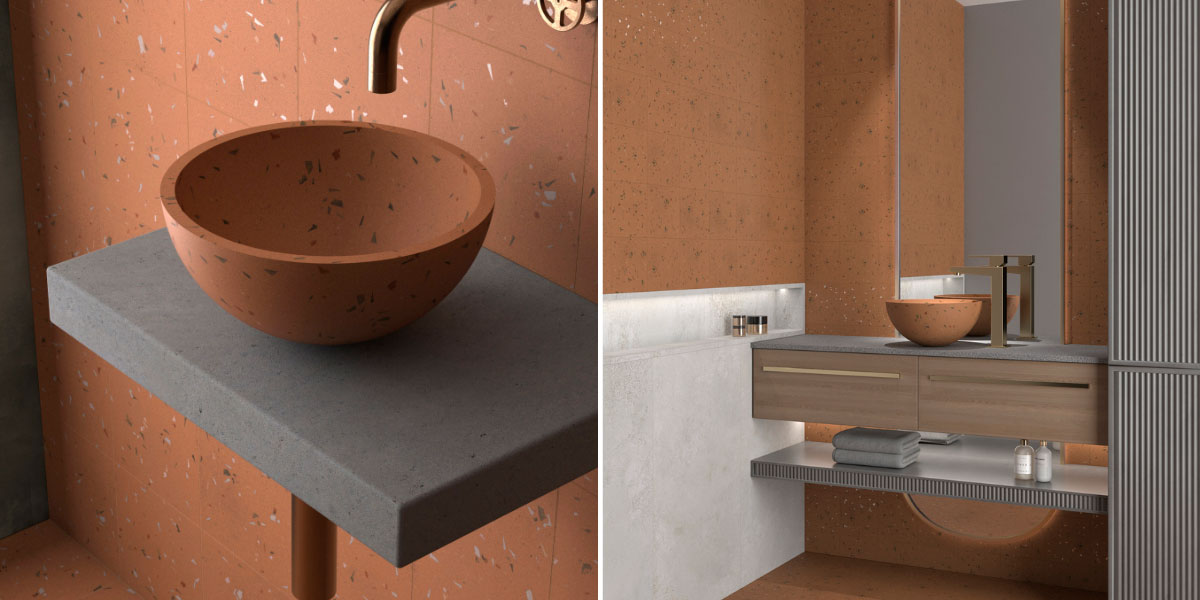
Terrazzo is an extraordinarily versatile material that fits a wide variety of styles and project types. Its ability to coexist with other ceramic textures allows for balanced, original spaces filled with personality. At Dune Cerámica, its decorative potential is amplified thanks to our range of wood-look, stone-look, cement-look, and handcrafted tiles, which offer subtle contrasts or bold accents depending on the space’s needs.
Terrazzo tiles with wood-look ceramics: warmth and dynamism
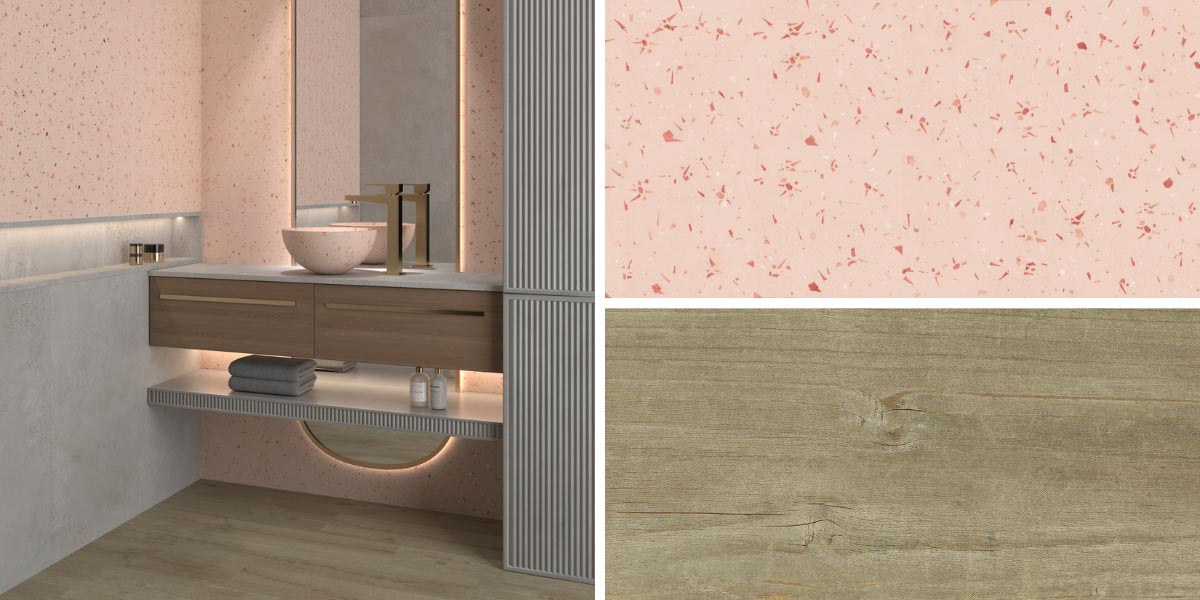
One of the most natural pairings is terrazzo with wood-look tiles, as both aesthetics complement each other organically. Terrazzo provides its characteristic dynamism, with color fragments that bring movement to floors or walls, while ceramic wood adds warmth and a sense of calm. Together, they balance bathrooms, hotel rooms, or restaurant areas seeking a mix of elegance and comfort—ideal for Mediterranean or contemporary projects that aim for a cozy feel with an artistic touch.
Terrazzo with stone-look tiles: contemporary sophistication
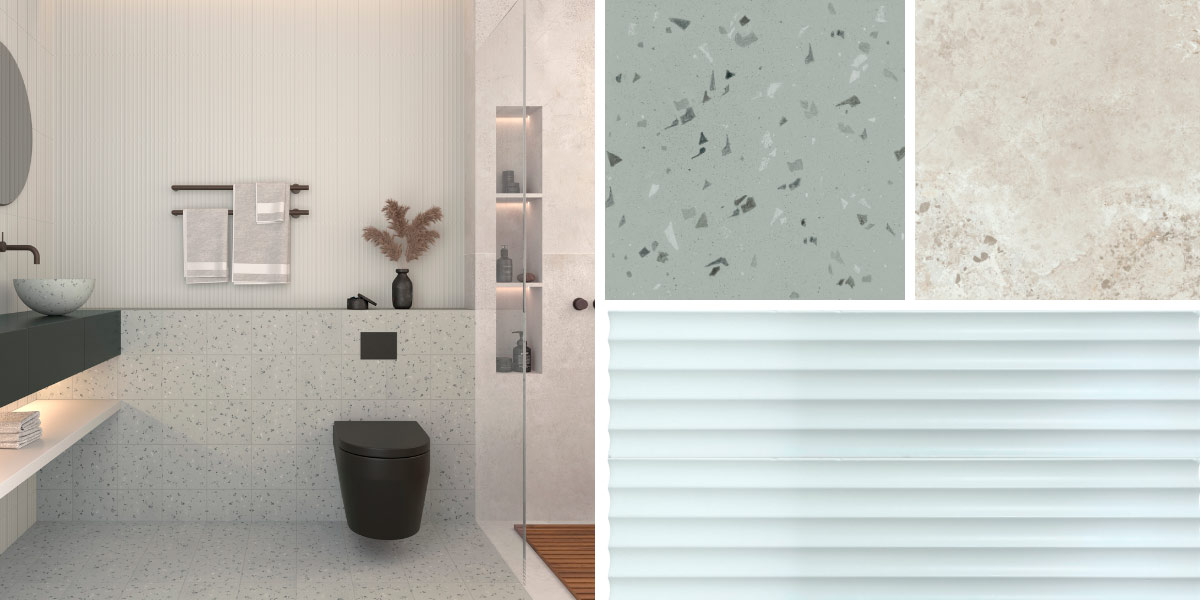
Terrazzo also pairs beautifully with stone-look ceramics, especially soft marbles, limestones, or basalts. This mix creates sophisticated environments where terrazzo’s speckled texture harmonizes with the mineral elegance of stone. In hospitality spaces, lobbies, or designer bathrooms, this combination retains a premium look without becoming overly ornate. The key is selecting stones with subtle veining that complement terrazzo rather than compete with it.
Terrazzo and cement-look tiles: industrial chic atmospheres
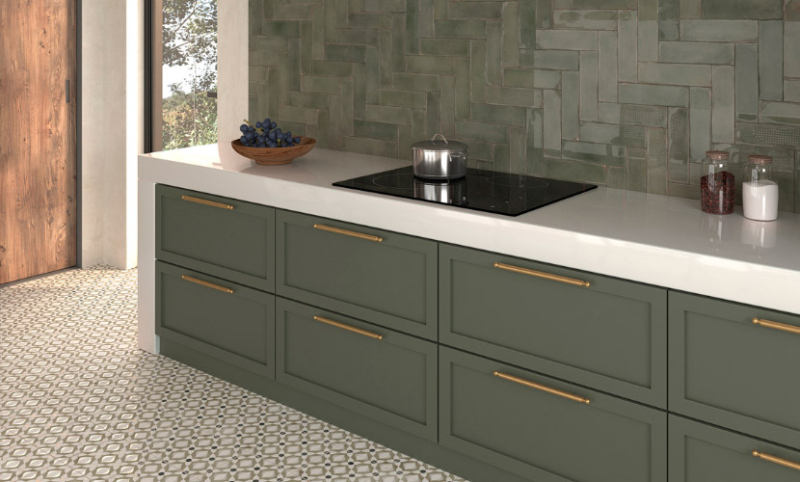
Another highly popular option in urban projects is the combination of terrazzo with cement-look ceramics. This pairing works especially well for creating an industrial-chic atmosphere that is modern but not cold or monotonous. Cement provides visual continuity and an urban feel, while terrazzo adds a creative touch that breaks uniformity. It’s perfect for modern cafés, coworking spaces, retail stores, or public bathrooms where technical performance meets contemporary style.
Terrazzo tiles with handcrafted ceramics: accent and personality
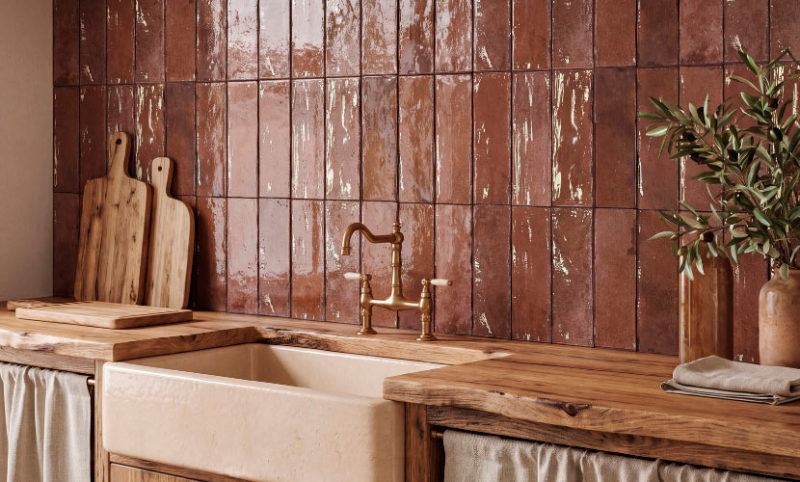
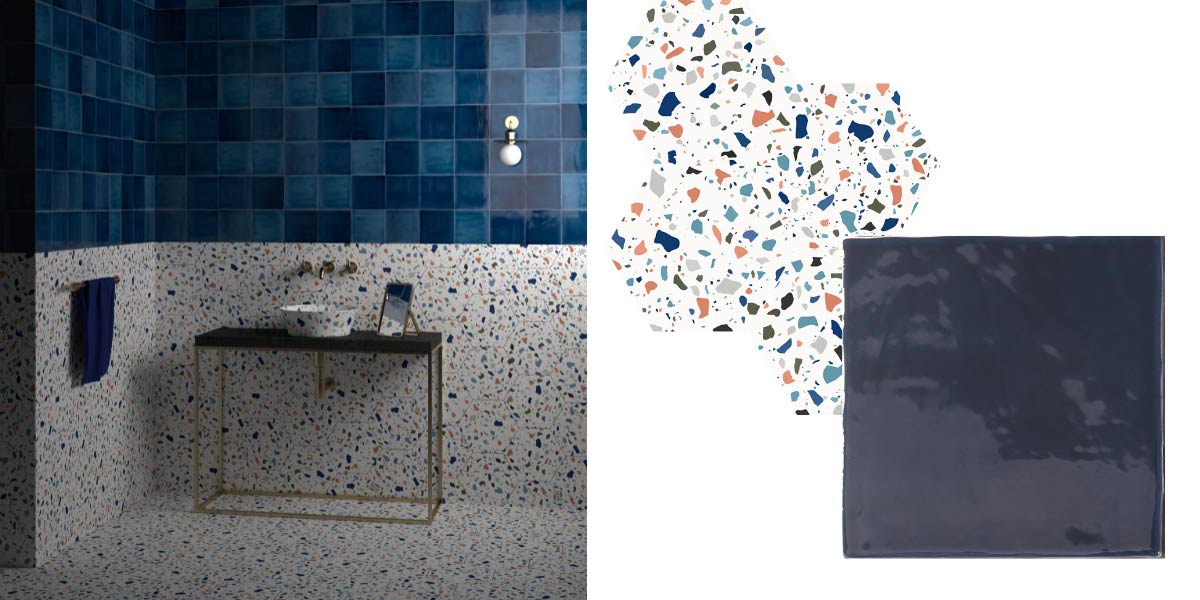
The interplay between terrazzo and handcrafted tiles offers highly expressive design possibilities. Glazed surfaces or bold colors act as accents that stand out against terrazzo’s speckled base, creating vibrant yet harmonious compositions. This combination works especially well in restaurant bars, kitchen backsplashes, decorative washbasins, or distinctive corners within hotels. When working with collections such as Terrazo, pairing them with solid-color tiles enhances the fragments that define their design.
Terrazzo with ceramic mosaics: artistic detail
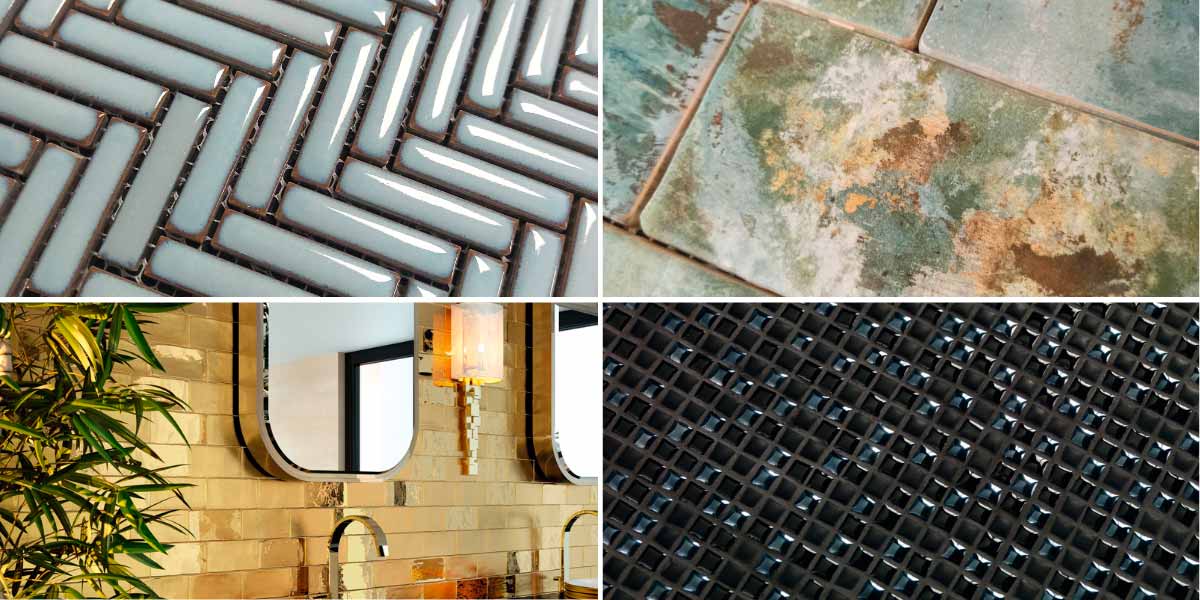
A particularly interesting combination is terrazzo with ceramic mosaics—a proposal that adds an artisanal, artistic character. Mosaics create focal areas such as showers, spas, entrances, or changing rooms, while terrazzo serves as the decorative base or main flooring, resulting in a detailed yet balanced composition. The mix of small-format pieces with terrazzo’s speckled surface adds depth without overwhelming the space, making it ideal for wet zones or spaces requiring both technical and aesthetic continuity.
The enduring appeal of terrazzo lies in its ability to transcend trends, adapt to multiple styles, and bring a unique personality to any project. Its aesthetic versatility, combined with its durability and low maintenance, makes it a privileged choice for hospitality spaces, pool areas, and residential bathrooms.
If you are considering renovating a bathroom, designing a commercial venue, or giving a fresh identity to a hospitality project, we invite you to explore all the combinations that terrazzo has to offer. Discover our collections, find the inspiration you’re looking for, and let Dune Cerámica accompany you in creating spaces with soul, design, and distinctive character.