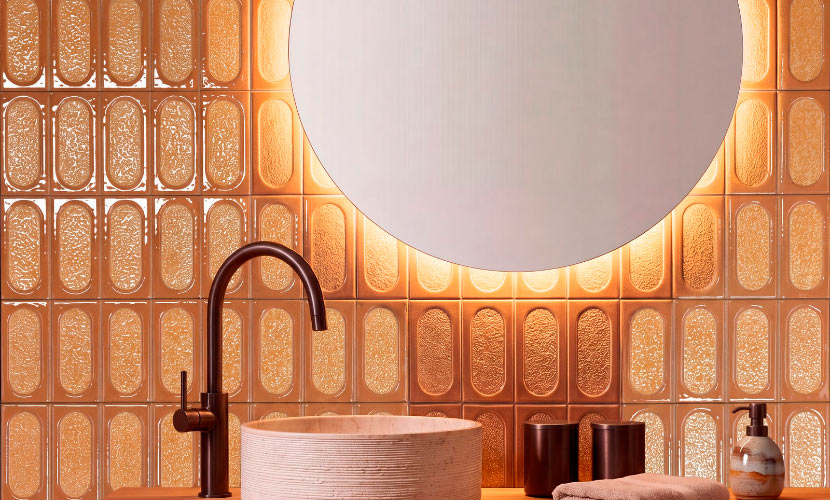

Textured tiles: transforming any space through texture
Beyond colour or format, textured tiles introduce a new dimension to interior design. Their volumes and geometric shapes interact with light, creating a play of light and shadow that brings depth, movement and personality to walls.
From geometric compositions to organic shapes, three-dimensional ceramic wall tiles offer endless decorative possibilities. Whether renovating a bathroom, adding character to a kitchen or creating a statement wall in the living room, they are a way to transform any space through texture.
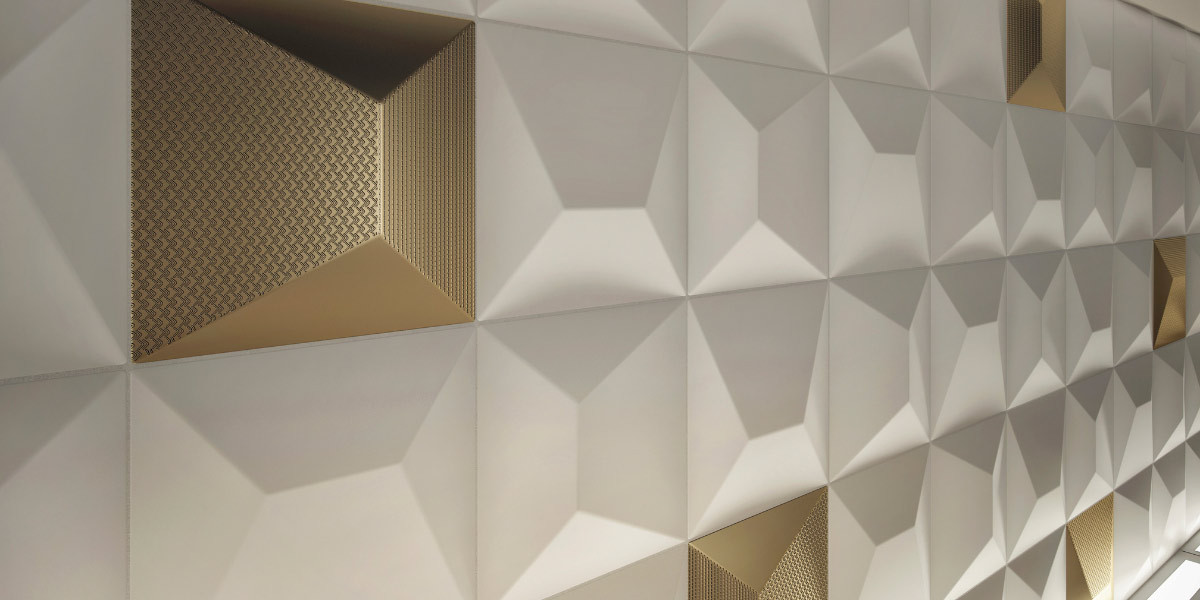
What are textured tiles and what do they bring to interior design?
Textured tiles are ceramic wall tiles that feature shapes, volumes or irregularities on their surface, creating a three-dimensional texture that goes beyond traditional flat designs. These reliefs can be subtle and delicate or feature more pronounced geometric patterns, lines, waves and organic shapes that add a new dimension to walls.
In interior design, textured tiles have become a decorative resource for adding depth, movement and personality to spaces. Their main appeal lies in the interaction between texture and light, creating a play of shadows and reflections that can transform the perception of a surface throughout the day.
Beyond their aesthetic appeal, textured wall tiles can be used to highlight specific areas, create focal points and enrich compositions without relying on bold colours or patterns. From bathrooms and kitchens to living rooms and commercial spaces, they offer a wide range of possibilities for creating contemporary, elegant interiors with a distinctive character.
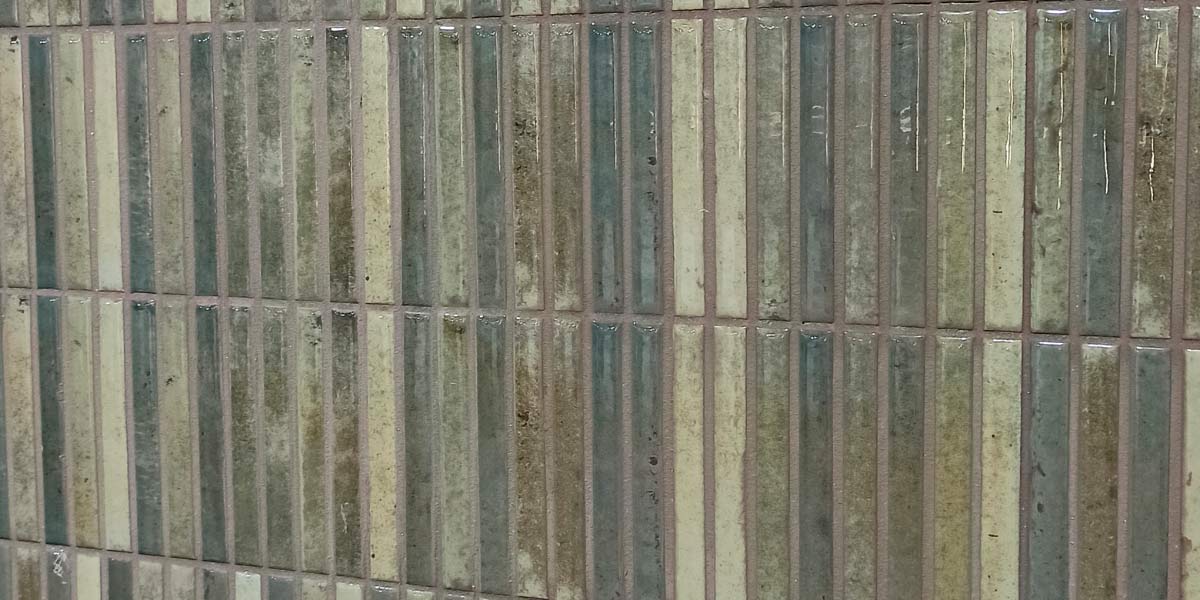
Light and texture: how textured tiles transform a space
Texture is one of the most interesting elements of ceramic design when it comes to adding personality to a space. Beyond colour or format, textured tiles introduce a three-dimensional quality that transforms the perception of surfaces, creating visual effects that change depending on the lighting and viewing angle.
From subtle, delicate reliefs to more pronounced geometric designs, this type of wall tile makes it possible to create dynamic walls, play with depth and highlight specific architectural features.
The play of light and shadow on ceramic surfaces
One of the main attractions of textured tiles is their ability to interact with light. Unlike completely smooth surfaces, their three-dimensional forms create areas of light and shadow that accentuate their shapes and add visual richness to the wall covering.
Natural light allows these effects to evolve throughout the day, while artificial lighting can highlight specific details. Side lighting or grazing light can enhance the relief, making its lines, curves and irregularities more visible.
This interplay of light and shadow transforms ceramic walls into expressive surfaces, capable of adding visual interest even when neutral colours or monochromatic compositions are used.
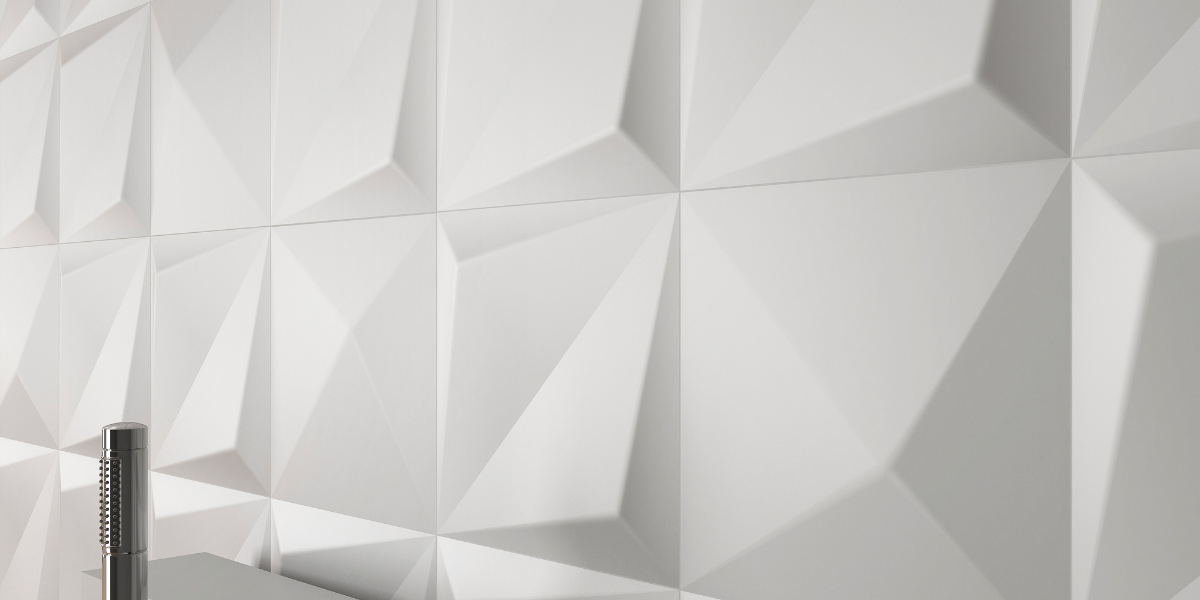
How textured tiles add depth and dynamism
Textured ceramic wall tiles break up the uniformity of walls and create a greater sense of depth. Their three-dimensional shapes introduce rhythm and movement, transforming a flat surface into a distinctive design feature.
Linear relief patterns encourage visual continuity and can enhance the perception of height or width depending on their orientation. Geometric designs bring structure and rhythm, while organic shapes create more fluid and natural compositions.
In bathrooms, kitchens and other interior spaces, these tiles are particularly effective for highlighting a feature wall, covering the wall behind a washbasin or drawing attention to a specific area without relying on strong colour contrasts.
Glossy, matt and colour: different ways to interpret texture
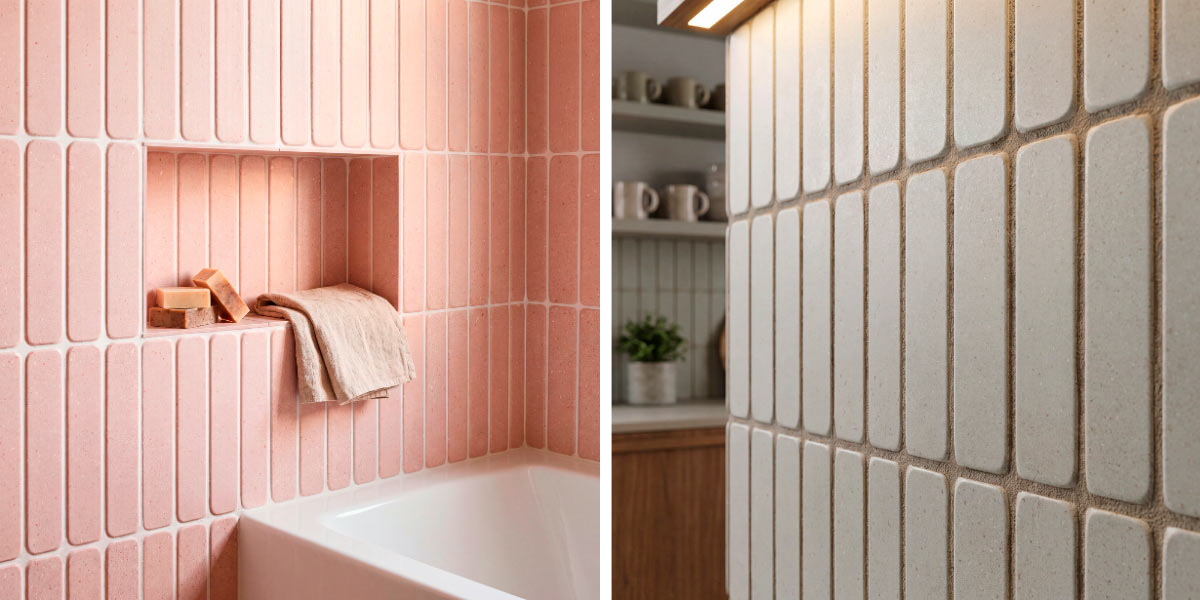
Finish and colour directly influence how we perceive the relief of a tile. The same geometric design can create very different impressions depending on how its surface reflects or absorbs light.
Glossy textured tiles enhance reflections and emphasise variations in depth, creating luminous and expressive surfaces. Matt finishes, on the other hand, offer a softer interpretation of texture, where shapes are primarily defined by shadows and changes in depth.
Colour also plays a fundamental role. White, beige and neutral tones allow the relief to take centre stage, while bold colours add a more decorative dimension and enhance the character of the wall covering.
The combination of texture, finish and lighting opens up a wide range of possibilities for designing spaces with personality, from serene, minimalist interiors to bolder, more contemporary environments.
Types of textured tiles: designs for every style
The shape, depth and finish of the relief allow ceramic wall tiles to adapt to different interior design styles. Here are some of the main options:
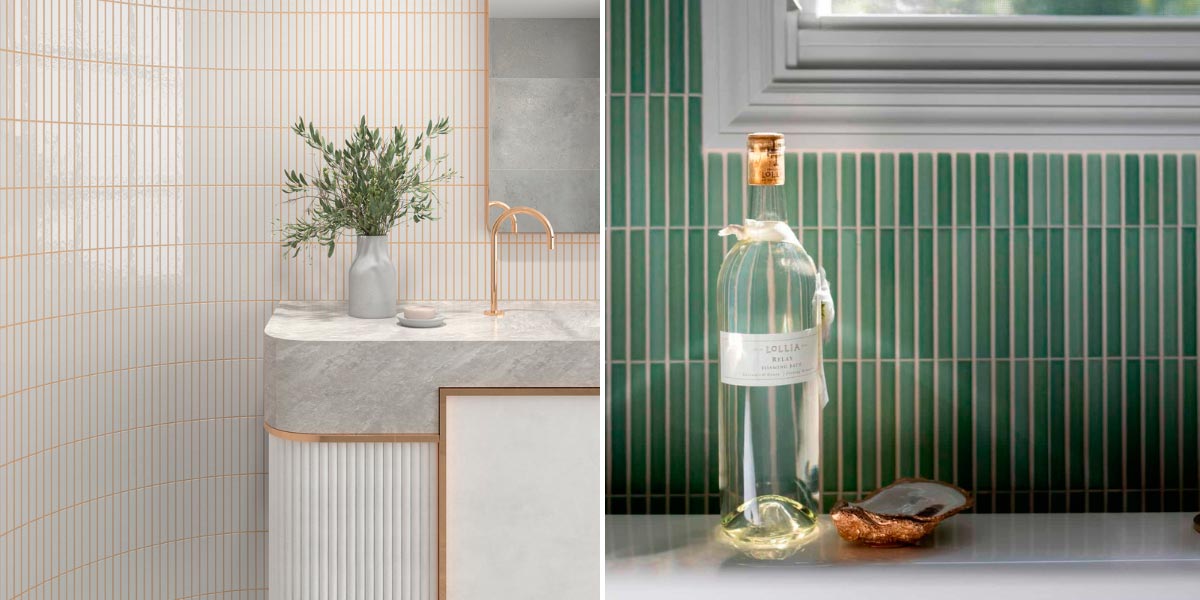
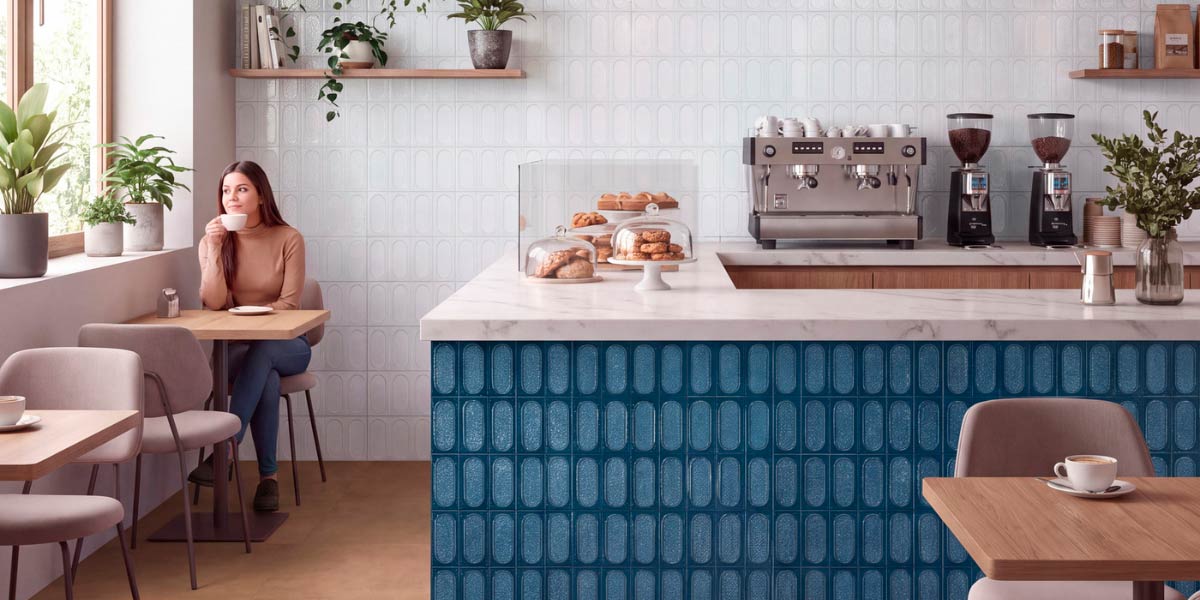
- Geometric reliefs: rhythm and personality. Geometric patterns bring visual structure and dynamism through repetitive shapes, defined lines and variations in depth. They are an interesting choice for contemporary interiors looking for a distinctive decorative feature. For example, our Esclat collection reinterprets Art Deco geometry with its characteristic oval relief and glossy glazes that enhance the interplay of light and shadow.
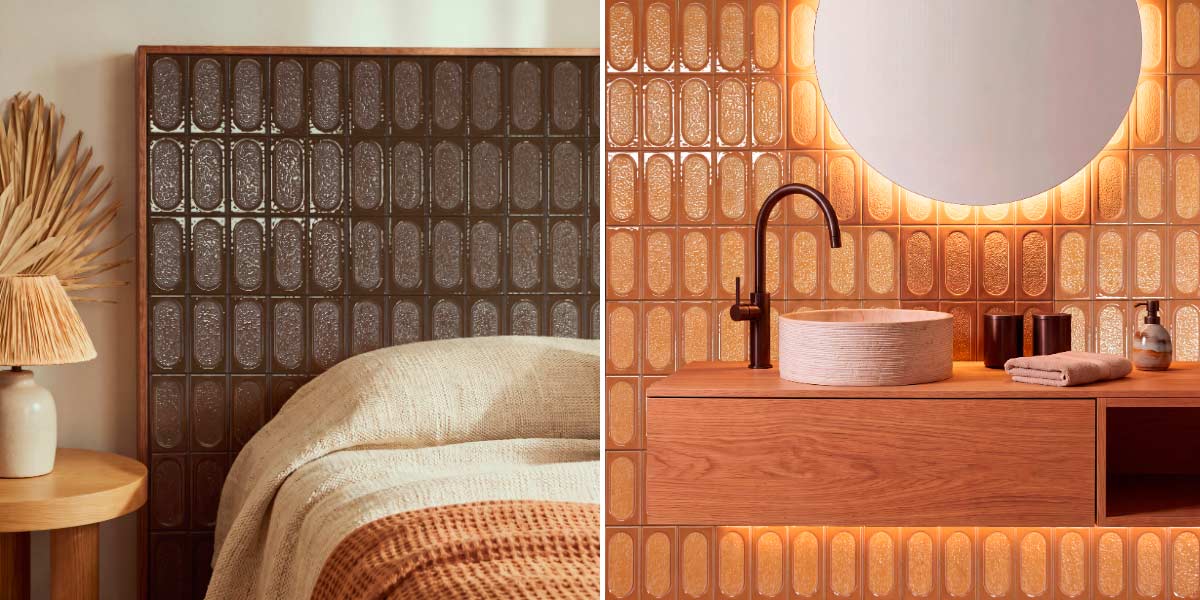
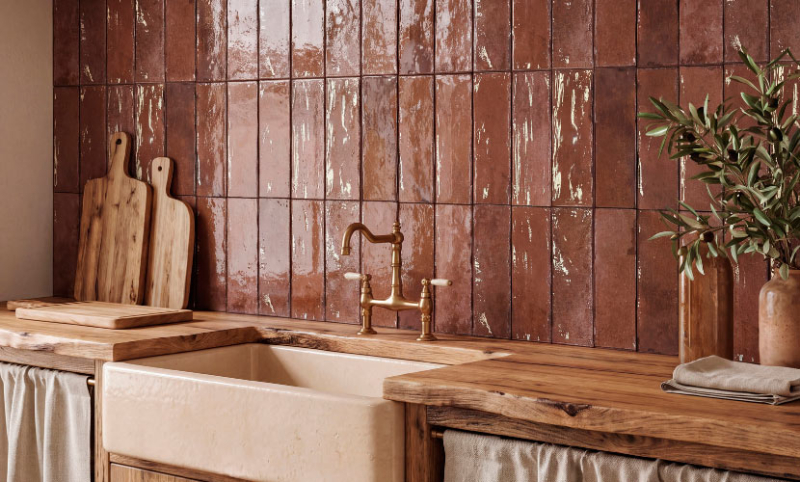
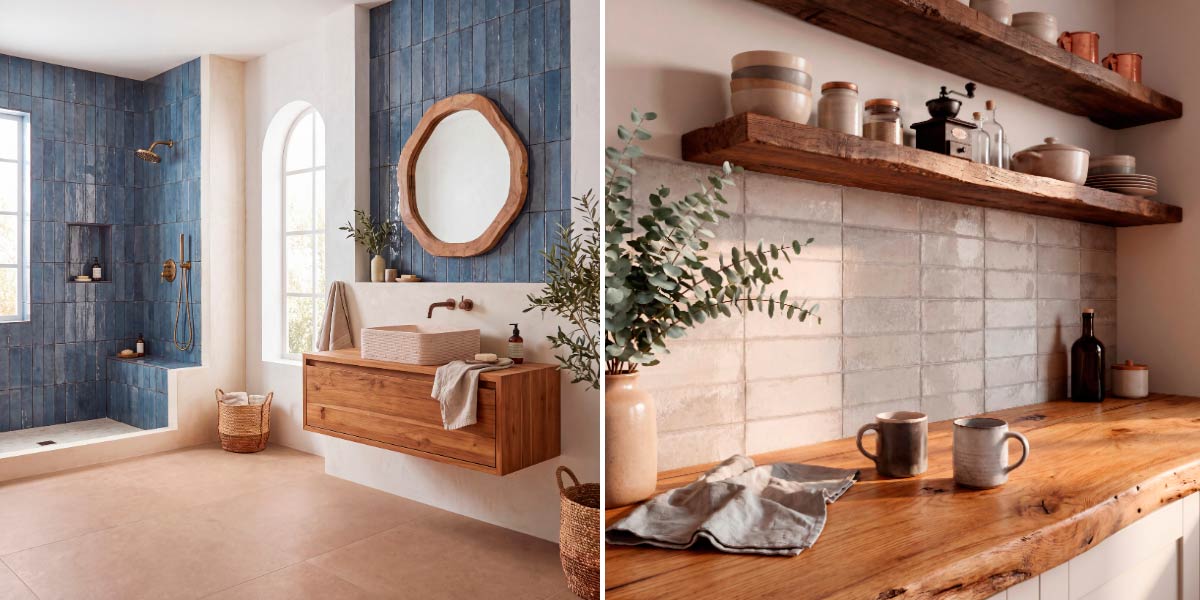
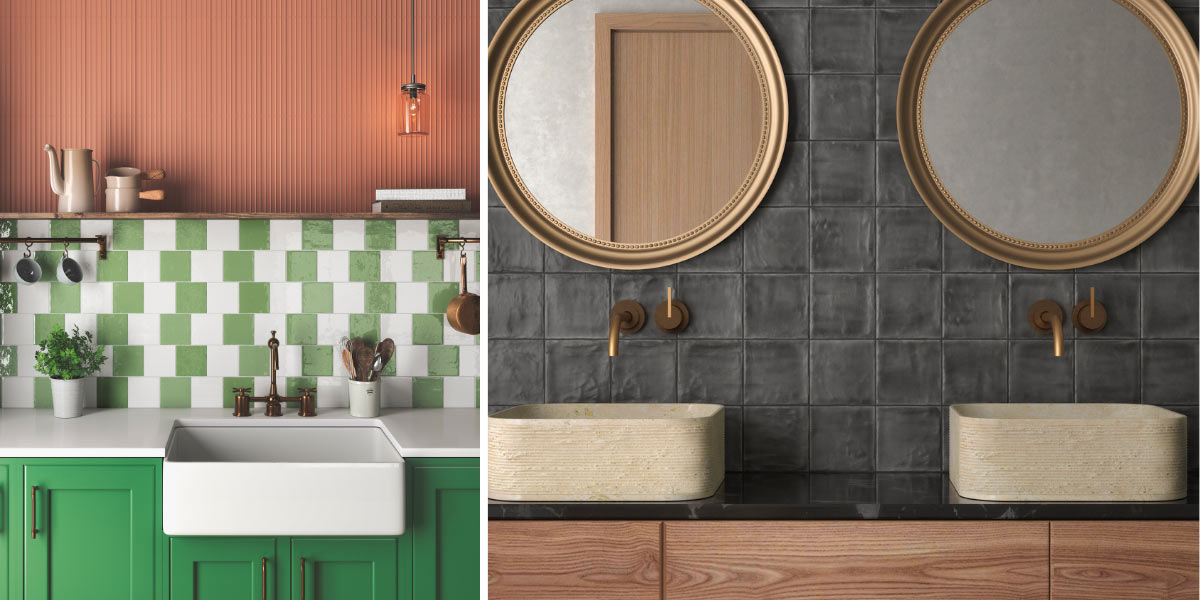
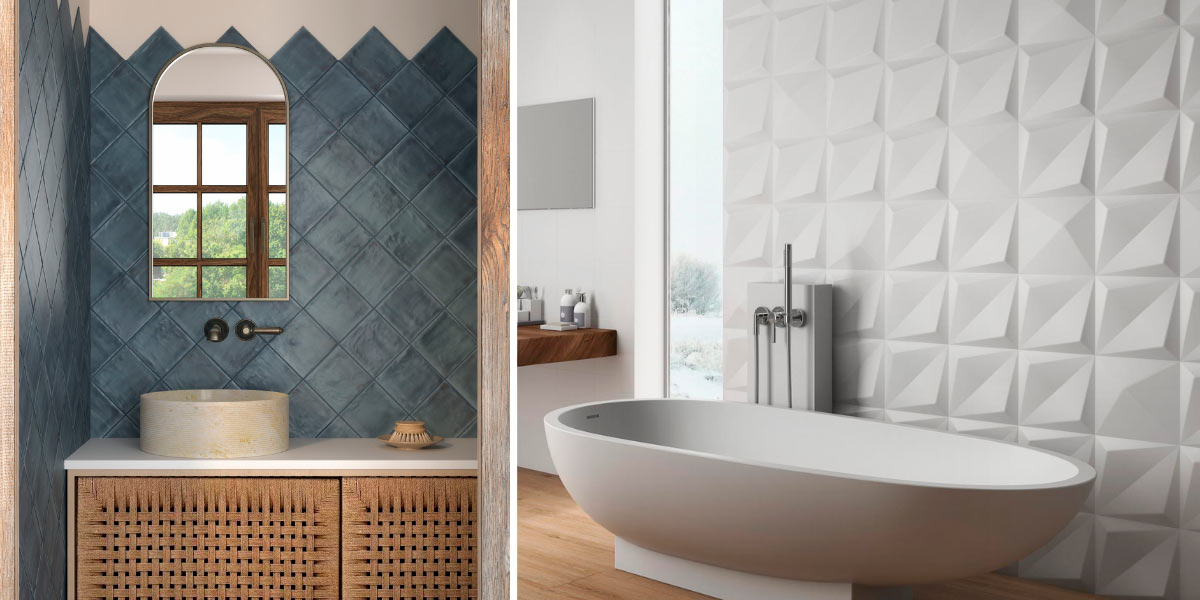
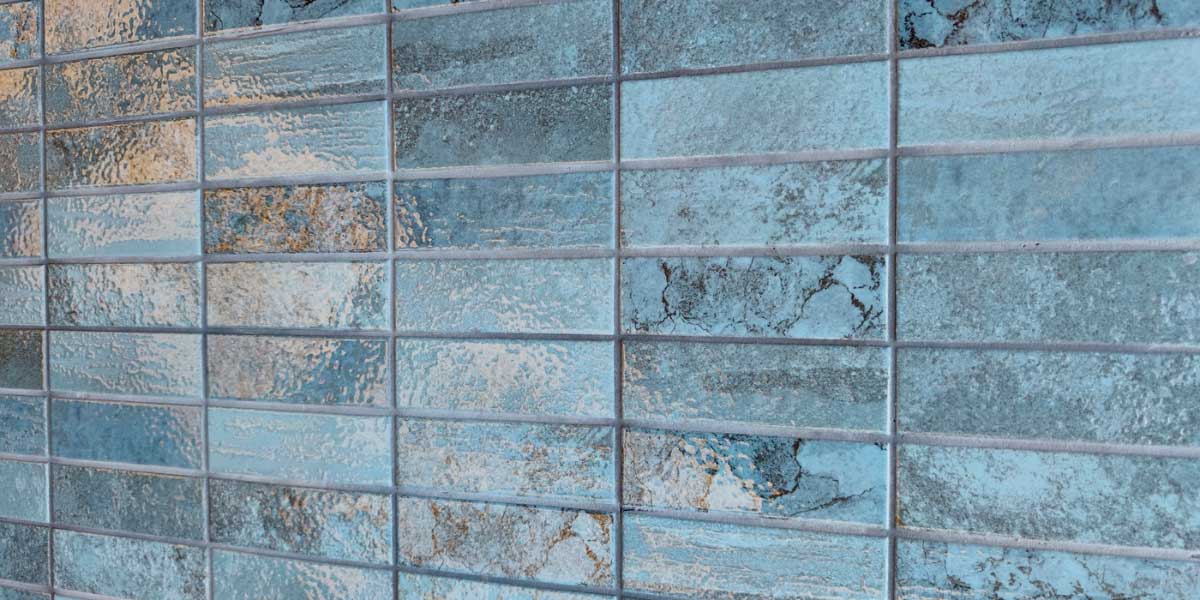
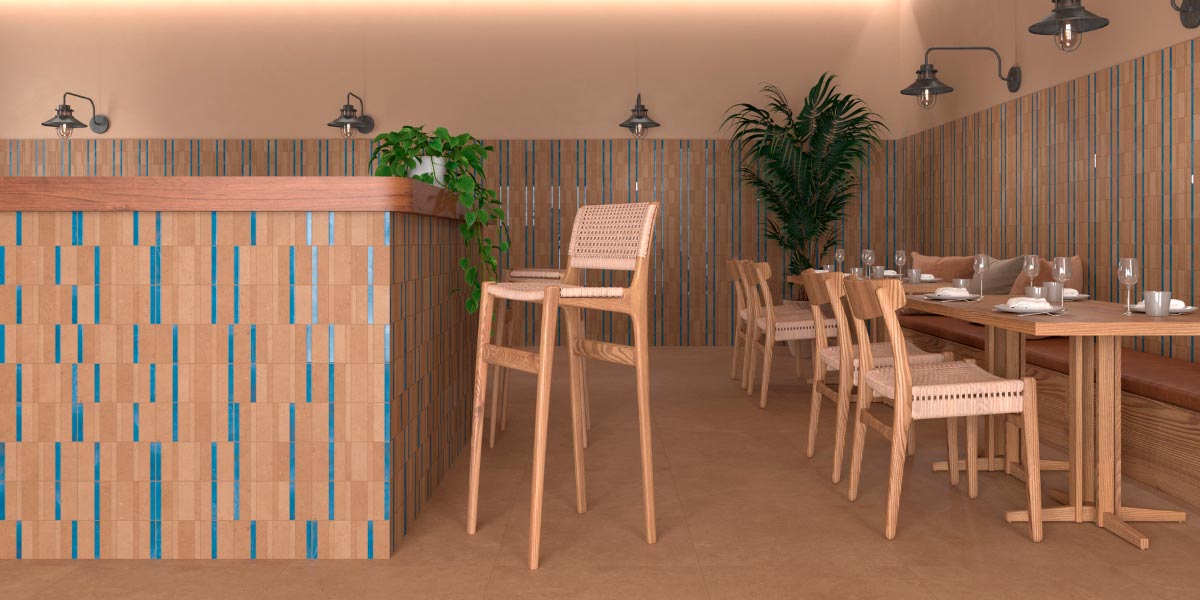
- Organic reliefs: the beauty of nature. Irregular shapes and undulating surfaces bring a sense of naturalness and authenticity. They work particularly well in warm, Mediterranean or artisan-inspired interiors. Our Alquería collection draws inspiration from glazed clay and traditional Mediterranean architecture. Its irregular surfaces evoke the charm of handcrafted tiles through a contemporary approach.
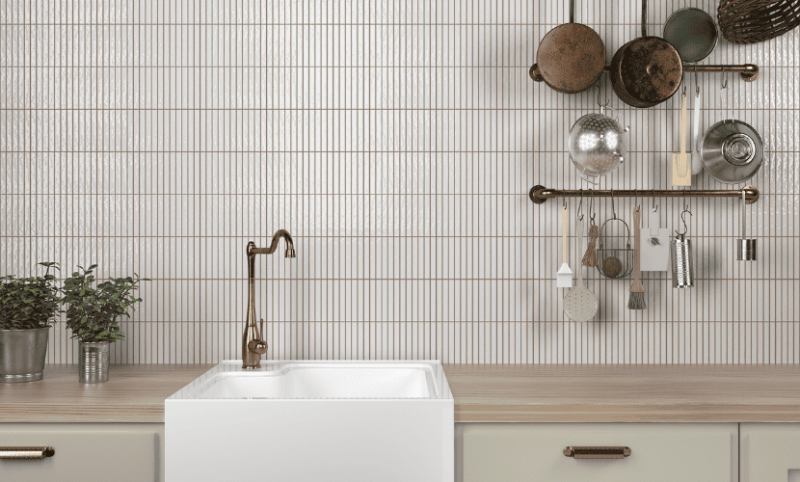
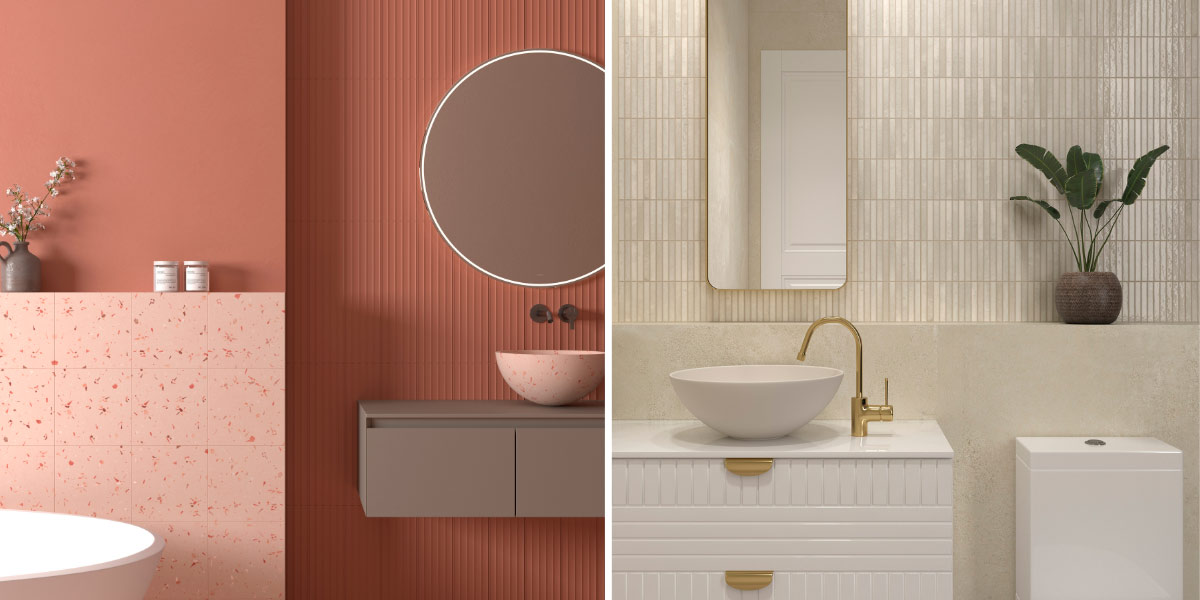
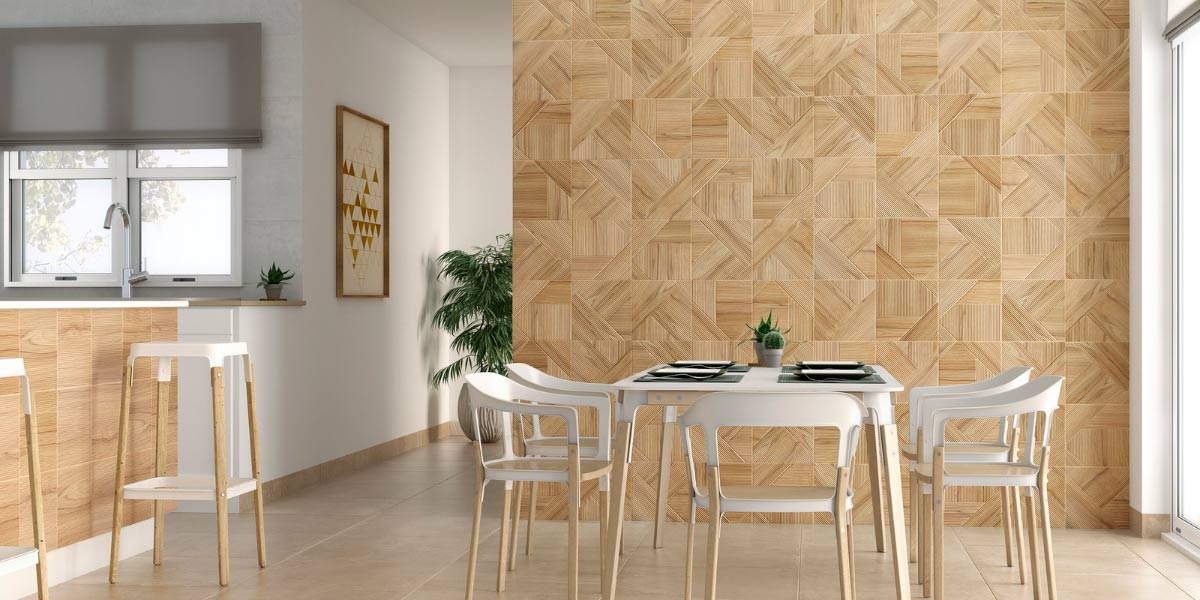
- Linear and fluted reliefs: elegance and movement. Parallel lines and grooves create a sense of verticality and continuity. Depending on their orientation, they can visually elongate walls or create an enveloping effect. Examples include our IMA and Scala collections, which stand out for their fluted surfaces, creating a play of light and shadow that brings dynamism and personality to the wall covering.
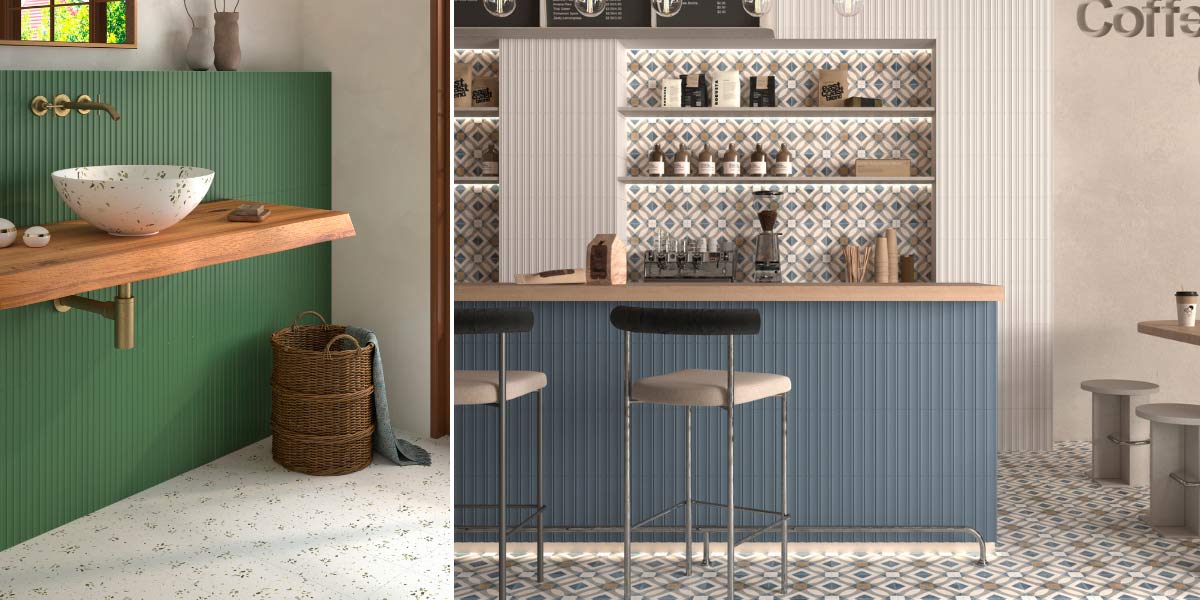
- Artisan-inspired reliefs: texture and authenticity. Subtle irregularities and surface variations evoke traditional ceramic craftsmanship and add visual richness. For example, our Meknes and Riad collections reinterpret zellige-style tiles with a subtle relief.
Textured tiles for every room
Textured wall tiles can be incorporated into a wide range of spaces, from residential interiors to commercial projects. Below, you’ll find room-by-room inspiration on how to use textured tiles in interior design.
Textured tiles for bathrooms
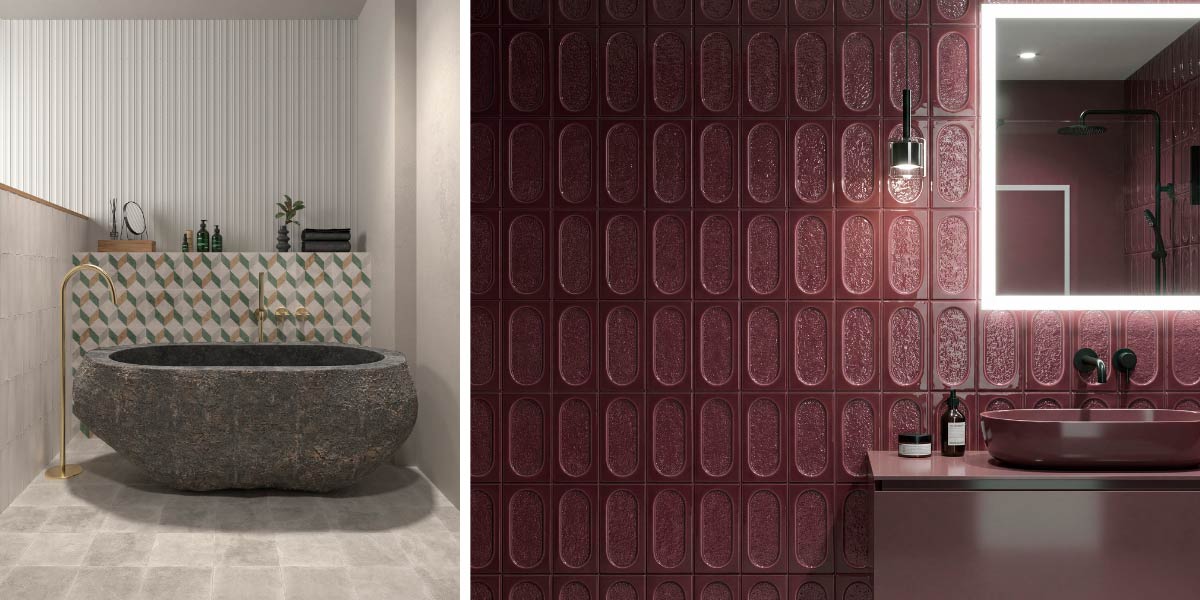
In bathrooms, textured tiles can be used to highlight the washbasin area, create an accent wall or add texture to the shower space. Subtle designs in neutral tones help create relaxing atmospheres, while geometric reliefs and glossy finishes offer a more expressive look.
Textured tiles for kitchens
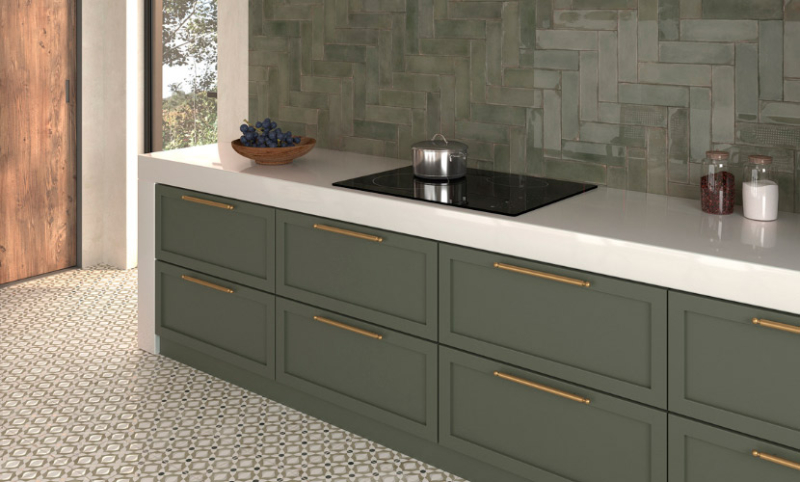
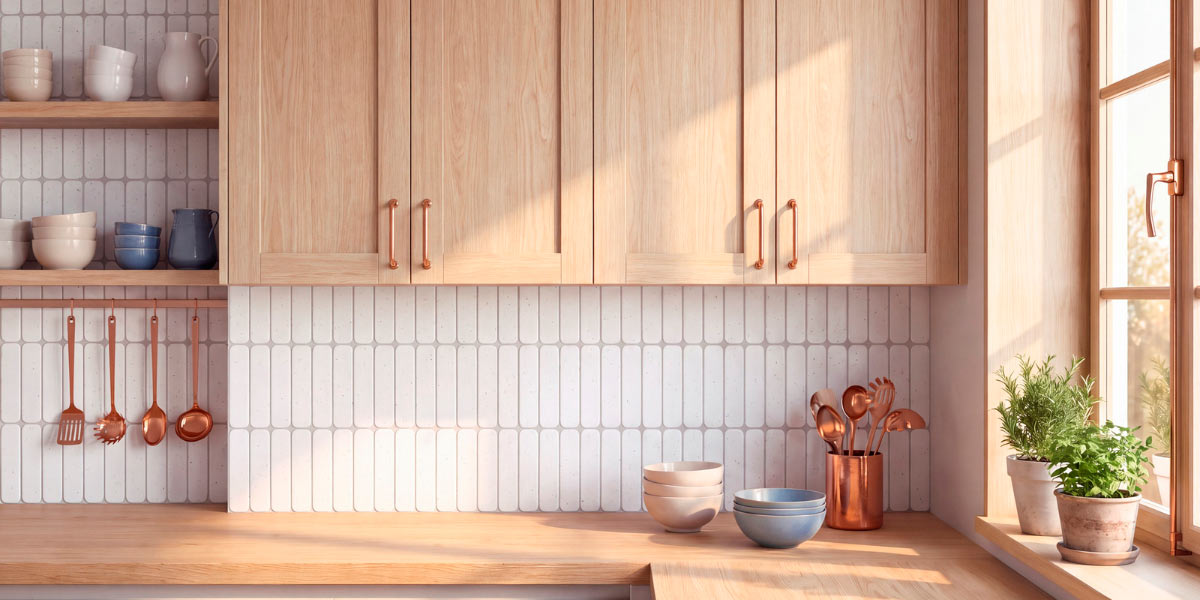
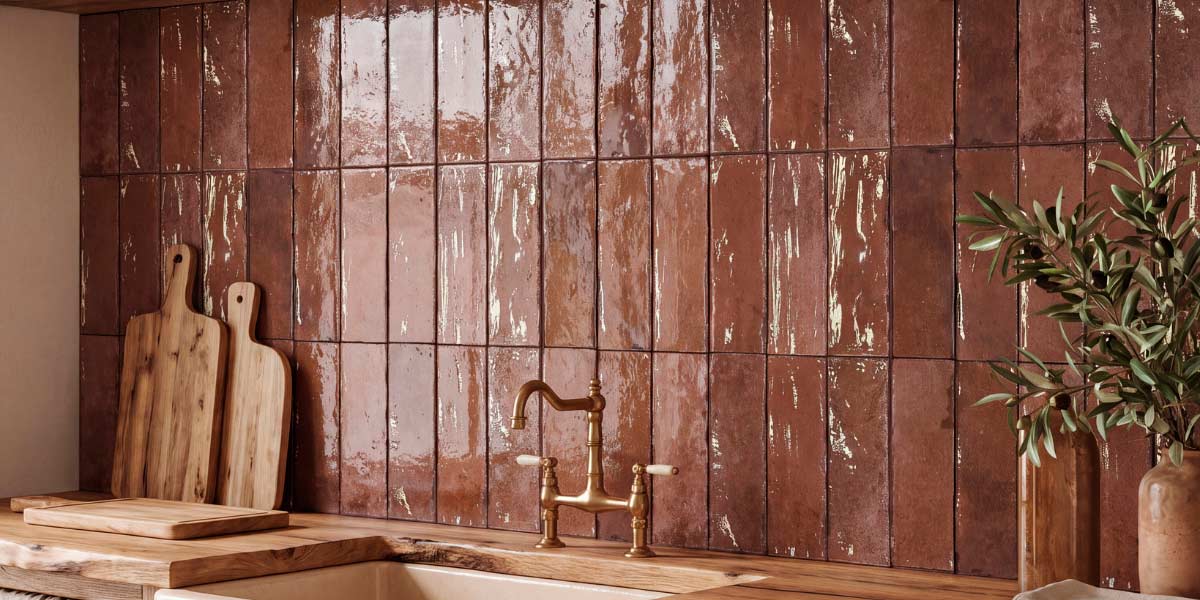
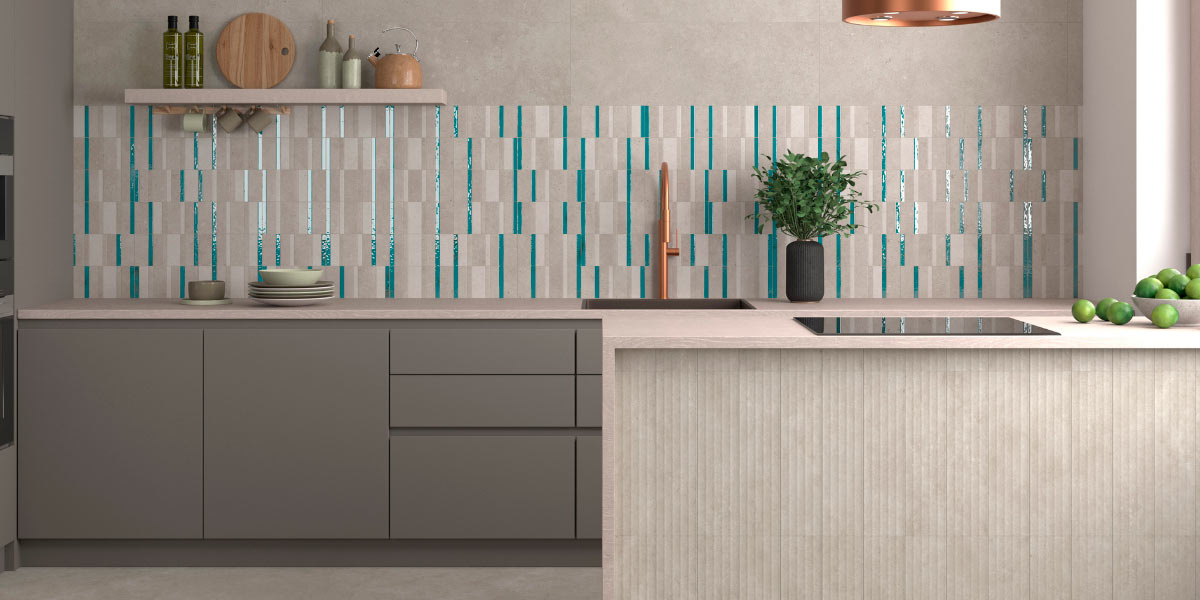
In the kitchen, the backsplash is a particularly interesting area for incorporating ceramic tiles, including textured designs. Geometric reliefs bring a contemporary feel, while irregular surfaces and glossy glazes evoke the charm of handcrafted ceramics.
Textured feature walls for living rooms and lounges
In living rooms and lounge areas, a wall covered with textured tiles can become a striking focal point, for example, behind the sofa or around the TV area. Geometric designs introduce dynamism, while organic textures bring naturalness and warmth. Indirect or side lighting helps highlight the three-dimensional shapes and integrate the wall covering into the overall interior design.
Textured tiles for commercial spaces
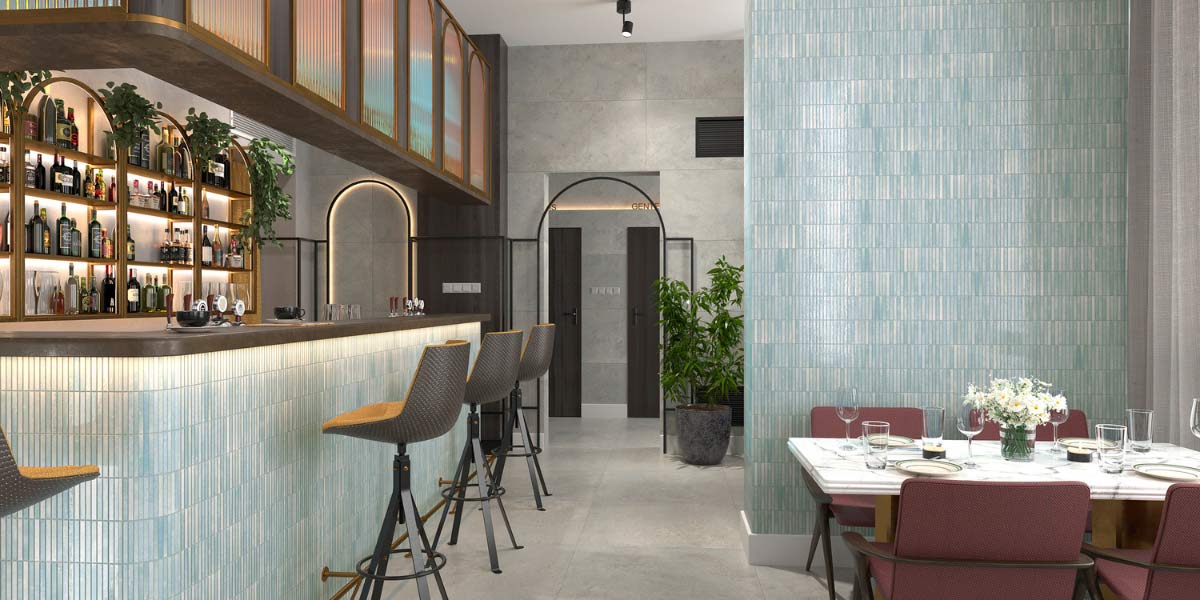
In entrance halls, hotels, restaurants and retail spaces, textured wall tiles can create focal points and reinforce the identity of the interior. They can also be used to highlight counters, reception areas or transitions between different spaces.
How to combine textured tiles without overwhelming the space
To incorporate textured tiles harmoniously, it is important to balance textures, colours and the surrounding materials. The aim is to make the textured surface stand out without overwhelming the overall design.
- Combine textured walls with smooth surfaces. A simple approach is to reserve textured tiles for a specific wall or area and pair them with smooth surfaces. This creates an appealing visual contrast while maintaining continuity throughout the space.
- Choose colours and finishes to create balance. White, beige and sand tones allow the three-dimensional shapes to stand out without visually overwhelming the space. Bold colours, on the other hand, add personality and turn the wall covering into a focal point. The finish is also worth considering: glossy surfaces enhance reflections, while Matt finishes offer a more understated aesthetic. In small or poorly lit spaces, lighter shades can help create a brighter, more open feel.
- Incorporate wood, stone and other natural materials. Wood brings warmth and softens the visual impact of ceramic textures, while stone introduces an organic and timeless character. Materials such as linen, rattan and metals can also enrich the overall composition.
Frequently asked questions about textured tiles
What are the benefits of textured tiles?
Textured tiles add depth, dynamism and visual richness to walls. Their three-dimensional shapes interact with light, creating plays of light and shadow that change the perception of a space. They also make it possible to highlight specific areas and add texture and personality without relying on patterns or bold colours.
Can textured tiles be used in small bathrooms?
Yes, textured tiles are an excellent choice for small bathrooms, especially when used in light shades and subtle designs. They add texture and depth without visually overwhelming the space. A good option is to use them on the wall behind the washbasin or in the shower area, combining them with smooth surfaces to create a balanced and bright atmosphere.
Are textured tiles difficult to clean?
Textured tiles are not necessarily difficult to maintain, although cleaning depends on the depth and complexity of the relief. Subtle textures are generally easier to clean, while more pronounced designs may accumulate dirt in their grooves. For maintenance, it is recommended to use cleaning products suitable for ceramic tiles and soft-bristled brushes when necessary.
What type of lighting works best with textured tiles?
Side or grazing lighting is particularly effective for highlighting textured tiles, as it accentuates their three-dimensional shapes and creates contrasts of light and shadow. Natural light reveals how the texture changes throughout the day, while well-positioned artificial lighting can emphasise the shapes and turn the wall covering into a focal point.
Can textured tiles be combined with smooth tiles?
Yes, combining textured tiles with smooth tiles is one of the most interesting ways to create contrast and visual balance. Smooth wall tiles provide continuity and allow textured surfaces to stand out without overwhelming the space. Tiles in the same colour can be combined for a subtle effect, or different shades and finishes can be used to create more expressive and contemporary compositions.
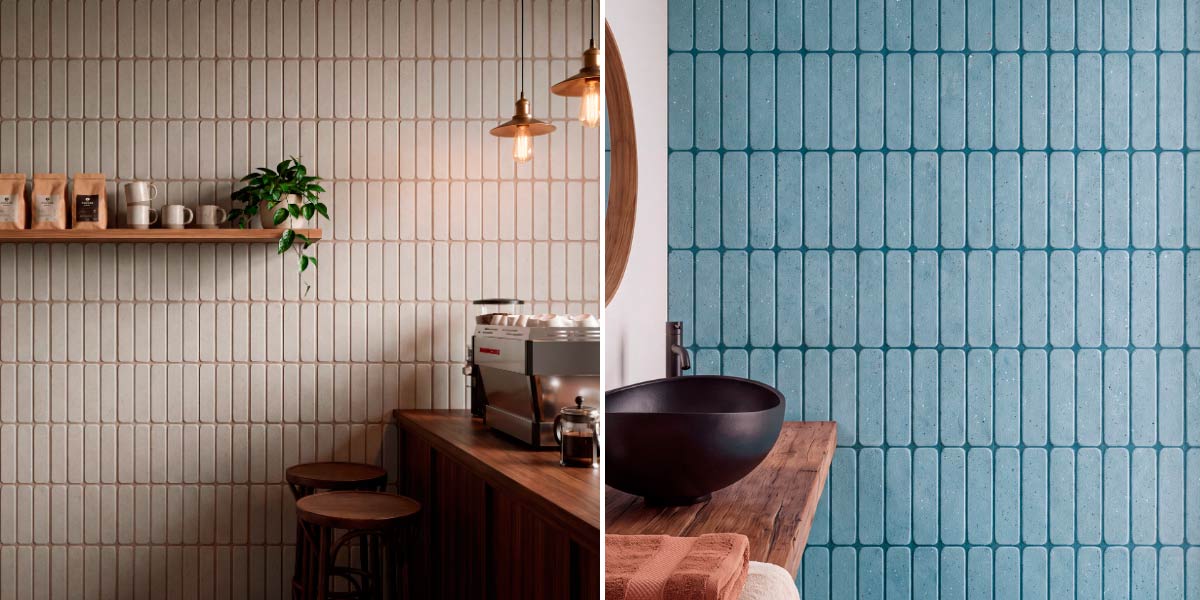
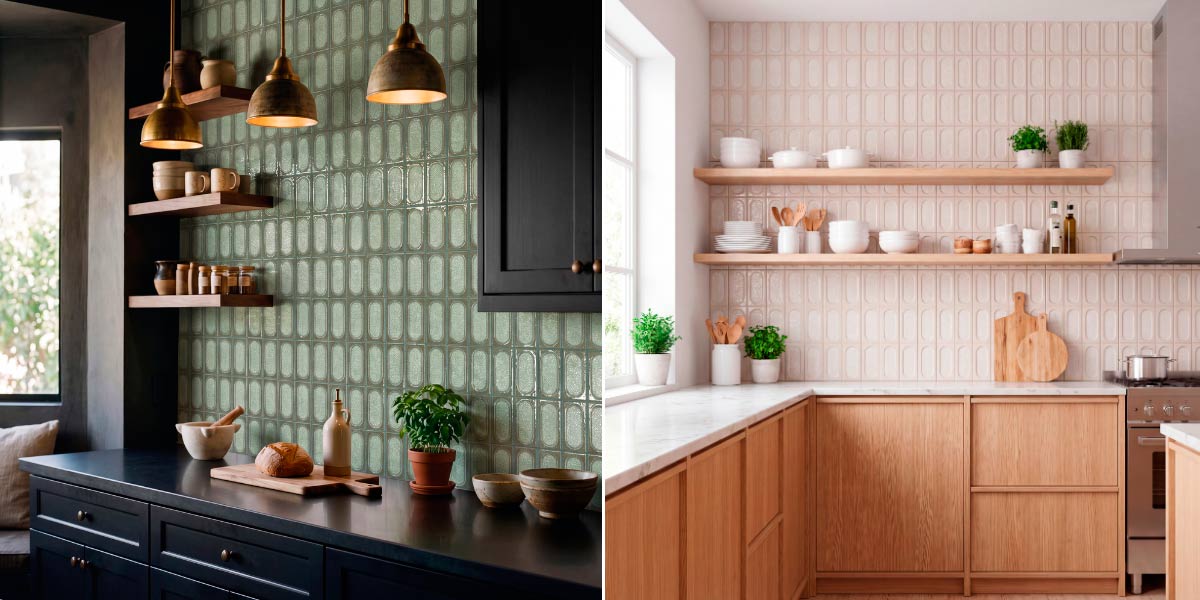
Textured tiles demonstrate that walls can go far beyond their basic function as a covering surface. Through volume, texture and the interplay of light and shadow, ceramic tiles make it possible to create spaces with depth, personality and a distinctive aesthetic identity.
From geometric designs to artisan-inspired surfaces, the possibilities are extensive. The key is to choose the right relief for each room, combine it with the surrounding materials and consider its technical performance. At Dune Cerámica, we explore the possibilities of ceramic design through collections of designer tiles that place texture at the heart of the design, offering new ways to transform walls.