Residential
Project Rosellón
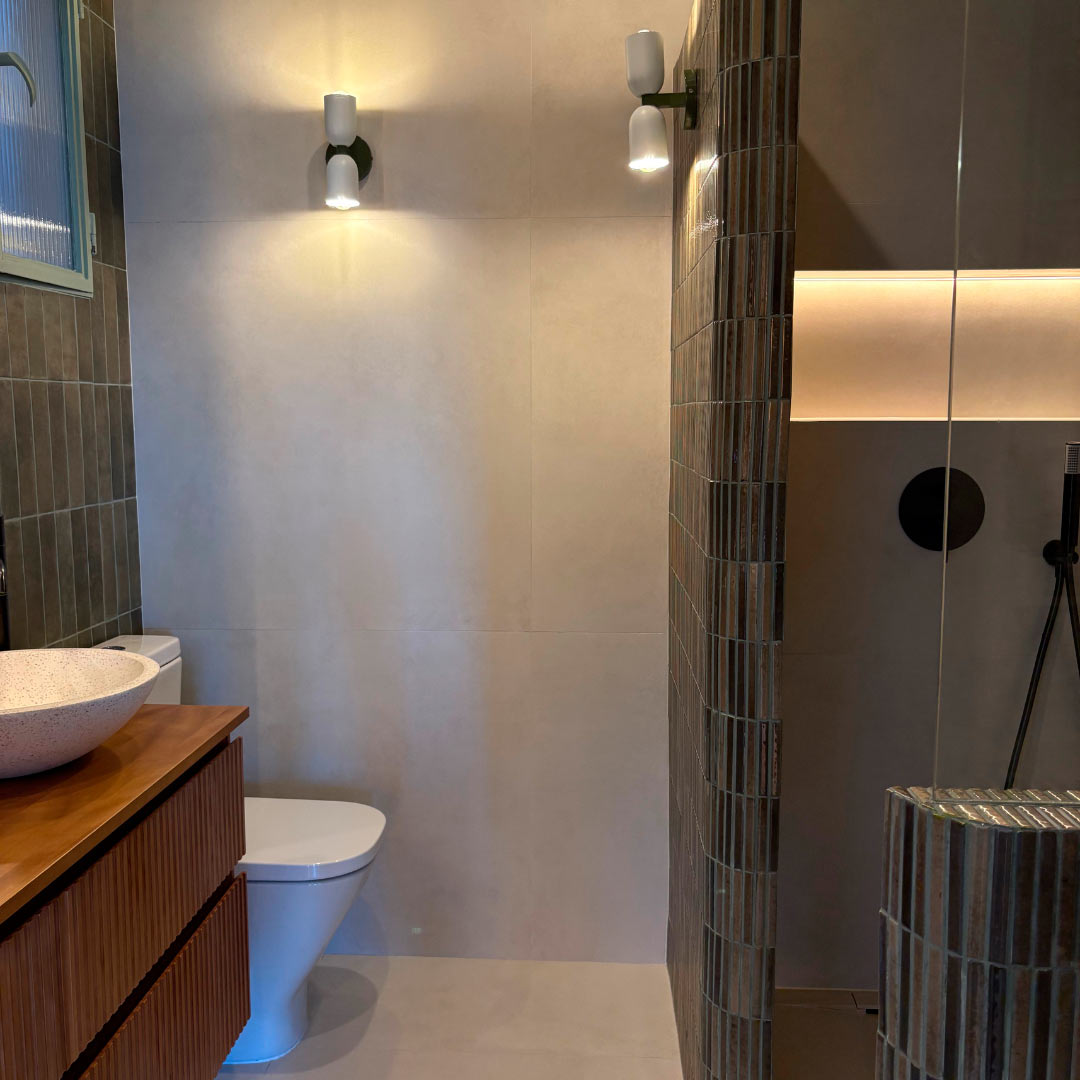
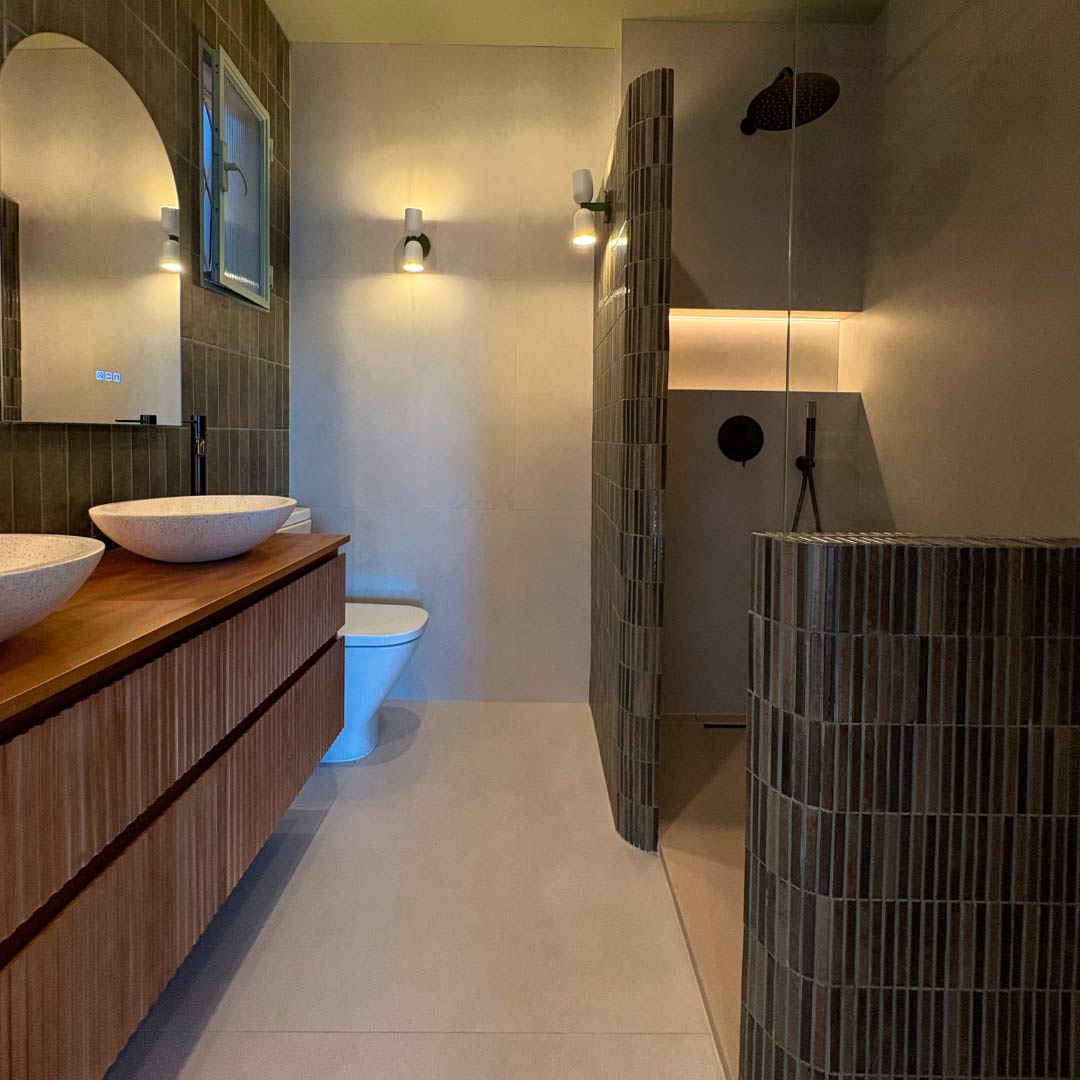
The design of this bathroom demonstrates how small-format tiles can transform the architecture of a space, adding texture, movement and personality. Here, our Kit-Kat Musgo tiles take centre stage, covering the curved surfaces of the shower and creating an interesting contrast between straight lines and organic shapes.
Pieces used in the project
Pictures of the project
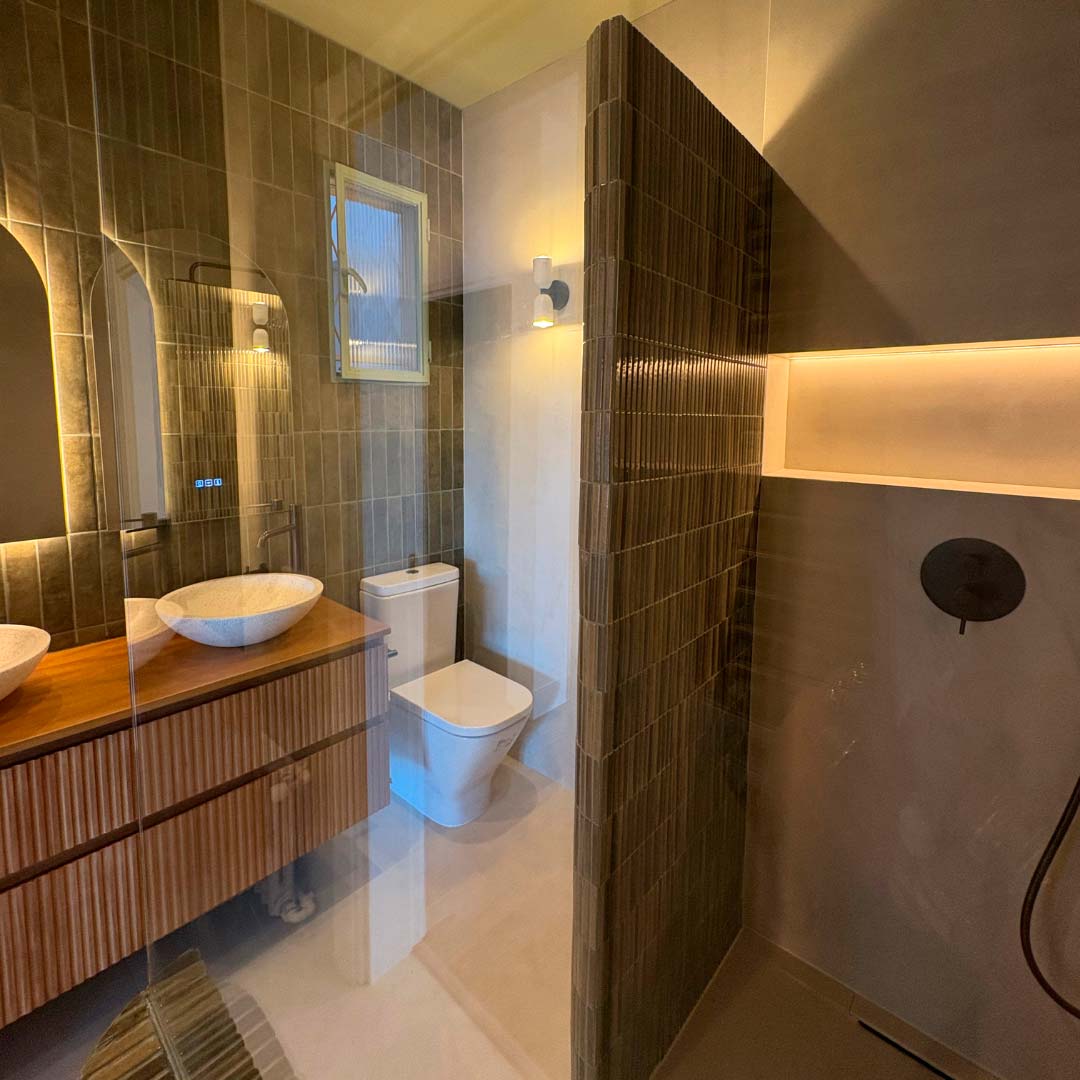
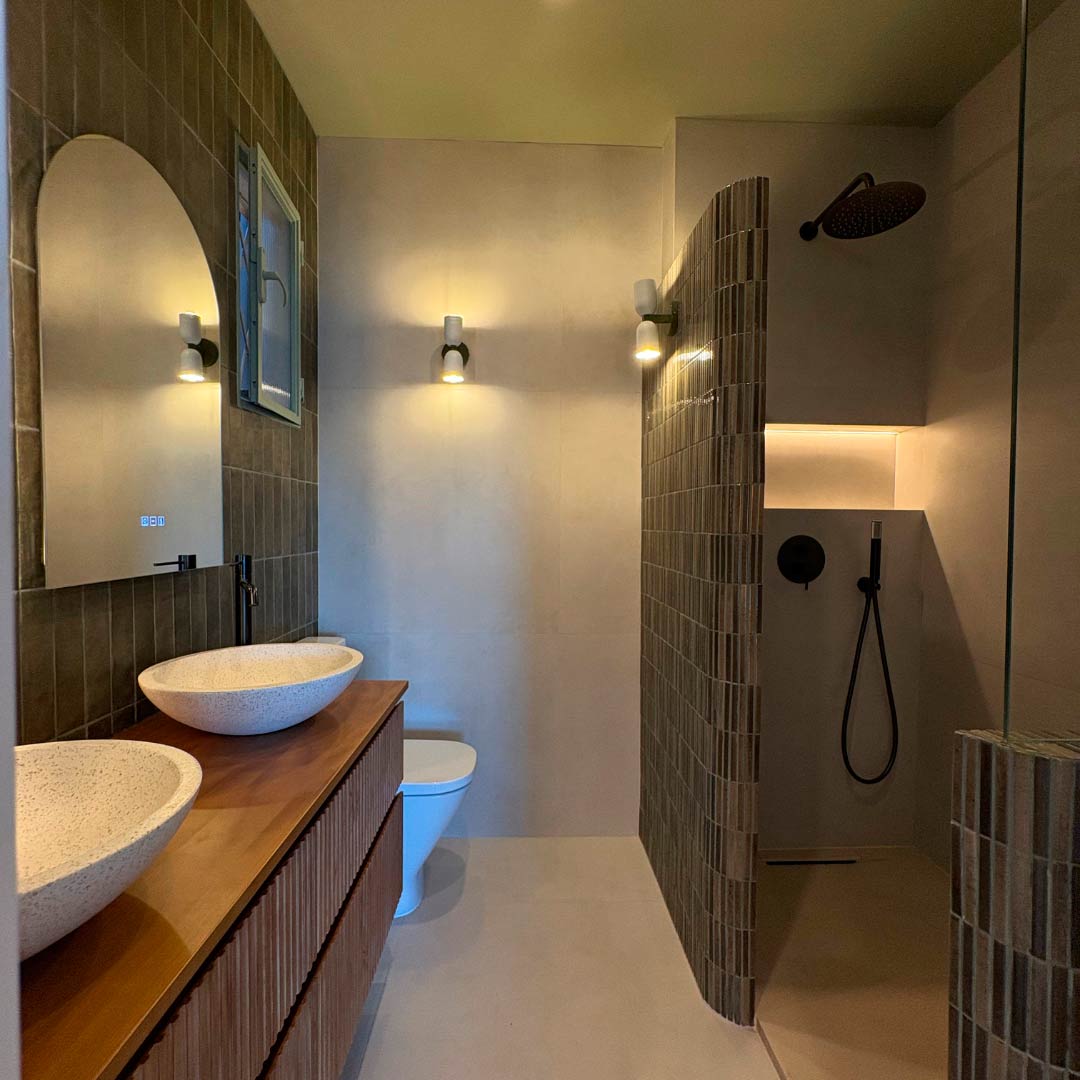
This contemporary bathroom project, designed by Nella Kasurinen, embraces an architectural approach defined by clean lines, natural materials and a carefully considered combination of textures. The layout, wooden furniture and neutral-toned wall coverings create a warm, balanced atmosphere in which curved shapes take on a particularly prominent role.
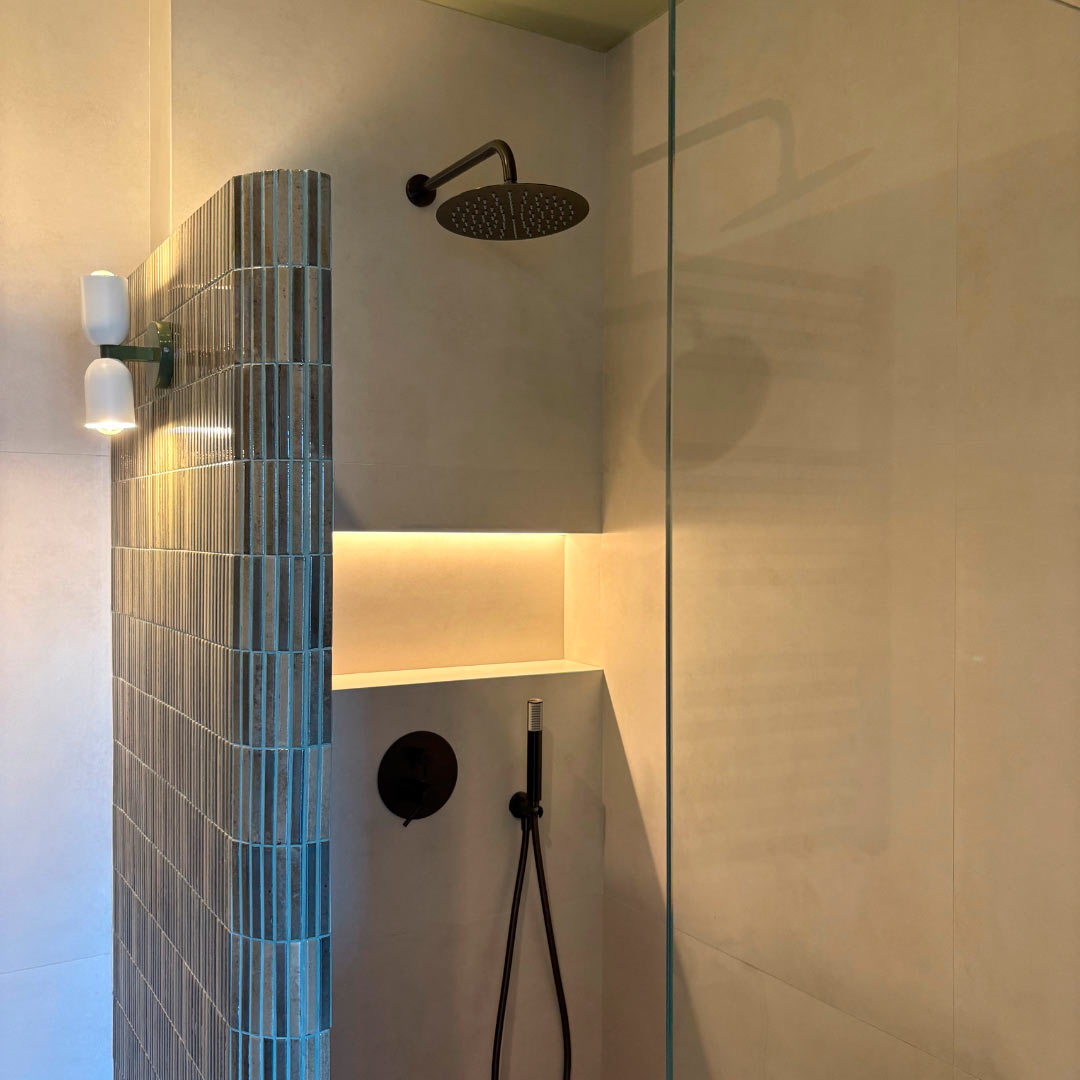
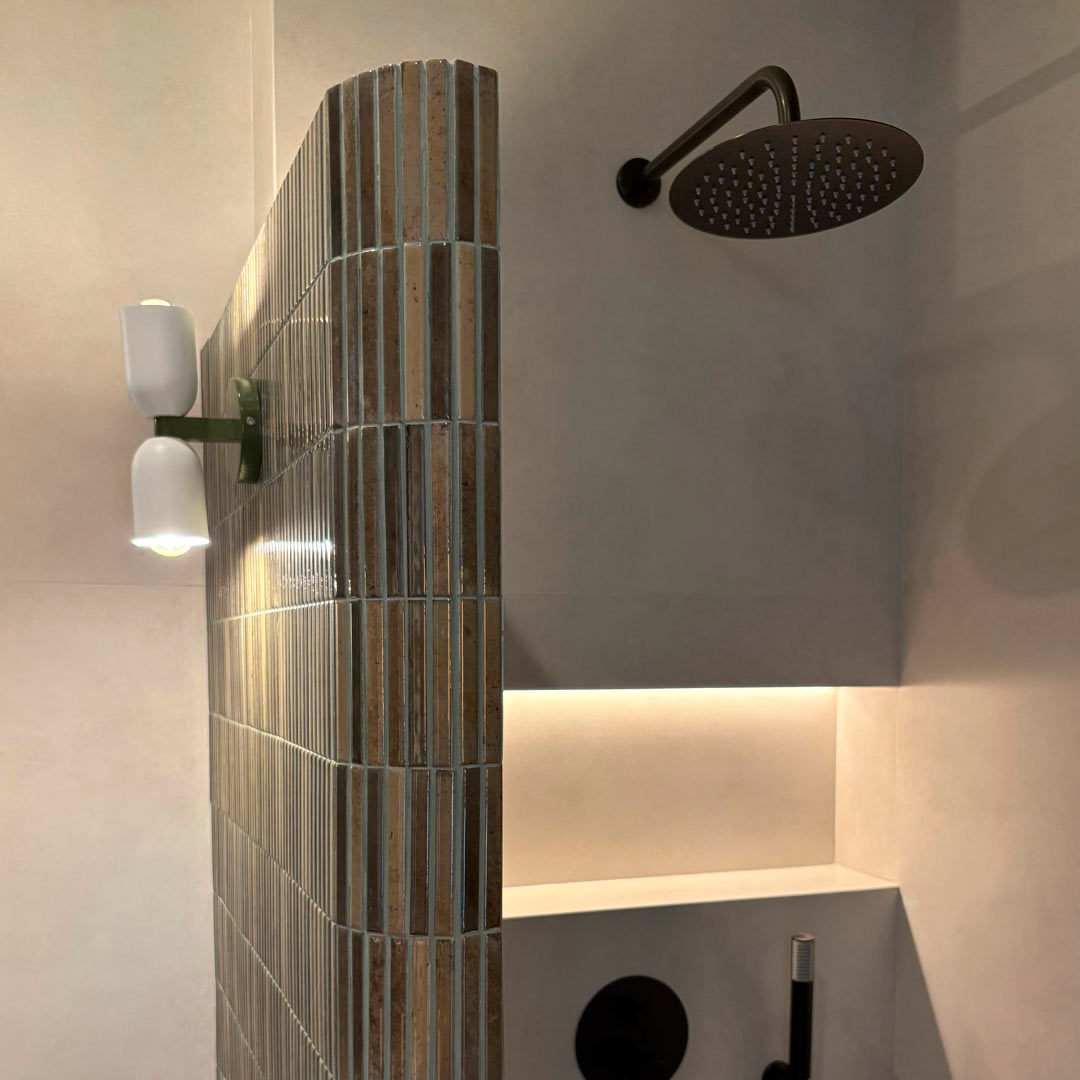
The most distinctive feature of the project is the shower area, defined by original curved partition walls clad in our Kit-Kat Musgo tiles. This design solution demonstrates how small-format tiles can be used to shape architectural surfaces that move beyond traditional straight walls.
Curved shapes have become an increasingly popular feature in contemporary bathroom design. Their ability to soften architectural lines, create smooth transitions between surfaces and introduce a sense of fluidity makes it possible to design more dynamic and welcoming spaces.
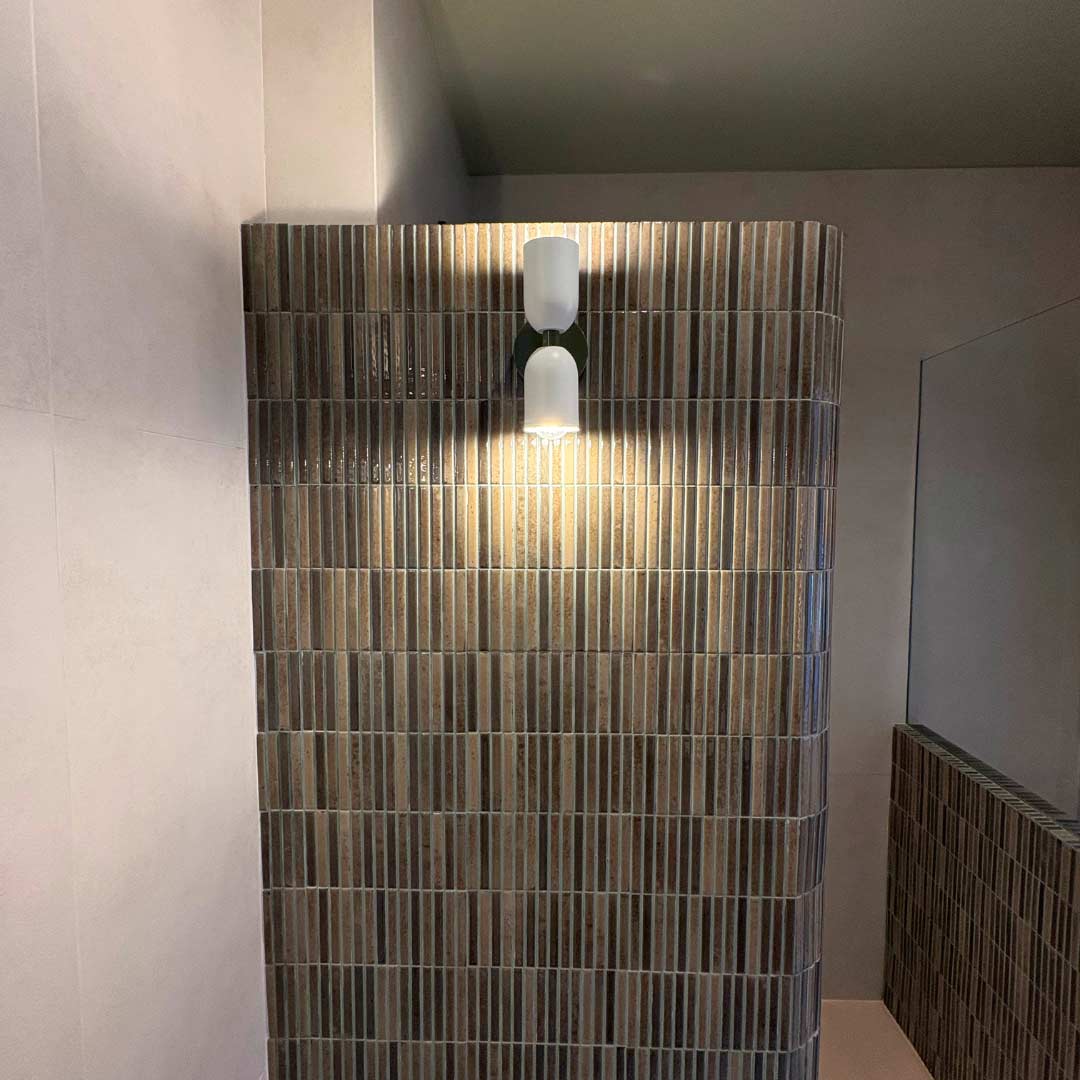
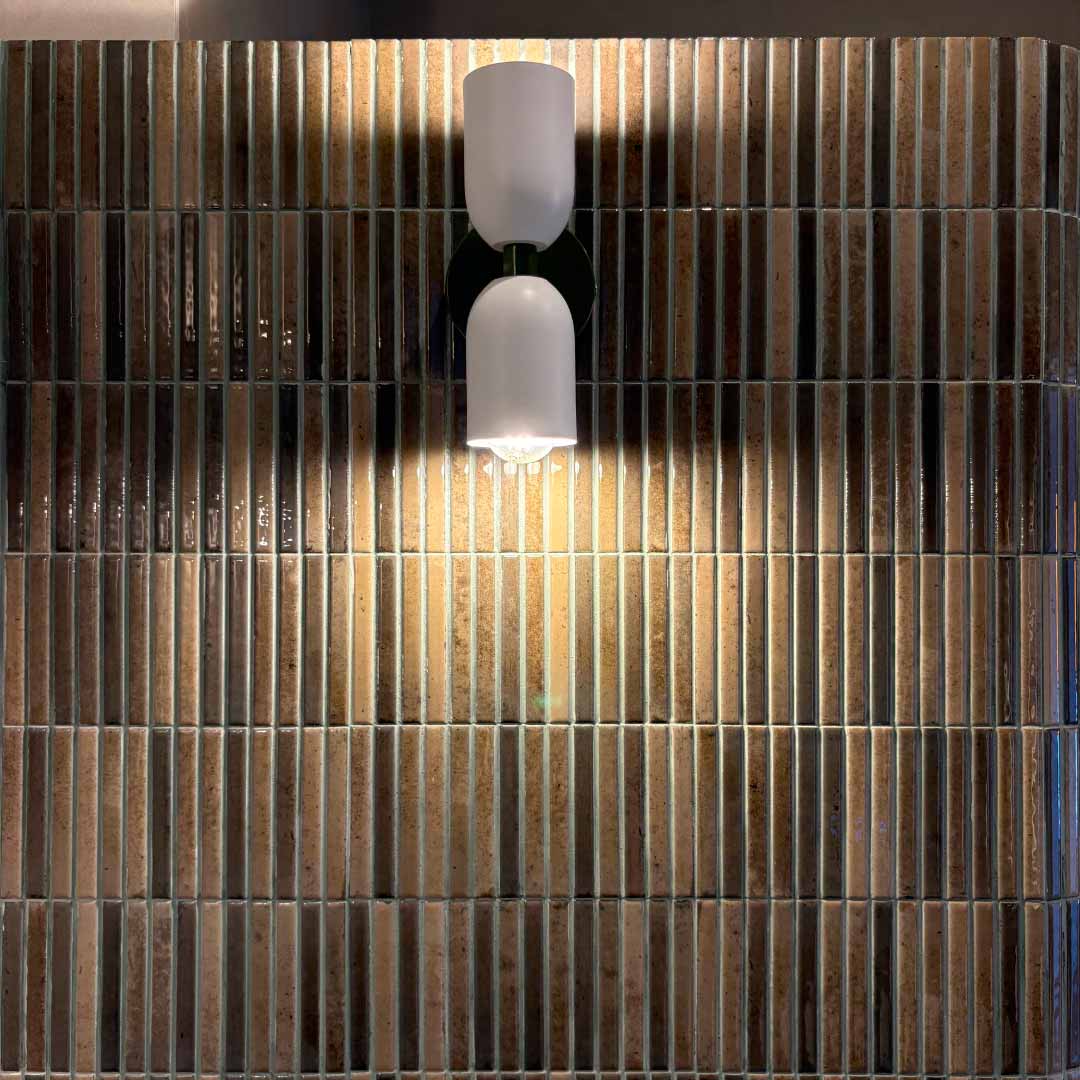
In this project, our Kit-Kat Musgo porcelain wall tiles are used to clad the partitions that define the shower area, following their curved geometry and highlighting their shapes. Their distinctive design, made up of small elongated pieces, creates a vertical rhythm that follows the curvature of the walls, adding texture and visual continuity.
Choosing tiles for curved surfaces is particularly interesting when incorporating distinctive architectural elements into bathroom design. Small-format tiles, especially mosaic-style solutions, can adapt easily to certain rounded surfaces, creating compositions that enhance the geometry of the space.
In this case, the vertical installation of Kit-Kat tiles enhances the sense of height and transforms the shower partitions into striking decorative features. The curves soften the transitions between different areas, while the repetitive pattern of the tiles introduces order and balance into the overall composition.
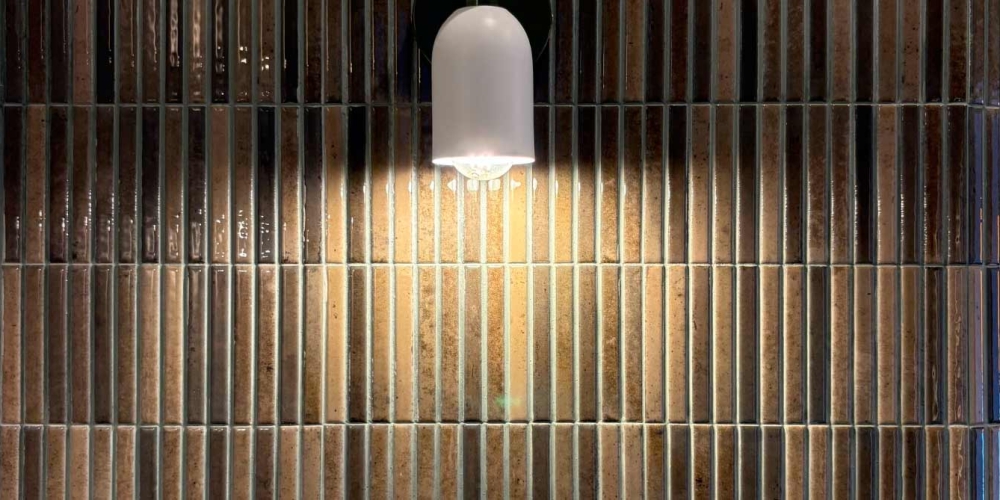
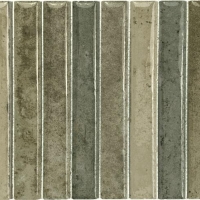
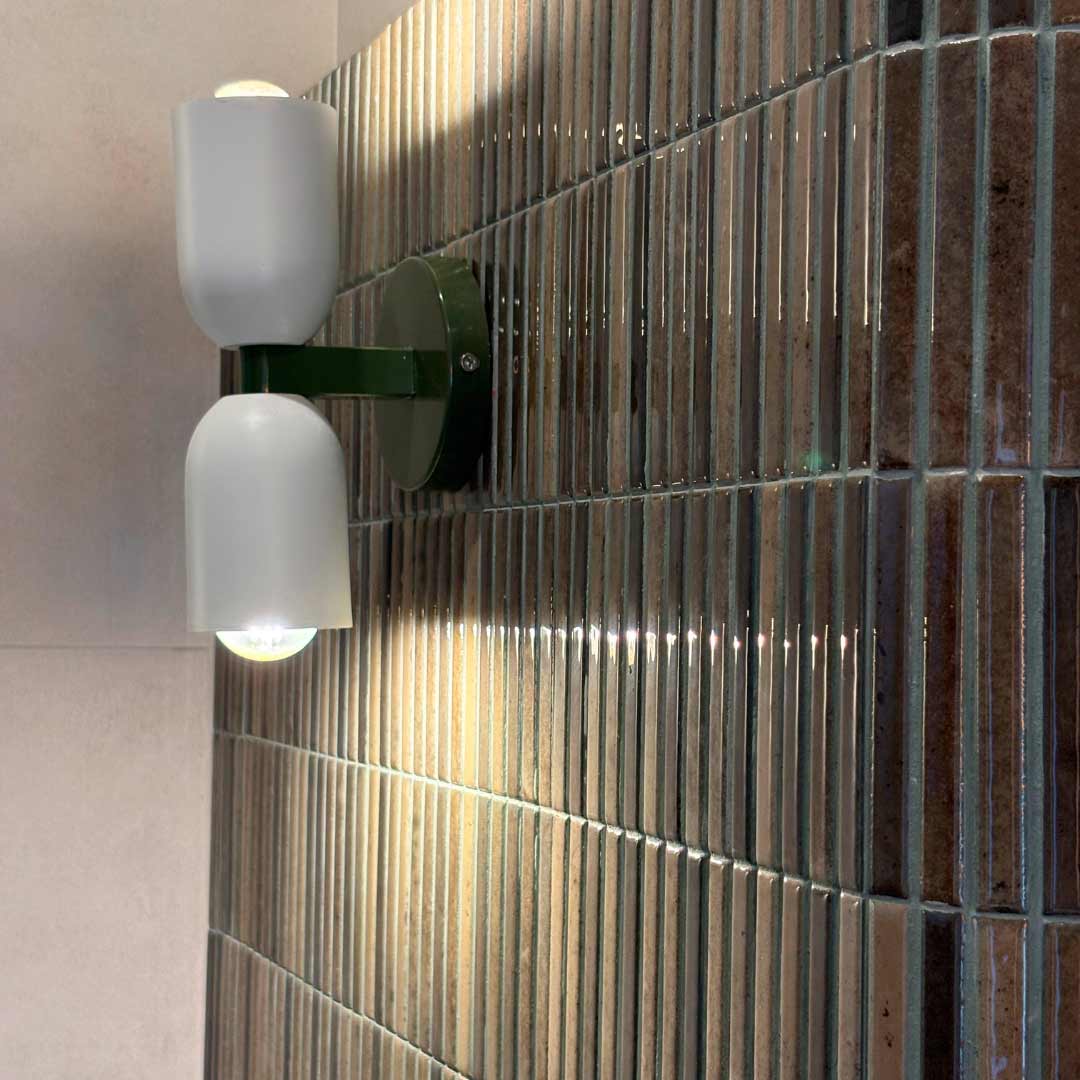
Beyond their application on curved surfaces, one of the main attractions of Kit-Kat Musgo is the visual richness of its finish. Its combination of muted green tones, earthy nuances and changing reflections evokes the colours of nature. The surface features subtle colour variations that add depth to the overall design, giving each section of the tiled surface a different appearance depending on how the light falls on it.
This richness of tones becomes particularly striking on the curved shower walls. Light reaches each section from different angles, enhancing the reflections of the glaze and creating an interplay of light and shadow that highlights the geometry of the surfaces.
The result is a ceramic wall covering full of character, capable of adding personality without relying on bold colours or large decorative elements. Furthermore, the elongated design of the small pieces introduces a linear texture that contrasts with the smooth surfaces throughout the rest of the bathroom, reinforcing the prominence of the ceramic tiles.
This project demonstrates how tiles for curved walls can become a powerful design feature capable of completely transforming a bathroom. Far from simply covering surfaces, ceramics actively contribute to defining the architecture, highlighting volumes, following shapes and giving the space its own distinctive identity.
With Kit-Kat Musgo, the curved shower walls are no longer just partitions but become one of the project's main design features. Their small format, rich colour variations and distinctive texture create a composition that combines natural inspiration with contemporary design.
The result is a modern, warm bathroom full of personality, where small-format ceramic tiles demonstrate their potential to cover curved surfaces and create spaces with more organic and expressive architecture.